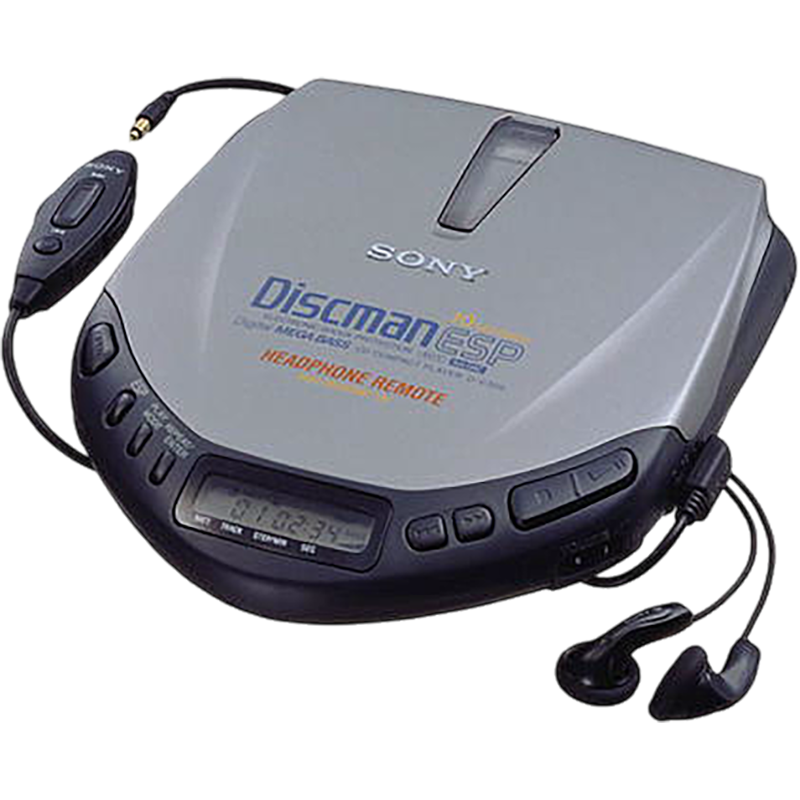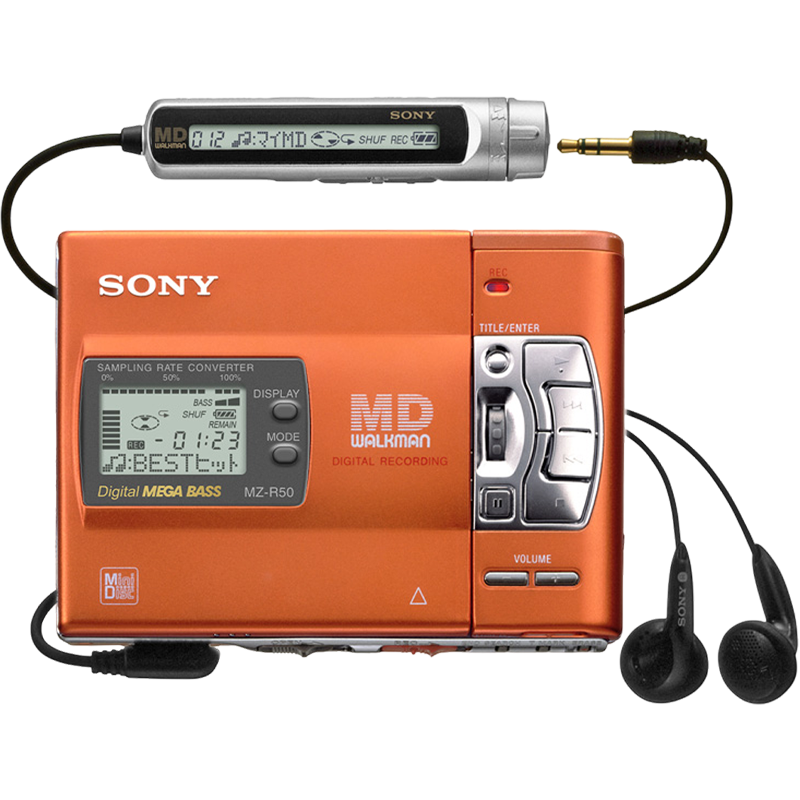
By 1997, Sony had deepened the character of each segment with refined materials and usability tweaks tailored to its audience. The portfolio approach meant managing multiple Walkmans rather than a single category.
WM-FS1
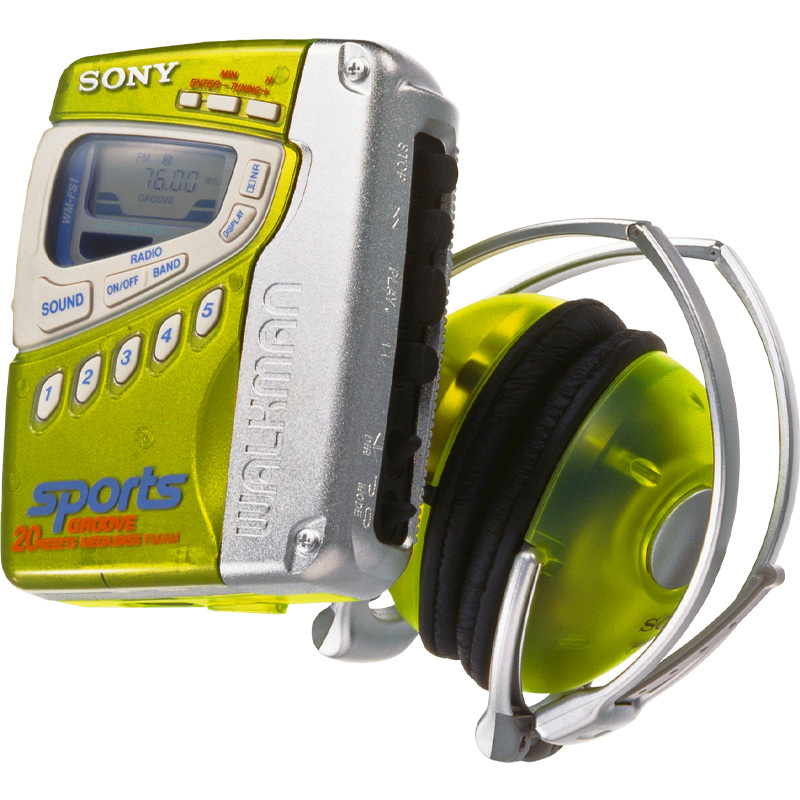
The WM-FS1 is part of Sony's late Sports Walkman range, combining cassette playback with an integrated AM/FM digital synthesizer tuner inside a compact water-resistant shell. Sealed controls and a more ruggedized body made it better suited to outdoor or exercise use than the ordinary EX and FX players, while a built-in stopwatch and digital clock pushed it further into lifestyle utility territory. The side-loading cassette layout remained familiar, but the overall handling was clearly designed around movement and one-handed use. What makes the FS1 interesting is that it shows how the Sports line had evolved from simple ruggedness into a more complete portable routine machine. Here, no longer simply a "tough Walkman," but something built to live alongside exercise, travel, and timed activity. It reads as Sony adapting cassette to the rhythms of the late-1990s body instead of just to the pocket.
WM-FS499
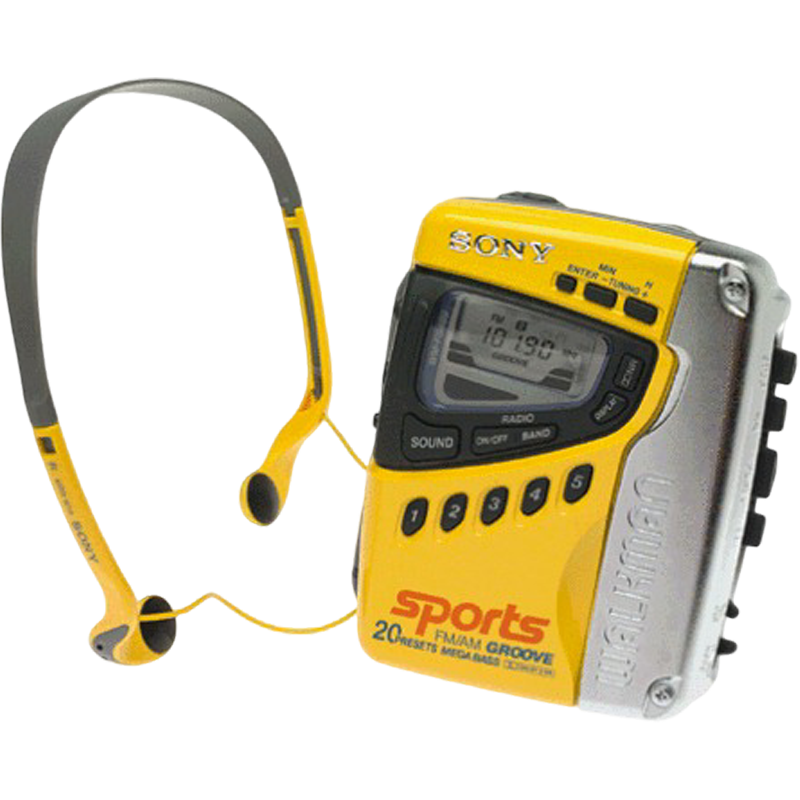
The WM-FS499 is a fully developed late-1990s Sports Walkman, released in 1997 with water resistance, auto-reverse, Dolby B noise reduction, digital AM/FM tuning with presets, and an LCD that added clock and stopwatch functions. It also introduced Groove bass branding and subtle silver accents on the familiar yellow Sports shell, while keeping the controls arranged for quick access outdoors. Battery life reached roughly 22 hours, making it one of the more complete lifestyle-oriented Sports models of its period. By this point the Sports Walkman was no longer simply about surviving bad conditions. Sony had turned it into a mature accessory category with a stable visual identity and a full list of expected conveniences. The FS499 was the line at its most settled, when toughness, radio use, timing functions, and cassette playback all came together without much tension.
WM-FX855
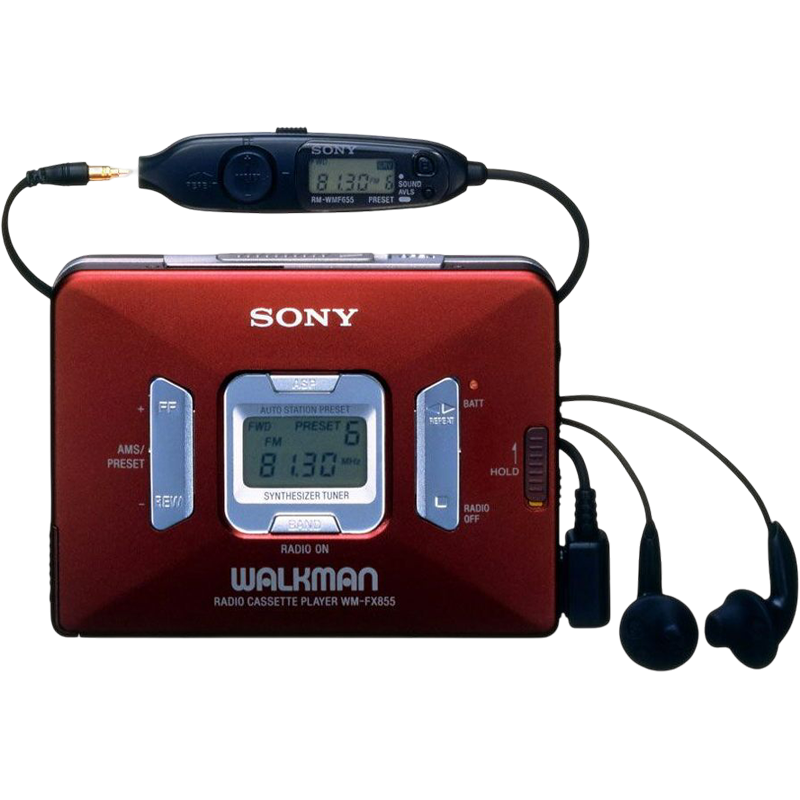
The WM-FX855 was a more rugged evolution of Sony's mature FX radio-cassette formula. It used a reinforced body and a distinctive double-slide lock system to protect both the cassette door and external controls more effectively during daily carry. It retained the basic cassette-and-radio logic of the line, including auto-reverse playback and a straightforward tuner layout, but traded some of the slimness of earlier models for a more impact-resistant feel. The footprint remained compact even as the shell became more assertive and protective. It shows Sony still responding to the reality of how people actually treated portable devices. By this point, refinement alone was not always enough; durability and survivability had also become part of the product story. The FX855 feels like a machine designed for pockets, bags, and accidental knocks rather than careful admiration on a shelf.
WM-GX655
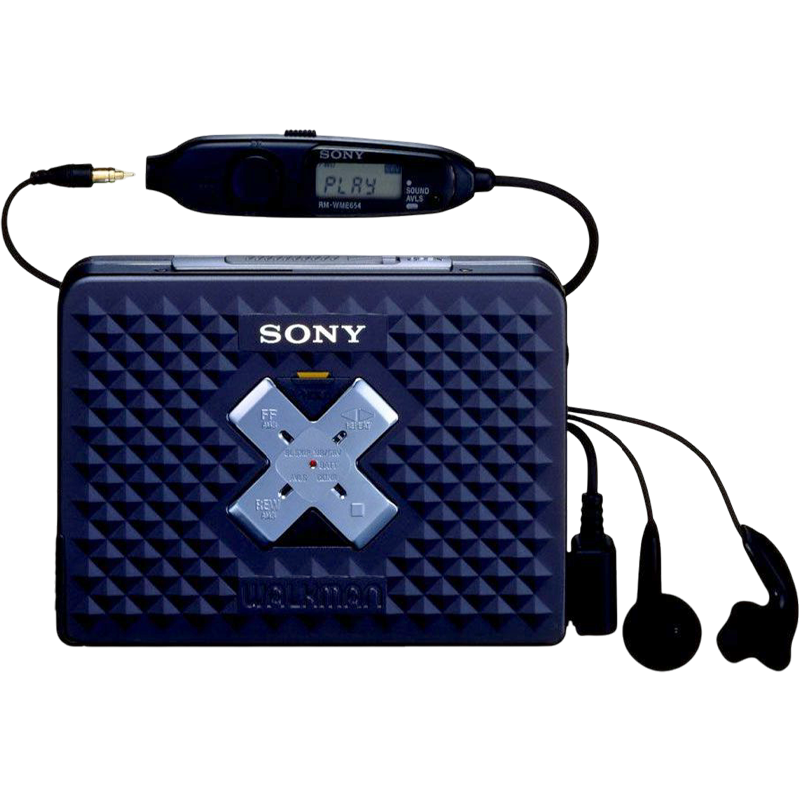
The WM-GX655 is the Japanese domestic-market counterpart to the international WM-GX652, serving as one of Sony's last serious high-end radio-recording Walkman. It combined full auto-reverse recording and playback with world-band tuning and a dense multi-function control layout, all compressed into a relatively compact late-GX chassis. The machine was clearly built around people who still expected a portable cassette recorder to handle travel, broadcast capture, and serious everyday use without stepping up to a larger dedicated recorder. This is one of those late GX models where Sony was still trying to defend the idea of cassette as an active, capable format instead of a fading convenience. The GX655 is a machine for users who still wanted one object that could listen, tune, and capture across multiple contexts. It sits within the final serious chapter of the recording Walkman instead of the novelty end of the line.
WM-MV1
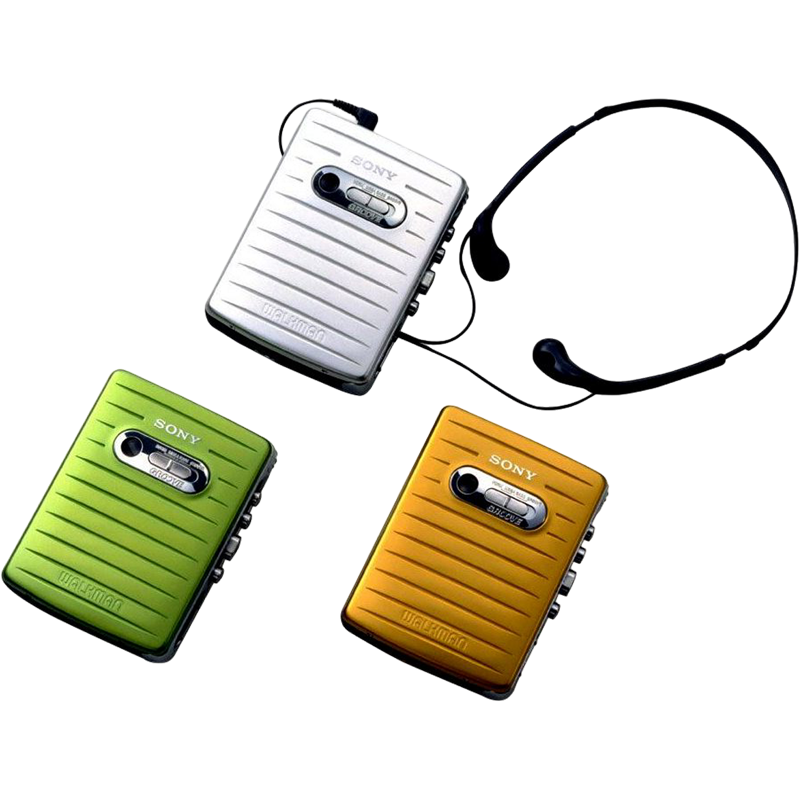
The WM-MV1 was a simple playback-only cassette Walkman aimed at the lower end of Sony's late-1990s range, but its all-metal body gave it a more durable and wear-resistant presence than many ordinary budget models. The underlying transport stayed straightforward, with auto-reverse playback and Mega Bass in a conventional belt-drive design powered by standard AA batteries. It was not technically sophisticated, but it felt a little sturdier and longer-lived than its price might suggest. What makes the MV1 interesting is that it shows Sony still maintaining a very plain, reliable cassette tier even as the rest of the lineup became more specialized or style-driven. Not every buyer wanted a bright Beans player, radio tuner, or retractable-headphone experiment. The MV1 feels like a Walkman bought to simply keep working.
WM-WE1
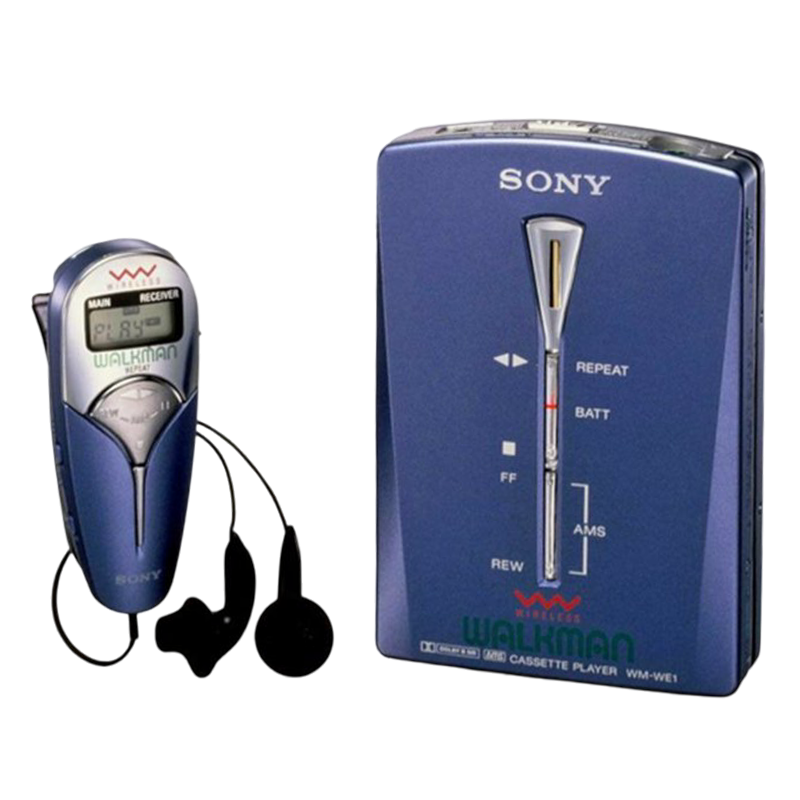
The WM-WE1 brought Sony's wireless cassette concept into a slimmer late-1990s form, pairing a compact playback-only Walkman body with RF-transmitting wireless headphones. Compared with earlier wireless generations, the player is cleaner and more visually contemporary, while still including Mega Bass and AMS track navigation to keep the cassette experience reasonably full-features. The underlying idea remained familiar: standard tape playback without the inconvenience of a headphone cable trailing from the main unit. Sony is still stubbornly refining a branch most companies would probably have abandoned by then. Wireless cassette listening had never become mainstream, but the WE1 shows the company still trying to make it feel elegant instead of experimental. It reads less of a technological breakthrough than a very late expression of a long-running Sony obsession.
WM-WE7
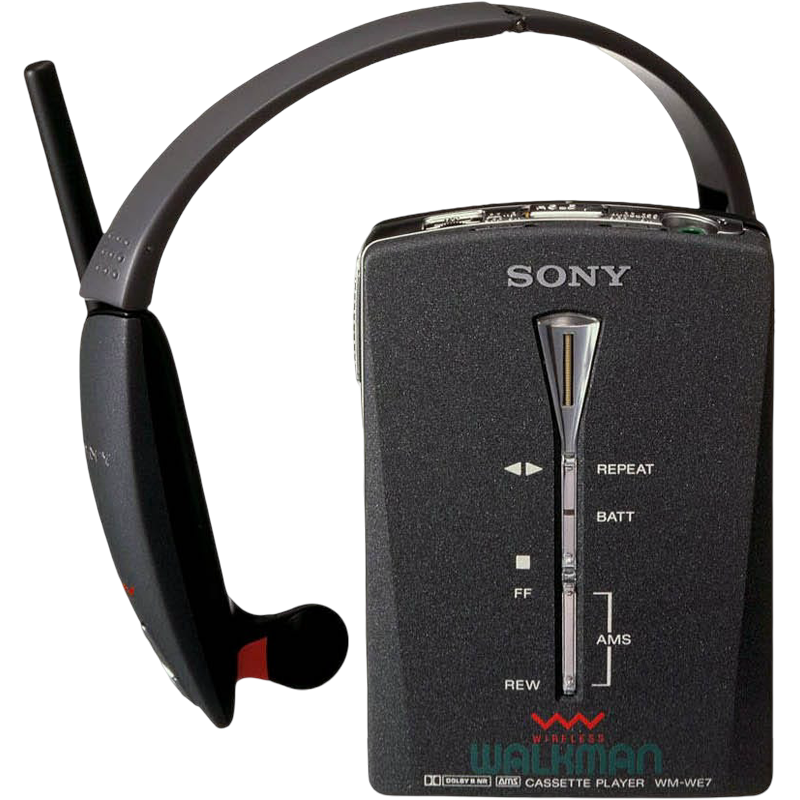
The WM-WE7 used the same RF wireless playback platform as the WM-WE1, but changed the feel of the system through its included folding over-ear wireless headphones. Those headphones had a more sculptural, almost alien form and folded for easier storage, giving the package a more visibly lifestyle-oriented presence than the smaller earbud-style setup of the WE1. The player itself stayed mechanically similar, with Mega Bass, standard controls, and the same wireless cassette architecture underneath. What makes the WE7 revealing is that Sony was treating the wireless branch as something differentiated not only by the player, but by how the listening system was worn and carried. By then, wireless Walkman design was less about the cassette mechanism than about the relationship between player, receiver, and body. The WE7 feels like a late-1990s attempt to make that relationship more designed and visible.
WM-EX7
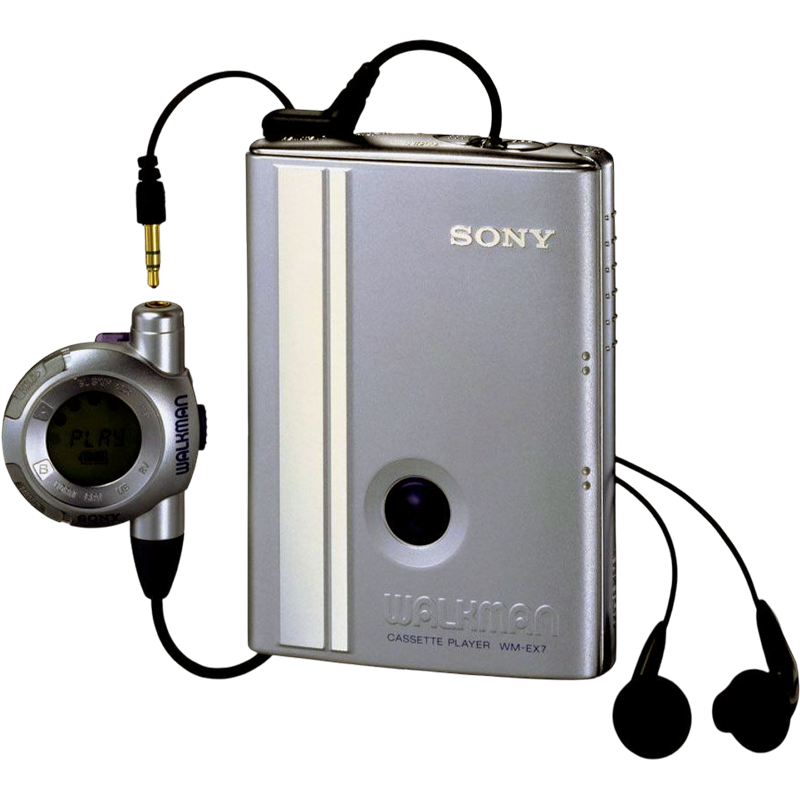
The WM-EX7 was a midrange EX-series playback Walkman distinguished by Sony's Music Info Database function, which let users store and display custom tape or track names on the LCD interface. Mechanically it stayed close to the refined EX5 platform, with auto-reverse playback, Dolby B noise reduction, Mega Bass, and a slim Japan-made body that fit neatly into Sony's late compact-cassette design language. The real difference was not the transport itself, but the extra layer of organization built around it. This is one of those fascinating transitional models where Sony was clearly trying to bring digital-era habits to analog media without actually abandoning tape. The EX7 is aimed at people who already expected song titles, memory, and a little more structure from portable audio. It is not a radical machine, but it quietly reveals how cassette was being asked to behave differently by the end of the decade.
1997 showed Sony had learned to curate a family of distinct products instead of a monolithic line. That internal diversity helped the brand absorb the late-decade tension between analog perfection and digital momentum. 1997 left the Walkman fully comfortable with its own internal variety, though comfort came at the cost of the original singular identity.