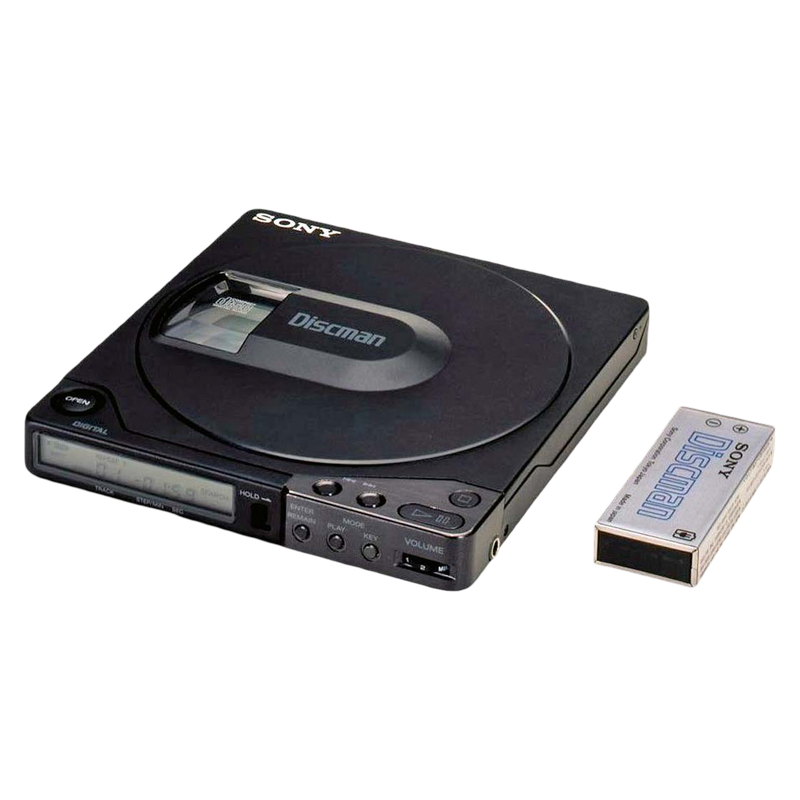
In 1988, the enclosure design and size were optimized. The design was changed to a configuration that prioritizes perfection.
WM-505
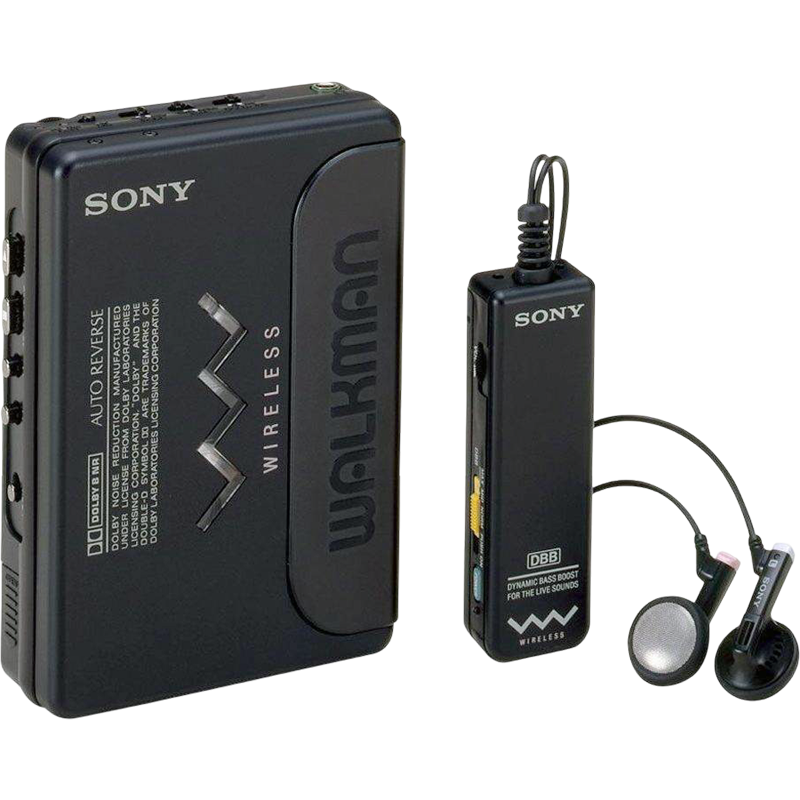
The WM-505 was Sony's first wireless cassette Walkman, launched in 1988 with a short-range RF transmission system that sent audio to a matching pair of dedicated wireless headphones instead of relying on a conventional cable. The player itself remained compact and high-end for the period, offering auto-reverse, Dolby B noise reduction, Dynamic Bass Boost, and rechargeable gumstick power, while the headphones used a similarly slim rechargeable cell of their own. An optional AA adapter provided a more conventional backup for longer use. This is one of those wonderfully specific late-1980s Sony ideas that feels forward-looking and slightly impractical in exactly the right way. The WM-505 was clearly trying to solve the cable problem before the technology was ready to make that solution invisible, which gives it a very transitional charm. It could never have been the mainstream future, but it shows Sony already reaching for it.
WM-509
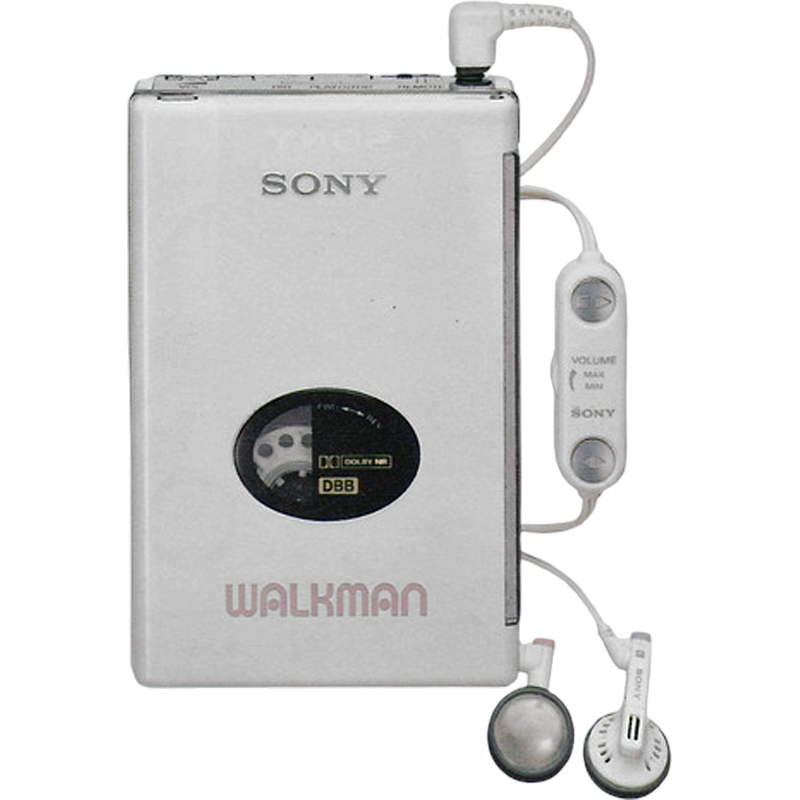
The WM-509 is a playback-only Walkman that followed the earlier WM-109 and pushed Sony's cable-remote concept into a more refined late-1980s form. It retained a compact metal-framed body while adding an integrated remote on the headphone cable for transport and volume control, alongside auto-reverse, Dolby B noise reduction, Dynamic Bass Boost, and an amorphous head. The result was a player that stayed physically modest while shifting more of the user interaction away from the body itself. By then Sony was no longer simply trying to make Walkman smaller, but easier to live with once tucked out of sight. The WM-509 makes sense as a commuter's machine, something designed around quick adjustments in motion instead of around admiring the hardware in your hand. It was a good example of Sony refining behavior instead of just specification.
WM-F404
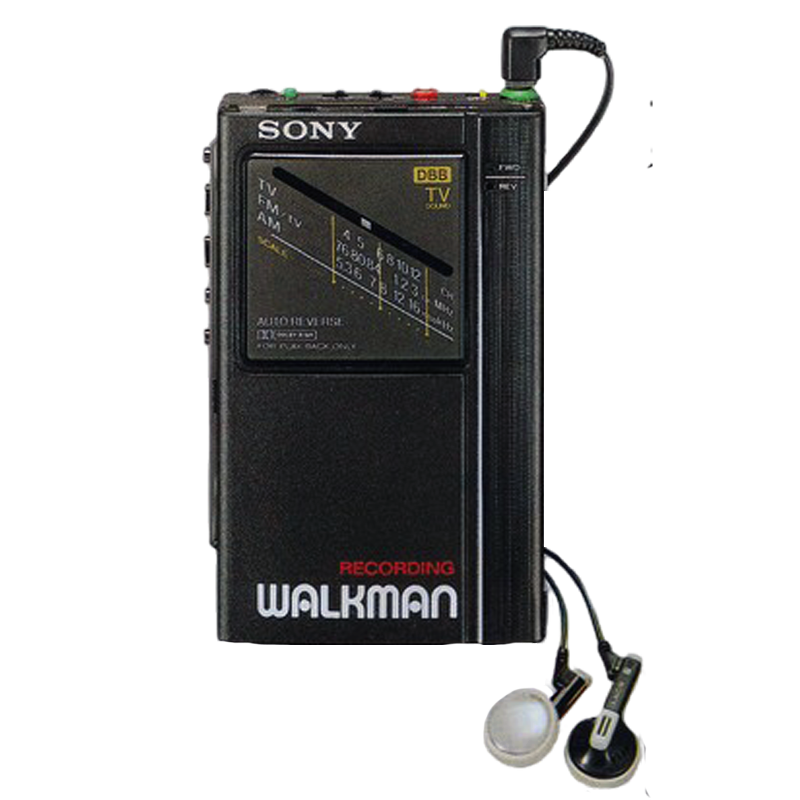
The WM-F404 is a high-end radio recording Walkman from 1988 that combined cassette playback and recording with FM, AM, and TV-band reception inside a substantial full-metal chassis. It supports auto-reverse for both playback and recording, Dolby B noise reduction, and Dynamic Bass Boost, giving it a broader feature set than most ordinary radio Walkman while keeping a sense of solidity and control. It was clearly built to feel more serious than the average all-in-one portable. This model is the kind of model that sits just below the truly specialist branch but still carries a lot of intent. Sony was clearly aiming it at users who actually planned to use the recording functions, more than admire them on a box, whether for broadcasts, tape dubbing, or general day-to-day capture. The F404 is a machine for someone who still treated cassette as an active medium instead of a passive one.
WM-F52
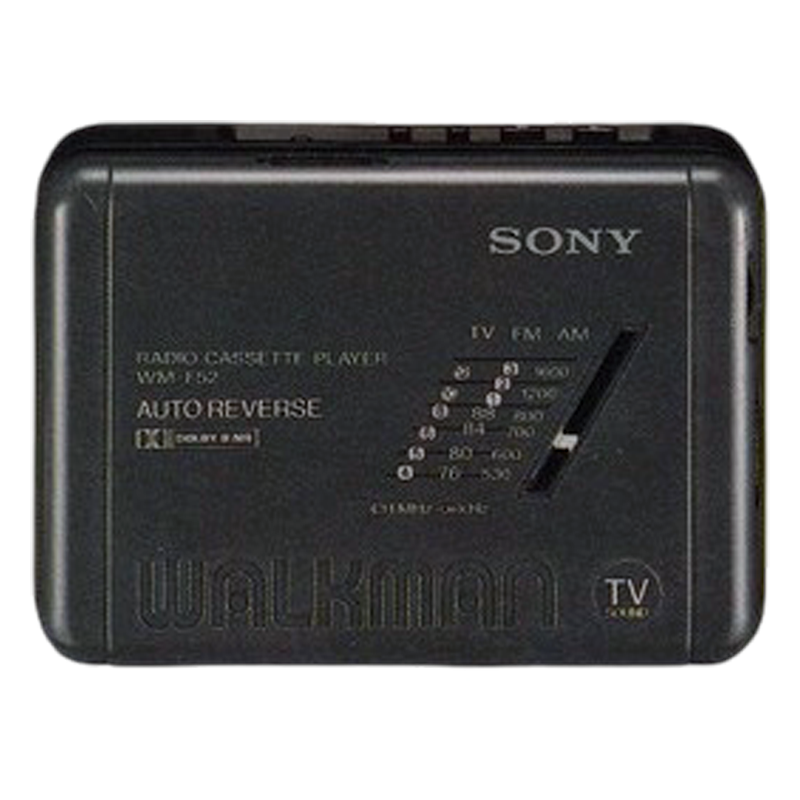
The WM-F52 is a three-band radio Walkman that extended the practical layout of the WM-52 by adding FM, AM, and TV audio reception to the same compact cassette playback concept. Auto-reverse and Dolby B remained part of the cassette side, while the rear cover opened to store the headphones flat against the body for cleaner transport. It was a tidy, self-contained design aimed at keeping both tapes and broadcast listening within easy reach. This model shows how much of the late-1980s Walkman story was about refinement instead of reinvention. Sony had already figured out that a compact everyday player with built-in listening convenience had broad appeal, so the F52 simply extended that logic into radio without making the machine feel heavier or more complicated than it needed to be. It is a very coherent little product.
WM-F550C
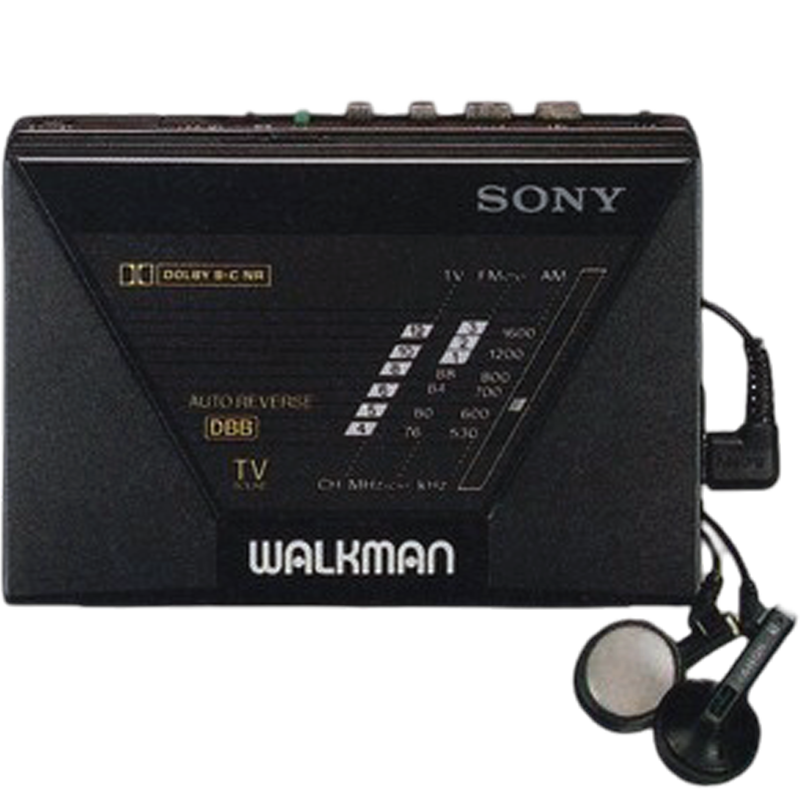
The WM-F550C extended the sound-focused WM-550C formula into the radio category, combining FM, AM, and TV reception with Dolby B and C noise reduction, an EX Amorphous head, Dynamic Bass Boost, and auto-reverse in a compact horizontal body. The metal shell and slim proportions kept it feeling closer to a premium playback machine than a bulky tuner-driven hybrid, while the extra circuitry gave it broader everyday use without fundamentally changing its character. This is a very typical late-1980s Sony move in the best sense: take a well-defined non-radio player and make the radio version without compromising what made the original appealing. The F550C is more than "the same one with a tuner," but a good example of how Sony managed to build parallel families that still felt coherent at every level. It sits within the branch for listeners who wanted quality first and flexibility second, but still wanted both.
WM-701C
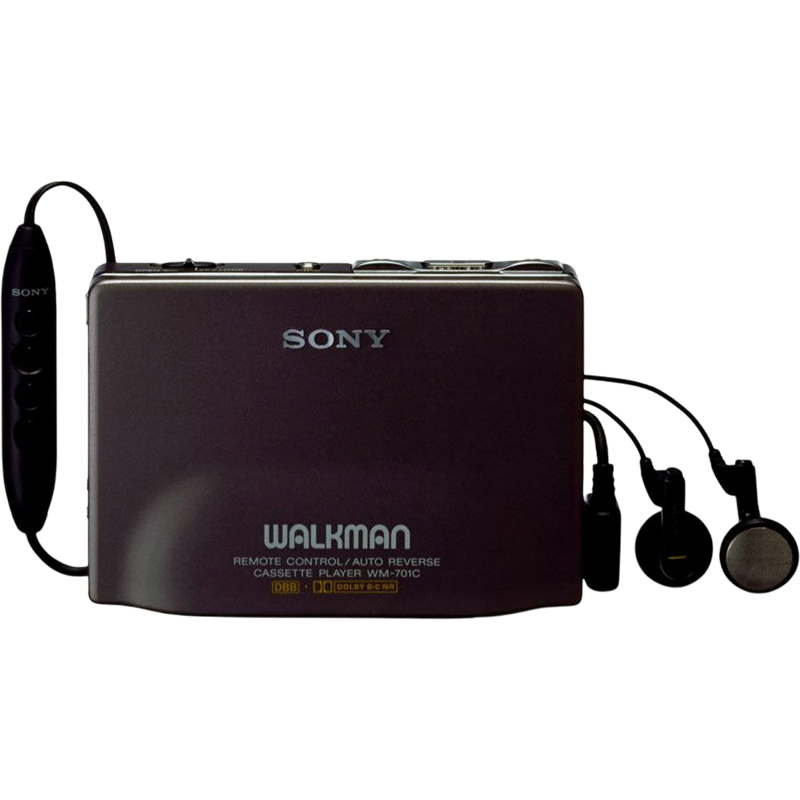
The WM-701C was one of Sony's most important high-end playback Walkman models of 1988, built around a newly developed slim transport that allowed the player to shrink to roughly 18 millimeters thick without giving up premium functions. It combined Dolby B and C noise reduction, an EX Amorphous Head, Dynamic Bass Boost, auto-reverse, and feather-touch logic controls in a compact metal body, with the battery housed inside the cassette compartment to preserve the clean silhouette. The whole machine was engineered to feel dense, precise, and unusually resolved for its size. Here Sony showed that the Walkman could still move forward even after years of miniaturization had already transformed the category. The 701C was not only thin, but thin in a way that still felt expensive, intentional, and acoustically serious. It sits at the point where high-end Walkman design became less about novelty and more about polish.
By 1988, the product line had a stable configuration. At the same time, we've entered a stage where perfection is prioritized over novelty.