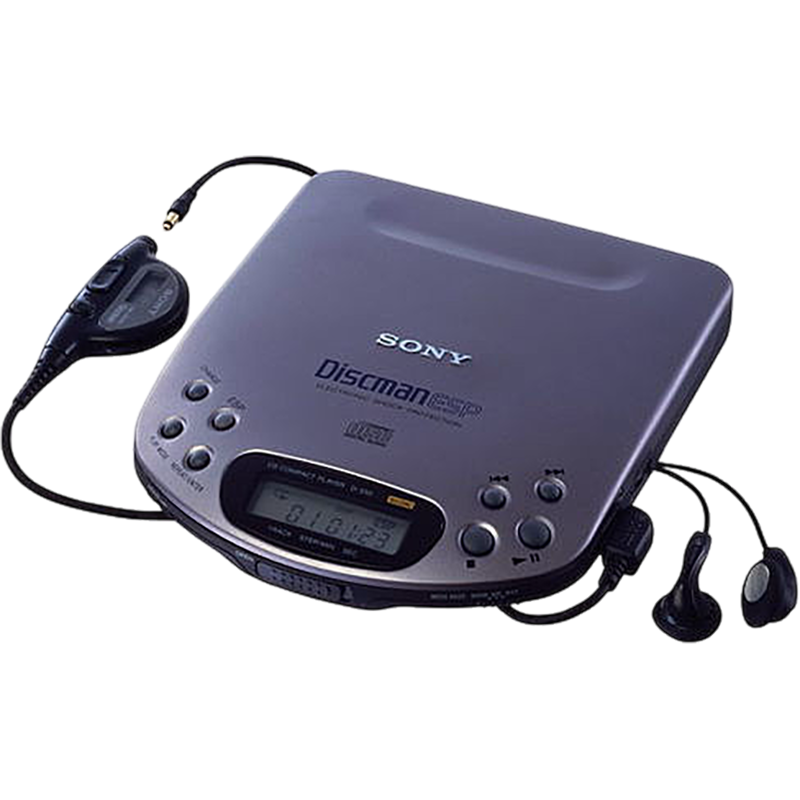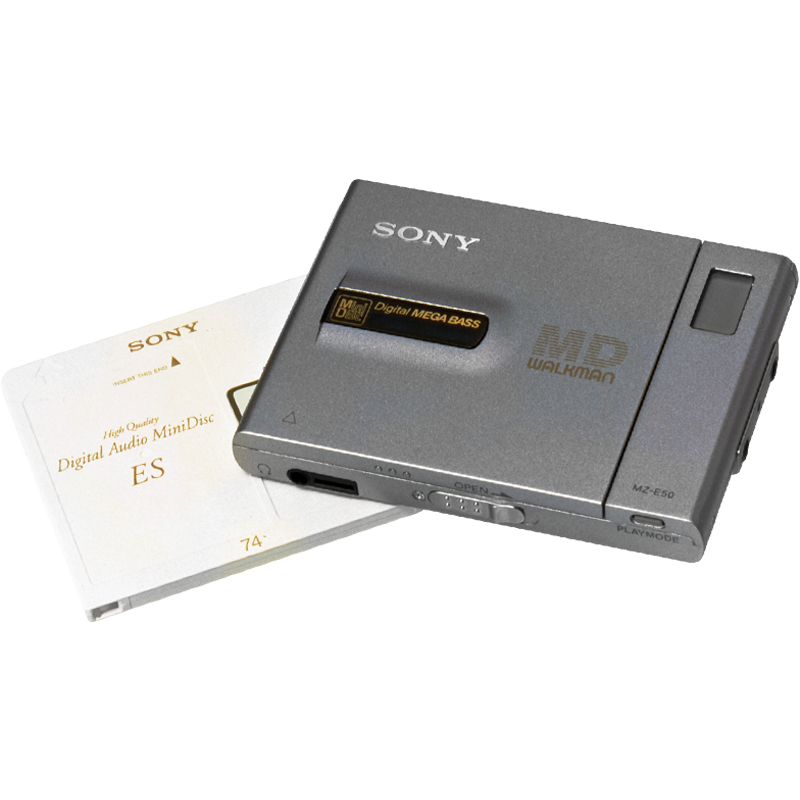
In 1996, Sony was refining the prestige, youth, and activity lines so each felt unmistakably distinct in the market. Placement, materials, and feature sets now spoke directly to specific audiences rather than a general public.
WM-EQ2
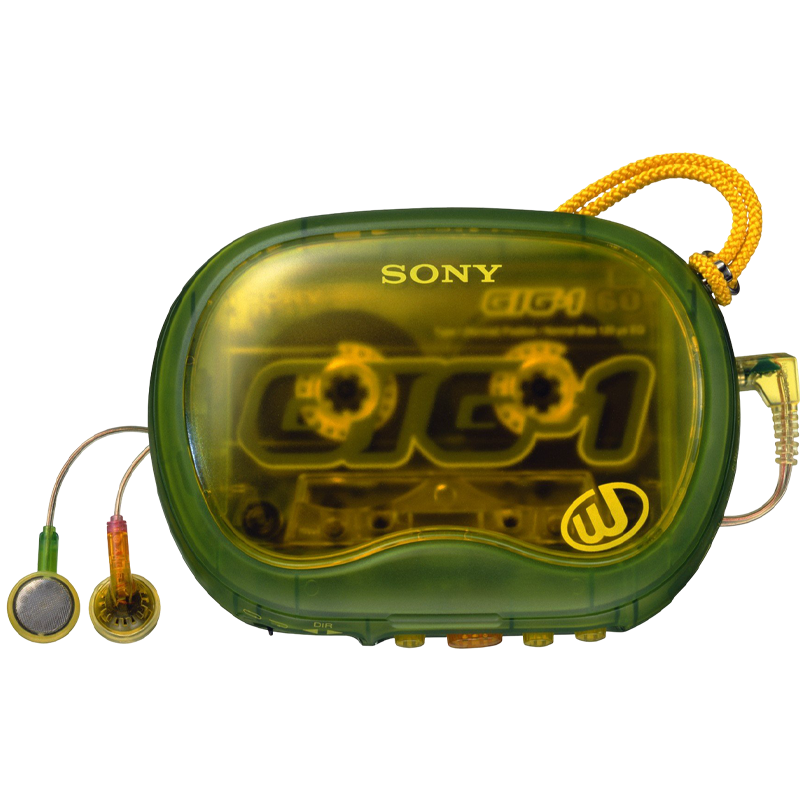
The WM-EQ2 belonged to Sony's Beans Walkman cassette series, abandoning the conventional rectangular player shape for a rounded bean-like body with a translucent skeleton shell. Its transparent panels exposed the tape mechanism and moving internal parts as part of the design itself, making playback visibly mechanical rather than hiding it behind opaque plastic. Auto-reverse playback and standard transport controls were integrated into the curved body, keeping the device easy to use despite the unconventional form. This is one of the clearest examples of Sony trying to keep the cassette interesting through industrial design rather than another round of transport refinement. By the mid-1990s, the Walkman was already a familiar object, and the EQ2 worked precisely by making that object feel unusual again. It feels less like a technical milestone than a playful reminder that portable cassette players could still be visually surprising.
WM-EX5
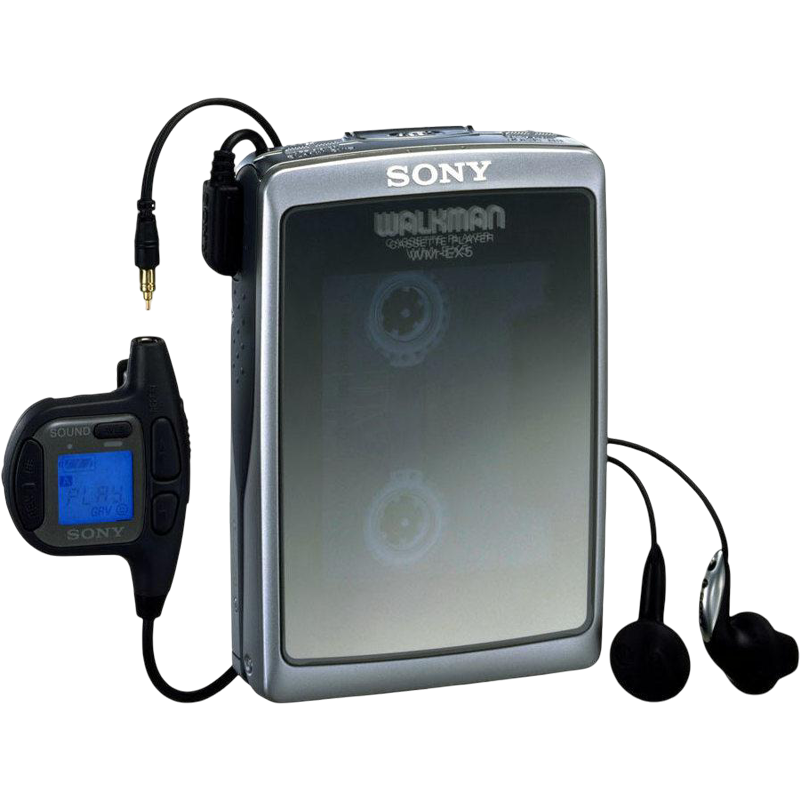
The WM-EX5 was one of the more visually assertive cassette Walkmans Sony produced in the mid-1990s. It was built around a polished mirrored cassette lid that reflected its surroundings and nearly concealed the tape behind it. Instead of the more familiar side-opening arrangement, the cassette loaded lengthwise like a car stereo, while most transport controls were hidden behind a slide-down rear panel to keep the front unusually clean. Auto-reverse, Dolby B, Mega Bass, AMS, blank skip, and AVLS were all present beneath the style-heavy exterior. Released in the year of Sony's 50th anniversary, the EX5 feels like a model meant to give the cassette Walkman glamour again at a time when the category was becoming visually familiar. The mirror lid and silver carry pouch pushed it closer to personal accessory territory than most ordinary EX players. It is a mid-1990s Sony object: not subtle, but very self-aware.
1996 marked the point where the brand’s meaning now rested on carefully crafted segments rather than on universal appeal. The sharpened identities carried the category through the final years of analog dominance. 1996 left the Walkman as a collection of distinct propositions instead of one overarching idea, the very clarity of segmentation exposing how much the core concept had narrowed.