
In 1986, improvements were made to the sound quality circuitry and chassis durability. At the same time, the expansion of models for specific applications continued.
WM-R202
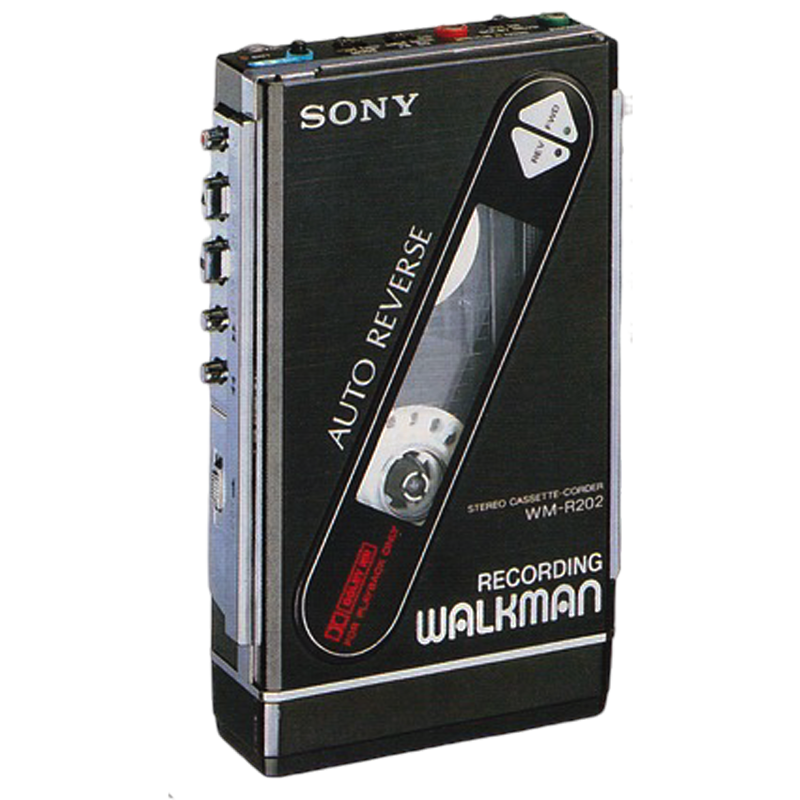
The WM-R202 is a slim recorder variant built on the same cassette-sized platform as the WM-102, adding stereo recording while keeping auto-reverse and Dolby B for both playback and capture. It uses Sony's gumstick battery system with an optional external AA holder for added flexibility, and keeps the body slim through a careful arrangement of transport keys, microphone input, and recording electronics. The brushed silver finish and restrained layout give it a more subdued, tool-like presence than many ordinary playback Walkman. It quietly prioritized capability over personality. Sony was clearly trying to preserve the appeal of the miniature format while making it useful for people who still needed recording, whether for school, notes, or occasional field use. The R202 is not flashy, but it is one of the better examples of how much function Sony could fit into a body that still feels genuinely handy.
DD-100
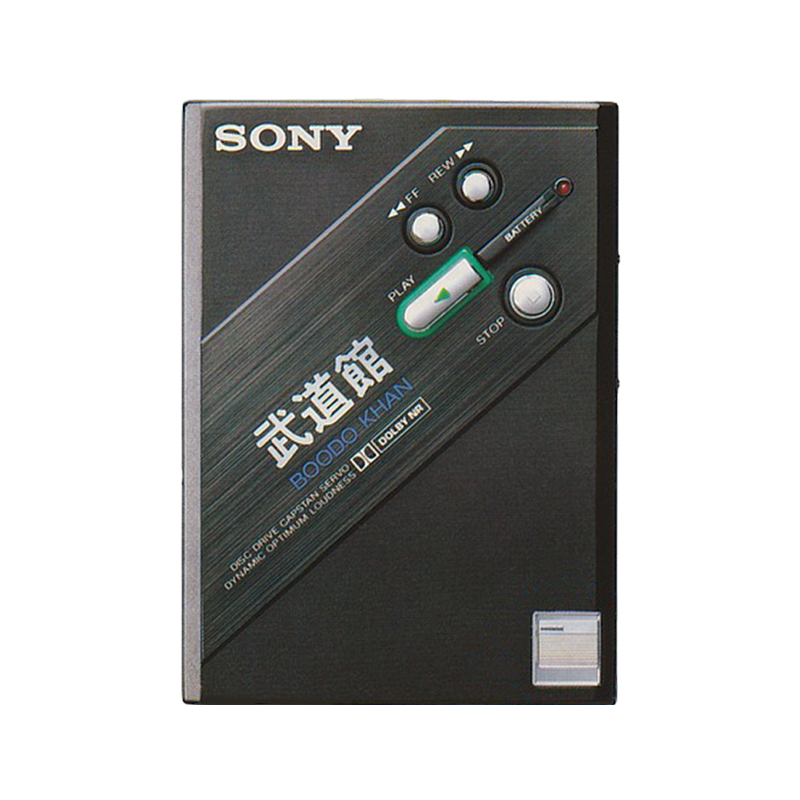
The DD-100 is a premium Disc Drive playback Walkman that refined the earlier DDII formula by adding Dolby B noise reduction and Sony's Dynamic Optimum Loudness circuitry. Its compact metal-and-plastic body retains the stable Disc Drive transport that reduces wow, flutter, and rolling-related instability, while dual headphone jacks and a visible tape window keep it aligned with the more refined end of the Walkman line. The loudness circuit boosts bass presence without overwhelming the rest of the sound. Even as the range expanded downward and outward, Sony was still taking portable cassette fidelity seriously. This was not a radical redesign, but a careful refinement of one of the company's most technically respected playback platforms. It was a machine for people who had already decided they cared.
WM-109
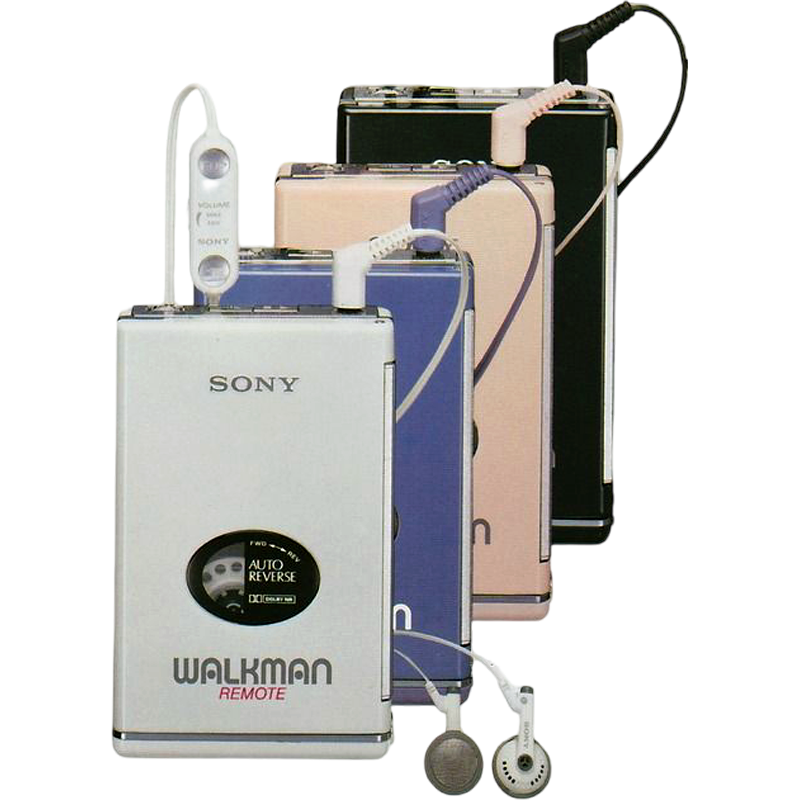
The WM-109 was a compact playback-only Walkman from 1986 and the first Sony model to use a wired remote for basic transport functions away from the main body. The player itself housed auto-reverse and Dolby B in a slim, symmetrical metal body with a small cassette window and very little surface clutter, while the remote connected through a dedicated point in the headphone wiring rather than requiring a large secondary interface. The overall design stayed clean and balanced despite the added convenience. This marked a small but important change in how Sony imagined portable listening in daily life. Instead of adding more sound functions to the body itself, the WM-109 explored what happened when the controls no longer needed to live on the machine at all. It feels like the beginning of a new kind of refinement, less about shrinking the Walkman itself and more about how it behaved once it disappeared into a pocket or bag.
WM-F102
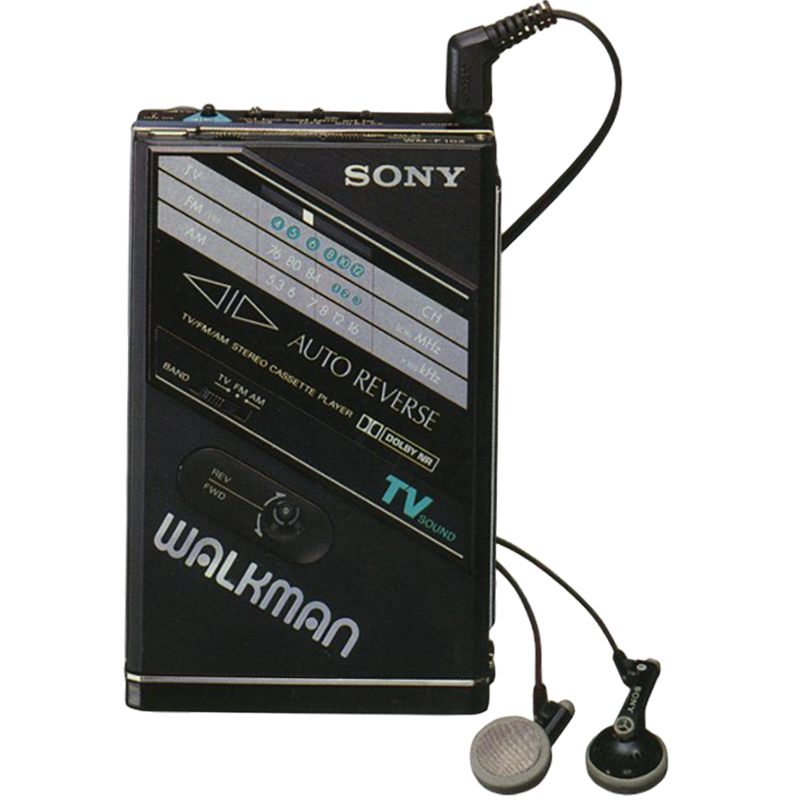
The WM-F102 is the radio-equipped counterpart to Sony's cassette-sized WM-102, fitting FM, AM, and TV audio reception into the same ultra-compact pressed-metal shell. Auto-reverse and Dolby B remain intact, and the radio controls are integrated into the body without significantly increasing the size, while gumstick battery support preserves the same rechargeable slimness as the non-radio version. It is one of Sony's clearest attempts to make a truly pocket-native all-rounder. More than a breakthrough, it proves that the miniature format can absorb more complexity without losing its identity. By the time the F102 arrived, Sony was no longer simply making compact Walkman for the sake of it, but trying to ensure users did not have to choose between portability and usefulness. It helped normalize what a compact radio Walkman could be.
WM-F107
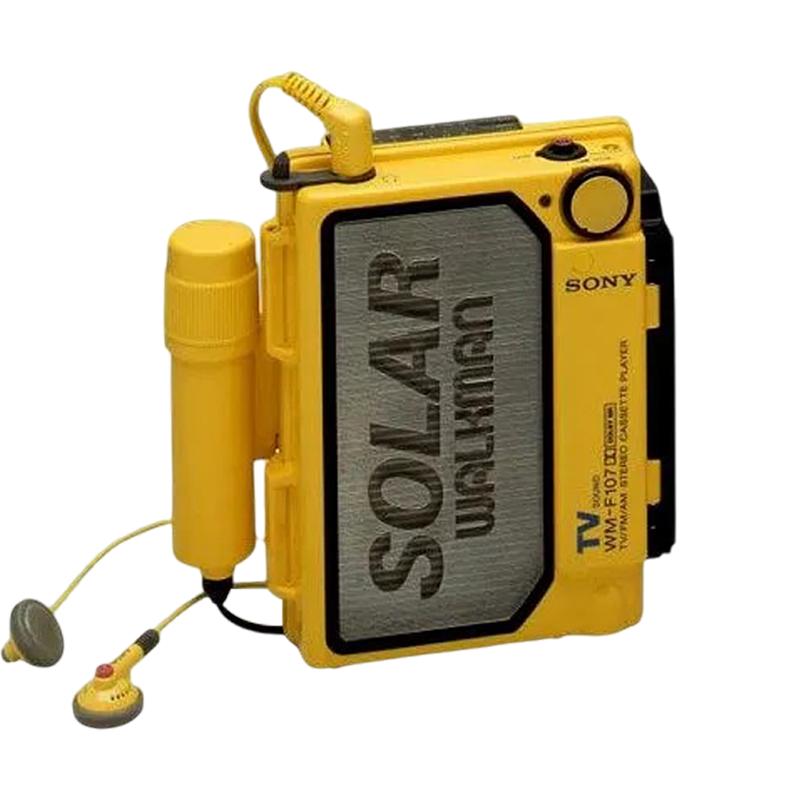
The WM-F107 was a solar-assisted Sports Walkman from 1986, with a large solar panel built into the lid to help charge its internal battery and support the radio and electronic functions in sunlight. The cassette transport still depended on stored battery power, but the sealed weather-resistant body also included auto-reverse, Dolby B, metal-tape support, and full AM/FM reception. Packing all of that into a Sports shell made it one of Sony's densest and most unusual portable designs of the decade. This is a very Sony experiment: practical on paper, slightly eccentric in execution, and impossible to confuse with anything else in the lineup. It shows the Sports branch becoming not only a place for ruggedness, but also for technical experimentation around power and outdoor use. The F107 was never an ordinary mainstream player, but it is exactly the kind of model that makes the Walkman family feel inventive rather than merely iterative.
WM-F202
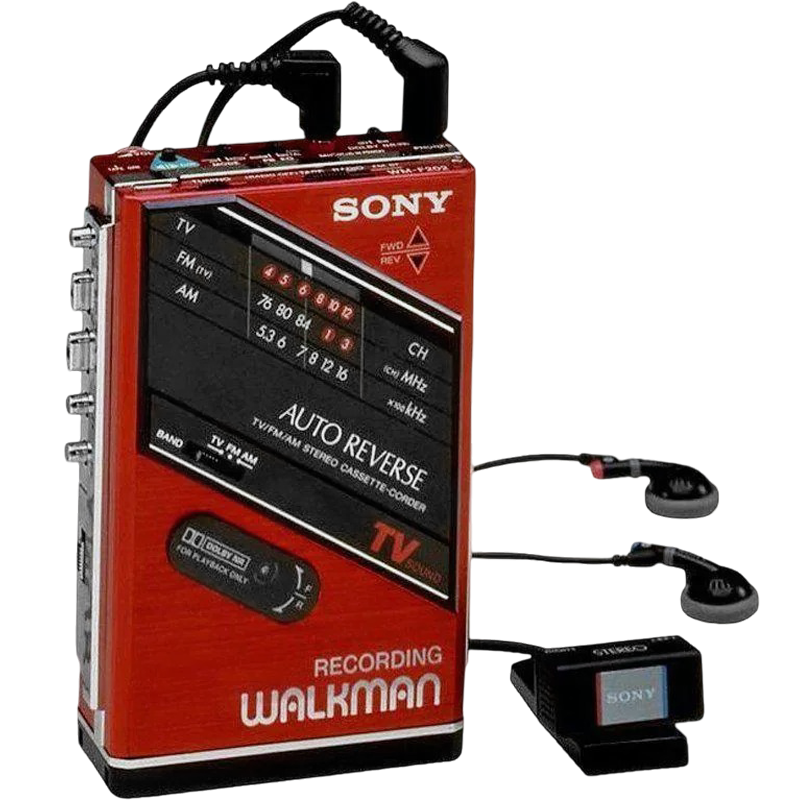
The WM-F202 was a radio cassette Walkman with full stereo recording capability, combining FM, AM, and TV audio reception with playback and recording in one of Sony's smallest portable bodies of the time. Auto-reverse and Dolby B supported both listening and recording, while a one-point plug-in stereo microphone and direct off-air recording gave it more flexibility than most compact playback-only models. Despite all of that, the metal body still stayed close to cassette dimensions and was sold as a fully portable setup with Fontopia headphones. This was one of those highly compressed mid-1980s Sony machines that tried to do almost everything without giving up portability. It makes most sense for users who treated the Walkman as a tool for gathering sound as well as hearing it, whether from broadcasts, quick outside recordings, or everyday tape use. The F202 feels less like a luxury model than a compact little utility object built for people who wanted options.
WM-F57
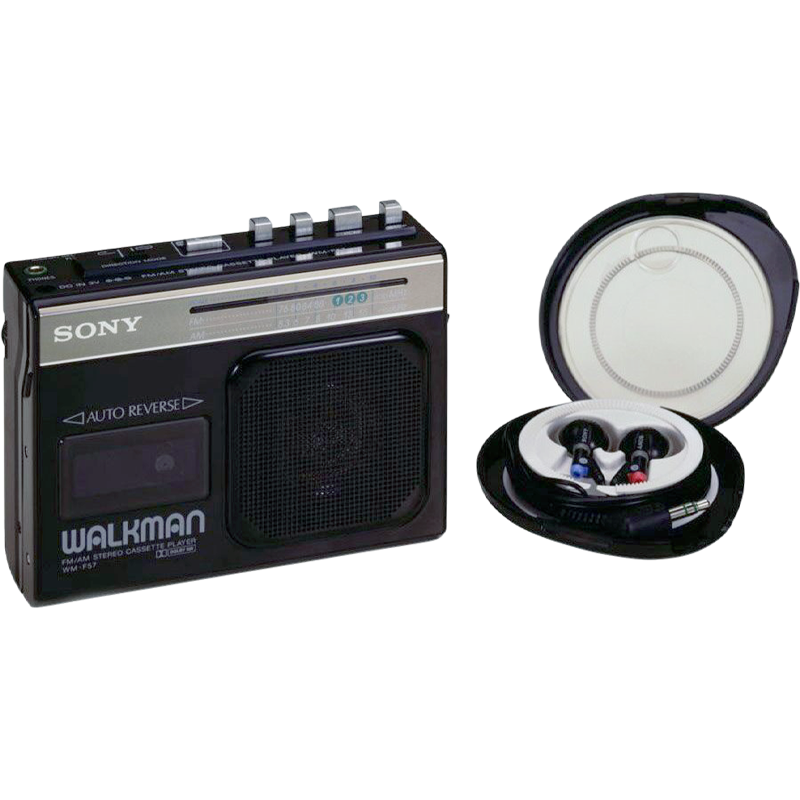
The WM-F57 combined cassette playback with an integrated AM/FM tuner and a small built-in speaker, allowing it to function both as a personal stereo and as a compact portable radio. Auto-reverse made tape playback possible without manually flipping the cassette, while the radio section worked independently from the cassette transport for easy switching between sources. The front-facing speaker and modest amplifier made it usable without headphones in casual settings, all in a body that still stayed reasonably compact. It is the kind of model that shows how elastic the Walkman idea had already become by the mid-1980s. It was no longer only about private listening, but also casual sharing, radio listening, and informal situations where headphones were not always the point. The F57 feels like a convenience-first machine in the broadest sense.
WM-F60
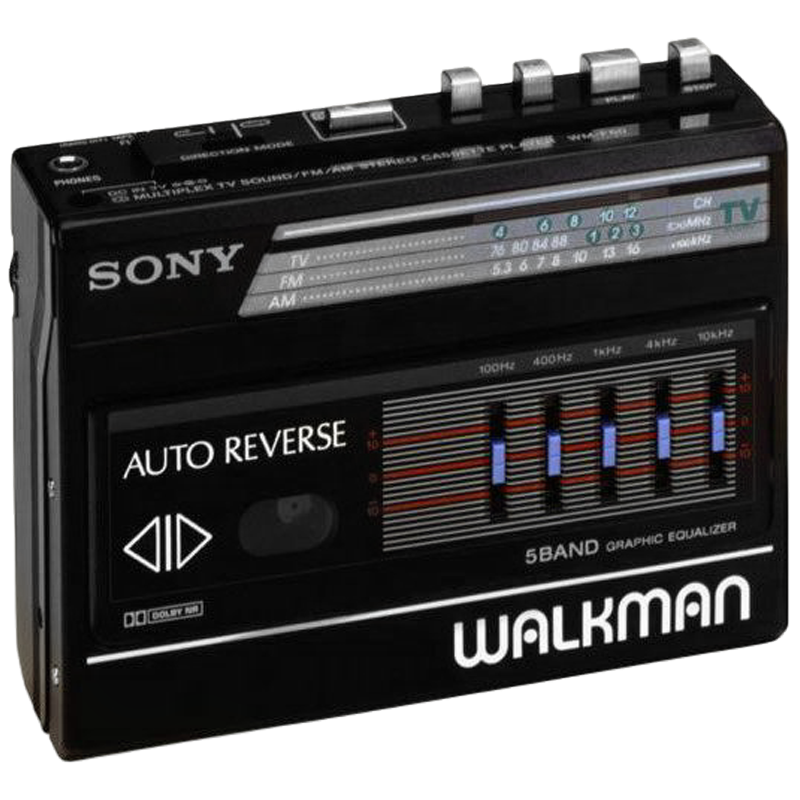
The WM-F60 is a radio-equipped Walkman from 1986 that pairs FM and AM reception with a five-band graphic equalizer, giving users direct control over tone whether listening to tapes or live broadcasts. Auto-reverse and Dolby B remain part of the cassette side, while the compact body integrates the tuner and equalizer controls in a way that keeps them easily accessible during use. It is not especially radical mechanically, but it offers a high level of interaction for a relatively compact player. Where many radio Walkman were built around simple flexibility, the F60 pushes a little further into listener preference and adjustment. It suggests a user who does more than want radio and cassette in the same device, but wants both to sound a certain way depending on where they are and what they are hearing. That makes it feel less like a utility model and closer to a genuinely personalized one.
In 1986, the product line was expanded in terms of both performance and applications. This structure was continued to be applied as a technical improvement in subsequent models.