ObsoleteSony.com
1985
WM-W800
Walkman
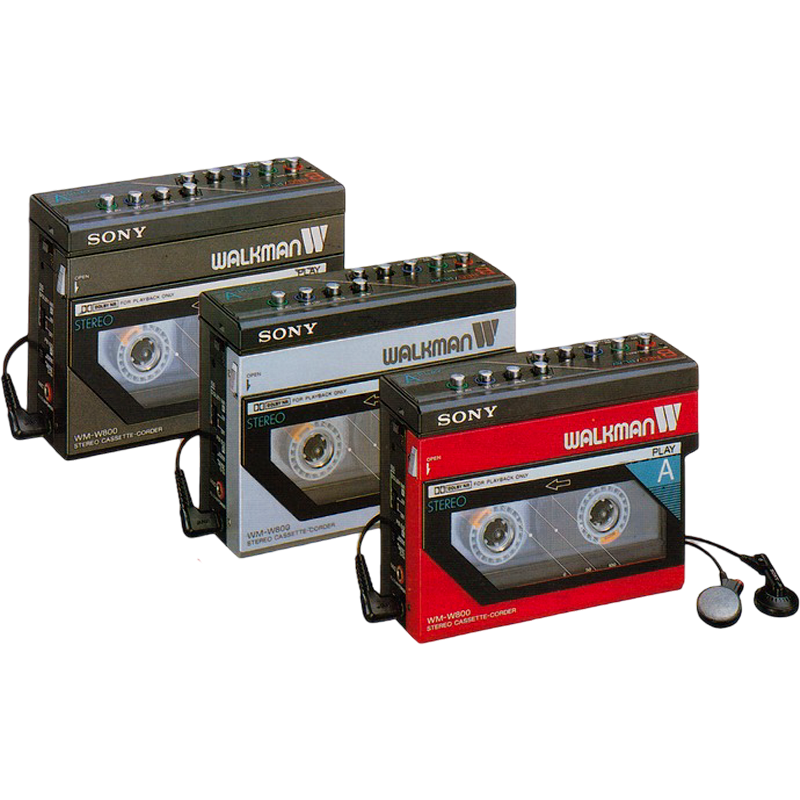
The WM-W800 was Sony's only double-cassette Walkman, nicknamed the Doppler, and used two independent...
obsoletesony.com/walkman/wm-w800

If you find it useful, you can support it. Support the archive


The WM-W800 was Sony's only double-cassette Walkman, nicknamed the Doppler, and used two independent mechanisms mounted back to back in a single portable body to allow direct tape-to-tape duplication without external equipment. One side handled playback while the other recorded, with internal routing circuitry, Dolby B on the playback side, support for normal, chrome, and metal tapes, line input, and a built-in AM/FM radio. Despite its unusual function, it still ran on two AA batteries and stayed compact enough to be carried as one self-contained machine.
This is one of the strangest and most charming branches of the entire Walkman family, because it solved a very specific cassette-era problem in the most literal way possible. For students, mixtape makers, or anyone regularly copying tapes, the W800 removed a whole chain of inconvenience by turning dubbing into something portable and self-contained. It was never going to become a mainstream branch, but it shows Sony at its most inventive and willing to indulge a niche use case.
Portable cassette design had reached a stage where most needs were already covered, from compact playback units to professional recorders. What remained missing was a way to duplicate tapes outside the home. The WM-W800 addressed that gap by combining two transports in a single portable enclosure, giving listeners a way to record and dub cassettes without relying on a full-size deck.
The internal layout used an asymmetric structure. The primary transport handled playback and recording with Dolby B noise reduction, while the secondary transport played tapes for dubbing through a simpler mechanism. This kept weight and power draw manageable and allowed two motors and full recording circuitry to fit inside a compact plastic shell.
Running both decks placed noticeable strain on the dual AA power supply, and battery life dropped quickly during copying. Although the W800 carried a premium price and sat near the upper tier of the lineup, it filled a narrow role. Mainstream listeners preferred smaller models, and those focused on fidelity gravitated toward professional units.
The W800 found its audience among people who wanted a portable way to make mixes or copy material in the field. It arrived shortly after the legality of home recording had been clarified, and it extended that capability into a pocket-sized format. Production was limited, and no later Walkman used the same two-deck configuration.