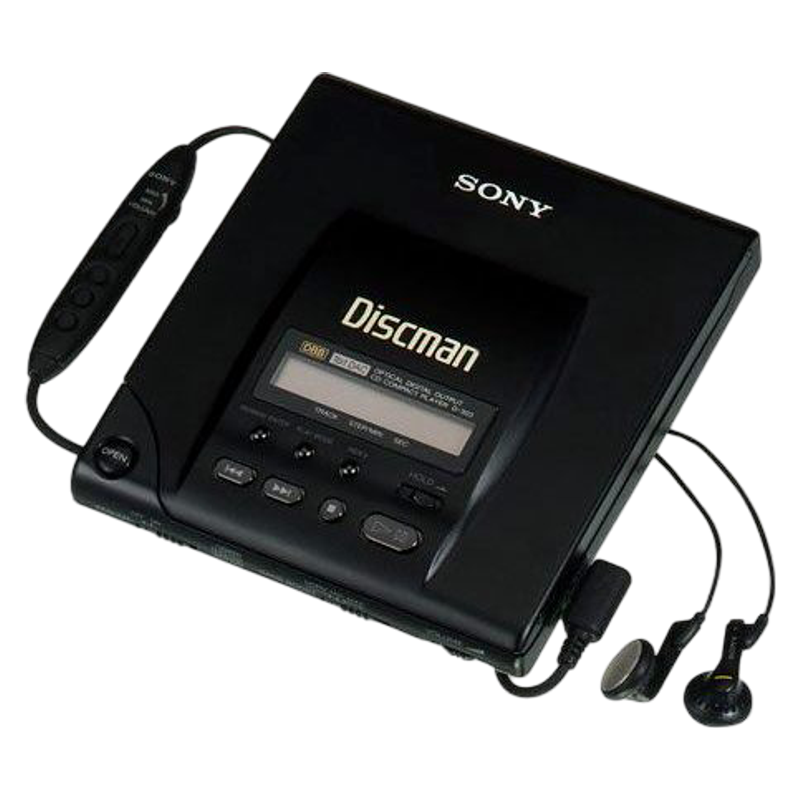
In 1990, efforts were made to miniaturize the casing and improve product quality. The design features a stable structure based on everyday use.
WM-EX60

The WM-EX60 is an early EX-series playback Walkman that brought together many of Sony's now-standard premium-portable features into a slimmer, more family-oriented design language. It uses an EX Amorphous head, auto-reverse, Dolby B noise reduction, Extended Dynamic Bass Boost, automatic tape-type selection, and logic-controlled transport functions, all wrapped in a compact metal-framed body with a tape window. Its cord-mounted disc-shaped "Joyful" remote gave it a more playful and contemporary interaction style than the plainer players surrounding it. This is part of the models where the EX family starts to feel like a true design program instead of just a collection of individual machines. Sony was standardizing a certain kind of late Walkman experience here: slim body, remote-first use, rechargeable flexibility, and enough sound polish to feel modern without drifting into audiophile territory. The EX60 is a player built for the new default behavior of portable listening.
WM-600
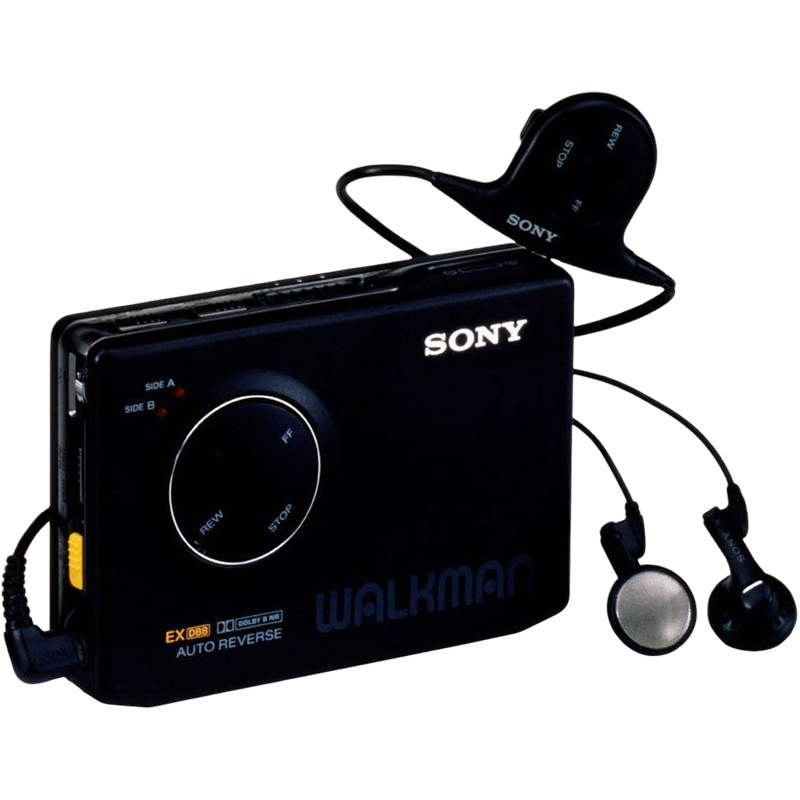
The WM-600 is a compact playback Walkman that gathered together a number of late-1980s conveniences into a straightforward everyday machine, combining auto-reverse, Dolby B noise reduction, Extended Dynamic Bass Boost, and a wired remote with a distinctive circular control pad. LEDs on the main body indicated the active tape side, while the underlying belt-driven transport prioritized low-power reliability over more ambitious engineering flourishes. It was a clean, user-friendly player built around ordinary daily use instead of prestige. This is one of those models where Sony was no longer trying to invent the future, just remove friction from the present. The WM-600 feels designed around routine handling: quick adjustments, easy side tracking, fewer reasons to pull the unit out of a pocket. It makes sense as the kind of Walkman someone would buy not because it was exciting, but because it simply fit into life.
WM-805
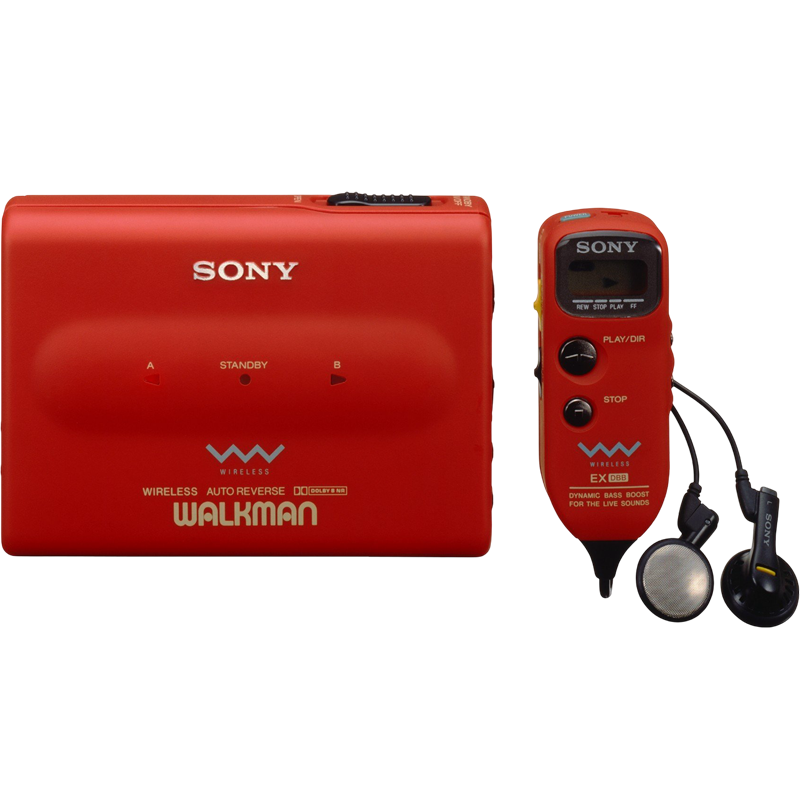
The WM-805 was a more advanced wireless Walkman that pushed the receiver closer to a real control interface rather than a passive listening device. Its separate receiver included an LCD display showing playback status and tape side, while the main unit handled the cassette transport and RF transmission. Sony also added 16 selectable pairing codes to reduce interference from nearby wireless systems, while the player itself retained auto-reverse, Dolby B, Extended Dynamic Bass Boost, and an EX Amorphous Head. What is interesting about the WM-805 is that Sony was clearly learning from the weaknesses of its own earlier experiments. Wireless freedom alone was not enough if the interface felt blind or interference made it unreliable in public. The 805 reads as a more mature attempt to turn the wireless Walkman into something that could survive real commuter use, not just demonstrate a clever concept.
WM-EX70

The WM-EX70 is a slim playback Walkman that shared much of its core platform with the EX60, including auto-reverse, Dolby B, Extended Dynamic Bass Boost, and the EX Amorphous head, but distinguished itself through a more flexible full-function remote arrangement. Instead of fixing the earphones directly to the control cable, Sony separated them through a mini-jack connection, making the remote easier to use with different listening setups while keeping the main unit compact and clean. It was a subtle but meaningful usability upgrade. This is exactly the kind of refinement that starts to define the early 1990s Walkman. Sony was no longer simply miniaturizing the player, but refining the ecosystem around it: remotes, connectors, charging habits, and the compact physical rituals of use. The EX70 is a product from a time when the listening experience was increasingly happening one layer away from the machine itself.
WM-EX85

The WM-EX85 is a slim playback Walkman built around the same late-period EX-series formula as the radio-equipped FX85, combining auto-reverse, Dolby B, Extended Dynamic Bass Boost, and an EX Amorphous head in a compact portable body. What distinguished it most was not the transport but the includes international quick charger, which supports 100-to-240-volt operation without manual switching and comes with plug conversion support for travel. A split-earphone remote kept control accessible while keeping the player's compact footprint. This model makes sense once Sony had started thinking about the Walkman more than as a domestic commuter object, but as something users might actually live with across borders. The EX85 is less about feature escalation than about removing one very practical source of friction for frequent travelers. That gives it a slightly different kind of usefulness than most of the players around it.
WM-EX90
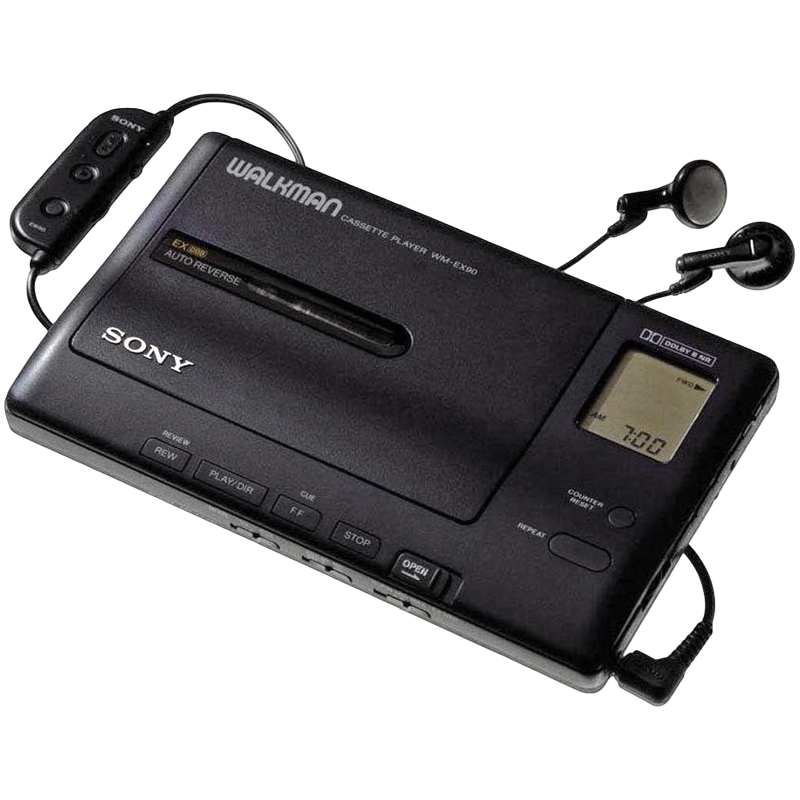
The WM-EX90 is a slim-bodied playback Walkman that stood out within the early EX line for framing portable cassette listening as something more deliberate and controlled instead of purely casual. Alongside auto-reverse, Dolby B, Extended Dynamic Bass Boost, and an EX Amorphous head, it introduced an A-B section repeat function built for language study, dictation, or close repeated listening. Its full-function LCD remote displayed counter, status, clock, and battery information, while an external battery sidecar allowed extended operation through two AA cells. This is part of the more revealing models of the year because it shows Sony imagining the Walkman as something other than just a music companion. The EX90 was clearly aimed at users who wanted repetition, precision, and a little more command over what the tape was doing, whether for study or careful listening. It is less of a lifestyle machine and closer to a portable tool that still happened to look elegant.
By 1990, the product had been established as a mature portable device. At the same time, competition with new technologies arose.