ObsoleteSony.com
1989
WM-DD9
Walkman
The WM-DD9 was the final and most advanced expression of Sony's Disc Drive Walkman concept, released...
obsoletesony.com/walkman/wm-dd9

If you find it useful, you can support it. Support the archive


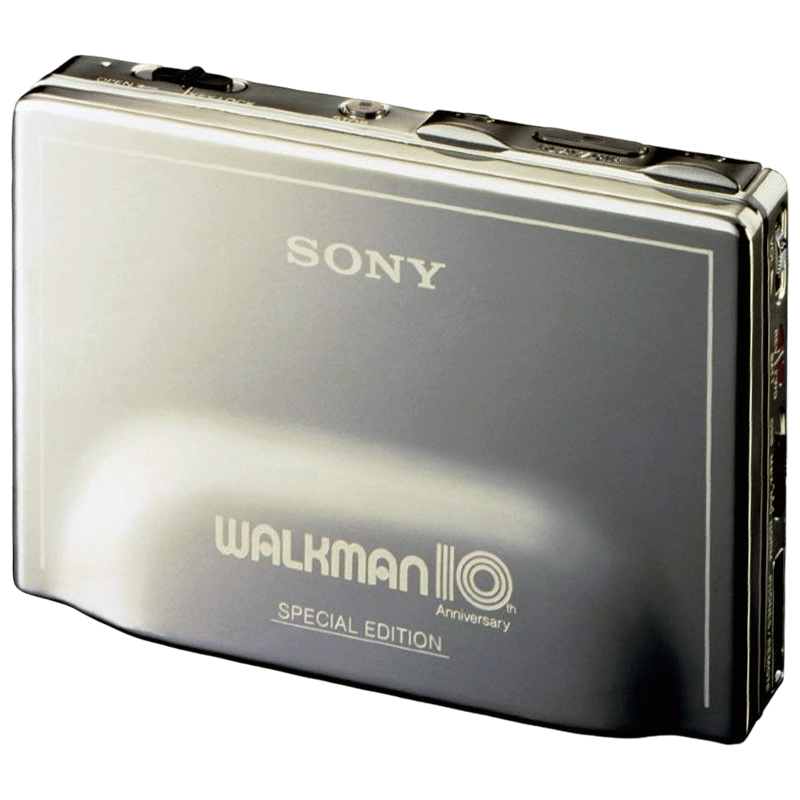
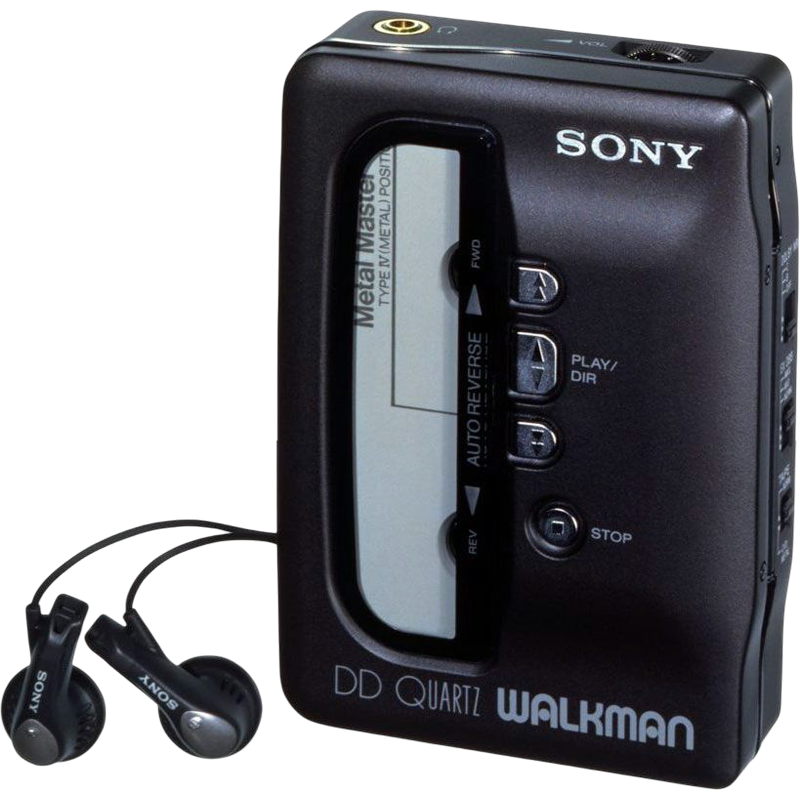
The WM-DD9 was the final and most advanced expression of Sony's Disc Drive Walkman concept, released as a 10th Anniversary model and built around a dual-capstan transport with two separate direct-drive motors to maintain precise tape tension and head alignment without belts. Quartz Lock held playback speed with exceptional accuracy, while Dolby B/C noise reduction, an EX Amorphous Head, Extended Dynamic Bass Boost, and a hybrid AA/gumstick power system treated the signal and power sides with equal seriousness. It was one of the rare Walkmans where the transport itself remained the central attraction.
This model sits at the point where Sony was extracting the last serious mechanical performance from the cassette format before digital alternatives began changing the conversation entirely. The DD9 was aimed at listeners who treated portable cassette playback as something worth optimizing rather than merely tolerating. It remains one of the clearest examples of the Walkman as a precision instrument rather than just a portable lifestyle object.
Sony released the WM-DD9 at the end of the eighties as the most advanced model in its direct-drive cassette lineup. Among collectors it later earned the nickname "the King" for its place at the top of Sony's analog Walkman range. The goal was clear: bring the tape stability of a small home deck into a portable enclosure.
The design expanded the DD concept with two motors, one for each capstan, so direction changes occurred without hesitation. This dual direct-drive system handled direction changes smoothly and made the DD9 the only auto-reverse Walkman built this way. For a unit only slightly larger than a cassette, the transport behaved with unusual stability.
The chassis used aluminum alloy for rigidity, and the transport sat inside a machined frame that limited movement. The faceplate kept a clean layout with a window showing the cassette reels, and the amorphous dual-gap head supported strong high-frequency response. Logic-controlled buttons offered a firm feel, and the player included Dolby B, Dolby C, and a basic Mega Bass switch. The headphone jack used a gold-plated contact.
In daily use, the DD9 carried itself like a compact precision deck. Tape handling stayed steady, the mechanism ran quietly, and the behavior reflected the controlled alignment of Sony's higher-tier home equipment. The twin-motor system required extra control circuitry, but the layout stayed compact and preserved the familiar footprint of the DD series.