
In 1983, models designed for specific applications such as sports use were introduced. Due to the diversification of enclosure shapes and functional configurations, application-specific design has begun.
WM-10
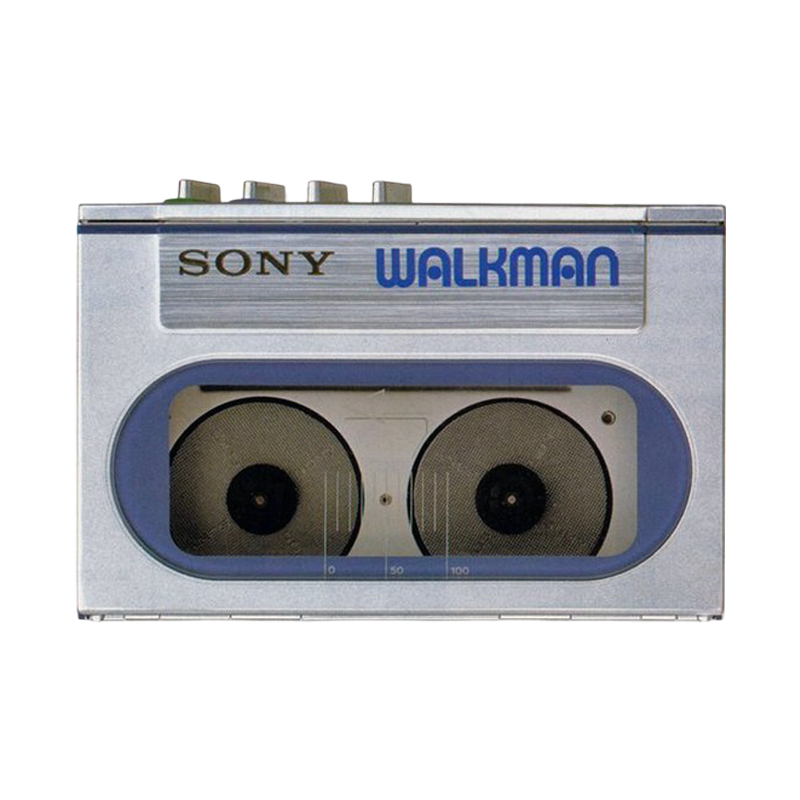
The WM-10 was one of the most technically ambitious early Walkman models and the one that pushed Sony's miniaturization efforts into genuinely radical territory. Released in 1983, it used a collapsible metal body that expanded for playback and contracted for storage, allowing the player to shrink to only slightly larger than the cassette itself when closed. To make that possible, Sony used a flat motor, tightly integrated internal packaging, a flexible rolled circuit board, Dolby B noise reduction, and a single-AA power system boosted through a DC-DC converter. Despite its tiny scale, it still supported multiple tape types and full playback operation. The WM-10 mattered not only because it was smaller than what came before, but because it solved portability in a structurally different way. This is one of the clearest moments where the Walkman became a real engineering statement instead of just a consumer electronics success. It is one of the points where miniaturization itself became part of the mythology.
WM-20
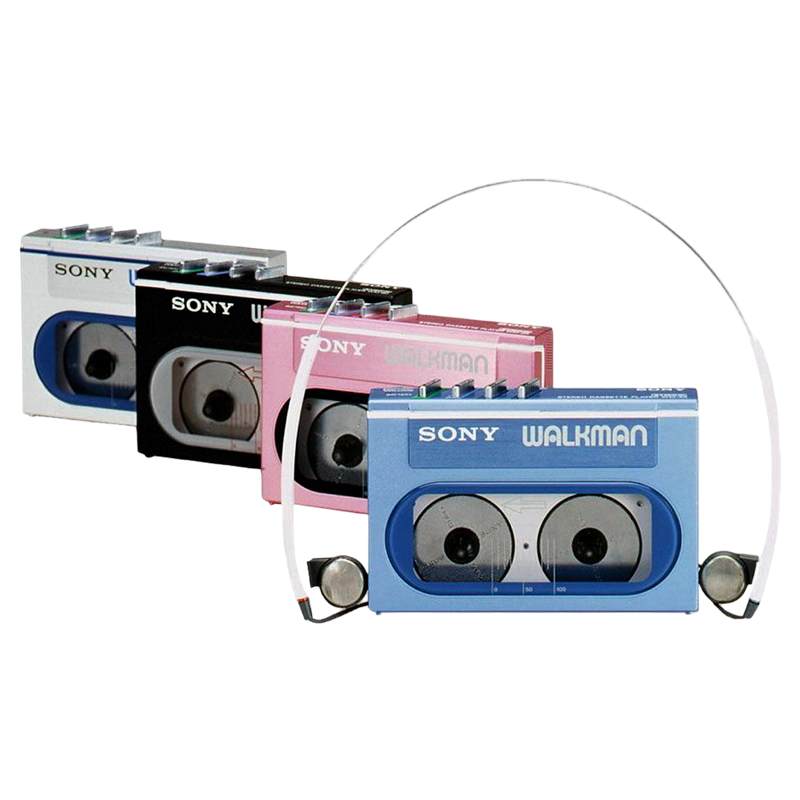
The WM-20 was an ultra-compact playback Walkman released in 1983 around a sliding, expandable mechanism that kept its closed size close to that of a cassette case. The battery compartment, head assembly, pinch roller, and headphone jack all moved together as part of the sliding structure, letting the body stay unusually small without giving up compatibility with full-size cassettes. A clear rounded window exposed the cassette inside, while diagonal transport keys and a manual tape selector supported normal, chrome, and metal tapes. Sony was pushing miniaturization from simply small enough into something more deliberate and theatrical. The WM-20 was aimed at people who wanted a player that felt genuinely pocketable by home-audio standards, not merely portable. It is one of those models where the mechanism itself became part of the appeal, not just the sound coming out of it.
WM-F20
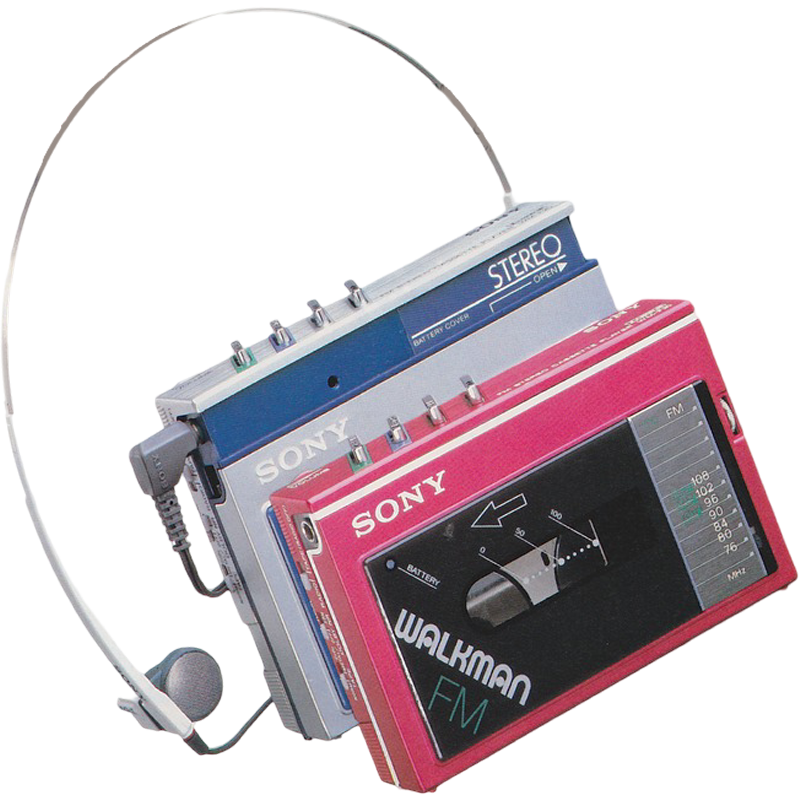
The WM-F20 was a compact expandable radio Walkman introduced in 1983, closely following the sliding cassette-case design of the WM-20 while adding FM and TV audio bands through an integrated tuner section. The expandable body kept the player unusually compact when closed, while reinforced hinges and a slide mechanism were adapted to support the added radio hardware. Users could switch between tape and broadcast listening without needing a second device, extending the appeal of the format without fundamentally changing how it worked. It was less a headline model than an intelligent extension of an idea Sony already knew had appeal. Once the expandable format had proven itself, it made sense to carry it into the radio-equipped side of the range for users who wanted the same practical pocketability without giving up broadcast listening. Models like this are a useful reminder that much of the Walkman story was built not only on breakthroughs, but on careful, logical variations.
WM-F5
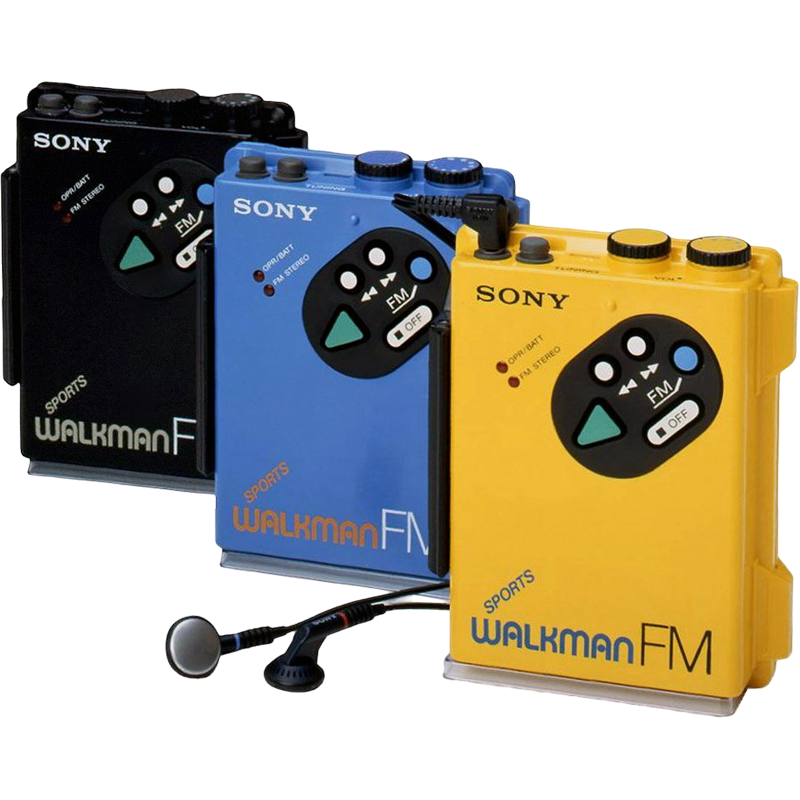
The WM-F5 was the first Sports Walkman, launched in 1983 with a rugged yellow body built to withstand shocks, splashes, and rougher outdoor use than Sony's standard cassette players. Its reinforced plastic shell used sealed joints and rubberized controls, while inside the Disc Drive transport was paired with an integrated FM tuner activated by a dedicated switch. The overall design prioritized stability and durability without abandoning the core cassette-listening experience. It marked the moment when the Walkman stopped being imagined only for commuters or students and began to be positioned for movement, weather, and activity. Sony was clearly responding to the growing outdoor and fitness culture of the early 1980s, but did so in a way that still felt distinctly like a Walkman rather than generic sports equipment. The F5 ultimately defined an entire sub-identity inside the brand.
In 1983, there was a shift from single products to product groups. This structure was subsequently applied as part of later segmented design.