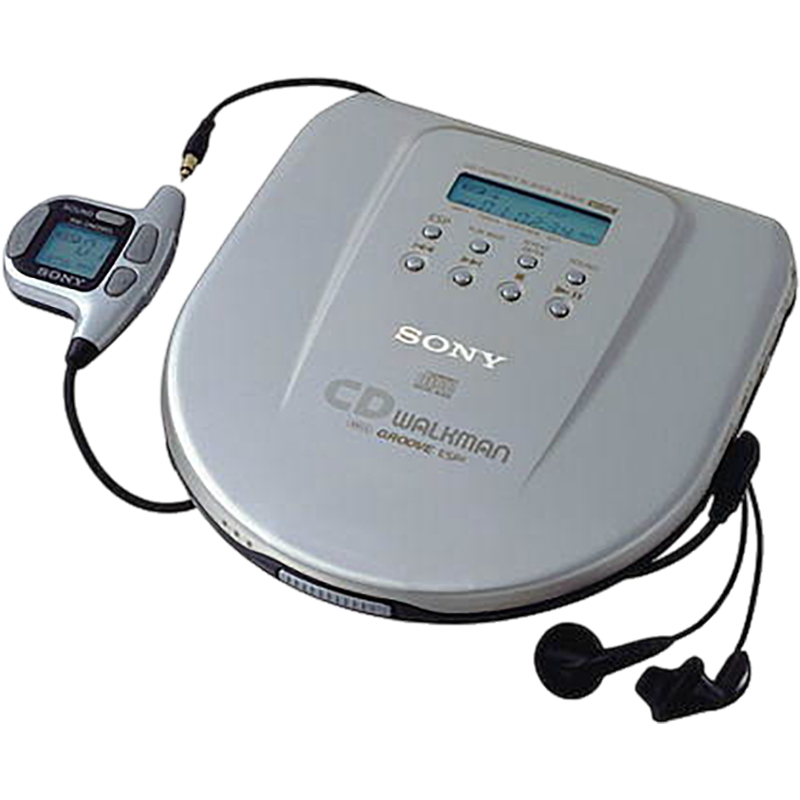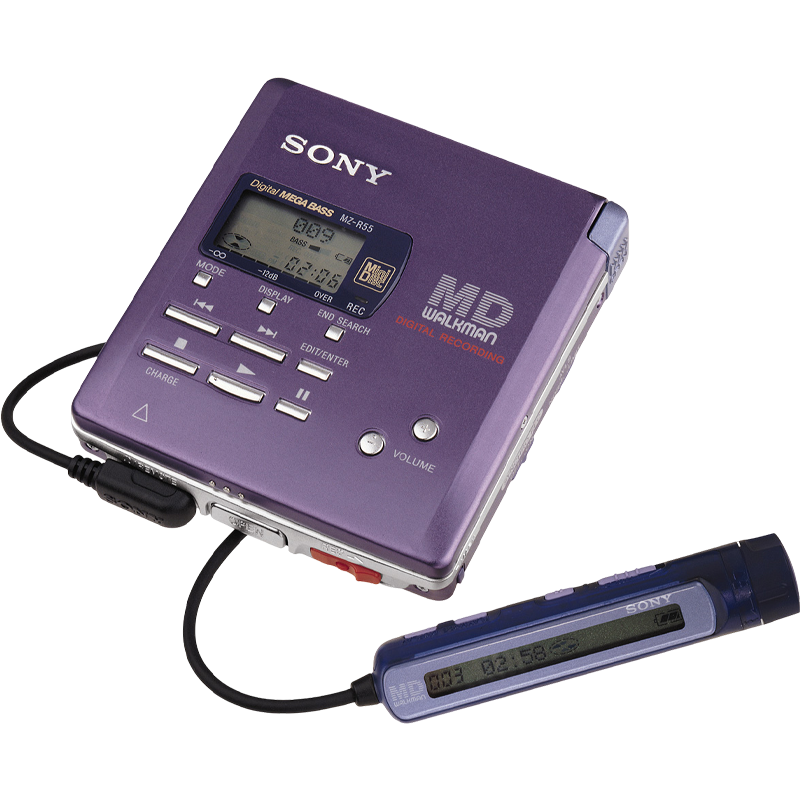
In 1998, Sony leaned harder into activity alignment and stylistic variety to keep the analog models culturally current. The lineup maximized its remaining strengths in a market already tilting toward file-based players.
WM-EQ5

The WM-EQ5 is the only true special edition in Sony's Beans series, taking the already unconventional bean-shaped cassette Walkman and pushing it further into collectible territory. Its translucent "Metal Taste" shell kept the series' exposed internal look intact while giving the plastic body a more stylized metallic feel, and the bundled earphones glowed in the dark for added novelty. The underlying machine remained simple, with auto-reverse playback, a manual tape selector, automatic volume limiting, and two-AA power inside the same rounded skeleton chassis. This is one of those late Walkman where the object itself is clearly doing more of the work than the mechanism. Sony was not trying to evolve the Beans line technically so much as keep it visually alive and culturally interesting. The EQ5 is less of a new player and closer to a designed variation meant to be noticed, collected, and carries.
WM-EX9
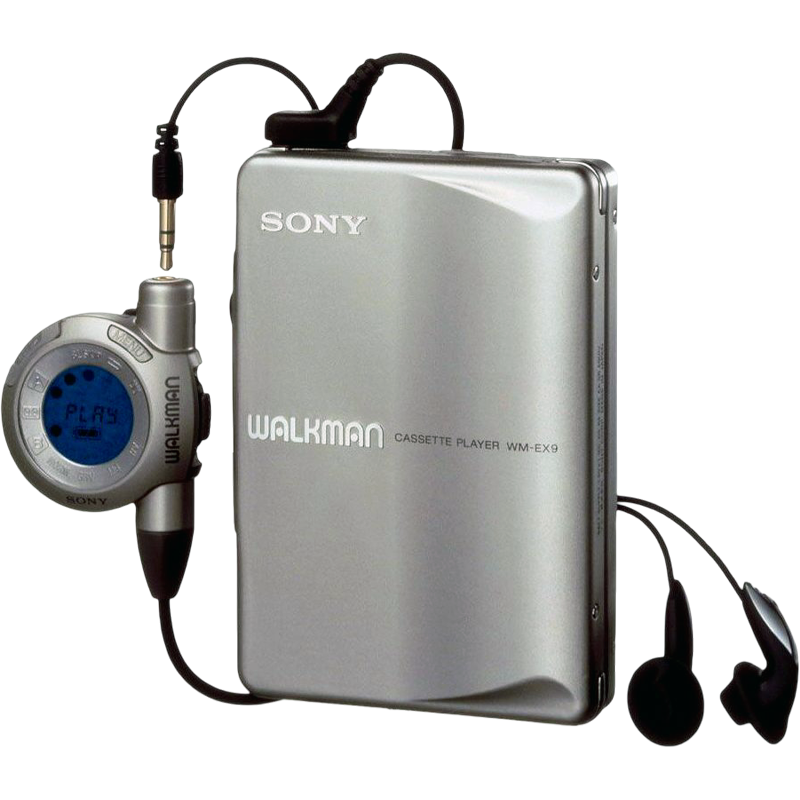
The WM-EX9 was Sony's final top-class analog playback Walkman in the EX line and one of its clearest late attempts to make cassette portability feel as elegant and self-contained as possible. Built in Japan, it used an ultra-thin body less than two centimeters thick and relied heavily on the included remote for operation, leaving very few visible controls on the main unit itself. Auto-reverse, Dolby B noise reduction, Extended Dynamic Bass Boost, automatic music sensor, and extremely long battery life were all present, with some versions using a color-shifting finish that changed appearance depending on light and angle. This is one of those models where the cassette Walkman seems fully aware of its own lateness. Sony was no longer trying to reinvent the format here, but to compress its most polished habits into one final, elegant object. The EX9 matters because it feels like an endpoint: a player designed for people who still wanted cassette in its purest portable form.
WM-EX677
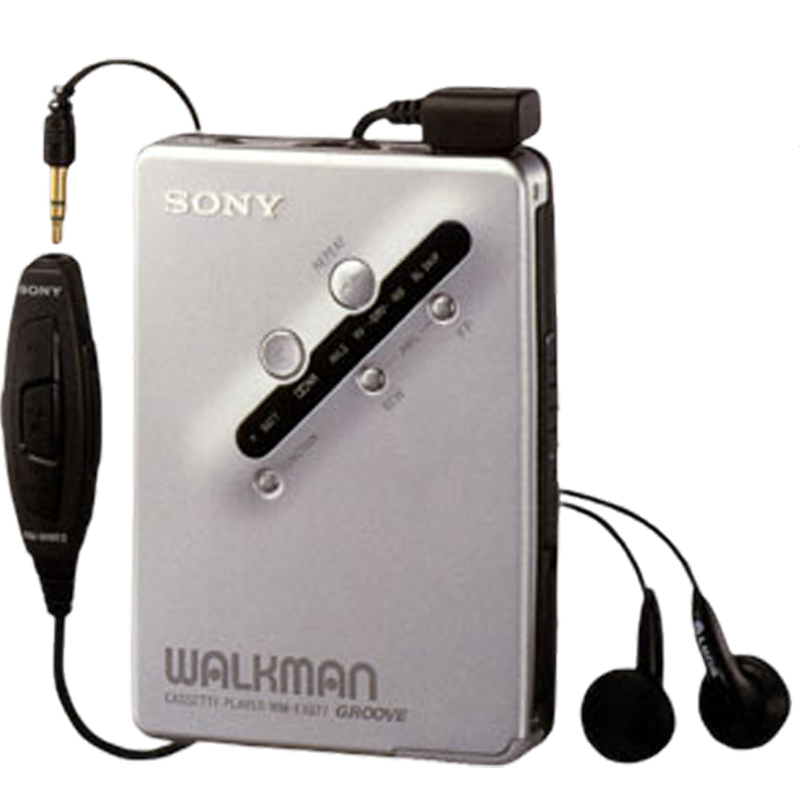
The WM-EX677 is a higher-end Japanese-market EX-series playback Walkman that sat just below the EX9 and offers a more traditional late-period premium cassette experience. Its slim body combined metal and plastic construction with an external battery compartment, while auto-reverse, Dolby B noise reduction, Mega Bass, AVLS, anti-rolling stability, hold lock, and logic-controlled transport all helped keep it aligned with Sony's more mature commuter-era players. The overall package was clearly built to feel refined without becoming experimental. What makes the EX677 interesting is that it shows Sony still maintaining a serious domestic playback tier beneath the headline models. Not every late premium Walkman needed a mirror finish, metadata gimmick, or anniversary mechanism. The EX677 is a clean, very Japanese version of what a mature cassette player had become by the end.
1998 represented Sony’s last major analog push to keep the Walkman relevant. The intensified lifestyle focus smoothed the transition into the first file-based experiments under the Walkman name. 1998 left the category having extracted every possible cultural value from its analog roots, yet the effort itself revealed how much ground had already shifted.