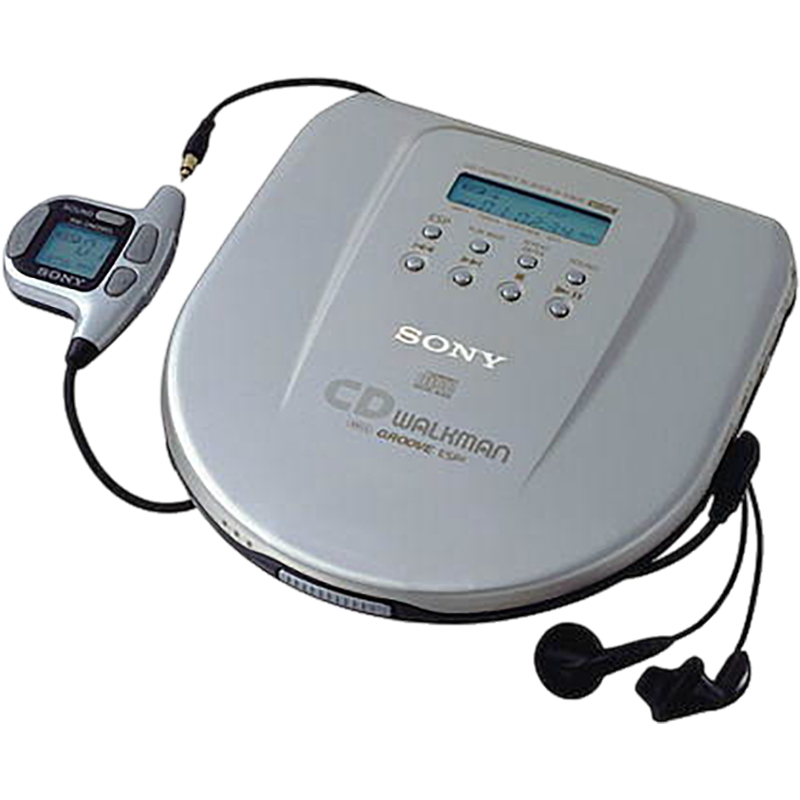
In 1998, Sony enhanced its design to improve operability and portability. The equipment has been miniaturized and designed to accommodate operating speed and ease of use.
MZ-R35
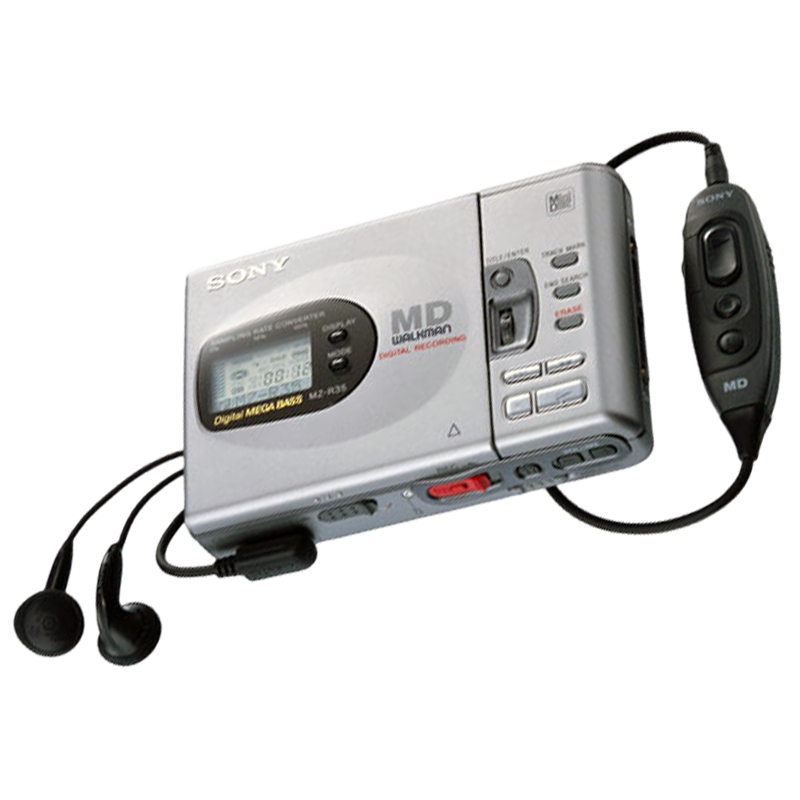
The MZ-R35 continues the MZ-R30 platform with minimal changes to the underlying system. Optical and analog recording share a single input, with a sampling rate converter supporting digital recording from multiple formats. Control remains centered around a vertical jog dial used for editing, titling, and navigation. Manual and automatic recording level adjustment are still available, along with standard editing functions such as divide, combine, move, and erase. Updates are limited to firmware revision and minor exterior changes.
MZ-R55
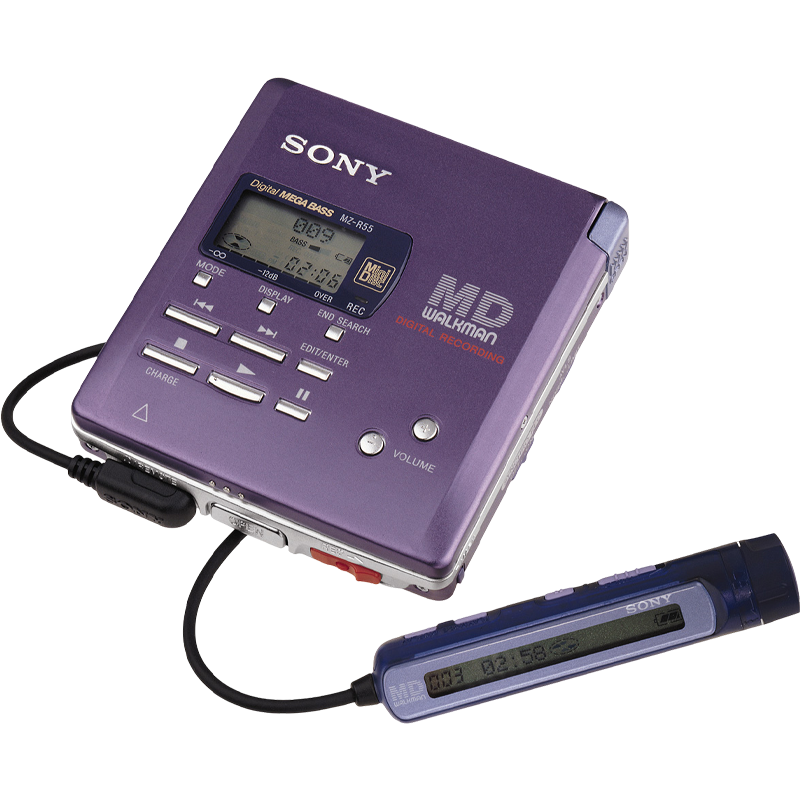
The MZ-R55 is a MiniDisc recorder that maintains the basic configuration of a recording device while achieving miniaturization and power saving. Optical and analog recording use a common input, and it also supports voice recording via a dedicated microphone input. The miniaturized chassis and low power consumption design improve efficiency while maintaining functionality, and playback stability is ensured by an anti-skip buffer. A backlit remote control supports title input, editing, and playback operations. It uses a gum-type rechargeable battery and is designed with portability in mind.
MZ-E33
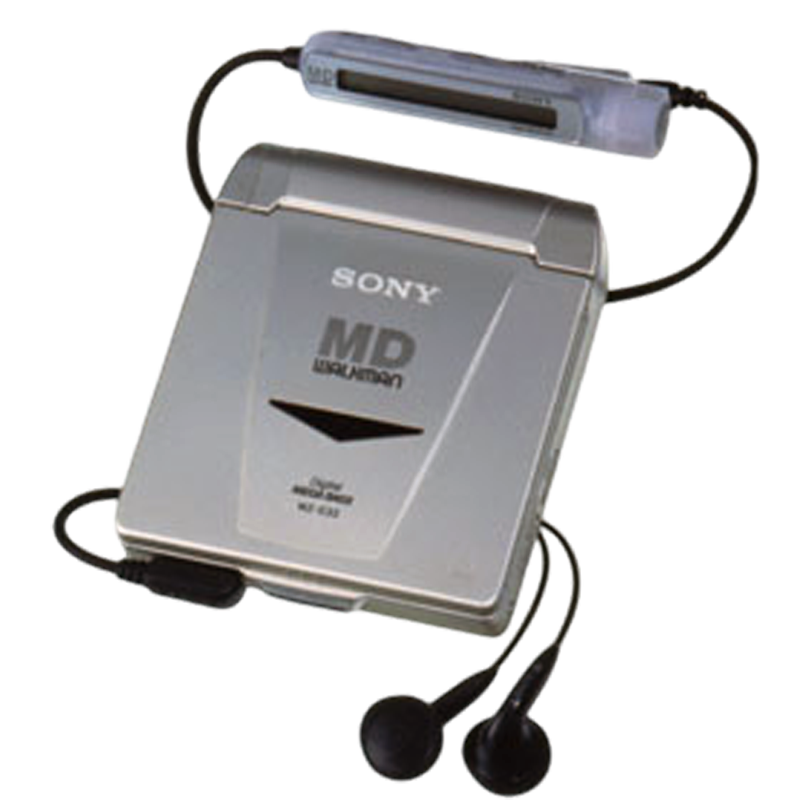
The MZ-E33 emphasizes flexible power over advanced playback features. It supports both standard gumstick batteries and a rechargeable AA-format cell, allowing operation without an external battery attachment. Controls are placed on the rear surface, and a simple remote provides track information and navigation without backlighting. Shock protection relies on a short buffer, and playback remains straightforward with no expanded sound processing.
MZ-E44
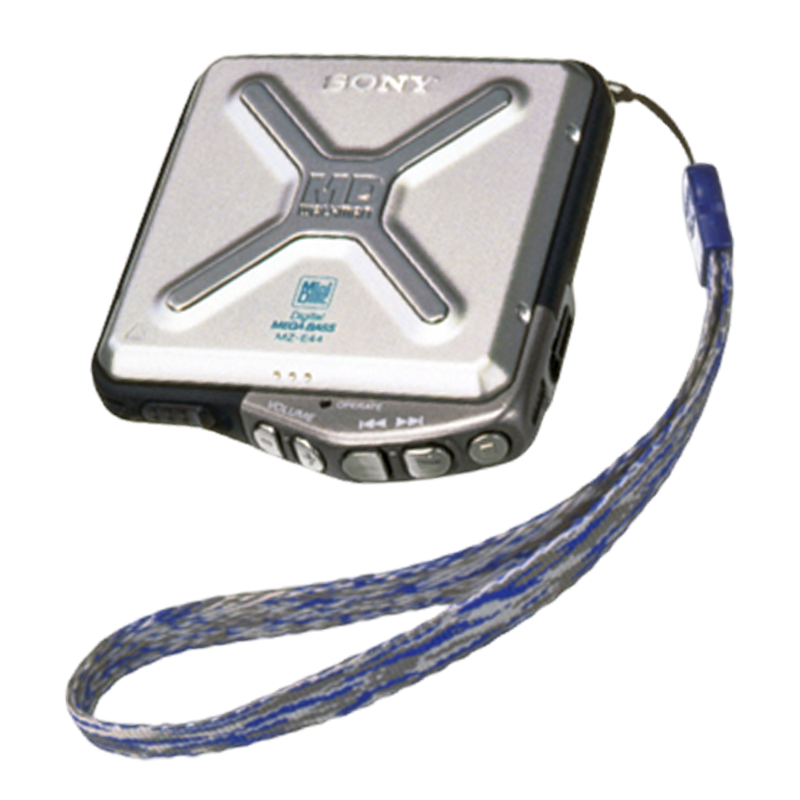
The MZ-E44 was a MiniDisc player that prioritized a balance between portability and ease of use. It featured a curved control surface and buttons positioned along the body's contours, resulting in a user-friendly interface even while holding the device. Playback functions were standard, including basic anti-skip features. The backlit remote control displayed track information and supported various operations. Power was primarily supplied by a gum-type rechargeable battery, and AA batteries were also supported when using the external case.
MZ-E55
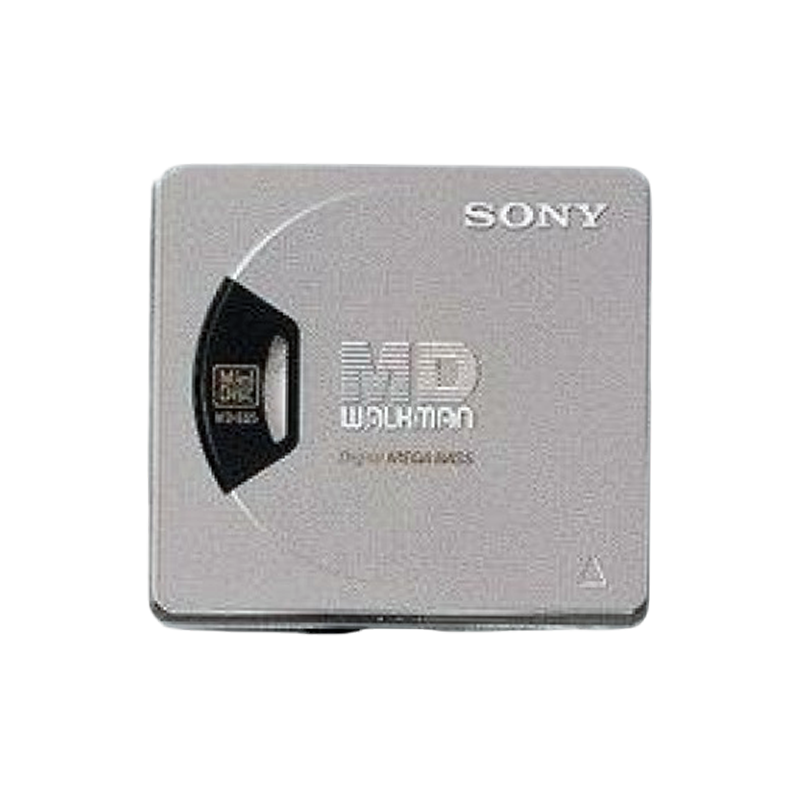
The MZ-E55 pushes the E-series toward smaller size and improved structural design. Its magnesium body reduces both weight and overall dimensions compared to earlier models, marking a clear step toward miniaturization. Shock protection is expanded through a larger buffer, improving playback stability. A backlit remote handles control and display. Power comes from a gumstick battery with optional AA support, and the internal system is refined for improved efficiency.
MZ-E45

The MZ-E45 builds on the same ergonomic platform with compact refinements to everyday use. Shock protection remains limited, and playback behavior stays close to its companion models. Sound adjustment is handled through basic presets, and standard playback features remain in place. Power continues to rely on a gumstick battery with optional AA expansion. Differences appear mainly in color and finish instead of underlying function.
By 1998, MiniDisc had achieved a stable structure suitable for everyday use. This structure was subsequently applied to subsequent product developments.