1992 WM-EX66
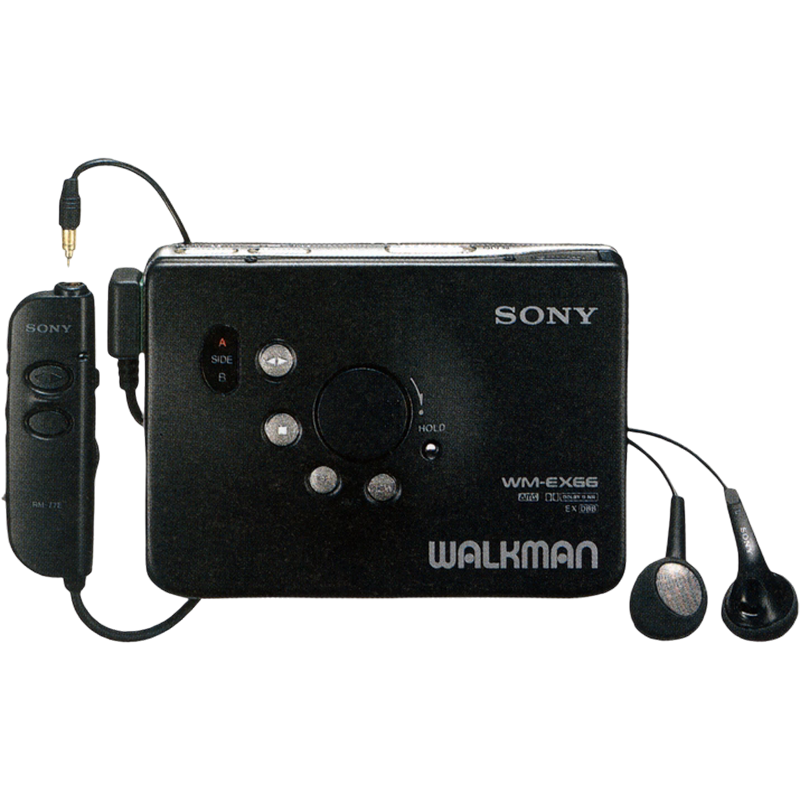
The WM-EX66 is a playback-only Walkman equipped with auto-reverse.

If you find it useful, you can support it. Support the archive
By 1992, Sony was no longer navigating between cassette and compact disc. That balance had already broken. CD had established its direction, and cassette continued to exist through refinement, but neither format fully addressed what Sony saw as the next step in personal audio.
Late in the year, Sony introduced a third path. MiniDisc was not designed as a simple replacement, but as a correction. It combined elements that had previously been separated: the durability and recordability of cassette with the access speed and sound quality associated with digital formats. It was smaller, enclosed, and built with portability as a starting point rather than a constraint.
What defines 1992 is not the immediate impact of MiniDisc, but the shift in thinking behind it. Sony was no longer just improving existing formats or extending them into new uses. It was attempting to reset the direction of personal audio entirely. That ambition would take years to unfold, but by the end of 1992, the company had already introduced the format that would define its next phase.
The WM-EX66 is a playback-only Walkman equipped with auto-reverse.
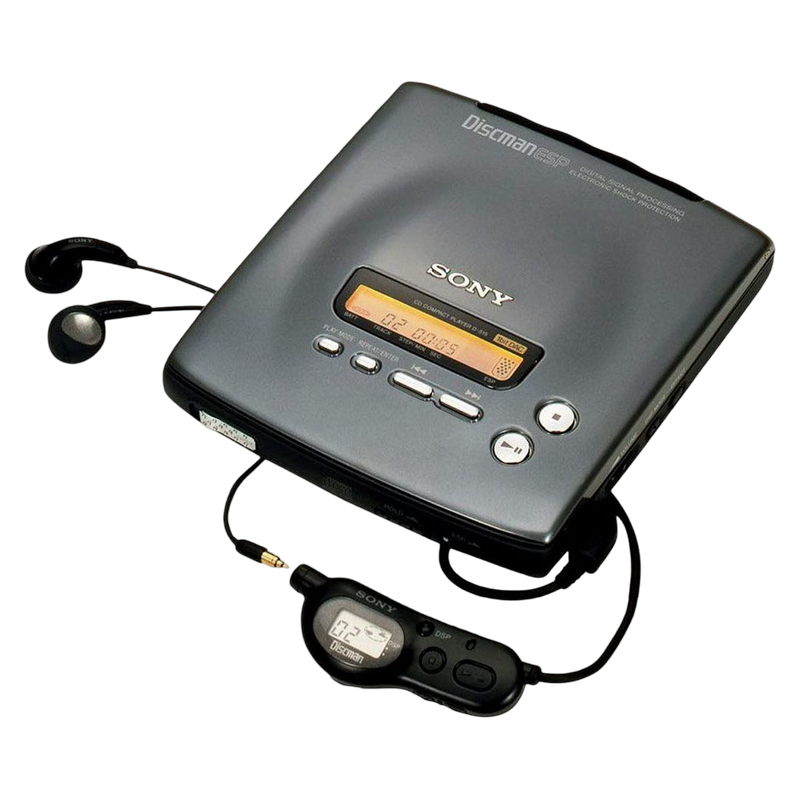
The D-515 is a high-end portable CD player equipped with an electronic anti-skip mechanism.
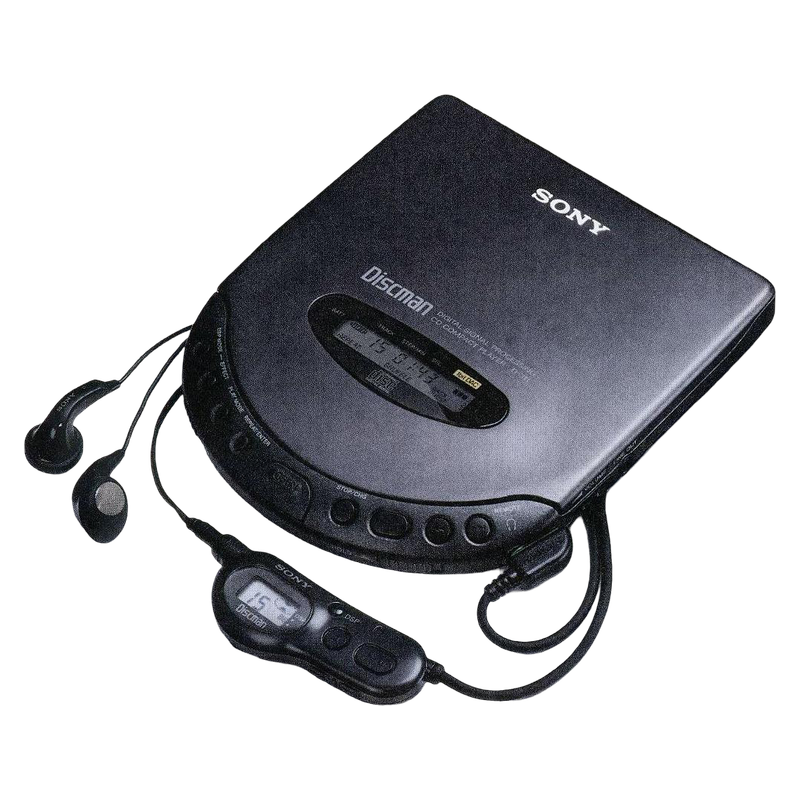
The D-311 is a high-end portable CD player with a high-quality audio output configuration.
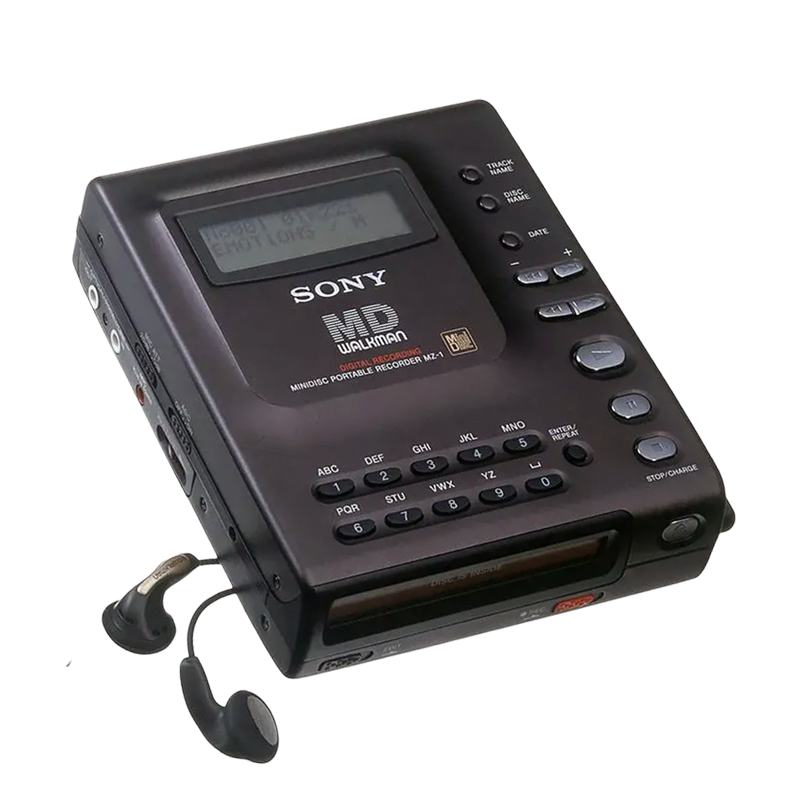
The MZ-1 was the first MiniDisc recorder to adopt random access discs instead of linear tape, significantly changing how recorded audio was handled.
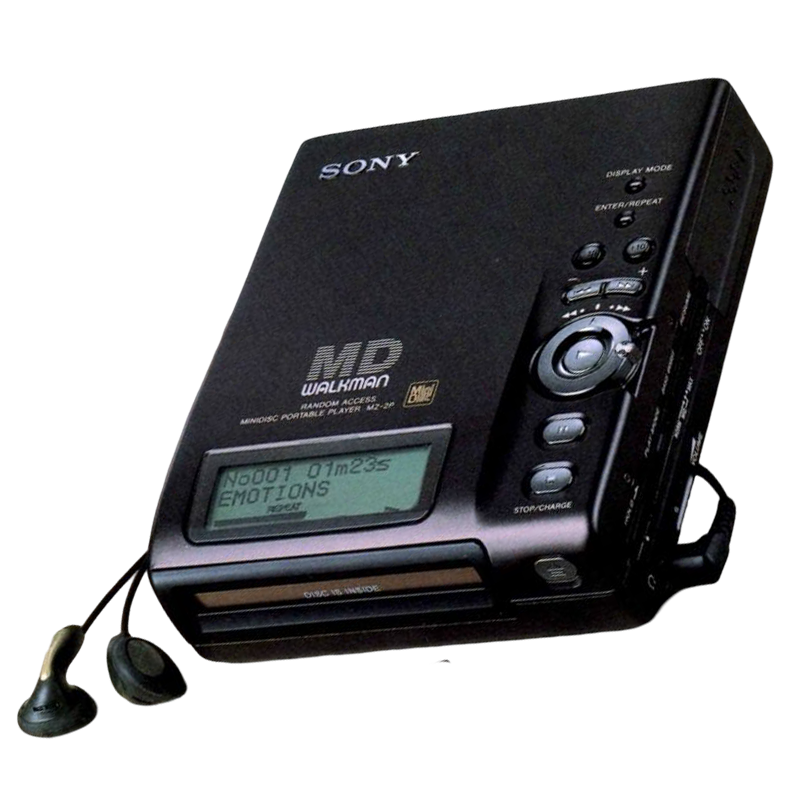
The MZ-2P is a player-only model that positions MiniDisc playback as a standalone device by omitting the recording function.