By 2004, Sony was applying final practical improvements to a category that had already fulfilled its original mission. These models wrapped up the Discman story with competence and very little fanfare.
D-FJ401
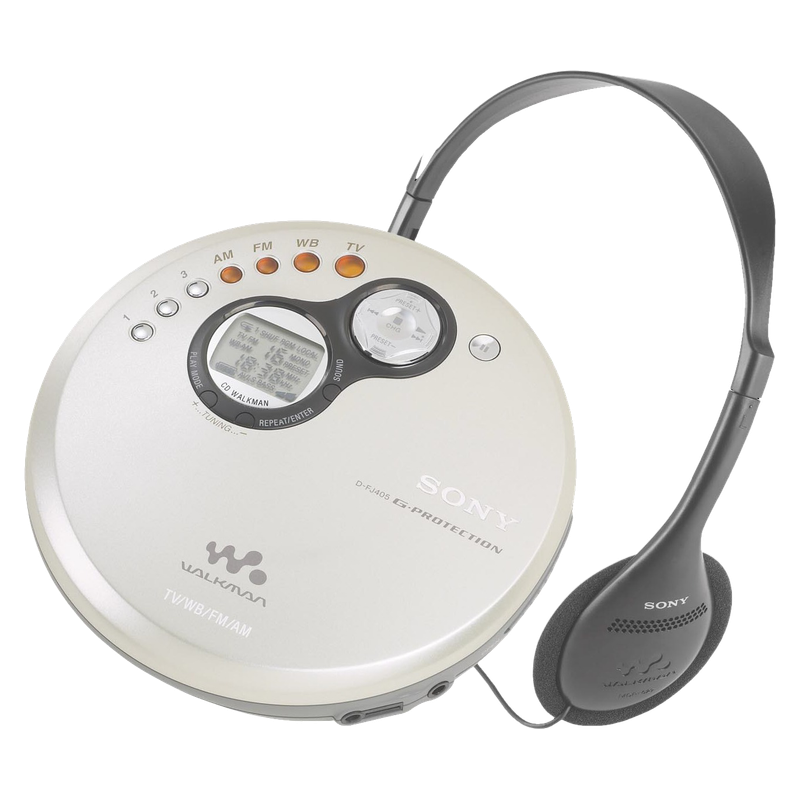
The D-FJ401 is a hybrid portable CD player from 2004 that combined standard playback with built-in radio in a package aimed more at convenience than specialization. It handled pressed CDs and CD-R/RW discs with G-Protection, included a remote, and is often sold with the accessories needed to make it useful immediately. That put it squarely in the everyday end of the lineup. The D-FJ401 is part of the part of the range where simplicity and availability mattered more than refinement once portable CD had settled into a casual, familiar role.
D-NE20
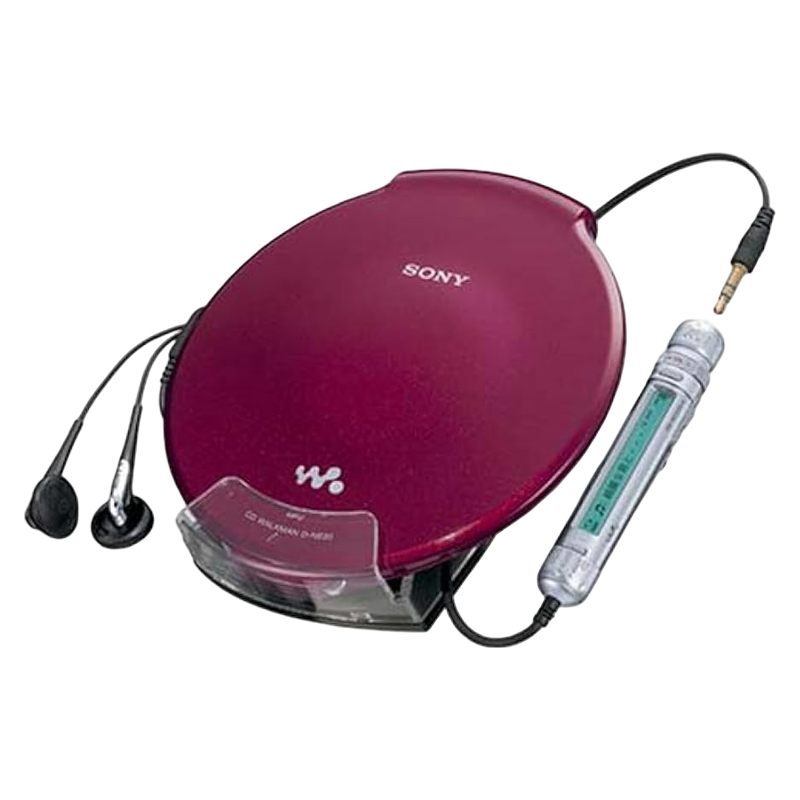
The D-NE20 is a portable CD player that supports ATRAC3plus, ATRAC3, and MP3 playback. It supports playback of compressed audio on CDs and CD-R/RWs and features an electronic anti-skip mechanism using G-Protection. It uses a slim and lightweight chassis designed for power efficiency. It is positioned as a high-end model emphasizing portability and compressed audio playback.
D-NE700
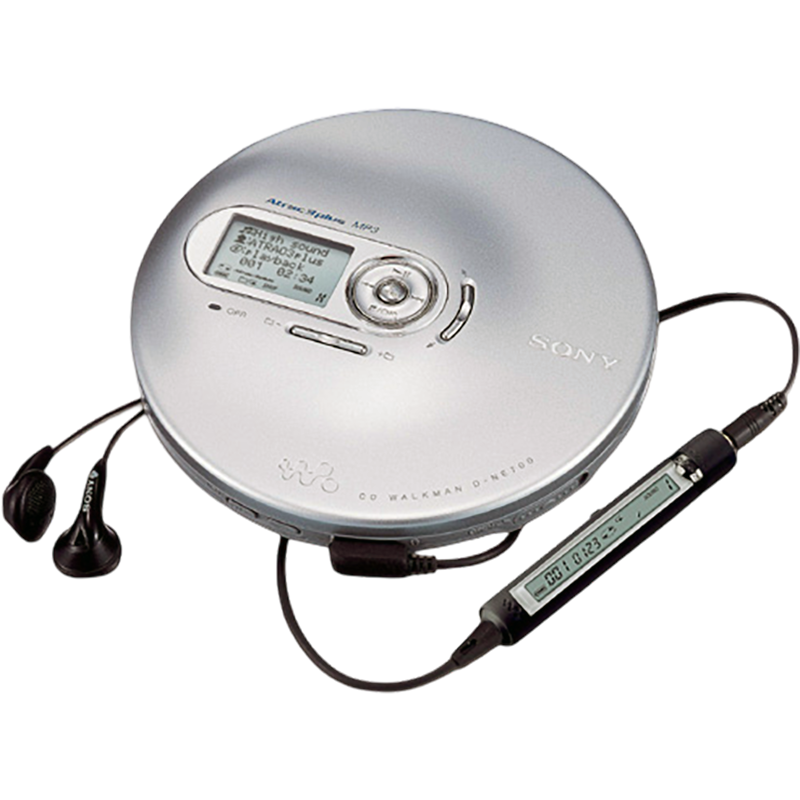
The D-NE700 is a mid-range compressed-disc CD Walkman from 2004 that offered ATRAC3plus, ATRAC3, and MP3 playback in a straightforward AA-powered body with a familiar interface and easy-to-follow controls. It stayed compact and consistent enough for everyday use without adding unnecessary complexity. By then, file-based discs had already stopped feeling advanced. The D-NE700 was part of the stage where large burned libraries had become a normal use case and the machine simply needed to support that reliably without trying to turn it into a statement.
D-NE820
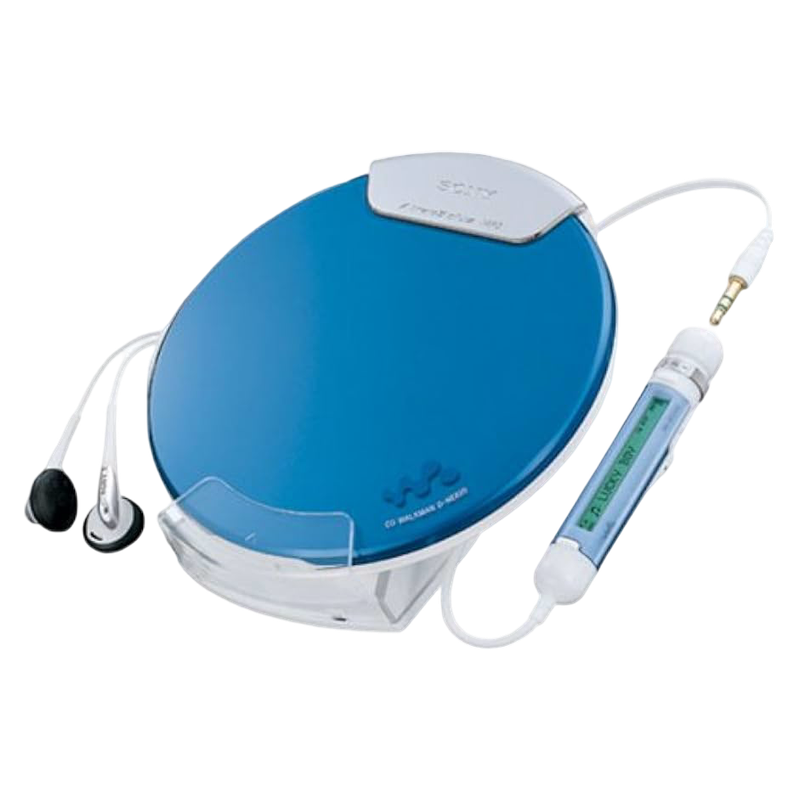
The D-NE820 is an upper-range compressed-audio CD Walkman from 2004 that combined ATRAC3plus, ATRAC3, and MP3 support with a more detailed interface, stronger battery behavior, and a more deliberate overall finish. The parametric EQ, clearer display, and improved navigation gave it a more complete feel than the simpler models around it. This is where the file-capable Discman starts to feel more fully worked through. The D-NE820 is part of the part of the line aimed at users who were actively organizing and living with larger disc-based libraries instead of just dabbling in compressed playback.
D-NE920
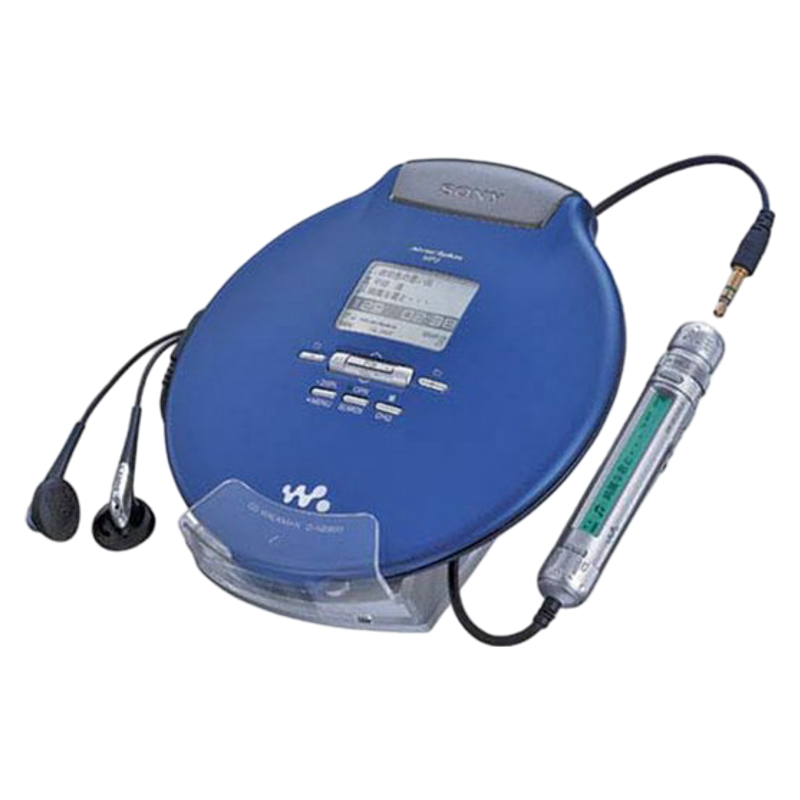
The D-NE920 is a refined compressed-disc CD Walkman from 2004 built around a slimmer body, more polished display behavior, and a more cohesive overall experience while supporting ATRAC3plus, ATRAC3, and MP3 playback with detailed navigation and stable G-Protection. It kept the player practical for regular movement without needing a dramatic redesign. By this point, most of the major pieces were already in place. The D-NE920 was part of the mature stage where the line was no longer trying to introduce the idea so much as smooth out how it felt to use every day.
D-NF600
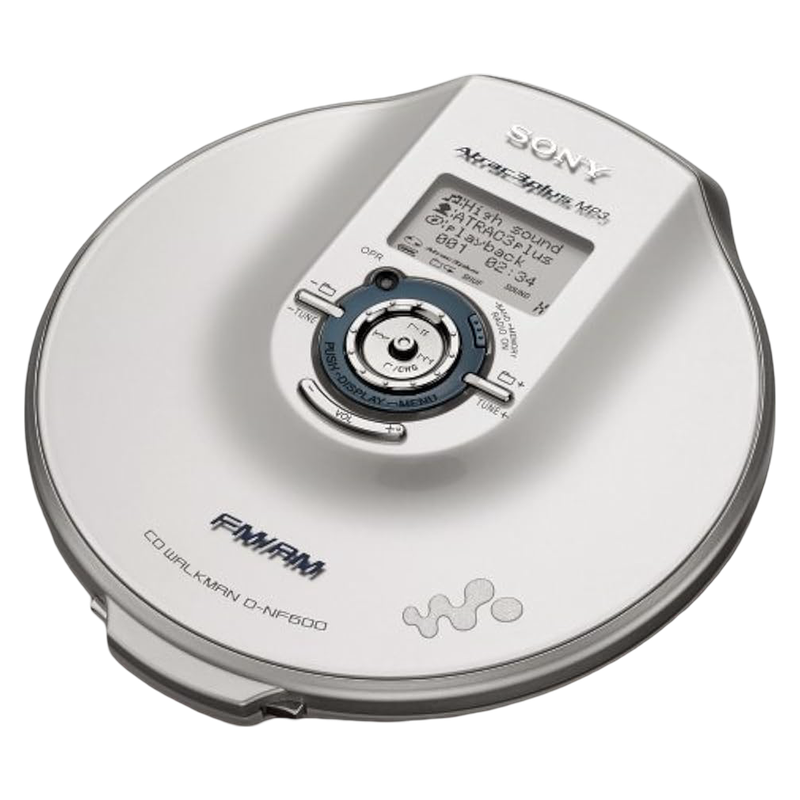
The D-NF600 is a multi-purpose compressed-disc CD Walkman from 2004 that combined ATRAC3plus, ATRAC3, and MP3 playback alongside standard CDs with full radio support including AM, FM, TV, and weather bands in a single portable unit. It retained G-Protection and practical battery life for everyday carry. That gave it a broader role than most models in the range. The D-NF600 is part of the late phase where one machine is increasingly expected to cover several listening habits at once without making a big deal out of it.
D-NS921F
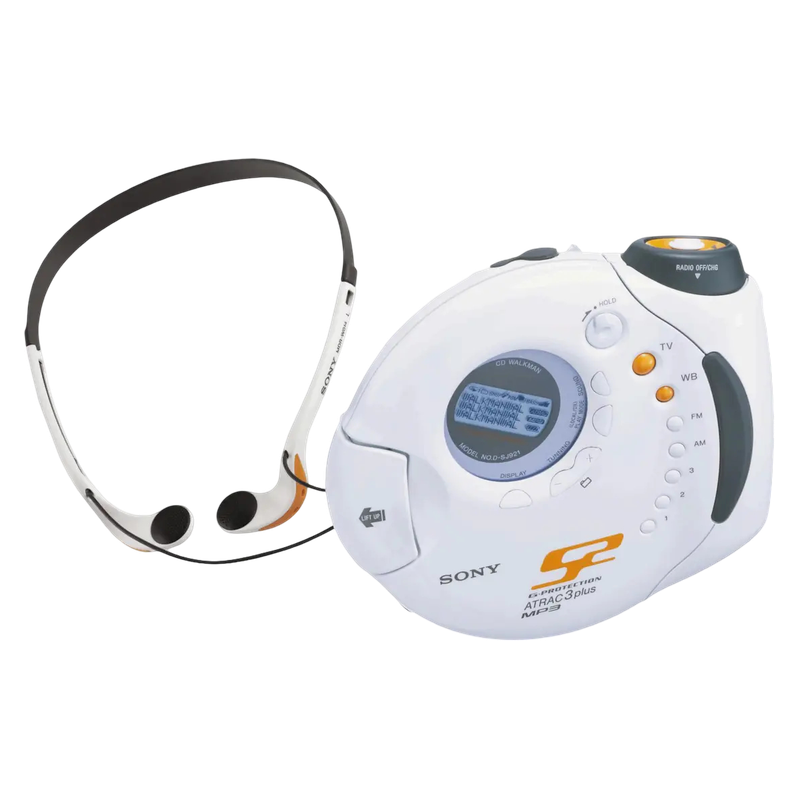
The D-NS921F is an S2 Sports model from 2004 built around durability and active use, supporting ATRAC3plus, ATRAC3, and MP3 playback with water resistance, strap-based handling, and a control layout built to stay usable during movement. G-Protection and long battery life helped it hold up in situations where most portable CD players would feel too exposed. That gives it a very different personality from the rest of the lineup. The D-NS921F is part of the shrinking part of the category that still treated the disc player as something meant to be moved around with instead of used carefully indoors.
2004 made clear how far portable CD had traveled, from revolutionary launch to polished conclusion. Its engineering legacy would keep echoing through Sony’s digital audio products, even if the format itself had already become more of a collector’s choice than a living category.