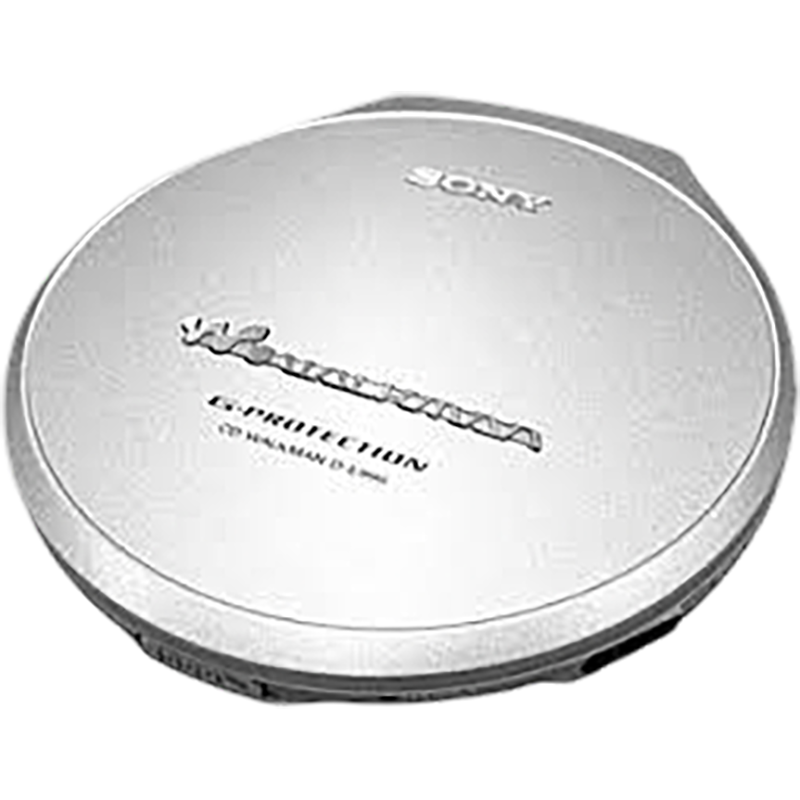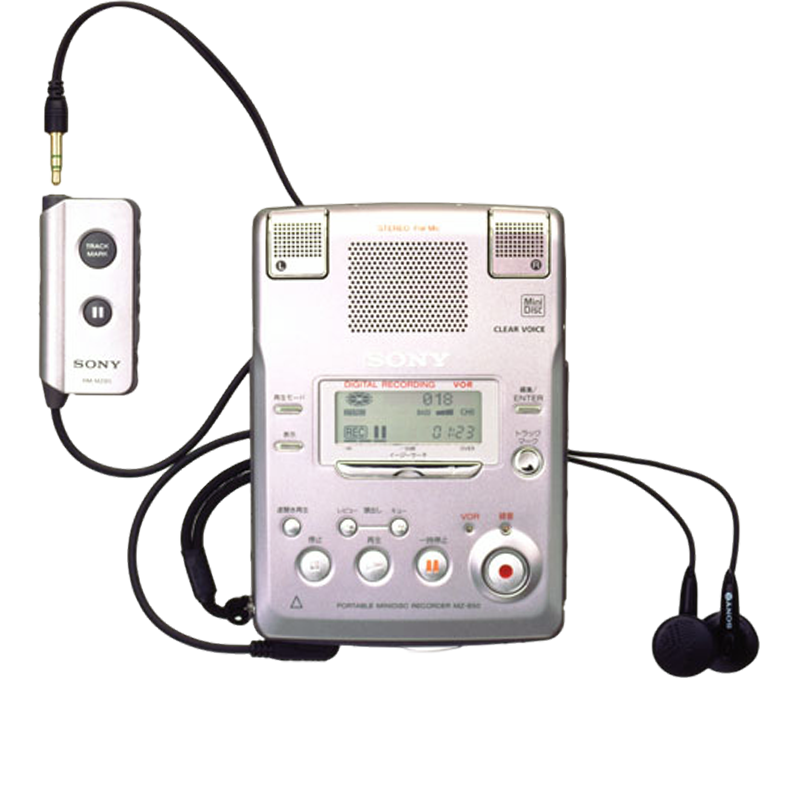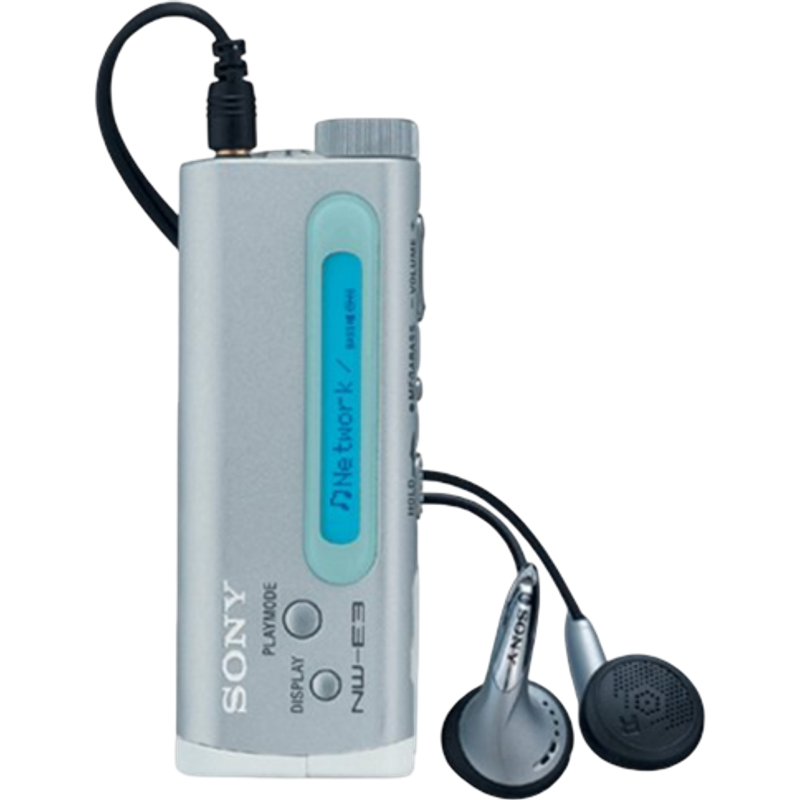
In 2000, the cassette model was maintained as a low-priced product. The main focus of development has shifted to digital music playback.
WM-EX190
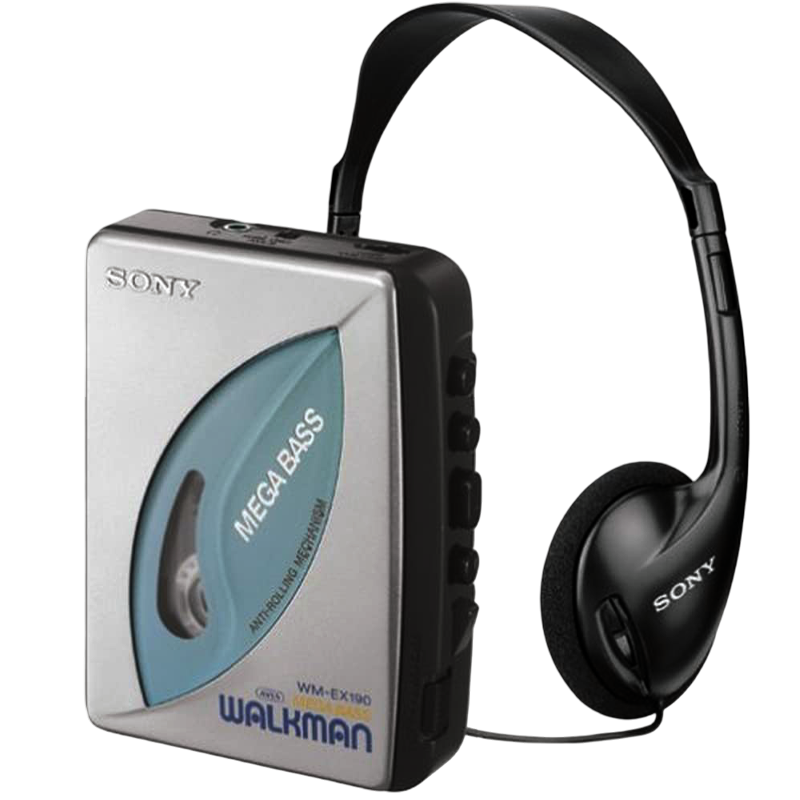
An entry-level EX-series cassette Walkman from 2000, the EX190 delivers straightforward playback with Mega Bass and AVLS volume limiting in a lightweight plastic chassis. Two AA batteries provides up to twenty-five hours of operation, and an anti-rolling mechanism stabilized tape speed during motion. The design omitted auto-reverse and Dolby to keep the price minimal. The design continued Sony's practice of offering reliable no-frills players for everyday listeners. It filled the bottom of the EX range for budget buyers who still preferred tapes, emphasizing long battery life and stable playback over additional features.
WM-EX192
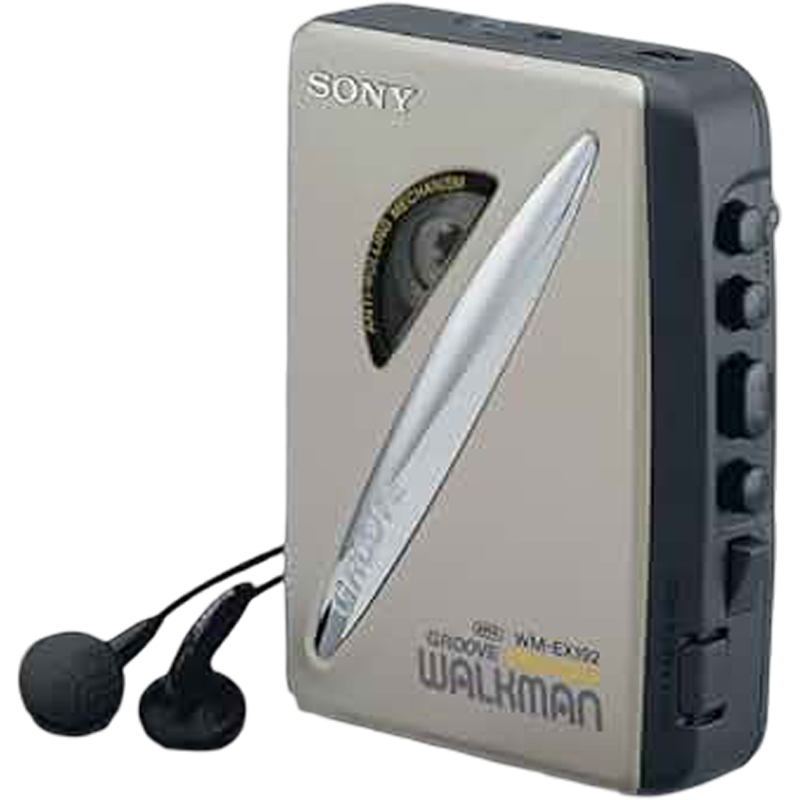
A compact EX-series cassette Walkman, the EX192 focused on basic daily use with Mega Bass and Groove sound processing. The plastic body includes a belt clip and open-style headphones, while two AA cells delivers standard runtimes. Controls remained mechanical and tape-type selection stayed manual. Sony kept this variant simple to serve as an accessible daily companion. It existed for listeners who wanted a lightweight player with enhanced bass without radio or remote, rounding out the EX lineup's entry options in the cassette era's final stretch.
WM-EX2000
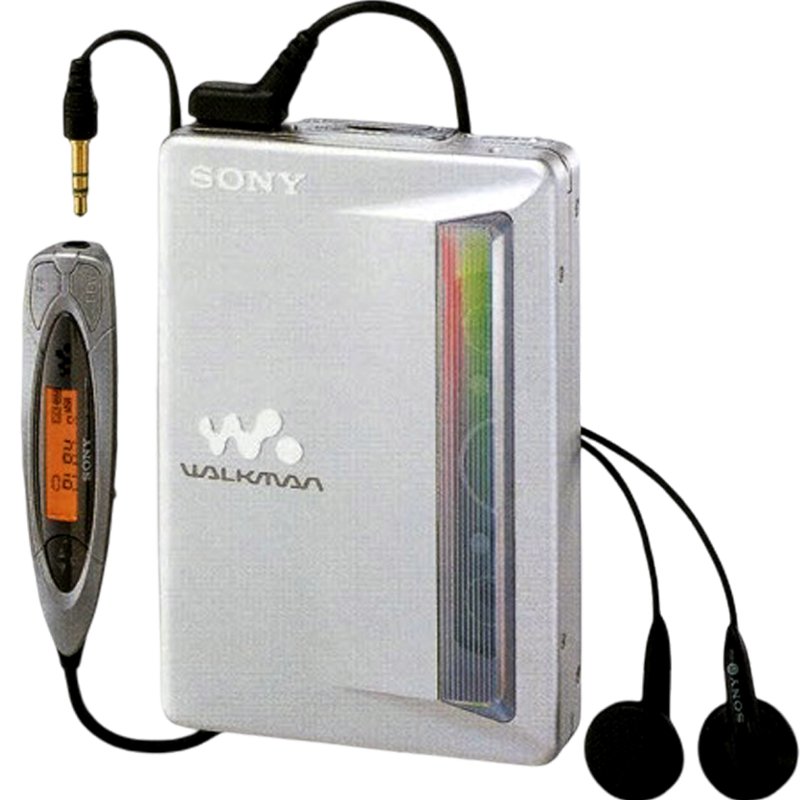
The WM-EX2000 is Sony's flagship playback Walkman for 2000 and one of the company's last truly audiophile-leaning cassette players. Its transport uses heavier brass flywheels to increase rotational inertia and improve tape-speed stability, while an oxygen-free copper playback head was chosen for more accurate signal reproduction and lower magnetic loss. Sony paired that with Dolby B noise reduction, Mega Bass, MEGA SURROUND processing, logic-controlled transport, and remote operation inside a slim metal body with external battery support, creating a machine whose engineering emphasis was still very much on analog playback quality instead of convenience alone. only appears when a company decides a fading format is still worth doing properly. The EX2000 was not built to save cassette or modernize it for the mass market, but to close out Sony's high-end playback tradition with dignity and mechanical seriousness. It reads as one of the last points where the cassette Walkman was still being treated as a precision listening device instead of just a surviving portable format.
WM-EX505
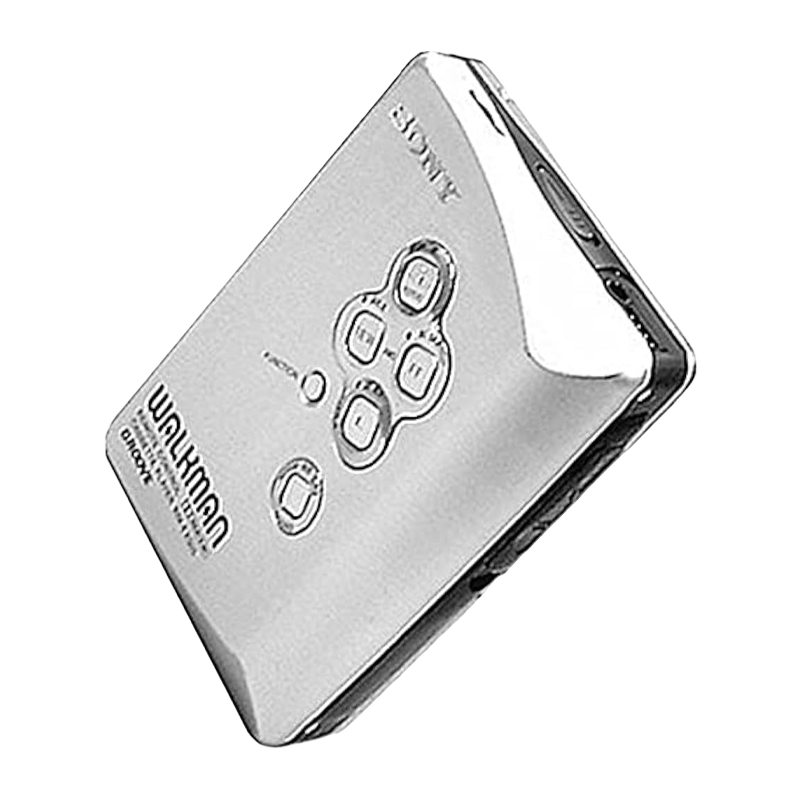
A design-oriented metal Walkman derived from the EX500 platform, the EX505 features Dolby B noise reduction, auto-reverse transport, and support for a wired remote. Its full-metal body gave a premium feel, while the single-AA power source maintained typical battery life. The layout prioritized clean lines and a visible tape window. Sony positioned the EX505 as a stylish step-up within the metal-body segment. It appealed to users who valued build quality and refined sound in a compact form, bridging basic plastic models and higher-end units without adding radio or elaborate extras.
WM-EX610
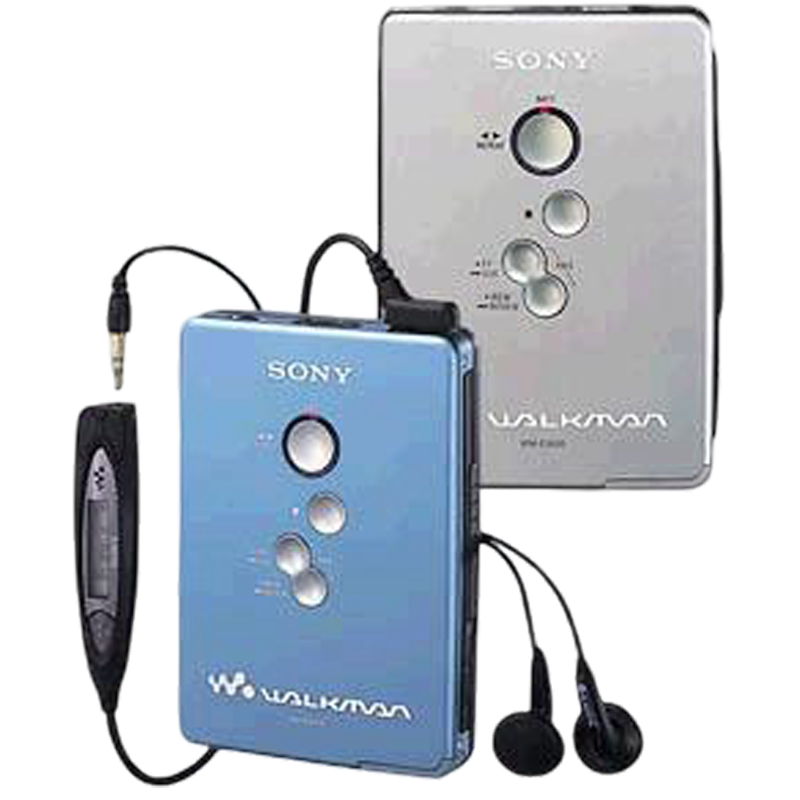
The WM-EX610 is a midrange playback Walkman in Sony's 2000 EX lineup and one of the first cassette models to adopt the company's refreshed Walkman visual identity, including the new dotted "W" emblem and a more rounded, ergonomic control layout. Its circular body buttons were deliberately shaped and spaced for easier blind operation, making the player feel more intuitive in a pocket or bag than many flatter earlier designs. Inside, it offers auto-reverse playback, Dolby B noise reduction, Groove bass enhancement, Automatic Music Sensor, blank skip, logic-controlled transport, and long runtime through an external AA battery sidecar, all housed in a compact metal-framed shell. This model shows Sony still putting real thought into the everyday cassette experience even after the format had clearly entered its late phase. Here, not a prestige model or a nostalgia object, but a carefully updated daily-use player built for people who still relied on tape without wanting anything theatrical. It is a practical Walkman from a time when practicality itself had become the product.
WM-EX615
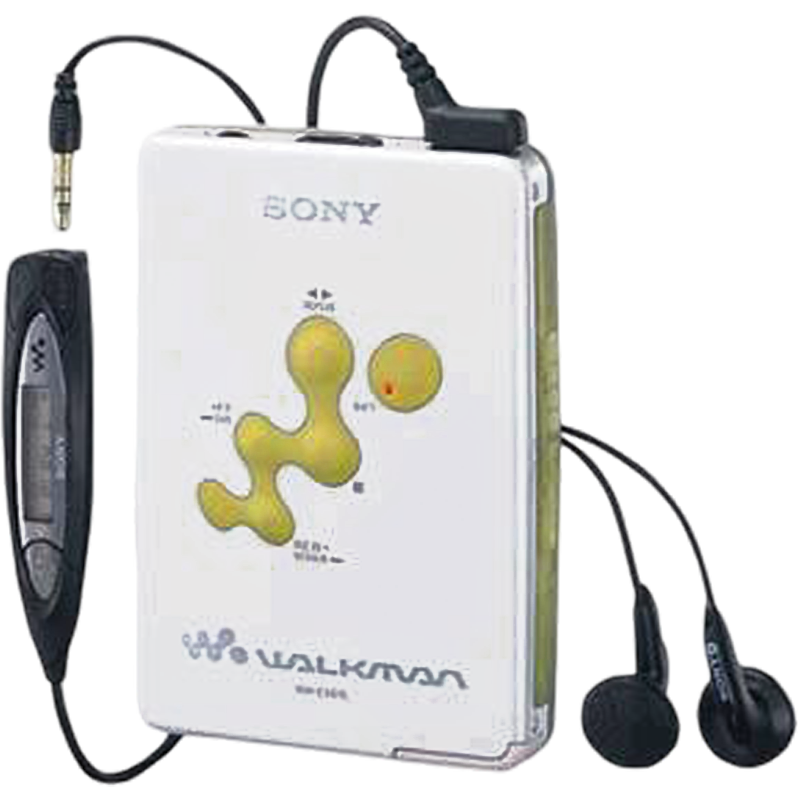
The WM-EX615 is a close continuation of the EX610, built around the same slim metal-cased platform and ergonomic circular-button layout while carrying Sony's refreshed 2000-era Walkman branding. It retained auto-reverse playback, Dolby B noise reduction, Groove bass processing, Automatic Music Sensor, blank skip, remote operation, and extended battery life through the external AA pack, with only compact cosmetic and market-level differences separating it from the adjacent model. Mechanically it remained part of the same mature late-period EX formula. What makes the EX615 interesting is that it shows how stable the Walkman had become by then. Sony was no longer revising the cassette player through dramatic yearly reinvention, but through compact controlled updates to already-proven hardware. It reads as the kind of model that existed because the company still knew exactly how to make a good everyday Walkman, even if the world around it had changed.
WM-EX910
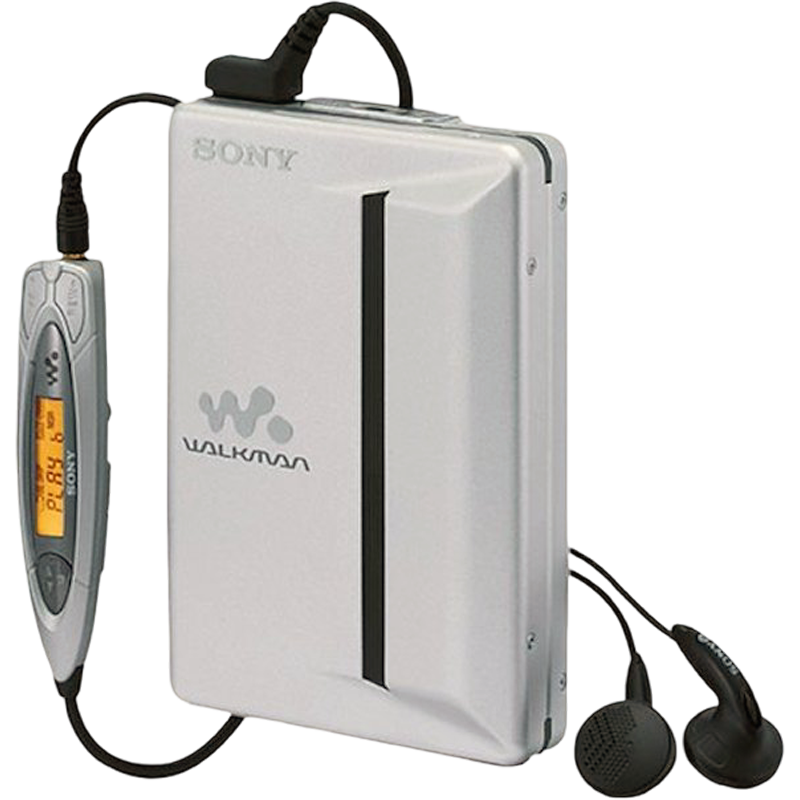
The WM-EX910 is a high-end playback Walkman that sat just below the flagship EX2000 in Sony's 2000 lineup, sharing much of the same slim metal-bodied design language and premium late-era cassette philosophy. It offers auto-reverse playback, Dolby B noise reduction, Mega Bass, Automatic Music Sensor, blank skip, logic controls, and remote operation, all arranged around a compact transport and external battery sidecar built for long portable use. While it lacked some of the more specialized audio refinements of the top model, it still carries the same quiet sense of late-format seriousness. This model is the kind of model that shows Sony still preserving a proper premium middle tier even at the end. The EX910 was not trying to be flashy or experimental, but to give committed cassette users most of the physical and ergonomic appeal of the flagship without turning the machine into a statement piece. It is a very mature Walkman: refined, understated, and fully aware of what it no longer needed to prove.
WM-FS220
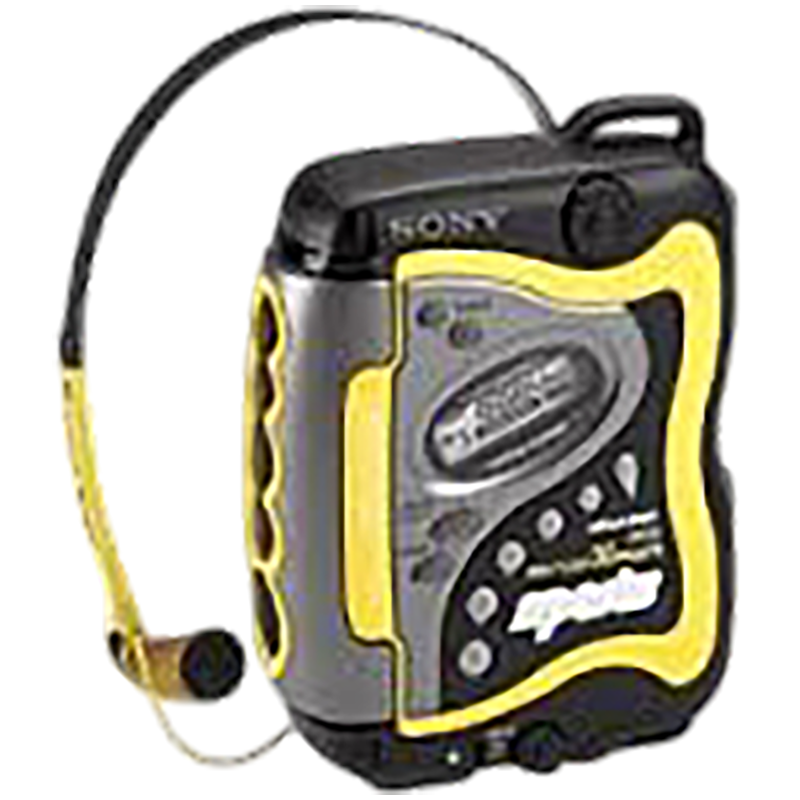
This Sports Walkman pushed practicality further with up to twenty-five hours of battery life from two AA cells, a digital FM/AM tuner with presets, and full water resistance. Logic-controlled buttons simplified operation, a hold switch prevented accidental presses, and an adjustable grip improved handling during activity. The gasket-sealed body and larger shell reflected heavy-duty design priorities. The FS220 represented Sony's final emphasis on endurance in the Sports series. It targeted athletes and outdoor enthusiasts who needed a rugged player that could survive rough conditions and long sessions, keeping the category viable even as cassette overall declined.
WM-FX493
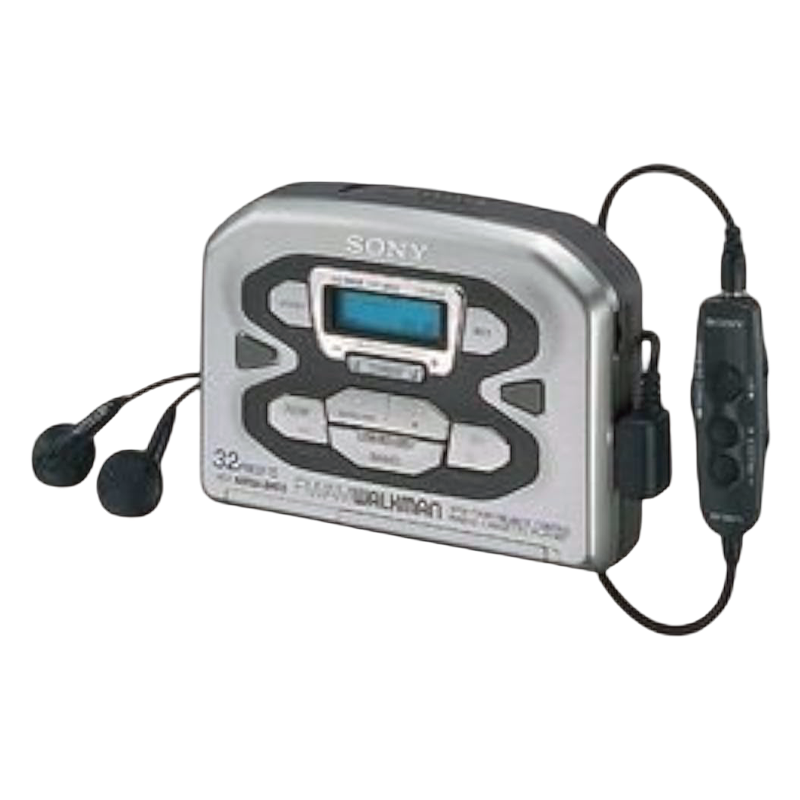
A mid-range FX-series radio Walkman from 2000, the FX493 uses a digital synthesized tuner with thirty-two presets alongside Mega Bass and a standard cassette mechanism. The plastic body runs on two AA batteries, and an LCD provides station and status feedback. The design gave users preset convenience at a moderate price point. Sony added digital tuning here to refresh the FX range without premium costs, targeting listeners tired of analog drift while keeping the player firmly in the everyday radio category.
WM-FX675
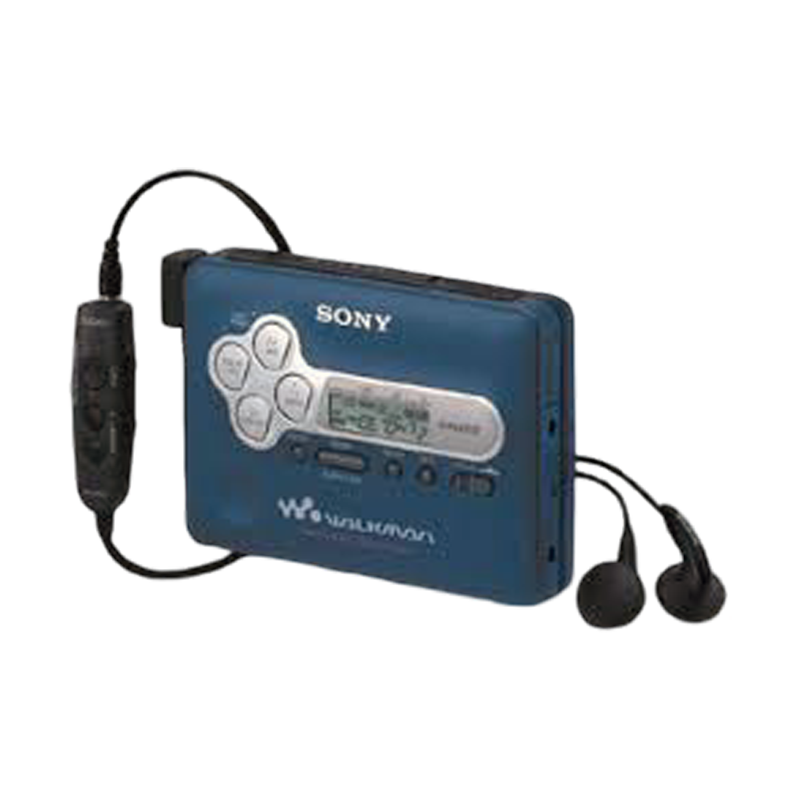
This radio Walkman combined a synthesized digital tuner, Mega Bass enhancement, and remote-control support in a slim metal chassis. Auto-reverse transport, Dolby B noise reduction, and over thirty preset stations rounded out the feature set, with a single-AA power source delivering extended playback. The compact layout includes an external compartment for added versatility. Sony placed the FX675 near the top of its radio Walkman offerings to capture enthusiasts who wanted both tuner flexibility and tape refinement. It served users seeking a capable all-in-one unit for travel or daily use, bridging the gap between basic FX models and full EX-series players in the cassette line's later years.
By 2000, the cassette Walkman was no longer a major product. This situation continued as a decrease in the number of products in subsequent models.
More Sony in 2000