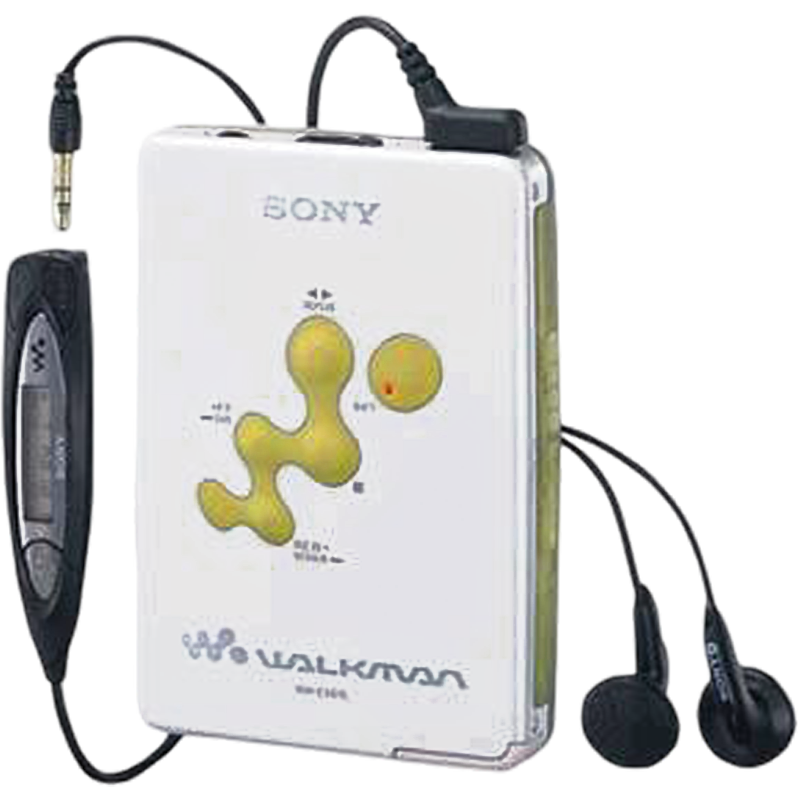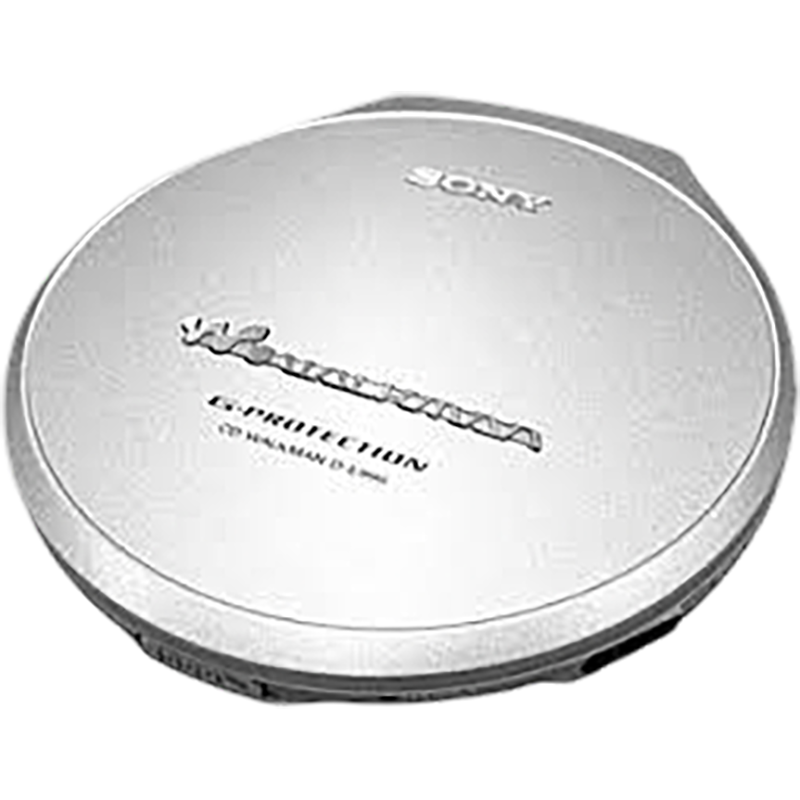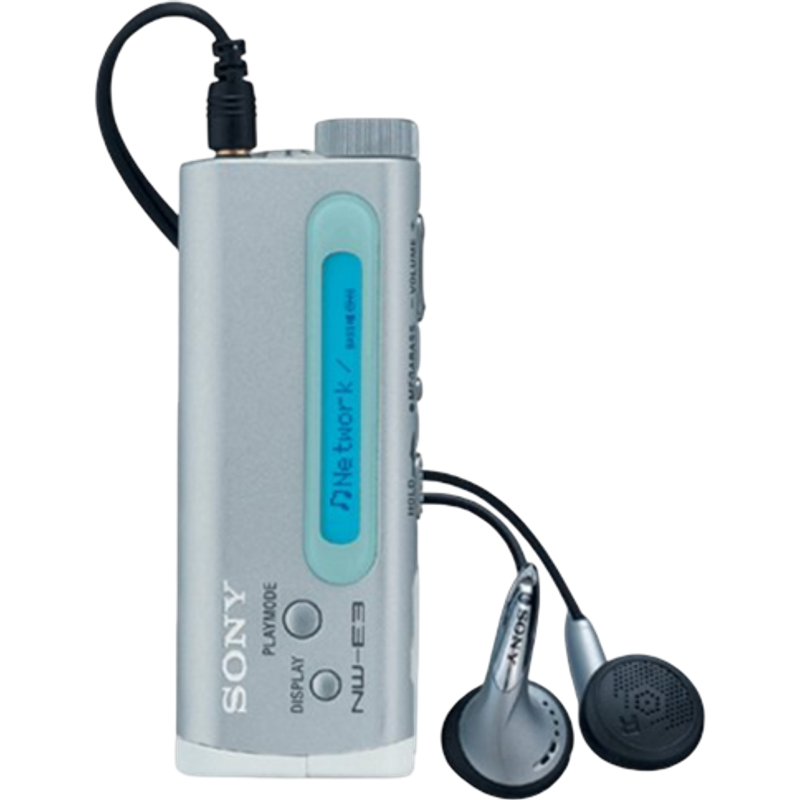
In 2000, Sony strengthened the integration structure between portable devices and home audio equipment. The recording and integration features have made it possible to configure it for use throughout the entire system.
MZ-R70
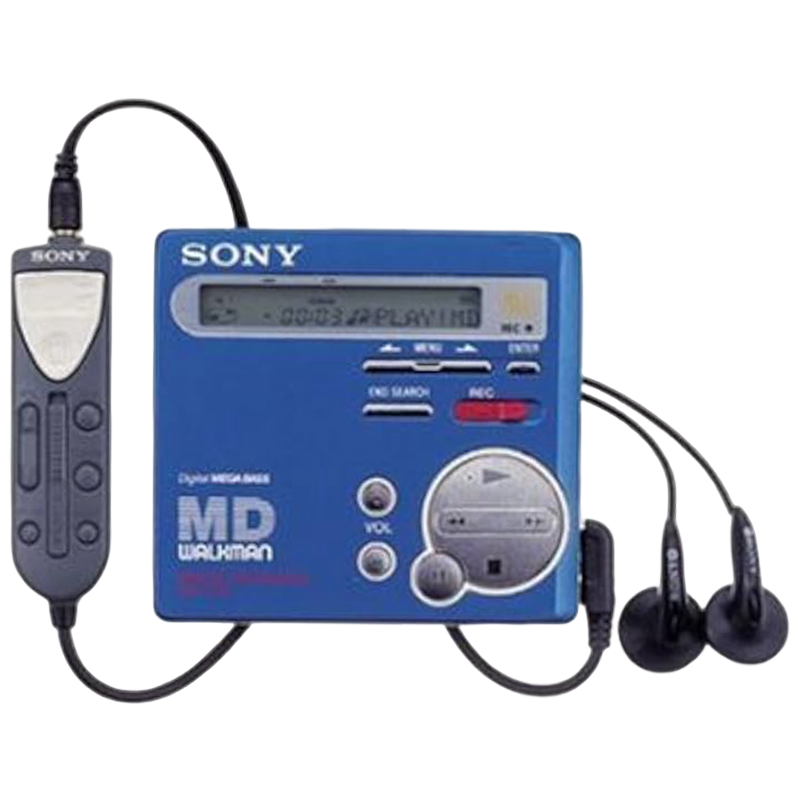
The MZ-R70 is a cost-reduced MiniDisc recorder that keeps the core recording system intact while simplifying operation. Optical and line inputs remain available for digital and analog recording, with digital level control included for basic adjustment. Shock protection buffers playback to reduce skipping, and overall recording performance remains close to higher-end models. The differences appear in the simplified control layout and a remote without a display, with several higher-end functions removed. It uses a single AA battery, making the unit larger than slimmer gumstick-powered models.
MZ-R900
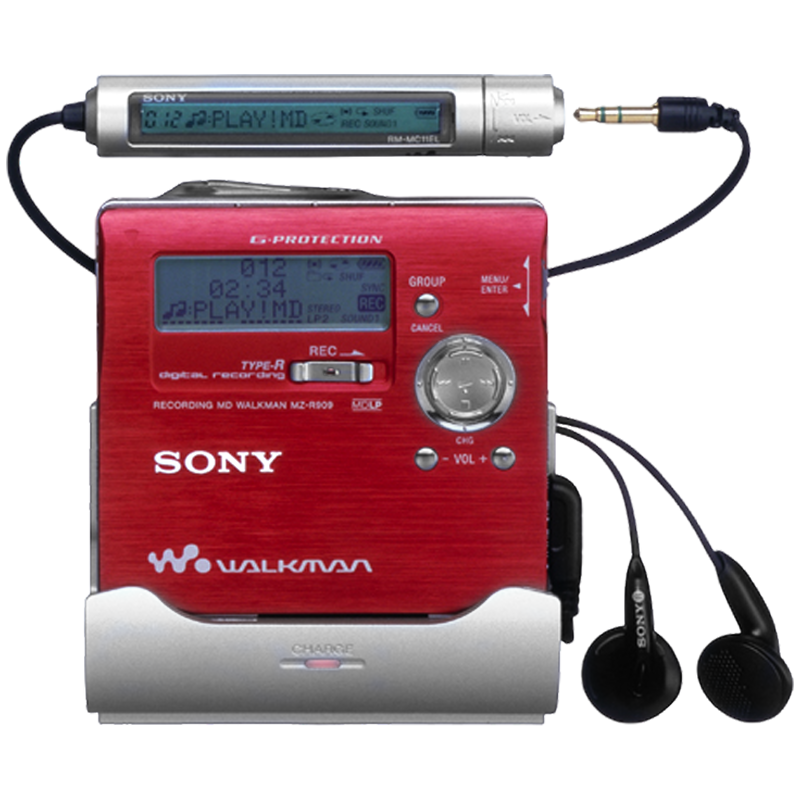
The MZ-R900 is a high-end MiniDisc recorder in the R series, featuring refined controls and display performance. Equipped with microphone input, line input, and optical digital input, it supports a wide range of applications, from voice recording to music recording. MDLP allows for extended recording time, and recording levels can be adjusted both digitally and manually. It also includes a group function for organizing long recordings. The combination of a rotary jog dial and multi-line display ensures operability befitting a high-end model, including dual level meters and display settings.
MZ-B50
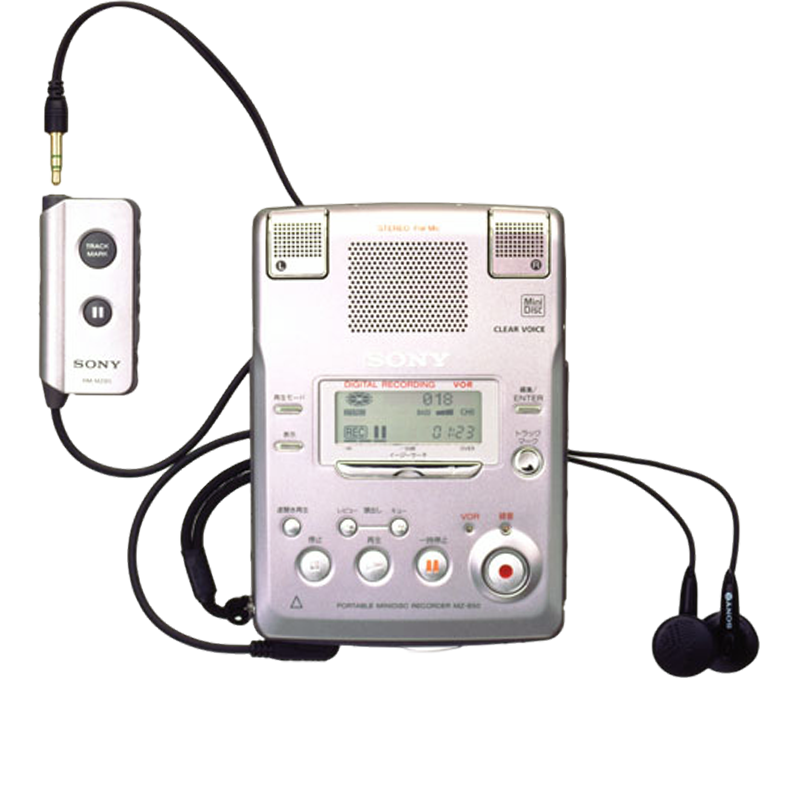
The MZ-B50 is a MiniDisc recorder built for voice capture, with a layout that favors standalone use over portability. A built-in stereo microphone and integrated speaker allow recording and playback without external equipment, making it suitable for meetings, interviews, and dictation. Recording behavior is simplified with automatic gain control and voice-activated recording, while playback speed can be increased for faster review and speech-focused processing improves intelligibility. Line and optical inputs remain available for external sources, but the system is centered on internal recording and appends new recordings to the end of the disc.
MZ-E500
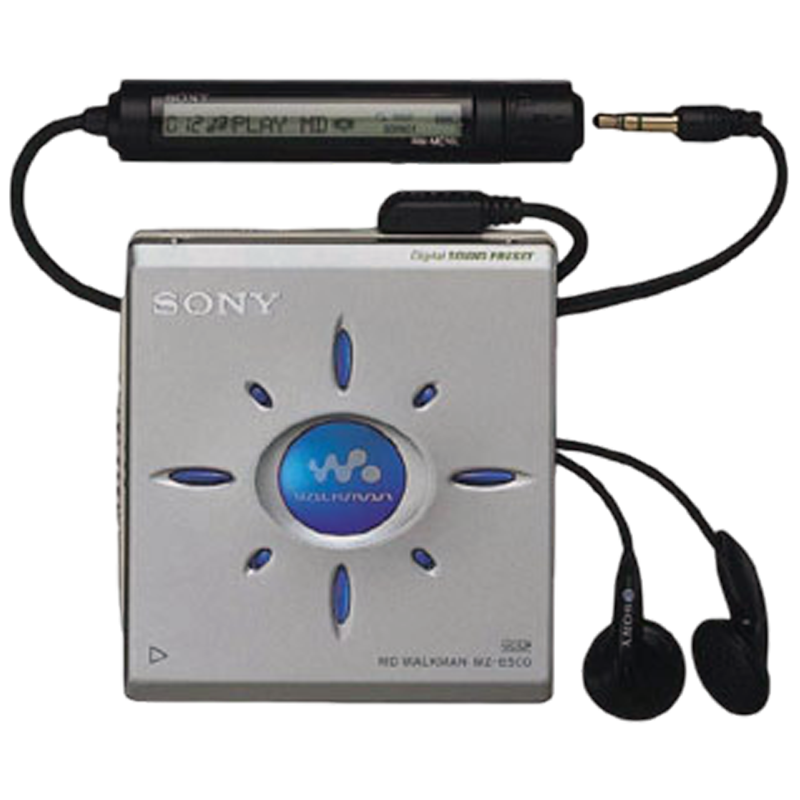
The MZ-E500 introduces MDLP playback while keeping the system focused on efficiency. MDLP extends playback time through compression, increasing how much content can fit on a single disc. Controls are placed on the rear of the unit, and sound adjustment is limited to basic bass and treble presets. Shock protection buffers audio to reduce skipping. Disc-based memory features are omitted, keeping operation consistent from disc to disc.
MZ-E700
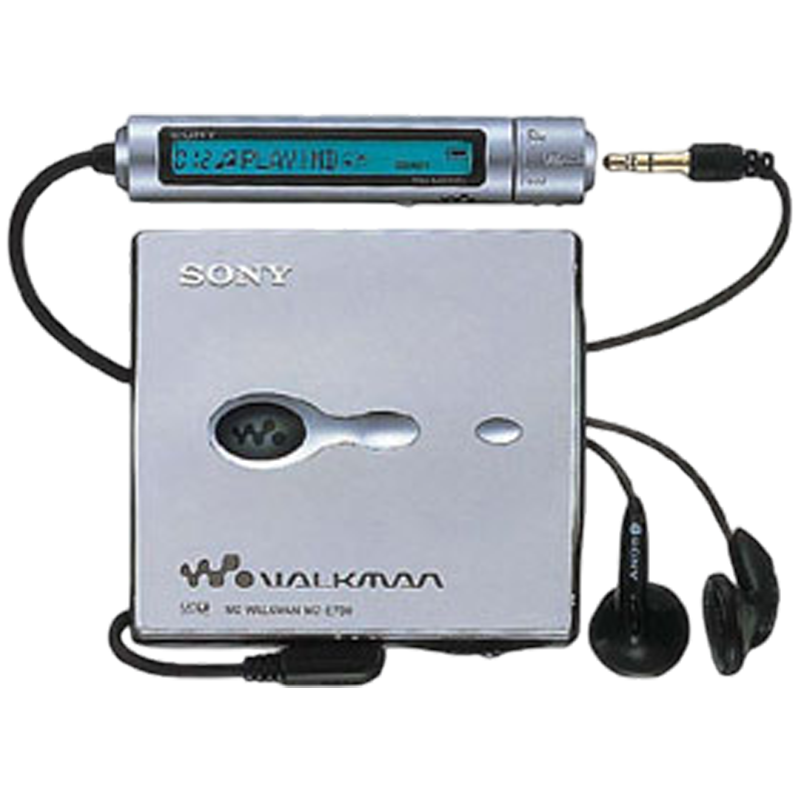
The MZ-E700 expands playback behavior through disc-based memory and additional control features. It supports both standard MiniDisc playback and MDLP recordings, increasing usable disc capacity. Disc memory stores playback preferences for individual discs, allowing the unit to recall settings such as sound adjustment or playback mode automatically. Playback speed adjustment and tone controls provide additional flexibility, while the remote handles navigation and display. Charging is managed through a cradle.
MZ-E900
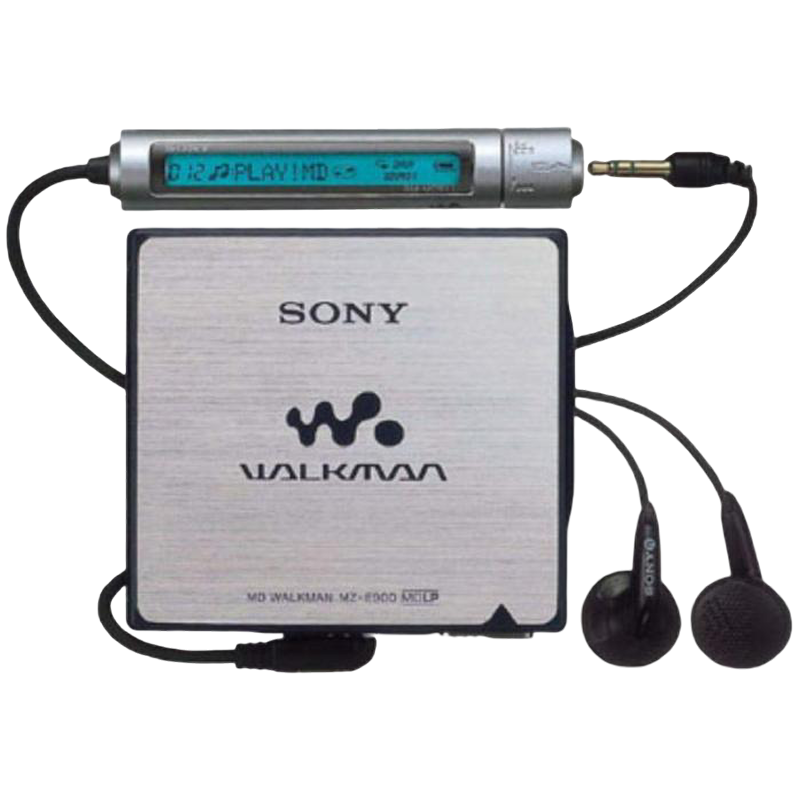
The MZ-E900 introduces MDLP, expanding recording capacity beyond standard play modes. LP2 and LP4 allow longer recordings by compressing audio, trading some fidelity for extended runtime. A redesigned internal system improves power efficiency, and optical and line recording share a combined input with a dedicated microphone input for direct voice capture. Dual jog controls allow faster access to tracks and settings, and Personal Disc Memory stores playback preferences for individual discs.
MZ-E800
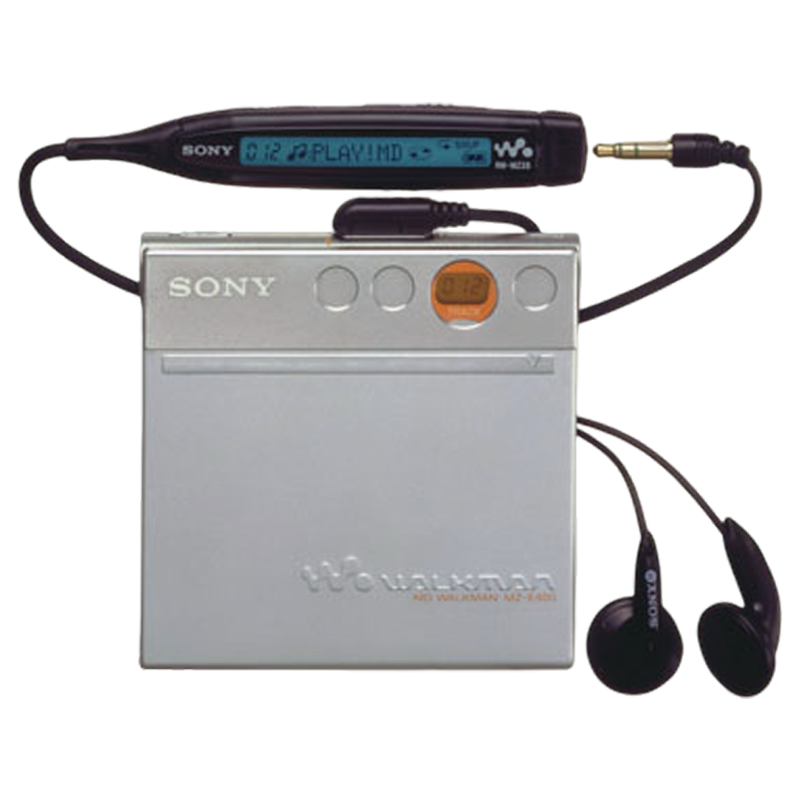
The MZ-E800 is built around a bundled system instead of the unit alone, with accessories playing a central role in how it is used. The charging stand, remote, power adapter, and external battery case form a more complete setup than the player itself suggests. Playback includes basic bass and treble adjustment, while shock protection buffers audio to reduce skipping. A revised loading mechanism improves disc handling. Control is handled primarily through the remote, which carries track information and navigation.
MZ-E77
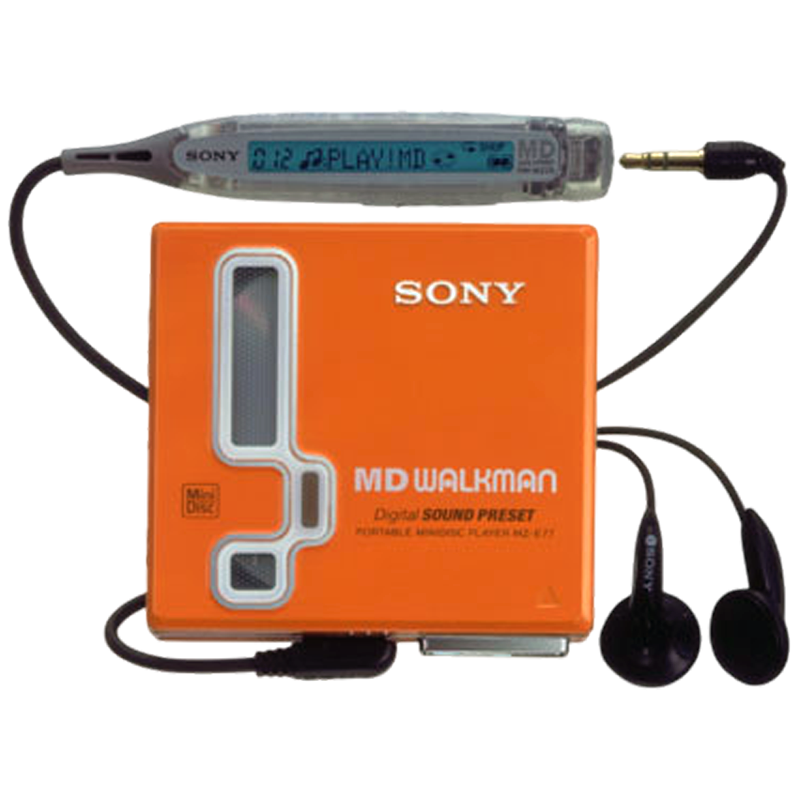
The MZ-E77 is built around ease of use and visual variety instead of expanded control. It supports standard playback with basic tone adjustment through preset bass and treble settings. One-touch eject simplifies disc handling, and the design is offered in multiple color variations. Playback remains stable with standard shock protection and consistent battery life. Controls stay straightforward, with minimal layers between the user and playback.
MZ-E60
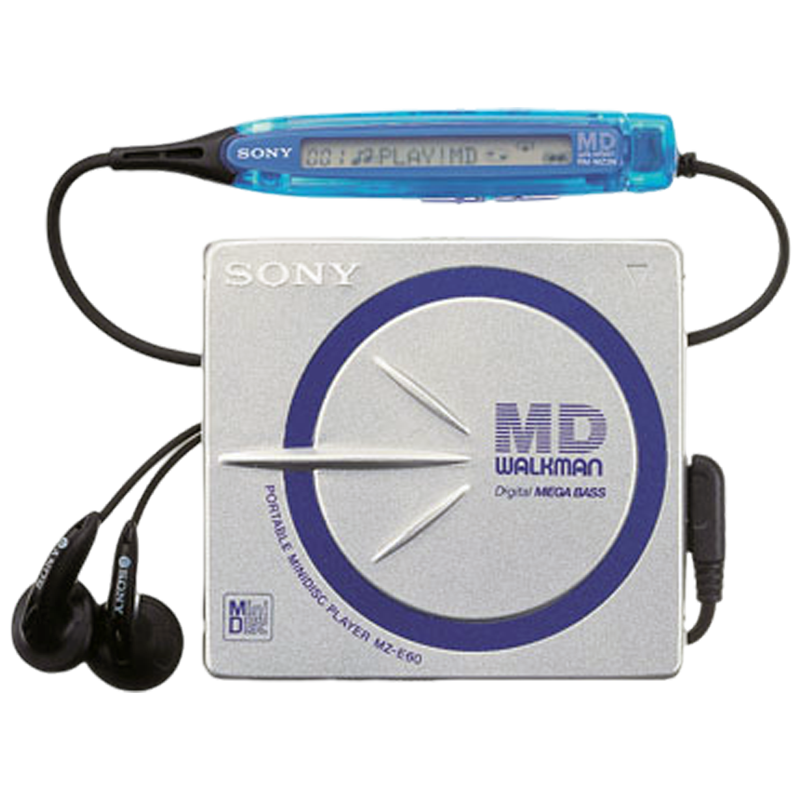
The MZ-E60 is built around a single battery strategy, relying entirely on AA battery operation with no internal rechargeable system or direct DC input. Playback remains standard, with control handled through the unit and a basic remote display. The pop-open eject mechanism simplifies disc handling. The remote includes an LCD for track information but lacks backlighting. Shock protection provides basic buffering.
MZ-E7W
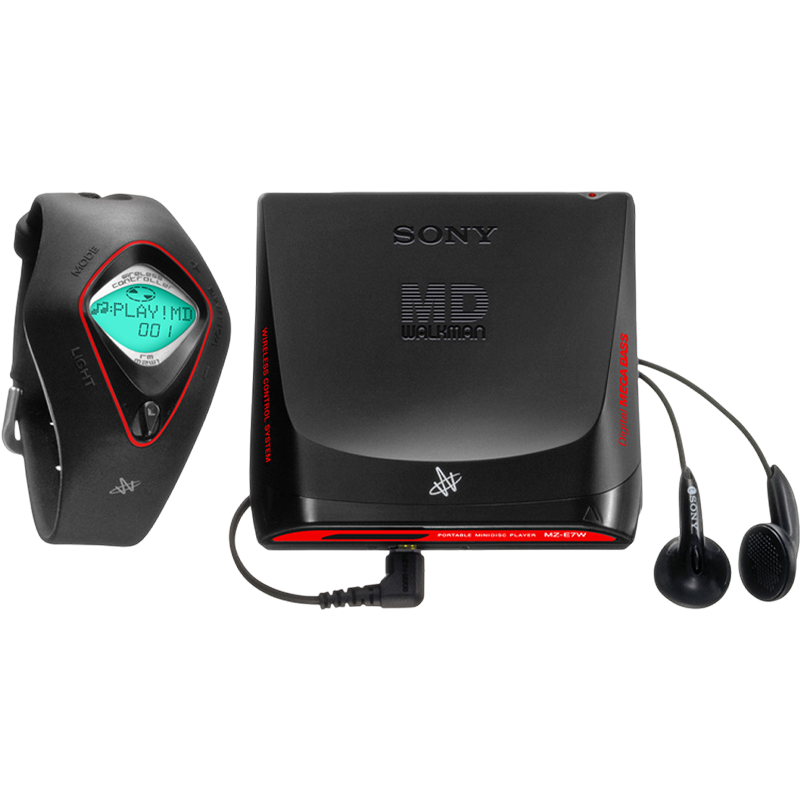
The MZ-E7W separates control from playback through a wireless remote designed as a wristwatch. Track information and navigation are handled remotely, allowing the player to be controlled without touching the main unit. Audio still runs through a standard wired headphone connection, while control signals are transmitted wirelessly. Playback includes standard features such as shock protection and simple sound adjustment. A one-touch eject mechanism simplifies disc handling.
By 2000, MiniDisc had been established not as a standalone device, but as part of a system configuration. At the same time, the structural differences from file-based sound sources became clear.
More Sony in 2000