ObsoleteSony.com
1999
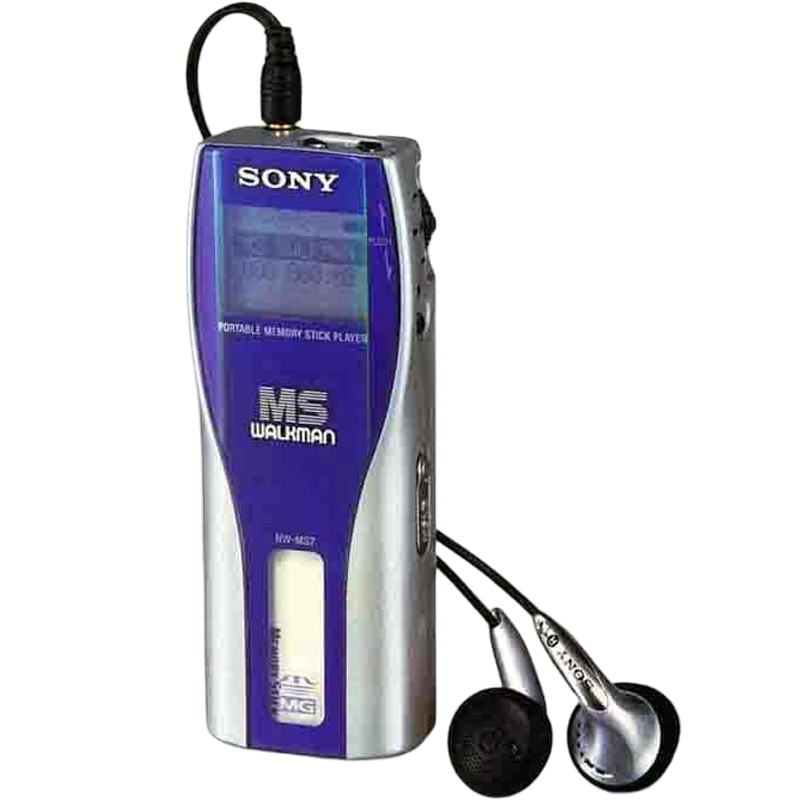
NW-MS7
Network Walkman
The NW-MS7 is the first Network Walkman to use a Memory Stick as its storage medium...
obsoletesony.com/networkwalkman/nw-ms7

If you find it useful, you can support it. Support the archive


The NW-MS7 is the first Network Walkman to use a Memory Stick as its storage medium. It supports ATRAC format audio playback, and has an LCD display that can show track information and playback status.
Memory Stick sat at the center of Sony's late-1990s attempt to unify its digital products. Introduced in 1998, the format was designed to move easily between cameras, VAIO computers, camcorders, and portable audio, creating a shared storage layer across categories. Early devices such as the DSC-F55K and F505K showed how the card would appear in consumer hardware and how Sony imagined users carrying data between devices rather than platforms.
The NW-MS7 arrived one year later as Sony's first portable music player built around that idea. Unveiled at VAIO CONGRESS in September 1999, it translated the Memory Stick strategy into a compact, curved form that subtly echoed the proportions of the TPS-L2 without direct imitation. Blue and silver finishes nodded to early Walkman color language, while the low-profile body reflected the late-1990s shift toward smoother, more integrated digital designs.
Its operation followed the same constraints shaping Sony's early digital ecosystem. Music was converted to ATRAC3, managed through OpenMG Jukebox, and transferred with encryption intact. Playback relied on 64 MB MagicGate Memory Sticks, which ensured stability and copy control but imposed strict limits on capacity.
The hardware felt ahead of the system built around it. The 69-gram chassis felt solid and easy to carry, and Sony's digital amplification delivered clean, stable playback.
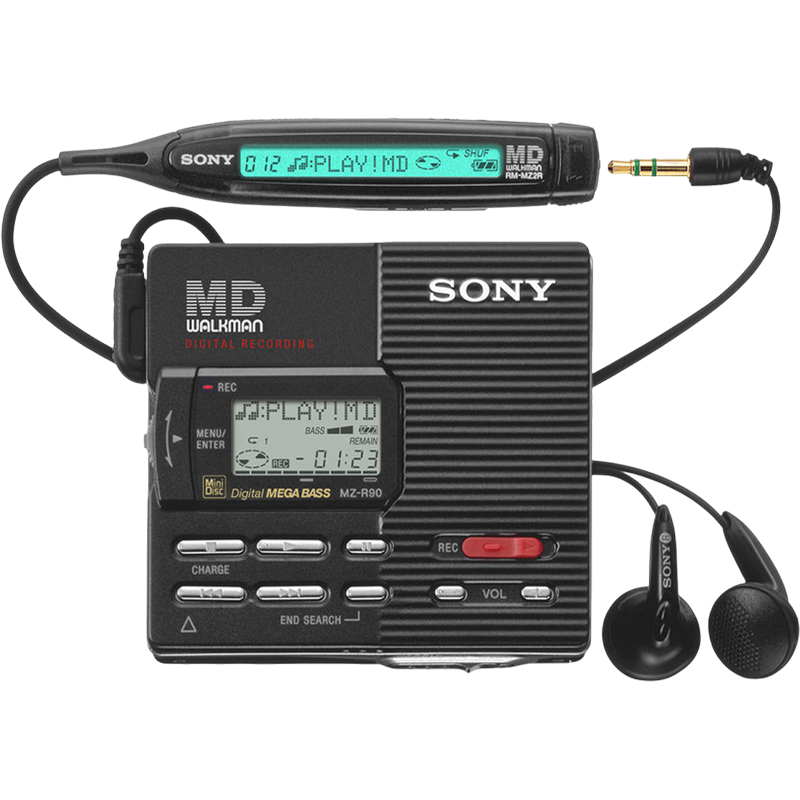
The MZ-R90 is a flagship MiniDisc recorder that maintains recording capabilities while achieving a smaller body size.
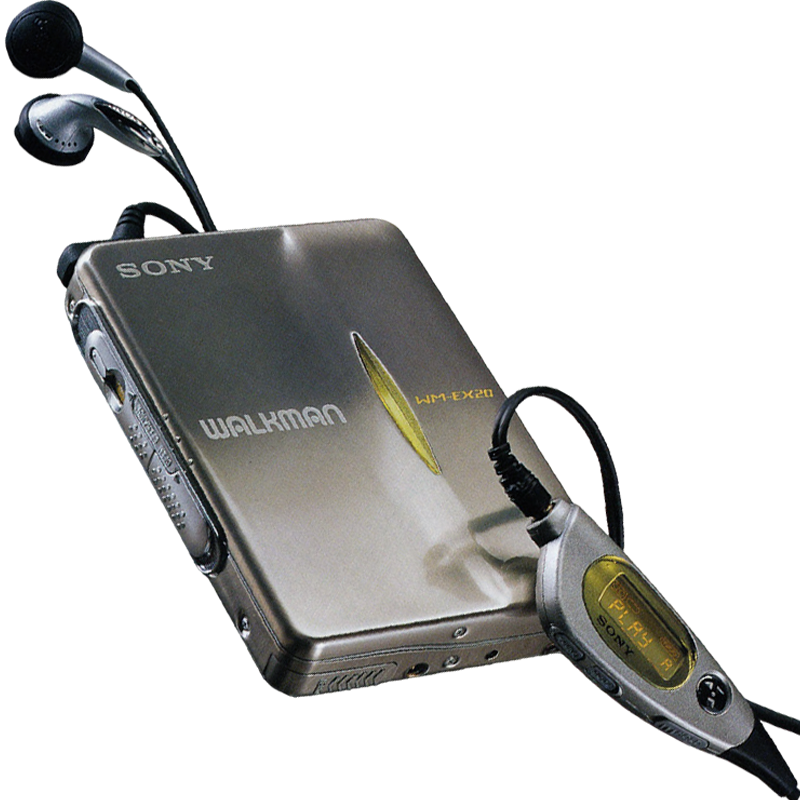
The WM-EX20 is a playback-only Walkman equipped with auto-reverse.
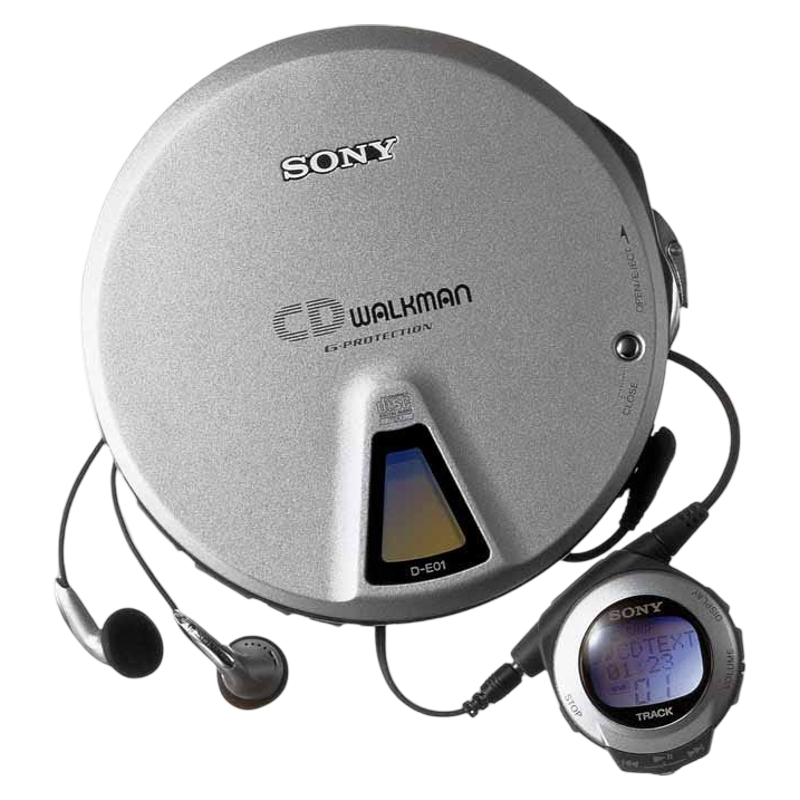
The D-EJ01 is a portable CD player equipped with a slide-in disc loading mechanism and G-Protection.