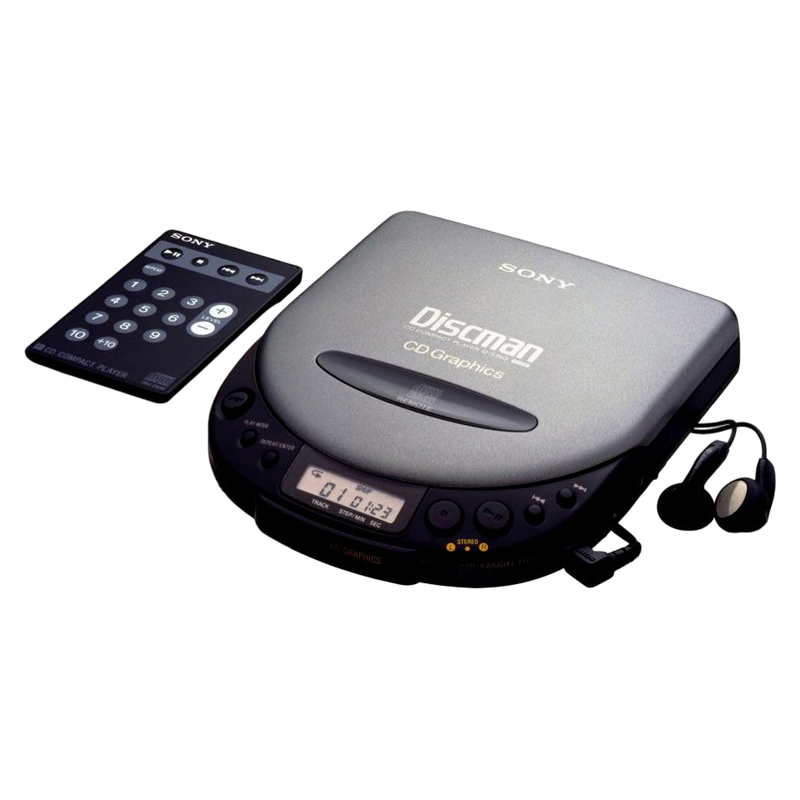
In 1994, Sony was introducing higher-end finishes and narrowly targeted models that hinted at a more divided future lineup. The category started differentiating internally rather than appealing to a single broad audience.
WM-EX1
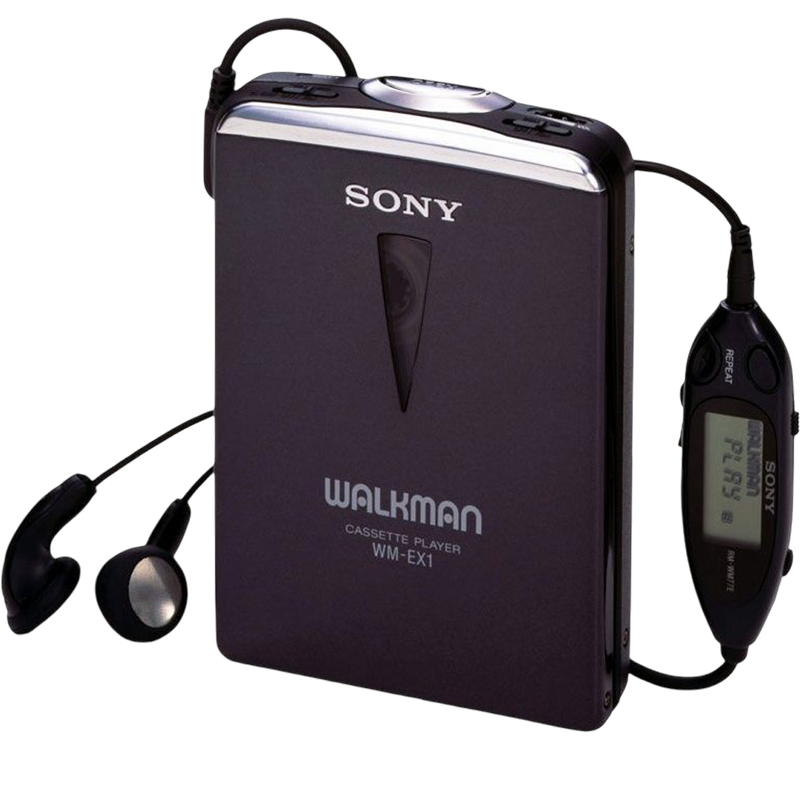
The WM-EX1 was the cassette Walkman that introduced Sony's vertically loading clamshell cassette system to the EX series, replacing the familiar side-opening door with a top-loading arrangement that changed how the machine was physically used. Achieving this required a major redesign of the tape path and transport geometry so head alignment, pinch-roller contact, and tape stability could be preserved in the new upright orientation. Around that mechanism, Sony included logic-controlled operation, auto-reverse, Dolby B noise reduction, Extended DBB bass boost, AVLS, automatic music sensor with high-speed search, blank skip, and a wired remote integrated into the headphone cable. Released for the fifteenth anniversary of the Walkman, the EX1 feels like Sony trying to modernize the cassette player not by changing playback, but by changing how it behaved in the hand. Vertical loading made tape changes feel faster and more intuitive when the player was already part of daily use, especially in bags or pockets where a side door was less graceful. It is one of the clearest examples of Sony treating cassette handling itself as an area still worth refining.
WM-EX1HG
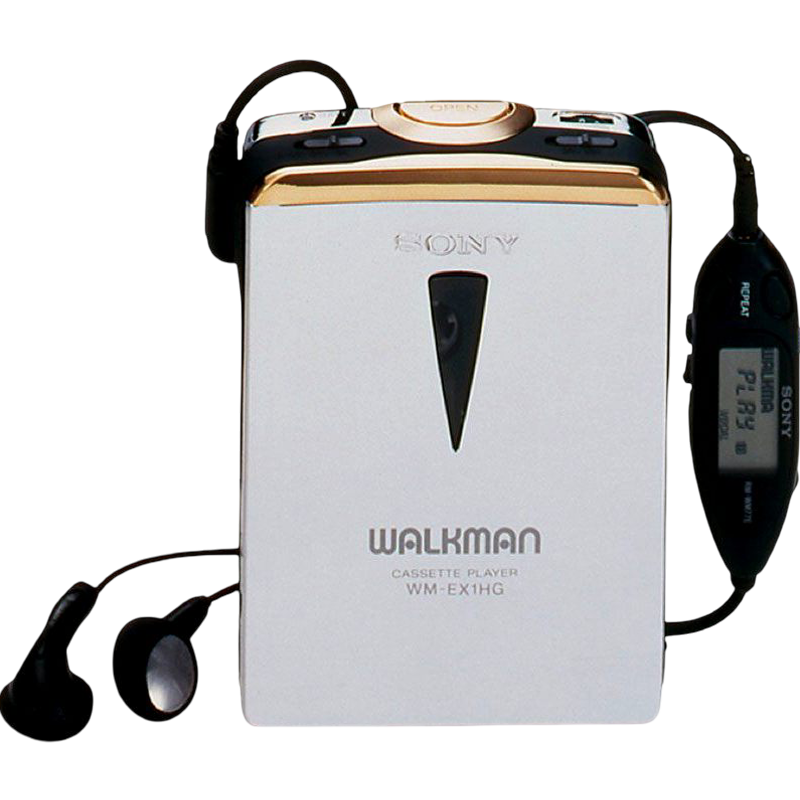
The WM-EX1HG is the deluxe chrome-plated variant of the WM-EX1, retaining the same vertical pop-up loading system and redesigned upright transport while shifting the emphasis toward finish and presentation. Mechanically it remained unchanged, with logic controls, auto-reverse, Dolby B, Extended DBB, AVLS, Automatic Music Sensor with high-speed search, blank skip, and remote compatibility all carries over intact. What changed was the visual and tactile character of the machine, with reflective exterior panels giving the anniversary platform a more overtly premium expression. only makes sense once Sony had already turned the Walkman into a personal object people noticed and lived with constantly. The EX1HG was not trying to improve the transport or the sound, but to make the same important platform feel a little more elevated in ownership. It is a good reminder that by the mid-1990s, material finish had become part of the product story, more than decoration.
WM-WX777
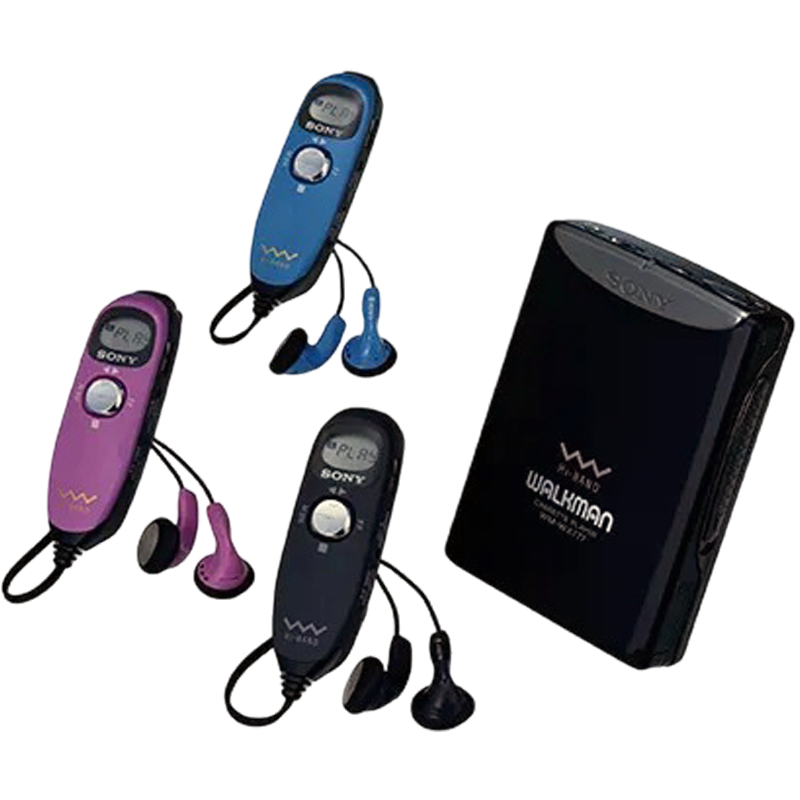
The WM-WX777 is the most refined model in Sony's WX wireless cassette Walkman line, built around a high-frequency transmitter and matching receiver built to reduce interference and improve day-to-day reliability. The main player handled cassette playback in a conventional body, while the separate Hi-Band receiver took over volume, playback start, and track control duties, effectively functioning as both listening device and pocket remote. Auto-reverse, Dolby B, Extended DBB, AVLS, Automatic Music Sensor, blank skip, logic control, and LCD status display completed a package that was trying to make cord-free listening feel routine instead of experimental. This is one of those models where Sony's wireless branch finally starts feeling settled. Earlier wireless Walkman often felt like ambitious proofs of concept, but the WX777 reads closer to a machine built around actual use: fewer dropouts, more stable control, less novelty for novelty's sake. It stands as a good example of Sony staying with a strange idea long enough to make it genuinely livable.
WM-EX666

The WM-EX666 is a style-driven EX-series Walkman that reused much of the same logic-controlled playback platform as the EX511 but reframed it through coordinated color, accessories, and presentation. It retained auto-reverse, Dolby B, Extended DBB, AVLS, Automatic Music Sensor, blank skip, and remote operation, while adding matching earbuds, a color-coordinated remote, and a dedicated pouch that made the player feel closer to a personal carry item than a neutral electronics product. The includes charger and slightly longer runtime helped keep it practical beneath the styling emphasis. This is one of those models where Sony was clearly treating the Walkman as part of a user's visible everyday identity instead of just a sound device. The EX666 matters less because of what it changed internally and more because of how directly it shows the cassette Walkman entering fashion-adjacent territory. It feels very much like a 1994 object: useful, familiar, and intentionally styled to be chosen as much as uses.
1994 first signaled that the Walkman would survive by becoming more selective instead of universal. Those early moves opened the door to the full fragmentation that defined the second half of the decade. 1994 left the category poised to split into distinct lines while digital pressures loomed, a compromise that bought relevance but narrowed the original universal appeal.