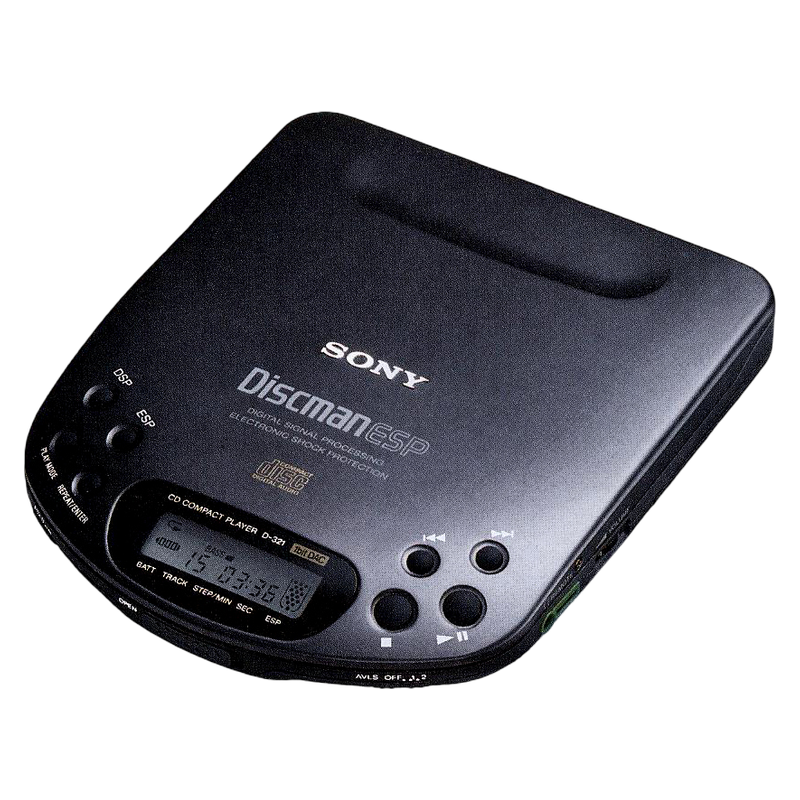
By 1993, Sony had stabilized core cassette performance and was focusing on consistent reliability across the entire range. The lineup reached a plateau of refinement where excellence was expected rather than announced.
WM-GX707
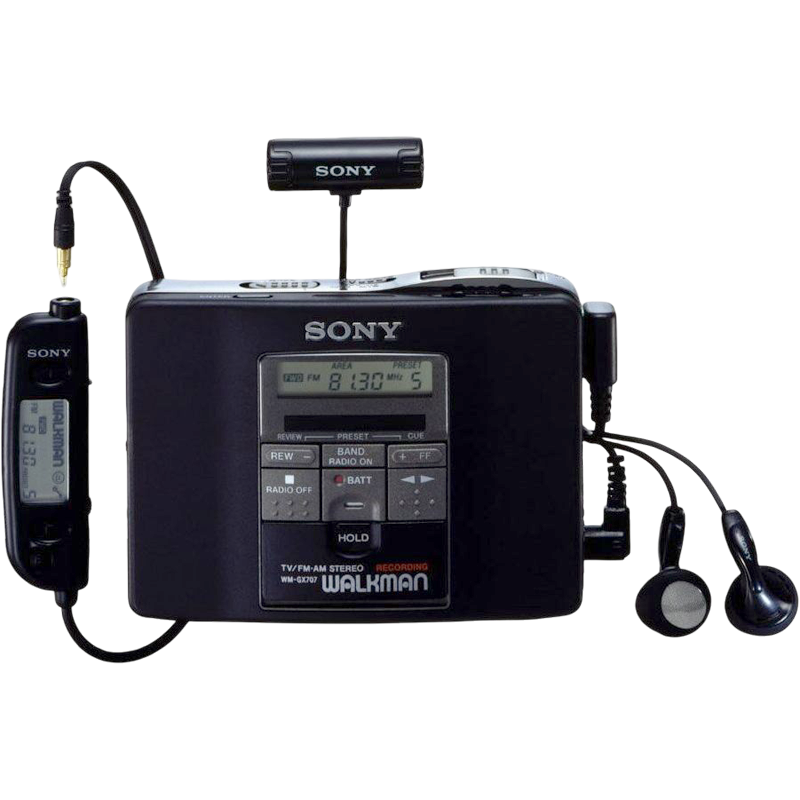
The WM-GX707 is a radio-recording Walkman that combined cassette playback and recording with AM, FM, and TV audio reception in a single compact unit. Recording could be taken from broadcast or external sources through internal preamplification, while auto-reverse, Dolby B, Automatic Music Sensor, Extended Dynamic Bass Boost, and remote control kept it aligned with Sony's better everyday cassette models instead of pushing it into obvious field-recorder territory. The metal-framed body gave it a more serious feel than a casual all-in-one portable. This is the kind of machine that only really makes sense once the Walkman had become a full portable ecosystem instead of just a music player. The GX707 was built for users who still wanted to capture, collect, and move sound around instead of simply replay it. It is less of a compromise device and closer to a very compact utility recorder that happened to sit inside the broader Walkman line.
WM-EX808
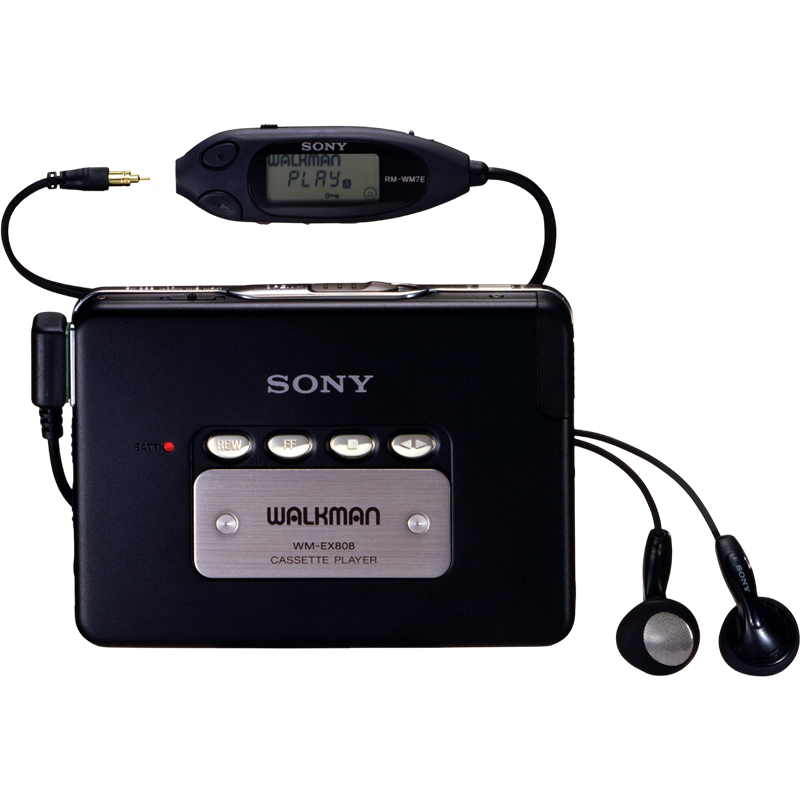
The WM-EX808 was the first Walkman to use an aluminum-magnesium alloy body, giving Sony a thinner and stiffer chassis without the weight penalty of a heavier metal shell. At roughly 20 millimeters thick, it still fit auto-reverse, Dolby B, Extended Dynamic Bass Boost, AVLS, automatic music sensor, blank skip, and remote control into a genuinely compact body, but the real point was how structurally resolved the player felt in the hand. The shell itself became part of the product identity, not just a container for the transport inside. The EX808 matters because it shows where Sony began looking for progress after the cassette mechanism itself had already been refined again and again. This model was not about adding another branch or another audio mode, but about making the object stronger, slimmer, and more satisfying as a physical thing. It reads like a machine from the phase when materials became part of the innovation story.
WM-EX808HG
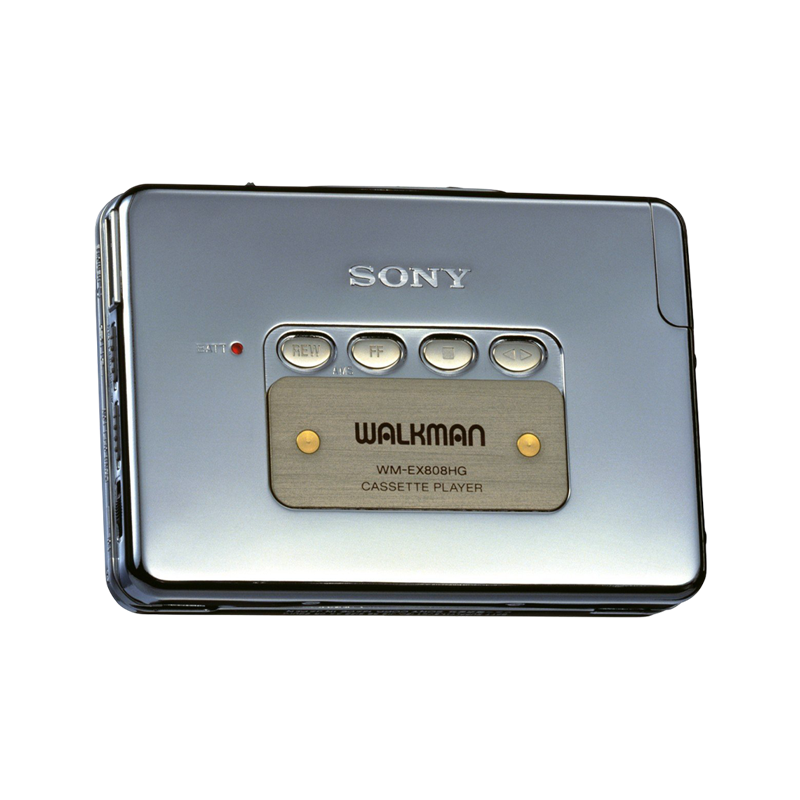
The WM-EX808HG is a close derivative of the EX808 that pushed the same aluminum-magnesium chassis into a more premium finish-focused direction. It retained the same auto-reverse transport, Dolby B, Extended Dynamic Bass Boost, AVLS, Automatic Music Sensor, blank skip, and remote operation, but distinguished itself through upgraded exterior treatment including chrome-plated surfaces intended to better resist visible wear over time. Mechanically it stayed close to the base model, but physically it presented itself as the more elevated version. What makes the HG variant interesting is that it shows Sony continuing to segment the Walkman through material quality and ownership feel instead of through obvious functional escalation. By then the way a player aged in a pocket or bag could matter almost as much as what it did. The EX808HG is a machine built for users who noticed that difference.
WM-EX999
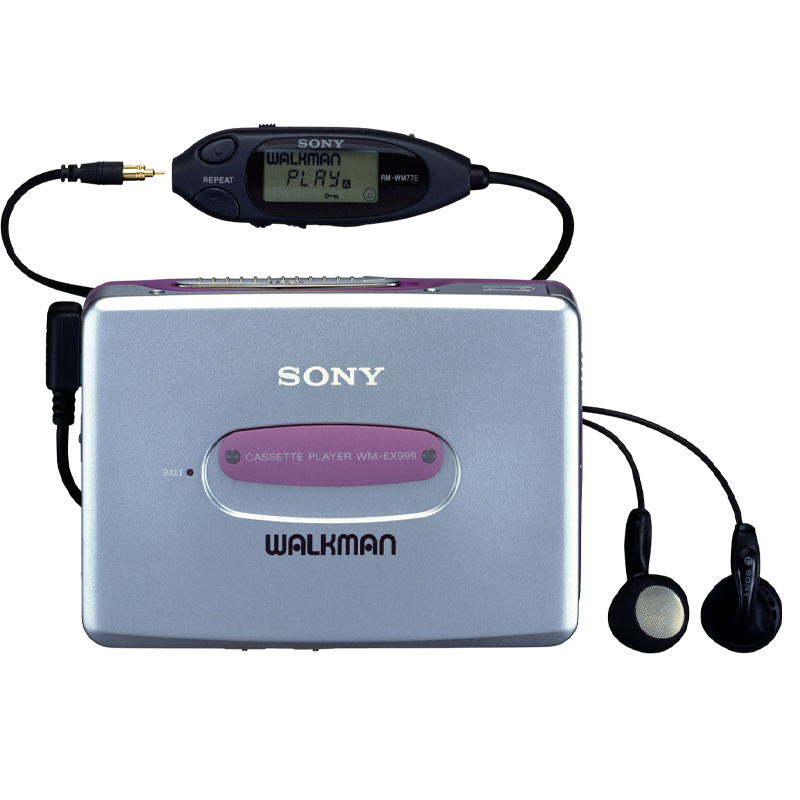
The WM-EX999 was Sony's flagship playback Walkman for 1993 and one of the clearest late expressions of how far the company was willing to refine cassette mechanics. It used a dual-head playback system with bi-azimuth adjustment, allowing each tape direction to maintain more accurate alignment without depending on a single rotating head assembly. Sony also included auto-reverse, Dolby B, Extended Dynamic Bass Boost, automatic music sensor, blank skip, AVLS, and advanced LCD remote compatibility, all in a compact metal-framed body that still looked like a normal Walkman rather than a specialist device. This is one of those models where the engineering became quiet but very serious. The EX999 was not trying to announce a new era so much as remove the last known compromises for people who still cared about cassette playback quality. It feels like the peak of a mature format, where Sony was no longer inventing the Walkman but polishing it almost to the edge.
1993 was when Sony was defending the category’s hard-won excellence instead of pushing its boundaries further. That stability created breathing room for the identity fragmentation that would arrive mid-decade. 1993 left the Walkman at peak analog consistency and ready to be reimagined through segmentation, the plateau itself a subtle admission that pure analog growth was slowing.