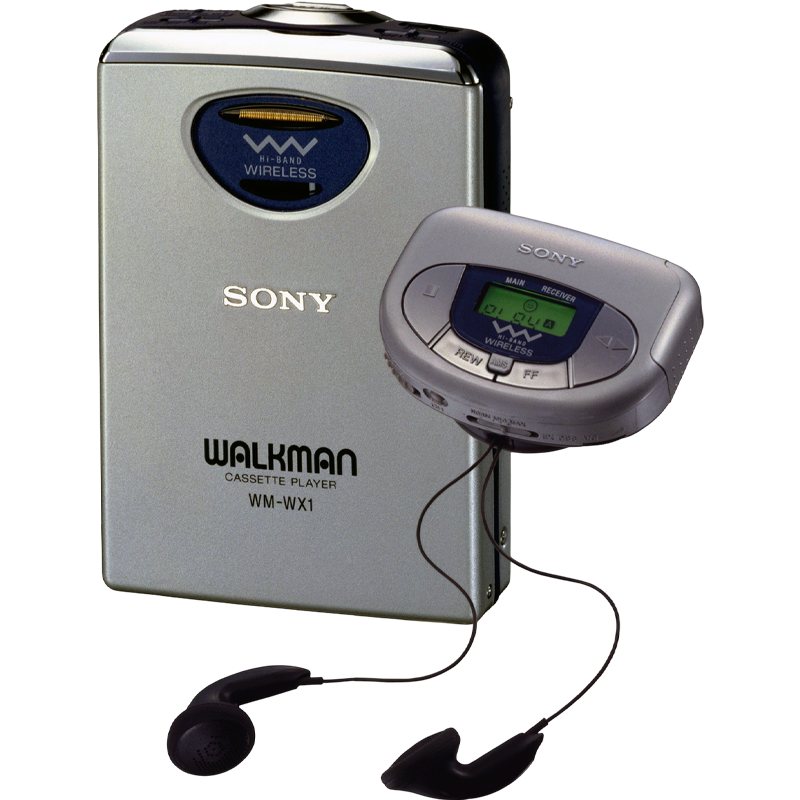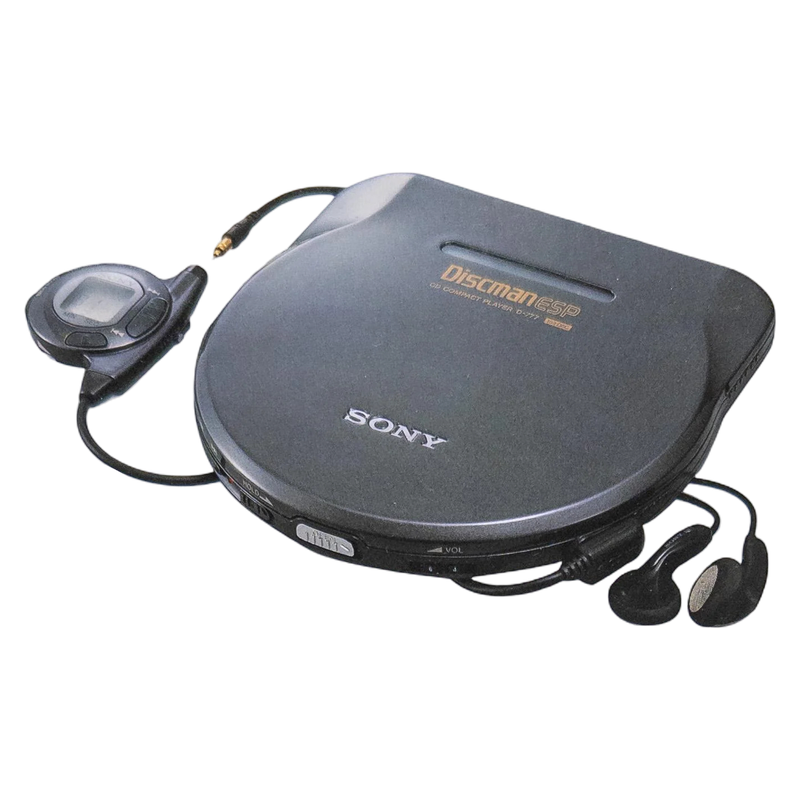
In 1995, MiniDisc was incorporated as part of the portable audio product line. The design has been modified to be more suitable for everyday use through weight reduction, improved power efficiency, and simplified controls.
MZ-B3
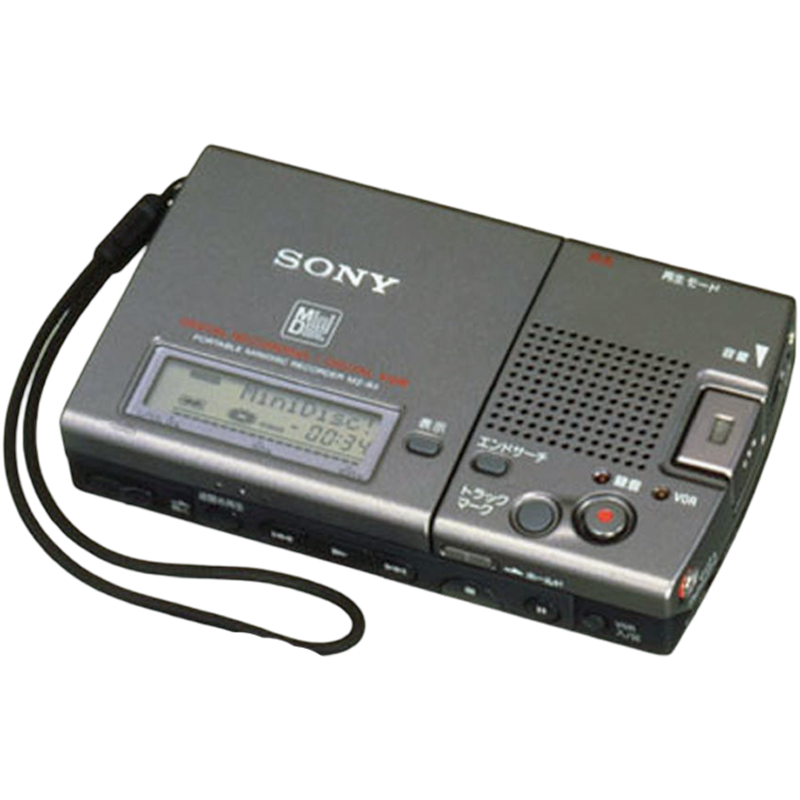
The MZ-B3 is a voice recording-focused model that expands the MiniDisc format from music to voice recording. Equipped with a built-in mono microphone and speaker, it allows for recording and playback without external devices. The recording function is optimized for conversations and note-taking, featuring voice-activated recording start/stop, high-speed playback mode, and position indicator. It lacks line input and optical input, and its editing functions are simplified, not supporting title input or advanced track management. It uses standard batteries and rechargeable batteries, and is designed as a standalone voice recorder.
MZ-R3
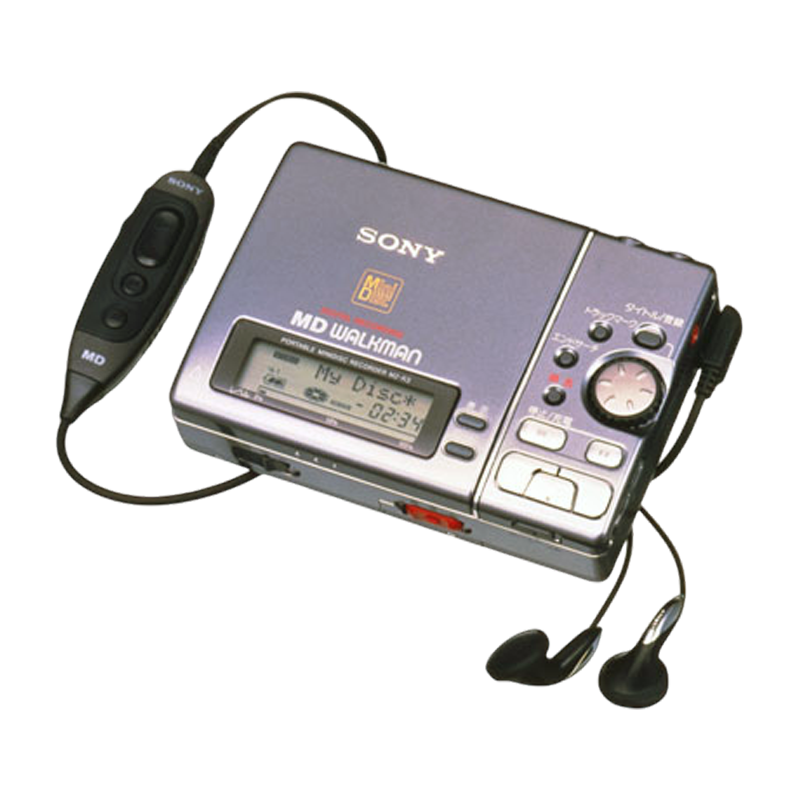
The MZ-R3 expands early MiniDisc recording into a more flexible system. Microphone, line, and optical inputs support both analog and digital recording across a wide range of sources. Recording control includes both automatic and manual level adjustment, while editing functions such as divide, combine, move, and titling allow recordings to be organized directly on the device. Date and time stamping adds context, and multiple battery options extend runtime.
MZ-E3
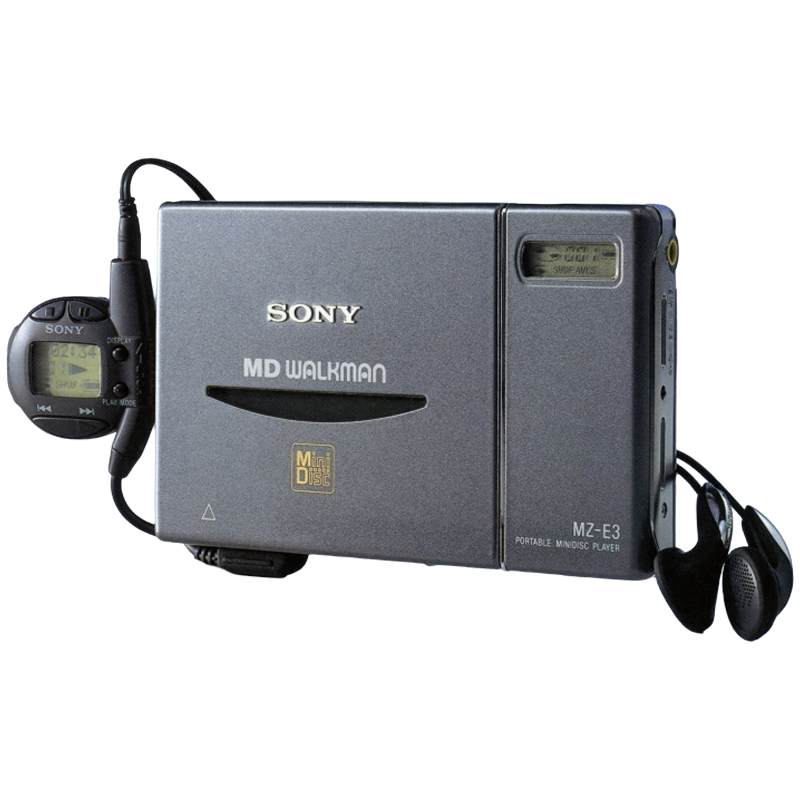
The MZ-E3 reflects a transitional stage before true MiniDisc miniaturization, with a design that remains relatively large and mechanically integrated compared to later players. Power comes from a dedicated rechargeable battery pack, with optional AA support through an external attachment. Playback remains straightforward, with basic sound enhancement and dual displays on both the unit and remote for track information.
In 1995, MiniDisc was redefined as a format suitable for everyday use. This structure was subsequently applied to subsequent models.