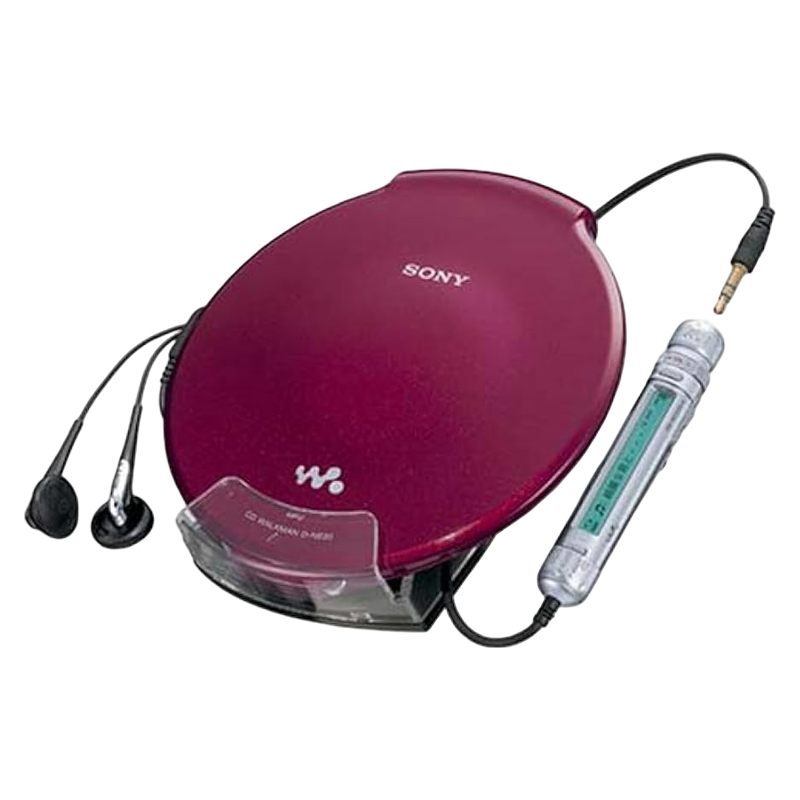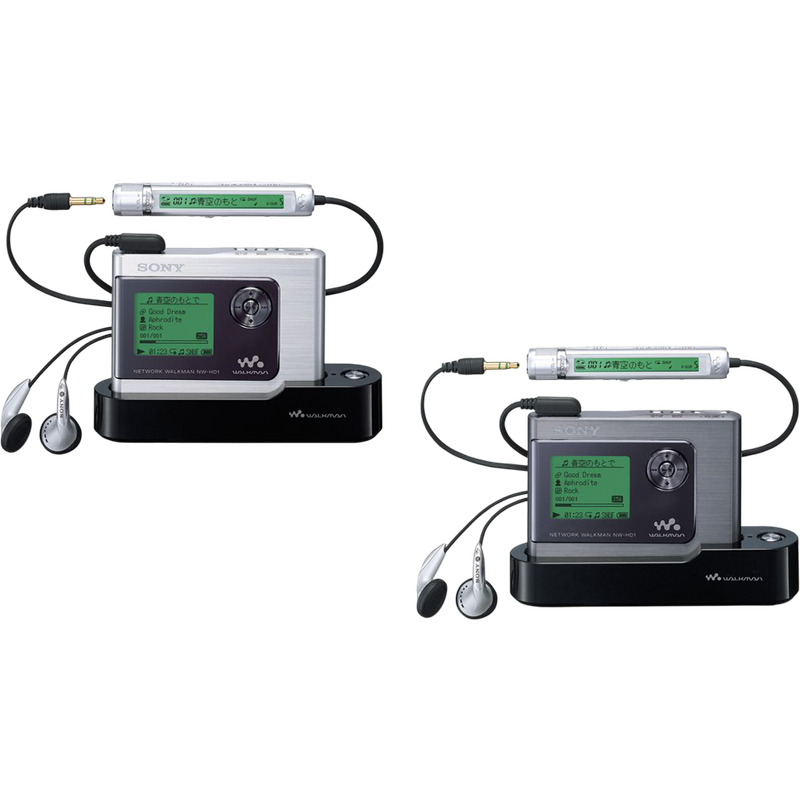
In 2004, MiniDisc was maintained as a parallel structure to file-based audio sources. A configuration was adopted that addresses the need for enhanced recording and management functions.
Qualia 017
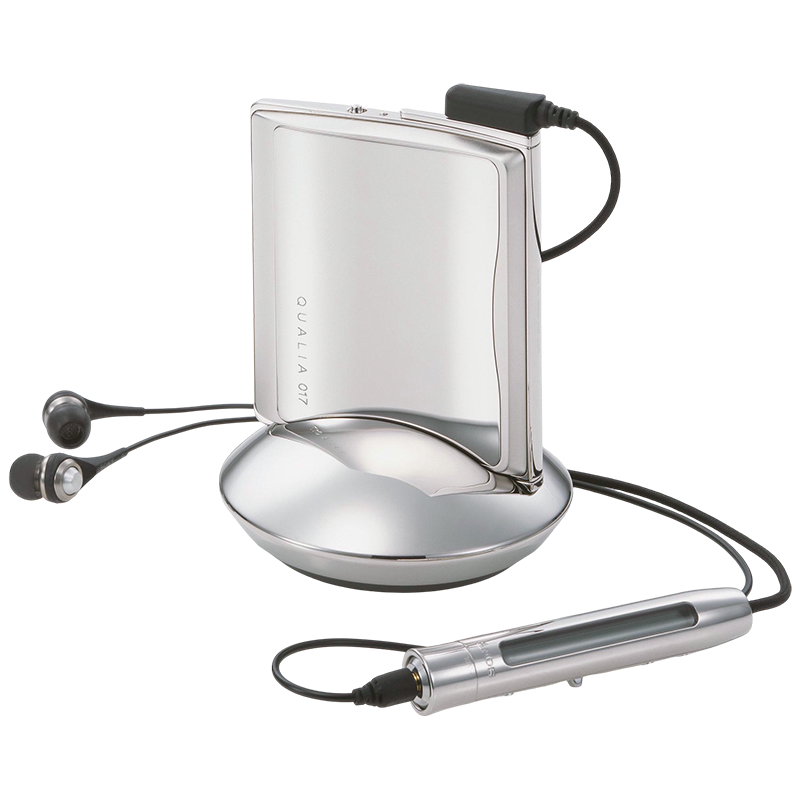
The Qualia 017 is a playback-only MiniDisc player developed under Sony's Qualia line, where material quality and construction take priority over feature expansion. Its chassis is machined from solid brass, giving it far more weight and rigidity than a typical portable player. This model omits recording entirely, with support limited to standard MiniDisc playback and no compatibility for newer formats or extended recording modes. The included charging stand and bundled earphones form part of a more controlled listening setup. Design decisions focus on finish, weight, and physical presence instead of portability or versatility.
MZ-NF520
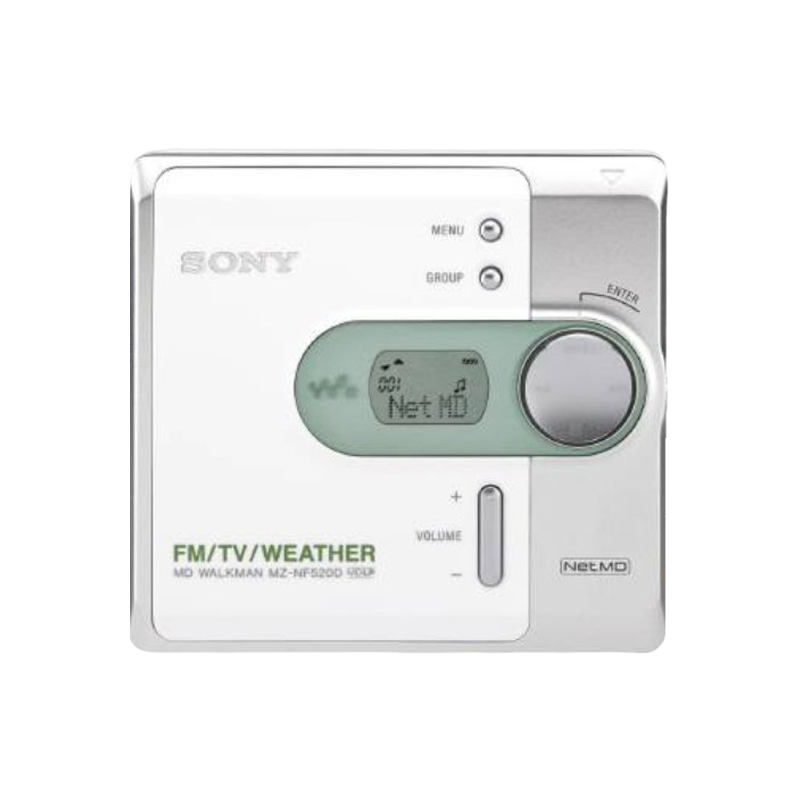
The MZ-NF520 combines USB-based audio transfer with a radio system built into the remote, splitting its function between two separate audio sources. As a MiniDisc unit, it removes microphone, line, and optical inputs, relying entirely on computer transfer for recording. NetMD enables compressed audio to be written to disc at high speed, while playback features such as MDLP and group mode remain available. The remote includes AM, FM, TV, and weather band reception, functioning as a standalone radio. Listening can switch between MiniDisc playback and broadcast audio, though radio content cannot be recorded to disc.
MZ-N920
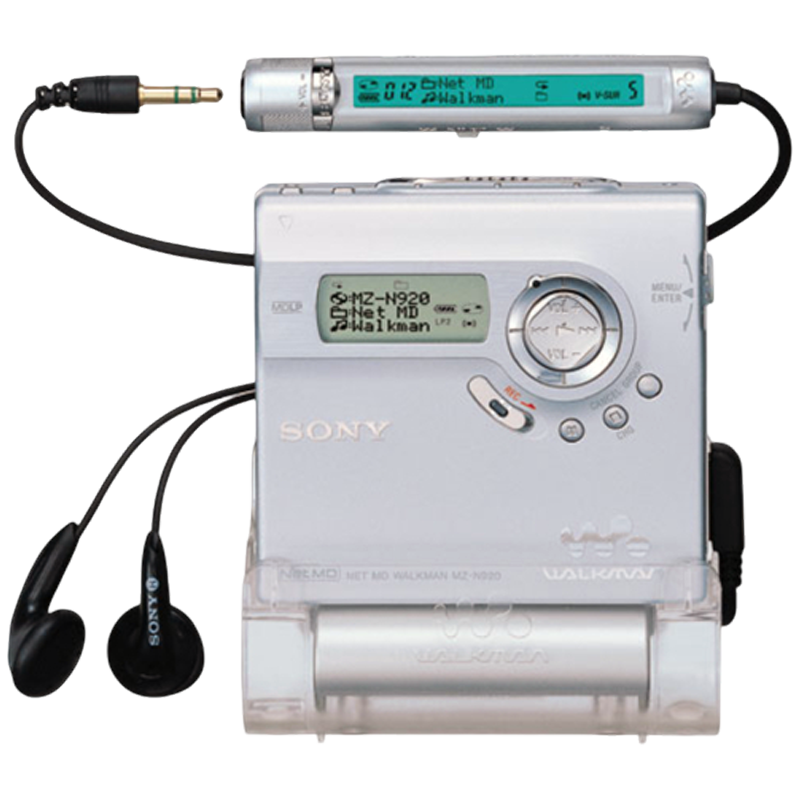
The MZ-N920 refines an already mature NetMD design with full input support and expanded playback processing. Microphone, line, and optical inputs support both analog and digital recording, while USB adds faster interaction with computer-based audio. ATRAC Type-S improves playback of compressed recordings, and the digital amplifier shapes output during listening. Additional processing options, including equalization and virtual surround, allow playback to be adjusted without changing the stored audio. Control is distributed between the main unit and a more detailed remote.
MZ-N420D
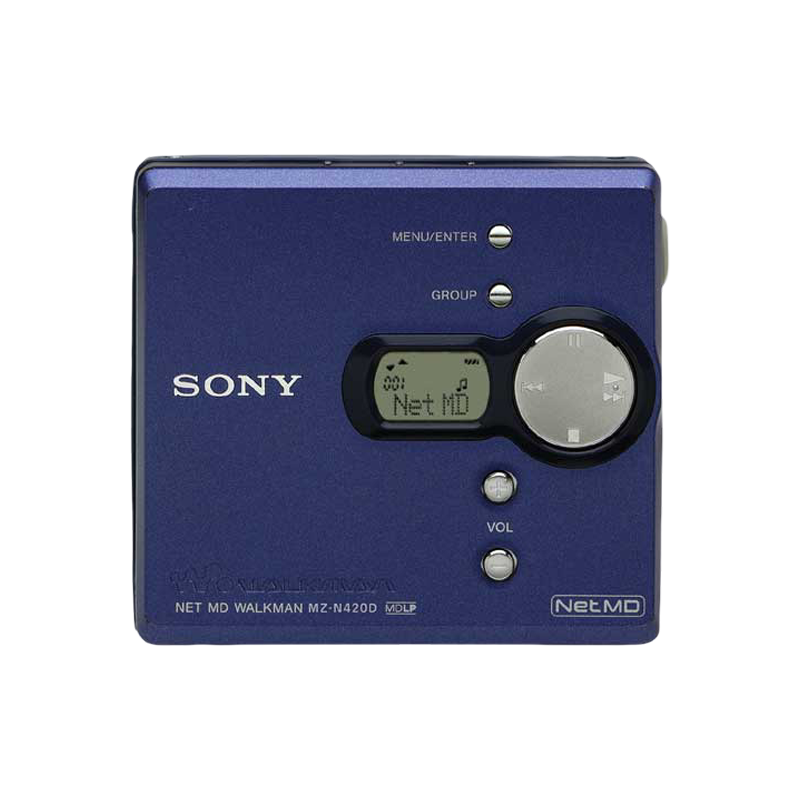
The MZ-N420D combines USB-based audio transfer with a radio system built into the remote, splitting its function between two separate audio sources. As a MiniDisc unit, it removes microphone, line, and optical inputs, relying entirely on computer transfer for recording. NetMD enables compressed audio to be written to disc at high speed, while playback features such as MDLP and group mode remain available. The remote includes AM, FM, TV, and weather band reception, functioning as a standalone radio. Listening can switch between MiniDisc playback and broadcast audio, though radio content cannot be recorded to disc.
MZ-E520
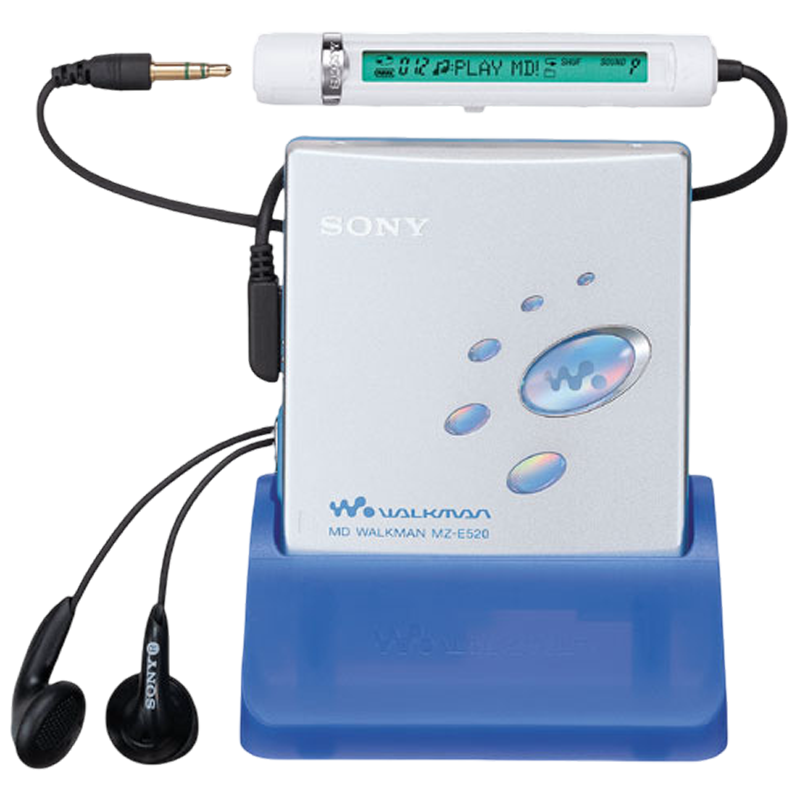
The MZ-E520 is built around efficient playback instead of expanded functionality. It supports both standard MiniDiscs and MDLP recordings. A digital amplifier handles audio processing after decoding, and ATRAC Type-S improves playback of MDLP recordings. A multi-band equalizer provides direct control over tonal balance. Charging is handled through a dedicated stand, and a backlit remote carries most of the interface.
MZ-E630
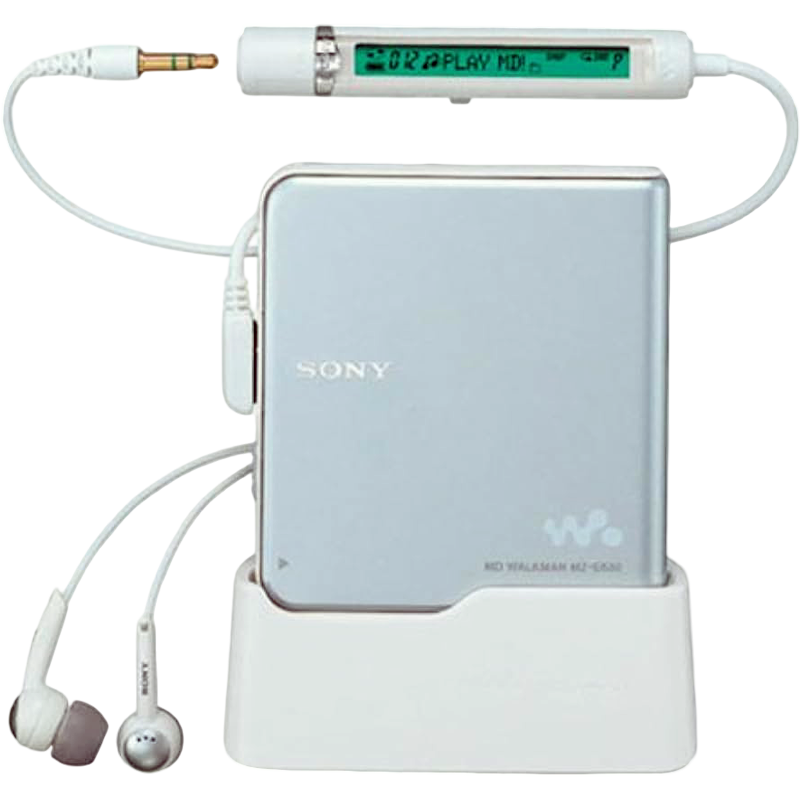
The MZ-E630 refines playback instead of expanding features, while remaining compatible with both standard and long-play MiniDisc formats. MDLP support extends playback time, and ATRAC Type-S improves reproduction of compressed recordings. A digital amplifier and onboard signal processing shape audio during playback with options such as bass enhancement and volume limiting. Control is handled primarily through a remote with full display support for track navigation and grouping functions.
MZ-E730
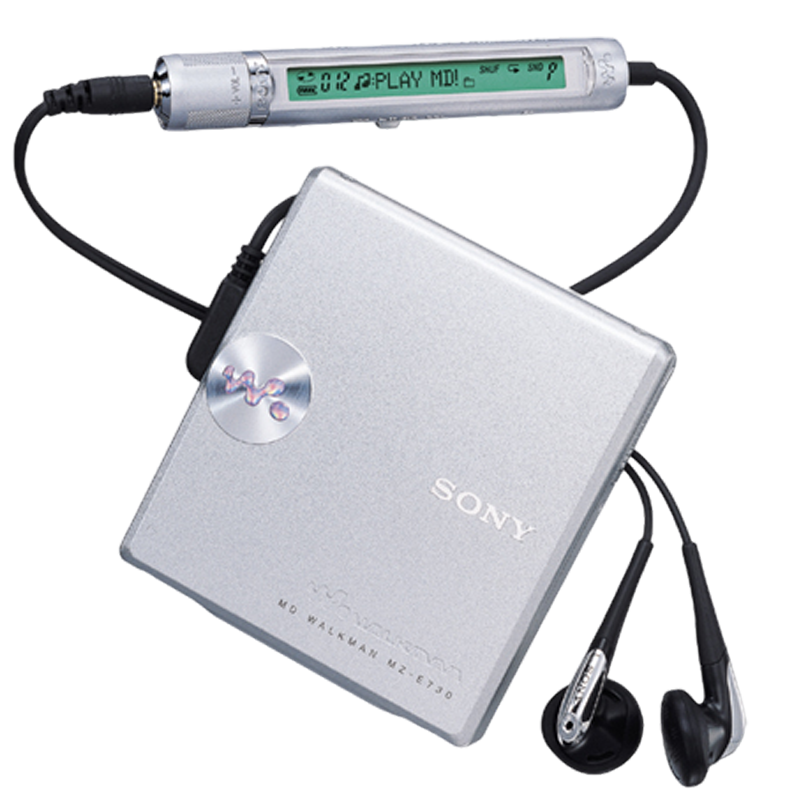
The MZ-E730 is built around playback control and refined materials, using an aluminum chassis to increase rigidity while keeping the unit compact. It remains playback-only, focusing entirely on how audio is processed and reproduced. An upgraded digital amplifier works with sound processing features such as virtual surround effects and equalization. Playback speed can be adjusted directly on the device. Charging is handled through a dock instead of a direct cable connection. Most control is handled through the remote.
MZ-EH1
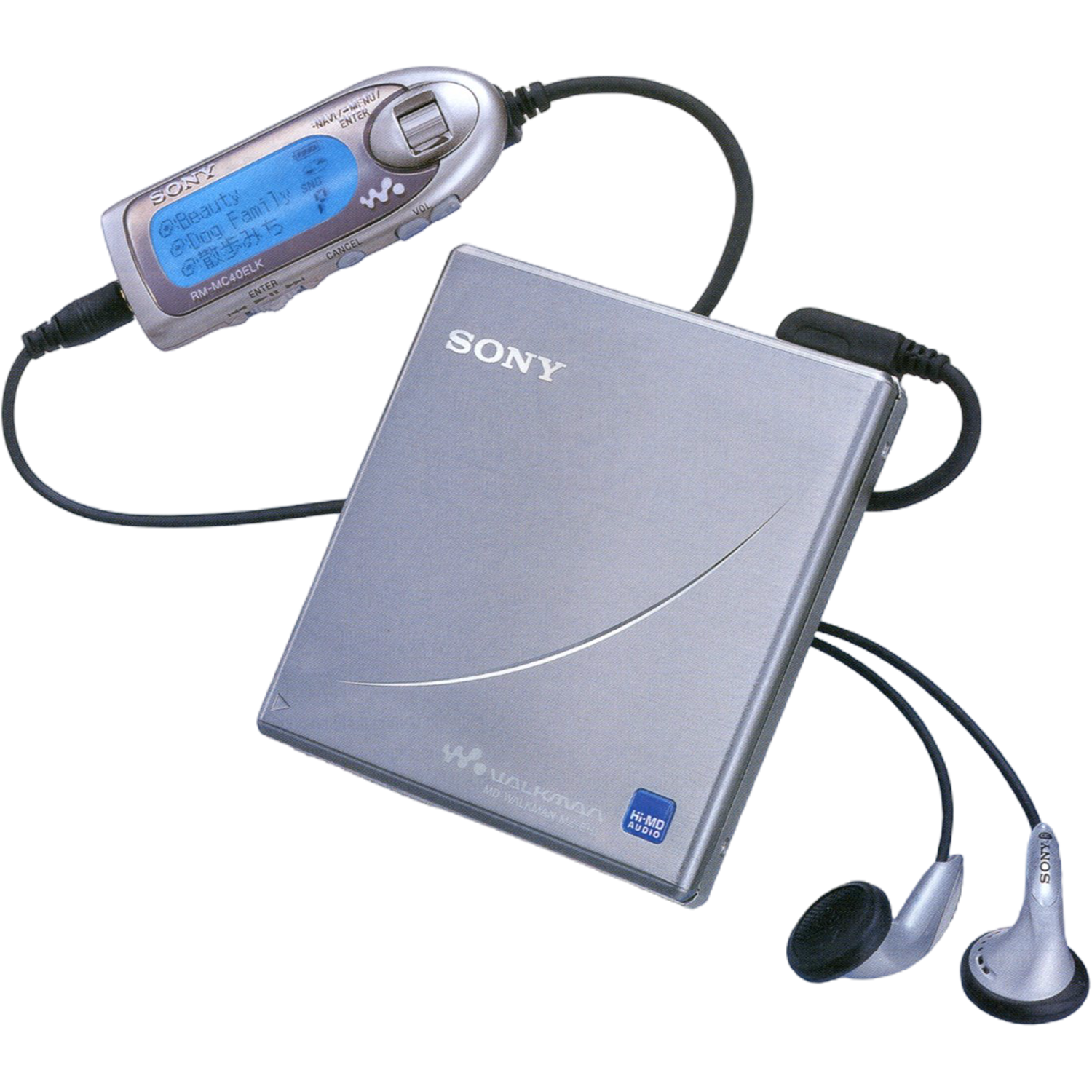
The MZ-EH1 is part of the first players built for the Hi-MD format, supporting both standard MiniDiscs and higher-capacity Hi-MD discs. Hi-MD increases storage capacity and enables playback of both compressed formats and uncompressed audio. The unit is playback-only and depends on external recorders or computers to create Hi-MD content. The remote includes a multi-line display with detailed track information, including Japanese character support. Power comes from a lithium polymer battery that provides higher capacity in a smaller space.
MZ-N520
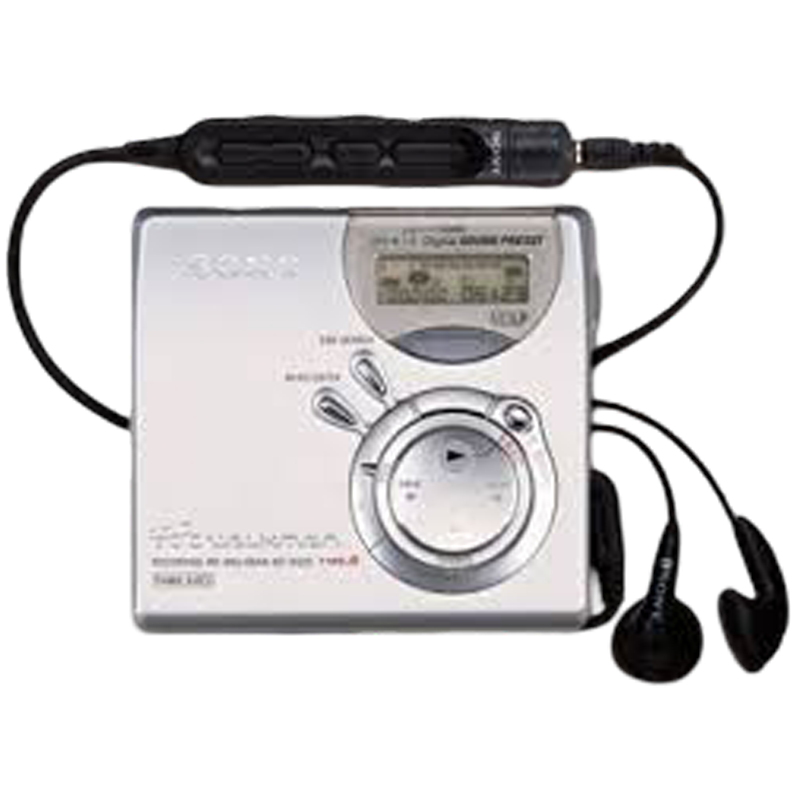
The MZ-N520 keeps both analog and digital recording paths while adding USB transfer. Line and optical inputs support recording from external sources, while USB provides a second path through computer-based audio. MDLP extends recording time through compression, and ATRAC Type-S improves playback of those recordings. Optical input allows direct digital recording. A single AA battery keeps the power system simple and easy to replace.
MZ-NH1
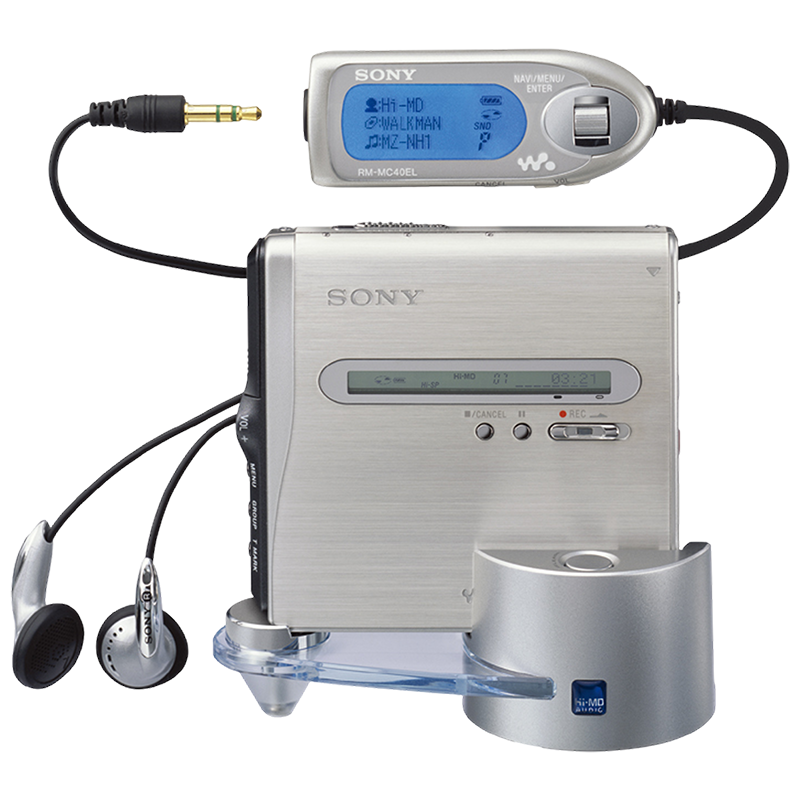
The MZ-NH1 was introduced as the flagship recorder during the early stages of Hi-MD's development, featuring full recording capabilities and a highly rigid aluminum casing. Equipped with microphone input, line input, and optical input, it supports both analog and direct digital recording without the need for a PC. Hi-MD expanded recording capacity, and multiple recording modes, including Linear PCM, were available. USB transfer support also provided greater flexibility in file management compared to previous models. With a configuration that allows for recording, editing, and transfer all in one unit, the dense feel of the metal body contributes to its flagship-like finish.
MZ-NH3D
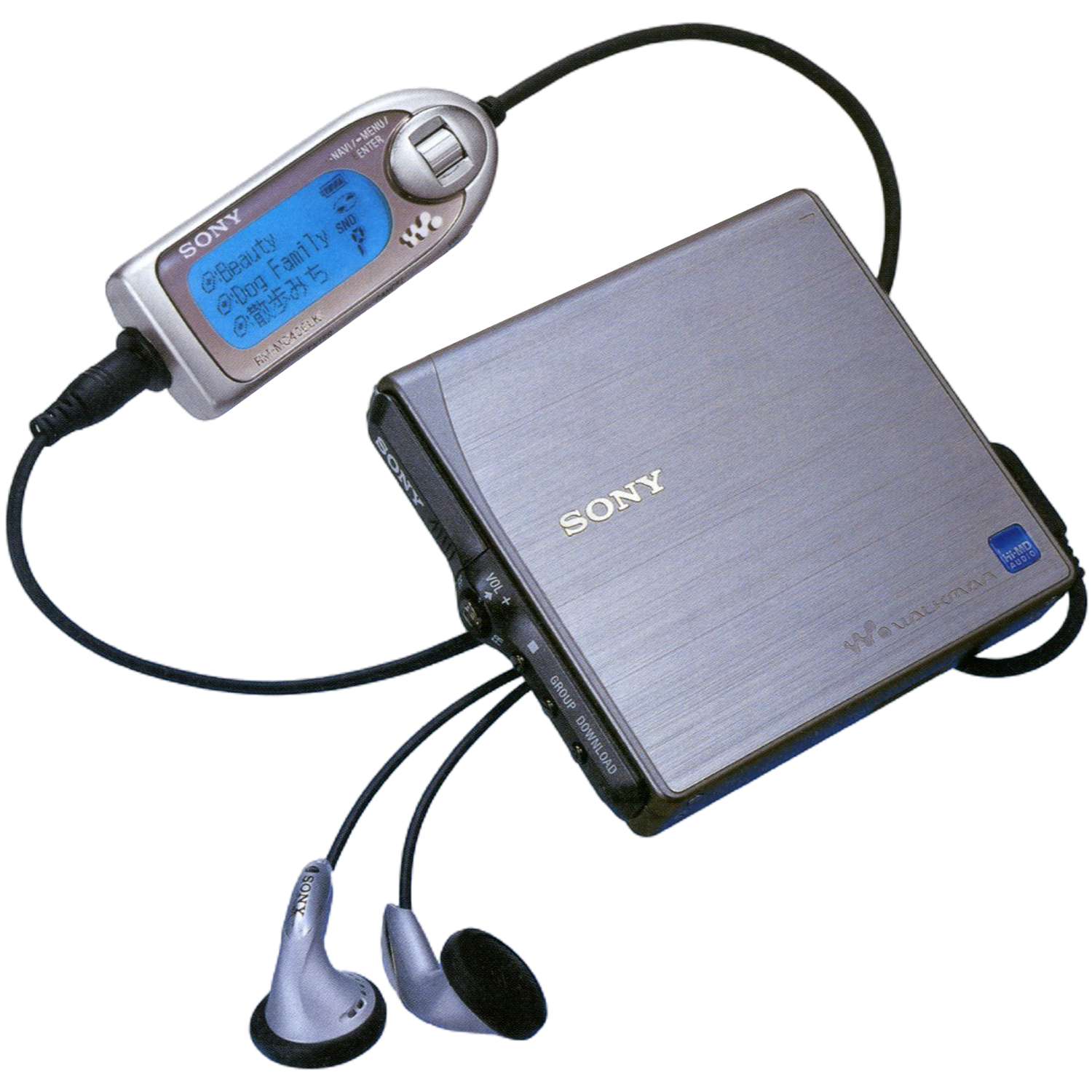
The MZ-NH3D keeps basic recording capability while removing most external inputs. It retains a microphone input for direct recording but omits line and optical connections. Hi-MD supports both compressed and uncompressed recording modes, though the workflow is narrower. Most audio is transferred over USB, with the microphone used for simple standalone recording. The internal rechargeable battery and compact body emphasize portability.
MZ-NH600
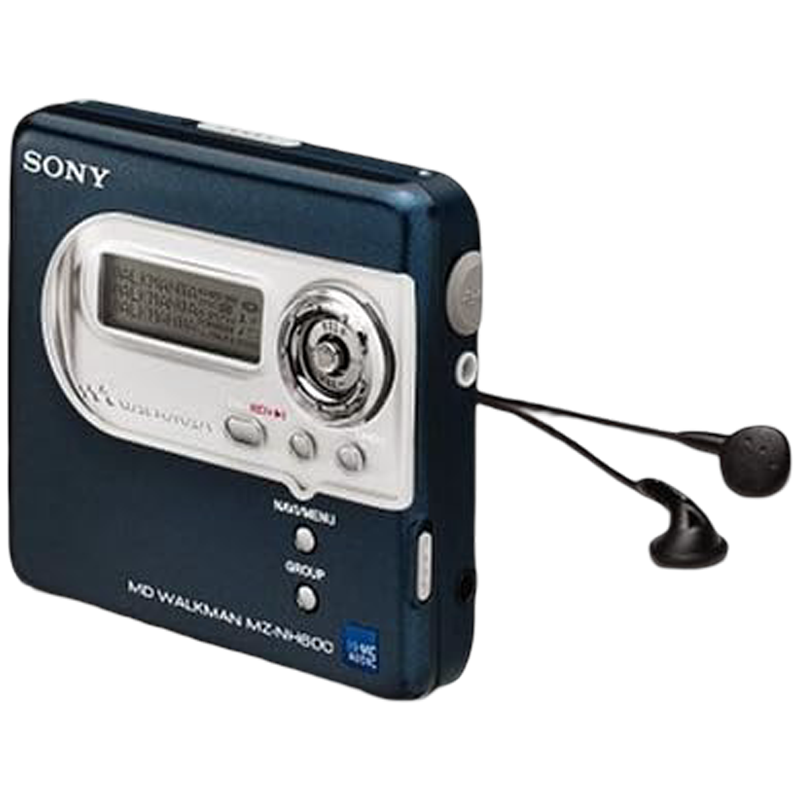
The MZ-NH600 exists in two configurations depending on region, creating a split between full recording capability and USB-focused operation. In versions with line and optical inputs, it functions as a traditional recorder with added digital transfer support. Hi-MD increases storage capacity and supports higher-quality recording modes. USB transfer reduces reliance on real-time recording. A standard AA battery keeps the power system simple and replaceable.
MZ-NH600D
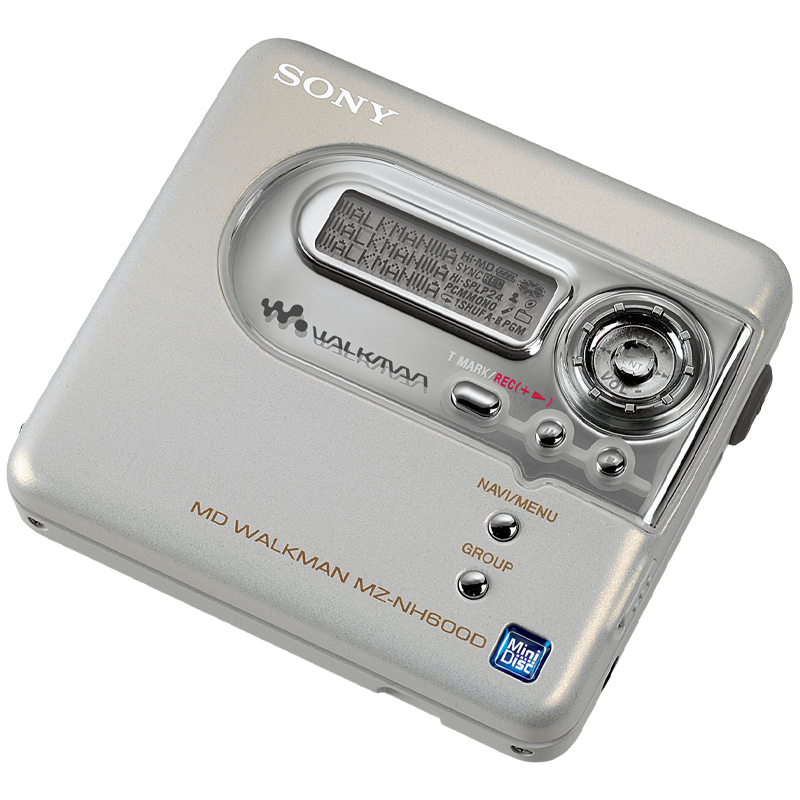
The MZ-NH600D removes optical and line inputs, shifting the device toward a workflow centered on transferring audio from a computer. Recording without a computer is limited to the microphone input. Hi-MD support remains intact, allowing use of higher-capacity discs and multiple recording formats. Power comes from a single AA battery.
MZ-NH700
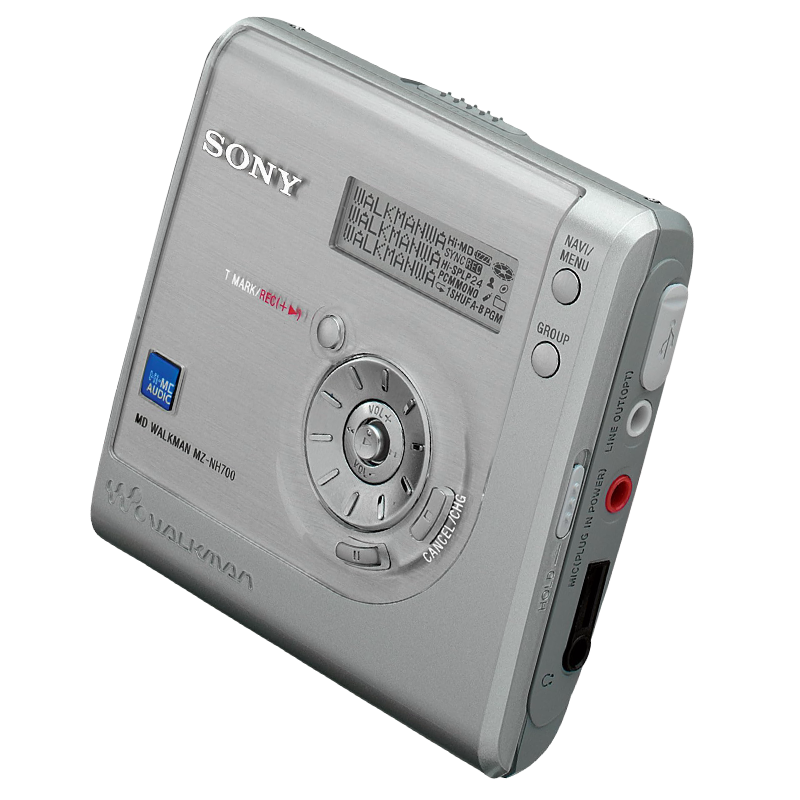
The MZ-NH700 keeps a full set of inputs while simplifying materials compared to higher-end models. Microphone, line, and optical connections support both analog and digital recording. Hi-MD expands storage capacity and supports uncompressed recording alongside compressed formats. USB transfer allows faster movement of audio between the device and a computer. AA battery power extends runtime without relying on proprietary cells.
MZ-NHF800
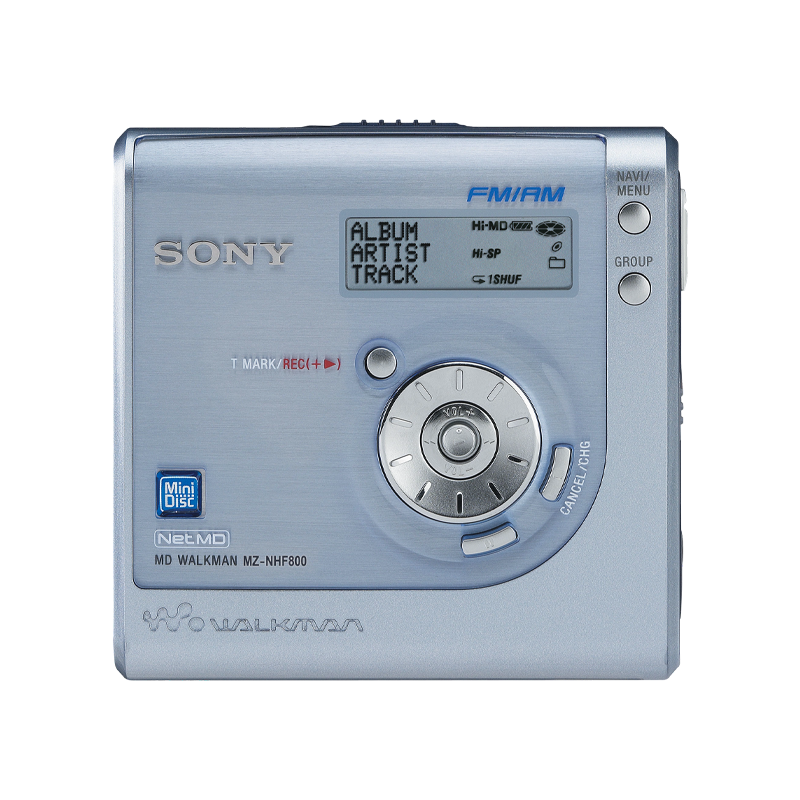
The MZ-NHF800 maintains full recording capability while introducing a different control system through its bundled remote. Microphone, line, and optical inputs support both analog and digital recording. Hi-MD supports multiple recording modes, including uncompressed PCM. USB transfer enables faster file movement. The remote includes an LCD display and an integrated AM/FM radio tuner.
MZ-NH900
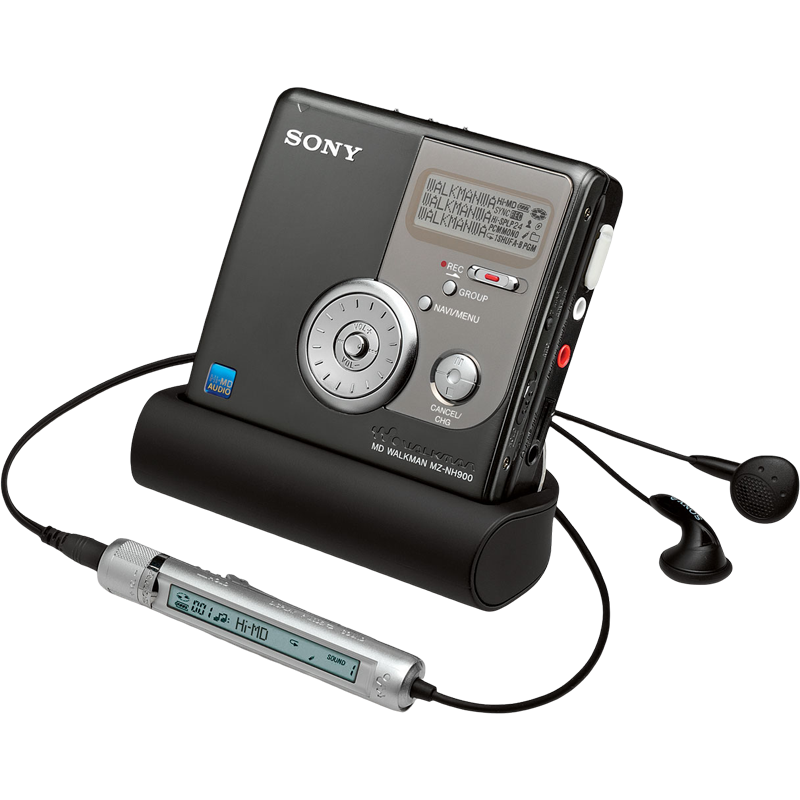
The MZ-NH900 combines full recording capability with a more refined physical build. Its metal chassis increases rigidity and supports extended recording and playback. Microphone, line, and optical inputs are all present. Hi-MD enables both compressed and Linear PCM recording. USB transfer integrates the device into computer-based workflows. On-device editing allows tracks to be adjusted without external software.
In 2004, the gap between product structure and market structure widened. On the other hand, the structural advantage in recording capabilities was maintained.