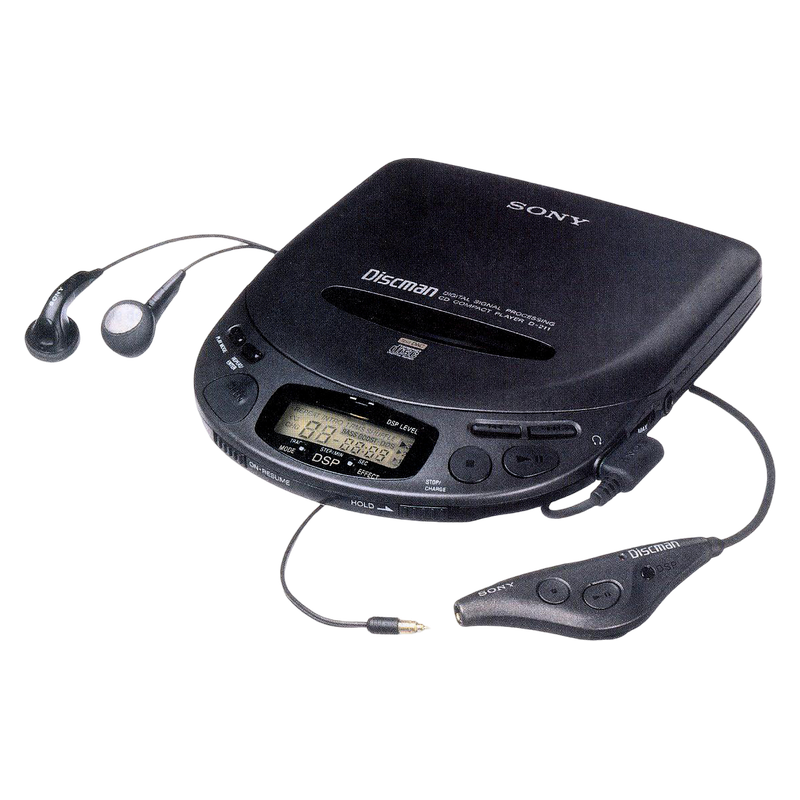
In 1992, Sony had placed ergonomics and ease of operation at the center of new models, making the player feel like a natural extension of the hand. The designs grew quieter and more invisible in the best sense, blending into routines without drawing attention to themselves.
WM-EX66
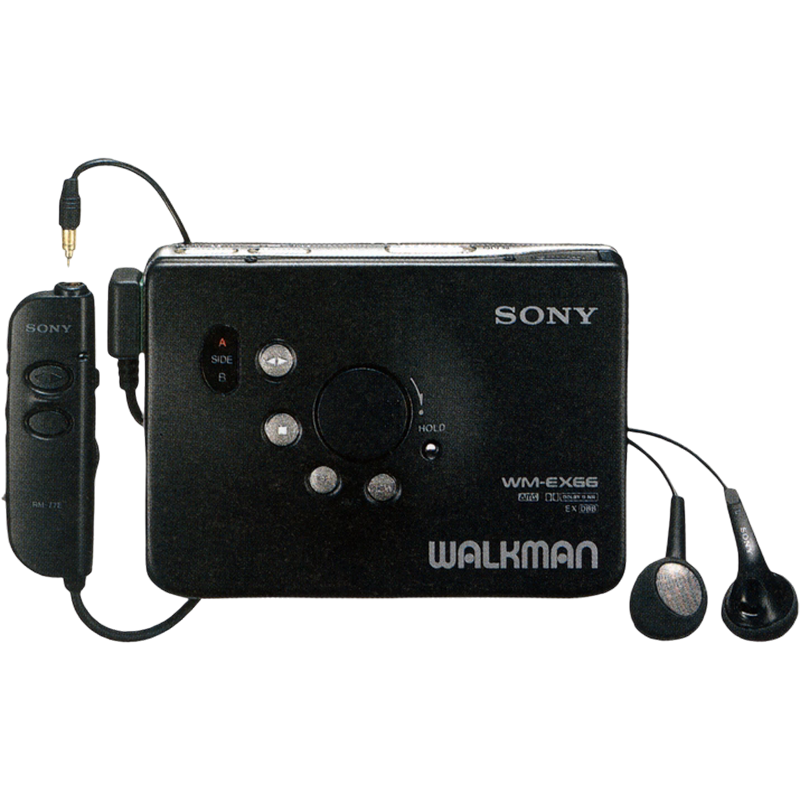
The WM-EX66 is a playback-only EX-series Walkman from 1992 that combined Sony's mature cassette essentials with a more colorful, everyday-facing presentation. It uses an EX Amorphous head, auto-reverse transport, Automatic Music Sensor track search, AVLS volume limiting, and Sound Swing Guard anti-vibration control, with a centrally placed rotating hold dial that made the control layout feel more integrated than on many earlier models. Vivid body finishes helped distinguish it visually from plainer siblings, while the wired remote preserved the increasingly standard late-Walkman habit of controlling playback one step away from the main unit. This model shows how settled the Walkman had become by the early 1990s. Sony was no longer trying to persuade buyers that cassette portability was exciting, but making sure even midrange players felt pleasant, stable, and current enough to remain desirable. The EX66 is a very deliberate everyday machine from a time when the basics had already been refined enough to feel mature.
WM-WX808
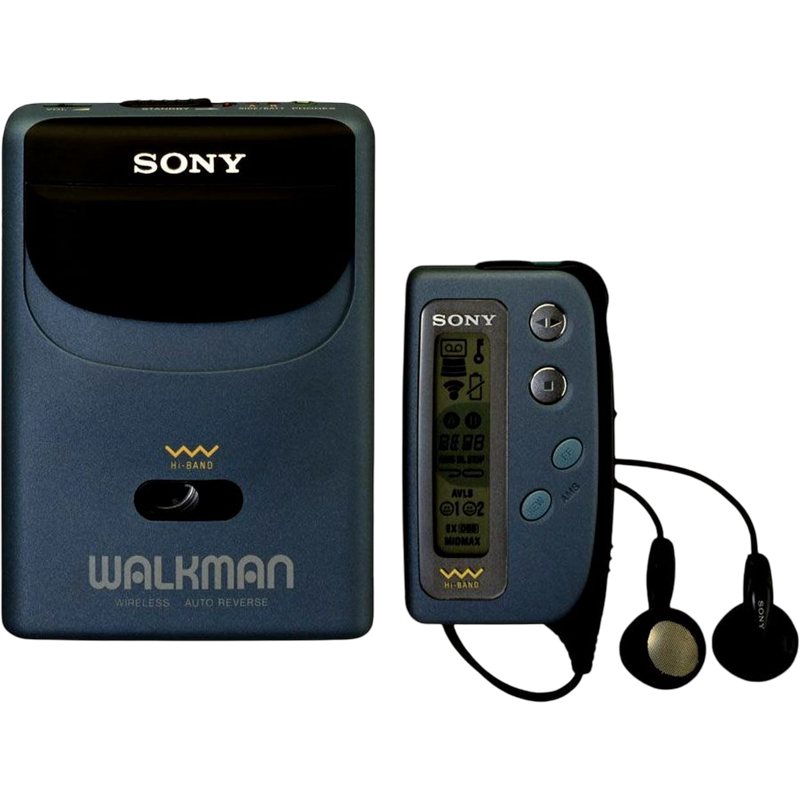
The WM-WX808 is a wireless cassette Walkman from 1992 that shifted Sony's cord-free listening concept toward greater everyday reliability instead of spectacle. It transmitted audio over a higher 238 MHz RF band to a matching belt-clip receiver, reducing the interference problems that had affected some earlier wireless systems. The main unit retained auto-reverse playback, Dolby B noise reduction, and Mega Bass in a fairly conventional cassette body powered by standard AA batteries, making the machine itself easier to live with than some of the more elaborate wireless experiments before it. This is one of those models where Sony's wireless branch starts feeling less of a futuristic side project and closer to an attempt to become practical. The WX808 was not trying to reinvent portable listening so much as make one specific convenience work with fewer tradeoffs. It is a cleanup model in the best sense: less ambitious on paper, but probably easier to use in the real world.
WM-EX909
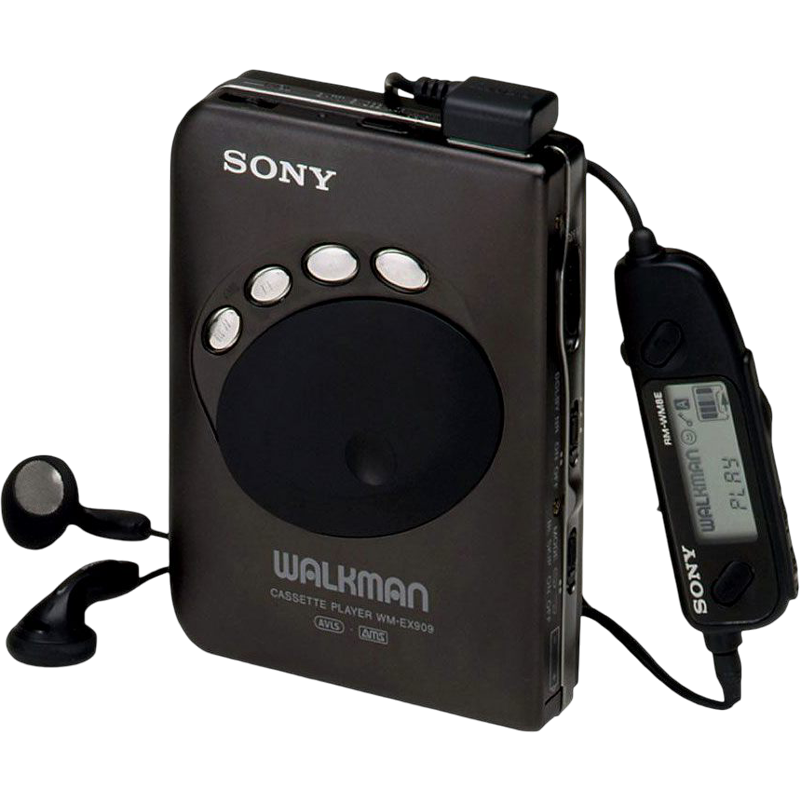
The WM-EX909 was a top-class playback Walkman from 1992 and one of Sony's clearest late attempts to solve the remaining compromises of auto-reverse cassette playback. Instead of relying on a rotating head assembly, it used separate fixed heads for each tape direction, preserving alignment and reducing the small inconsistencies in sound quality that could appear in conventional reversing mechanisms. Sony combined this with an EX Amorphous Head system, Dolby B, Extended Dynamic Bass Boost, AVLS, automatic music sensor, and a slim metal body with remote control, creating a machine that felt technically serious without becoming bulky. This is exactly the kind of model that appears only when a format is deep into maturity. Sony was no longer inventing cassette portability here, but refining the last annoyances for people who still cared enough to notice them. The EX909 feels like a machine built for listeners who had lived with Walkmans long enough to want the polished version of every old compromise.
1992 marked the point where the Walkman transitioned from something impressive to something simply there when needed. That seamless quality prepared the ground for the deliberate fragmentation into prestige and youth lines. 1992 left the category feeling second nature to users and primed for sharper segmentation, though the very invisibility made it harder to stand out against what was coming next.