
In 1984, a wide range of models were released to suit different price points and uses. The product is designed to appeal to a wide range of consumers.
WM-17
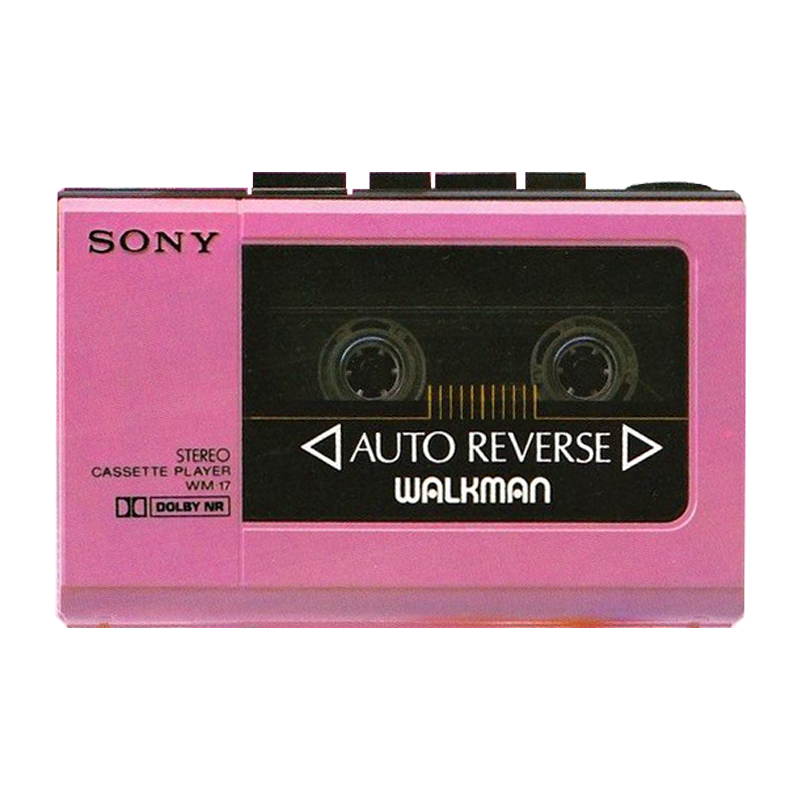
The WM-17 was a budget cassette Walkman introduced in 1984, combining colorful plastic construction with a more useful feature set than its price might suggest, including auto-reverse playback and Dolby B noise reduction. Beneath the outer shell it used a metal internal frame, ran on two AA batteries, and included a manual tape-type selector with straightforward transport controls arranged for easy everyday use. It was not a compact flagship or specialist model, but a simple player built to make the Walkman experience accessible without stripping away too much convenience. By 1984 Sony no longer needed every Walkman to prove a concept. Models like the WM-17 filled out the lower end of the range for buyers who wanted something reliable and modern without paying for miniaturization or prestige. It comes from the phase when the Walkman was becoming less a novelty and more a normal personal possession, the kind of machine someone bought simply because they needed one.
WM-30
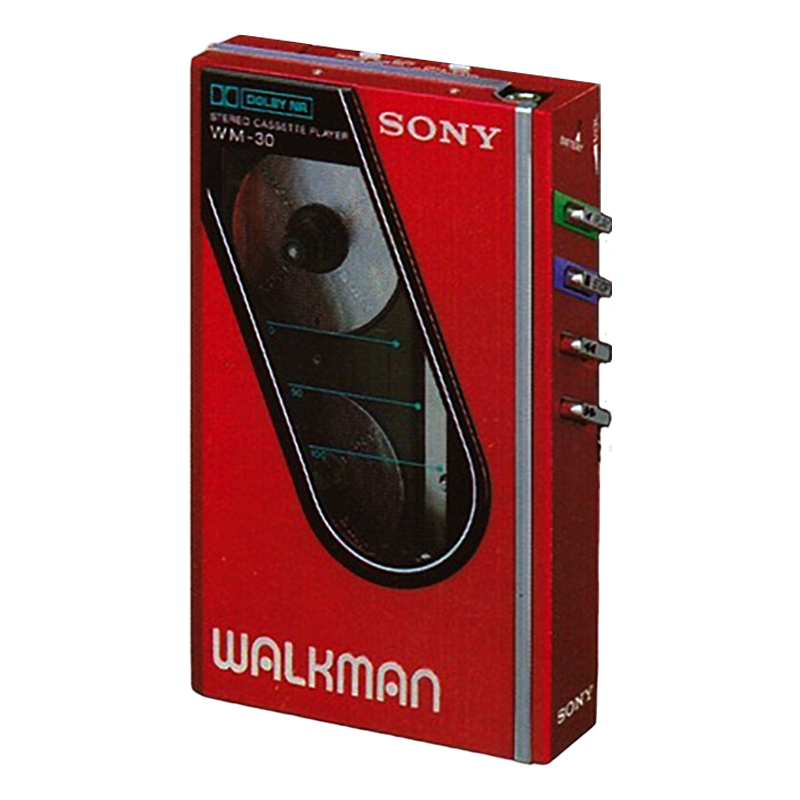
The WM-30 was an ultra-compact playback Walkman from 1984 that refined the expandable design of the earlier WM-10 with a brushed-metal body and upright layout that kept its footprint unusually close to that of a cassette itself. Powered by a single AA battery, it combined Dolby B noise reduction with a manual tape selector and a sliding body that expanded only when needed for cassette loading. The whole machine was built around making playback from a full stereo cassette seem improbably small. Where the WM-10 introduced the expandable format almost as an engineering statement, the WM-30 feels like Sony turning that idea into something broadly usable. It was aimed at people who wanted a Walkman that could disappear into a pocket or bag without feeling flimsy or stripped down. More than a radical departure, it marks the moment when the super-compact branch began to feel like a real part of the range rather than a clever side experiment.
WM-40
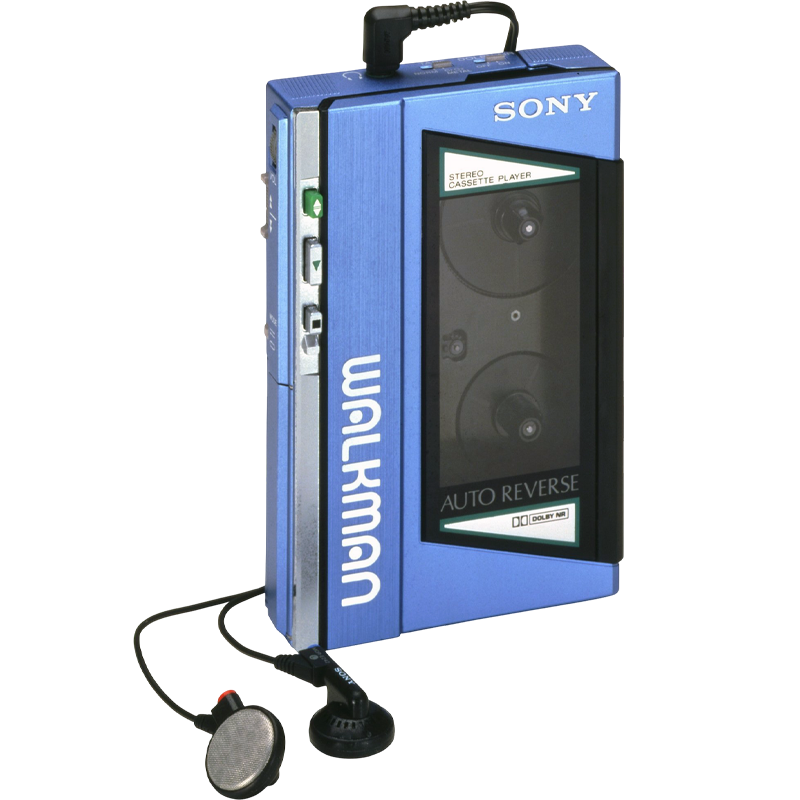
The WM-40 was a stretchable compact cassette Walkman introduced in 1984 within the WM-10 family, adding auto-reverse playback and Dolby B noise reduction to the expandable body format. Its metal-and-plastic shell extended for cassette loading and closed back down into a slim portable shape, while the front-mounted controls and manual tape selector kept operation simple despite the compact mechanism. Powered by a single AA battery, it was one of the smallest players of its time to combine miniaturization with a more convenient feature set. Sony was moving the tiny expandable concept beyond novelty into something easier to live with. The WM-40 was clearly aimed at users who wanted the smallest possible player but had little interest in manually flipping the cassette every time a side ended. It sits in the useful middle where the engineering still feels clever, but the priorities were already shifting toward everyday practicality.
WM-D6C
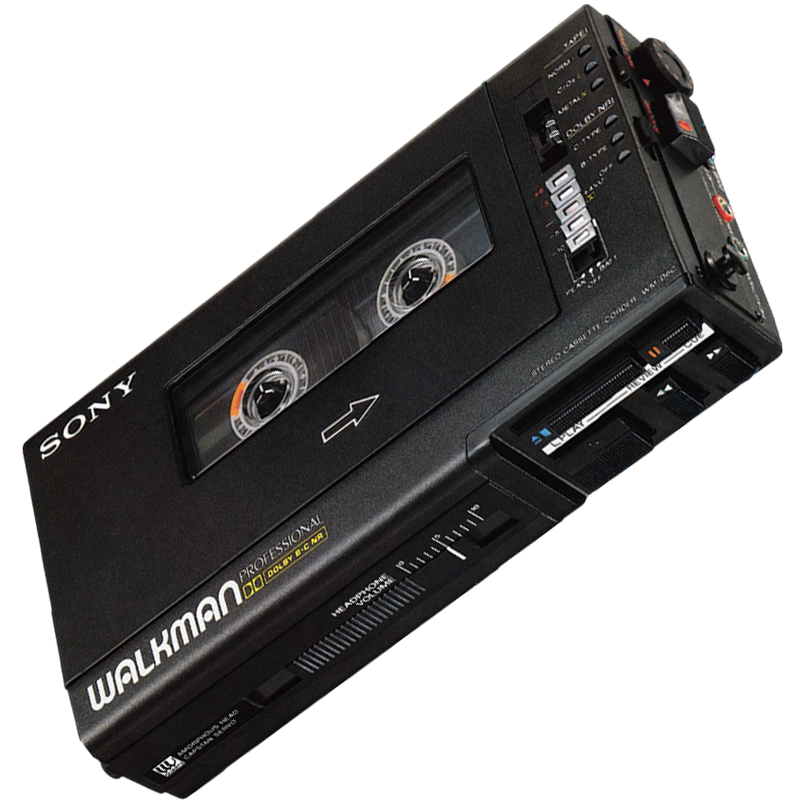
The WM-D6C is a professional portable cassette recorder that refined the earlier WM-D6 by adding Dolby B and C noise reduction, updated recording controls, and a dedicated line-in connection for cleaner external recording. Its metal body houses a quartz-locked Disc Drive transport, an amorphous recording and playback head, and switchable level metering that can be disabled to conserve battery life in the field. Everything about it is designed around control, stability, and trust rather than convenience. It matters because Sony recognized that portable cassette hardware could be taken seriously as a working tool. Journalists, musicians, engineers, and field recordists were the obvious audience, and the D6C earned its reputation by being good enough that people kept using it professionally long after most portable cassette machines had become disposable. It is one of the clearest examples of Sony treating mobility as a professional advantage, not a lifestyle feature.
WM-DC2
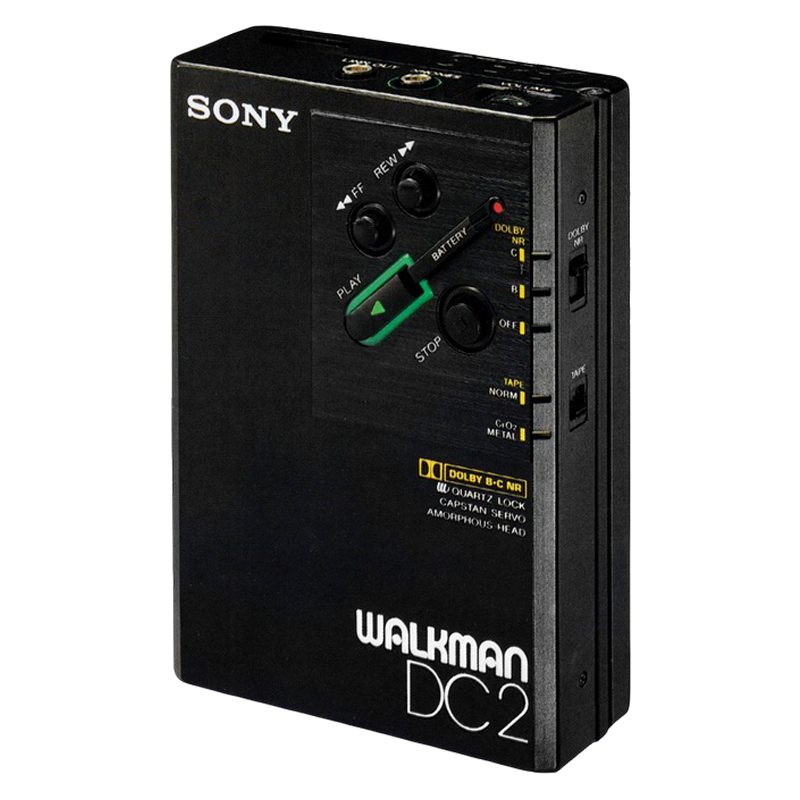
The WM-DC2 was a high-end playback Walkman built on Sony's Disc Drive platform, combining Quartz Lock speed stabilization with Dolby B/C noise reduction and a laser amorphous head for smoother tape contact and lower wear. It ran from two AA batteries in a compact metal body and treated playback quality as the whole point, without adding radio or recording as distractions. Compared with ordinary playback models, it was one of Sony's most serious cassette-only portable players. Sony was making a direct argument that portable cassette listening did not have to sit below home hi-fi. At a time when CDs were beginning to redefine what high quality meant, the WM-DC2 gave serious listeners a machine built around precision and fidelity rather than broadcast reception, recording, or novelty features. It feels less like a casual portable than a compact audiophile deck that happens to fit in a coat pocket.
WM-DD2
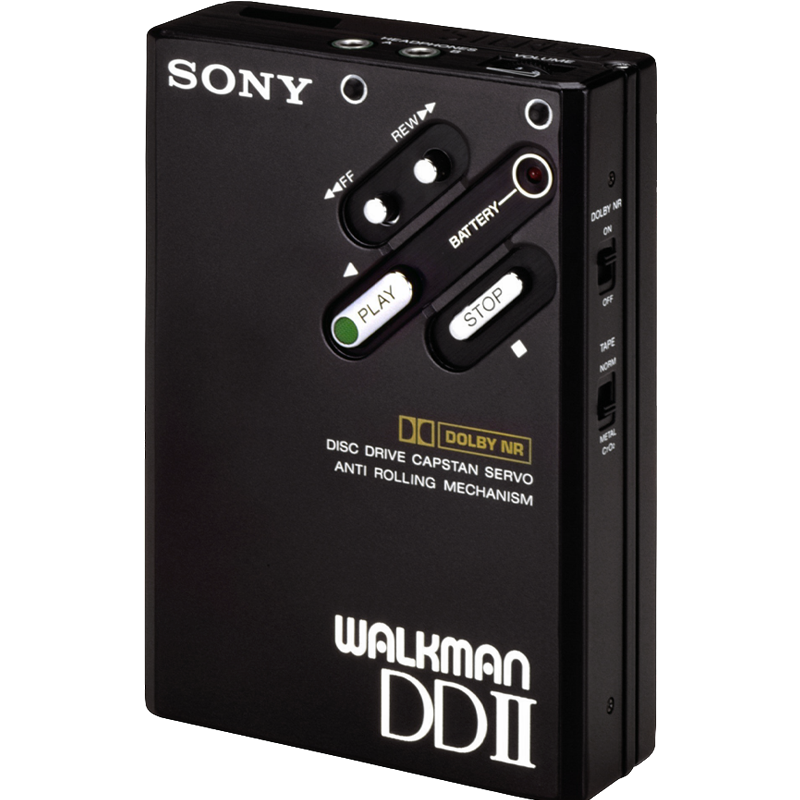
The WM-DD2 was a compact cassette Walkman that extended Sony's original Disc Drive concept by adding Dolby B noise reduction to the same beltless transport architecture. It retained the anti-rolling stability and capstan precision that defined the first DD model while adding the circuitry needed to reduce tape hiss without substantially changing the size or overall appearance of the body. Powered by two AA batteries, it remained a mechanically focused machine at heart. Rather than reinventing the DD idea, Sony used the WM-DD2 to complete it. The direct-drive platform had already proved its value for listeners who cared about speed stability, and this version simply made the listening experience quieter and more refined without losing what made the series appealing in the first place. It is one of those evolutionary models that mattered because it made a good idea harder to outgrow.
WM-F15
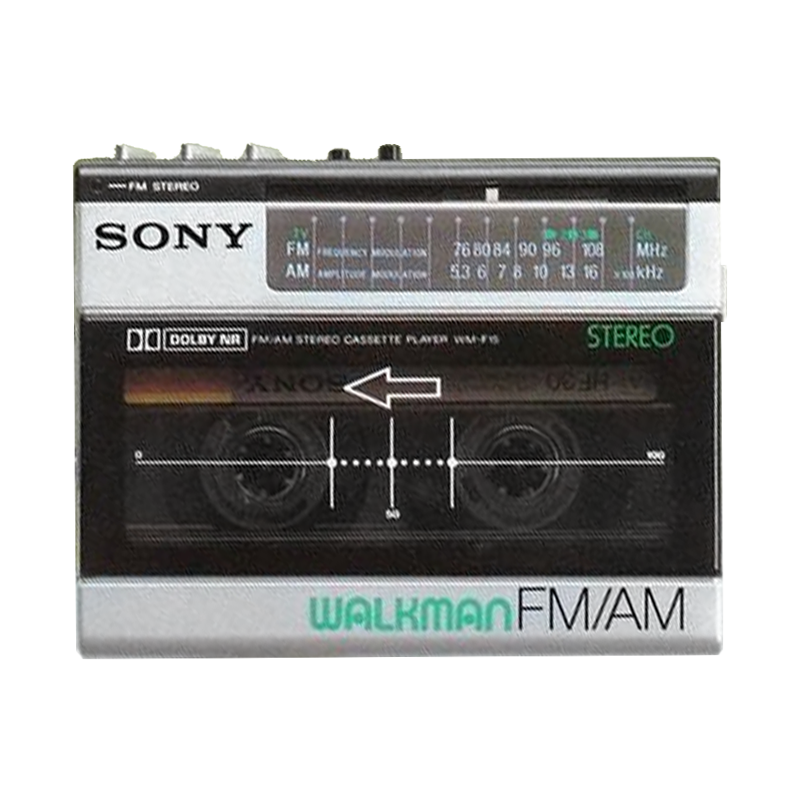
The WM-F15 was a compact AM/FM radio Walkman introduced in 1984, combining a built-in two-band tuner with Dolby B noise reduction in a straightforward cassette playback body. Its plastic housing contained manual tuning controls, an LED indicator, and a radio circuit that depended on the headphone cord as the antenna, meaning the unit only worked as intended once headphones were connected. The overall design kept things modest and functional rather than especially compact or advanced. By the mid-1980s, radio-equipped Walkman models were no longer novelties, and the F15 fits squarely into that practical everyday branch of the line. It was built for people who wanted a single device that could handle both their tapes and whatever was being broadcast, without carrying a separate portable radio. Not a standout model, but exactly the kind of machine that made Walkman feel useful to a much wider audience.
WM-F30
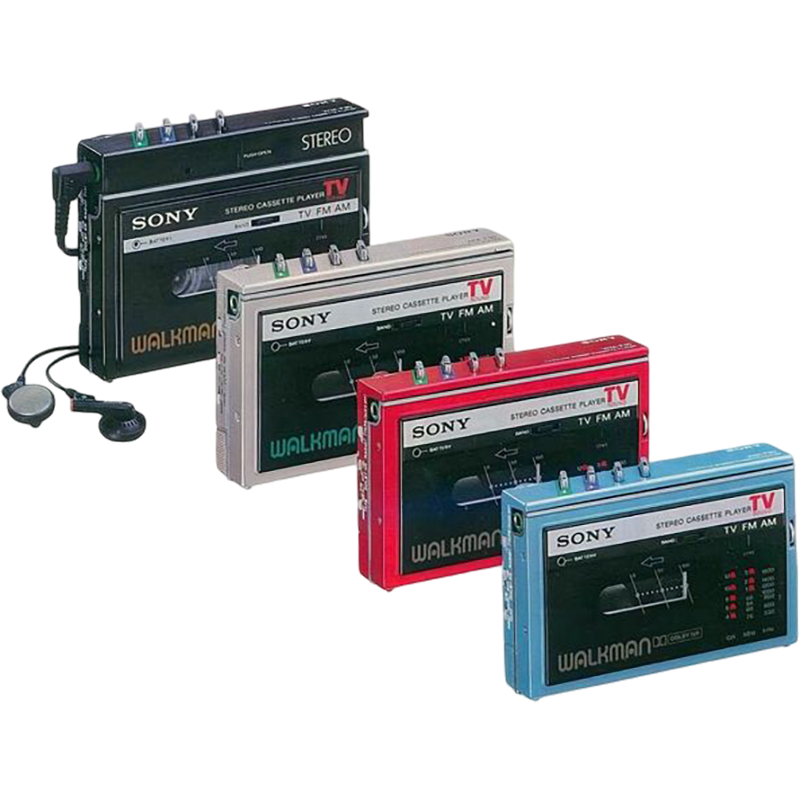
The WM-F30 was a stretchable radio Walkman based directly on the WM-30 chassis, adding FM, AM, and TV audio reception while keeping the same expandable metal-bodied format and single-AA power system. Dolby B noise reduction remained in place, and the tuner section was worked into the compact body without fundamentally changing how the sliding cassette-loading design operated. In effect, it was the radio version of Sony's super-compact cassette concept. It shows how quickly Sony learned to build families rather than isolated products. Once the stretchable format had proved viable, it made perfect sense to carry it into the radio side of the range for users who wanted the same pocketable design with more listening options. The WM-F30 is not especially dramatic, but it is exactly the kind of logical variation that helped the Walkman ecosystem feel complete.
WM-F8
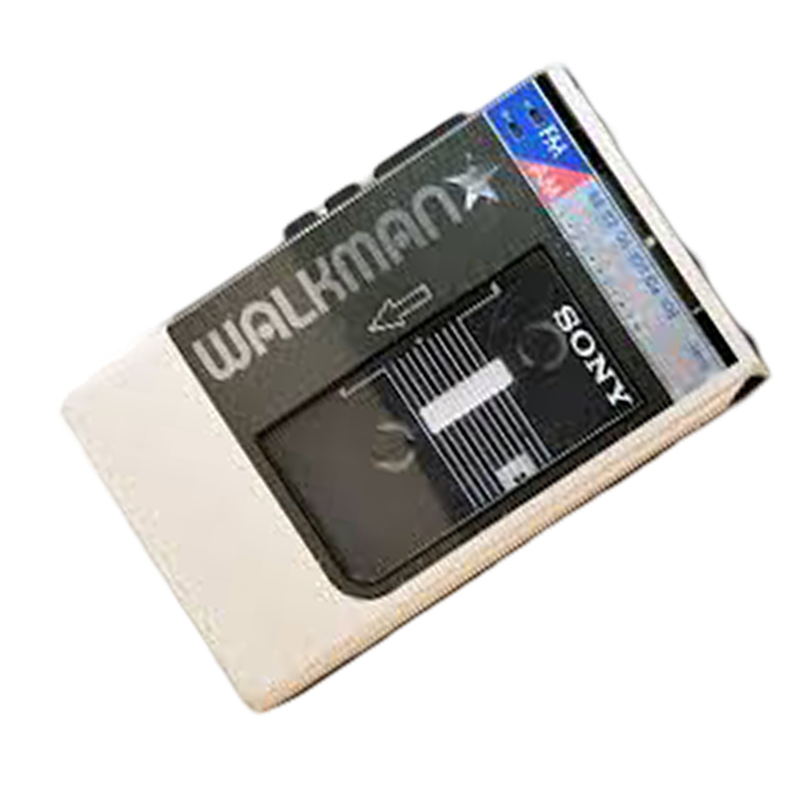
The WM-F8 was a radio-equipped cassette Walkman built on the basic WM-8 platform and aimed at more active, outdoor-oriented use. Its larger plastic body housed a simple belt-driven cassette transport, a manual AM/FM stereo tuner, LED indicators for battery and stereo reception, and support for normal and chrome tapes, with the headphone cable again serving as the FM antenna. Dual headphone jacks and cue/review rounded out the controls, keeping the machine simple but fairly versatile for the time. The radio Walkman was being pointed toward lifestyle use before the Sports branch had been fully formalized. The WM-F8 still feels like a simple everyday player, but one already aimed at mobility beyond basic commuting. It is part of the path toward Sony treating listening as something that could follow more kinds of movement.
WM-F9
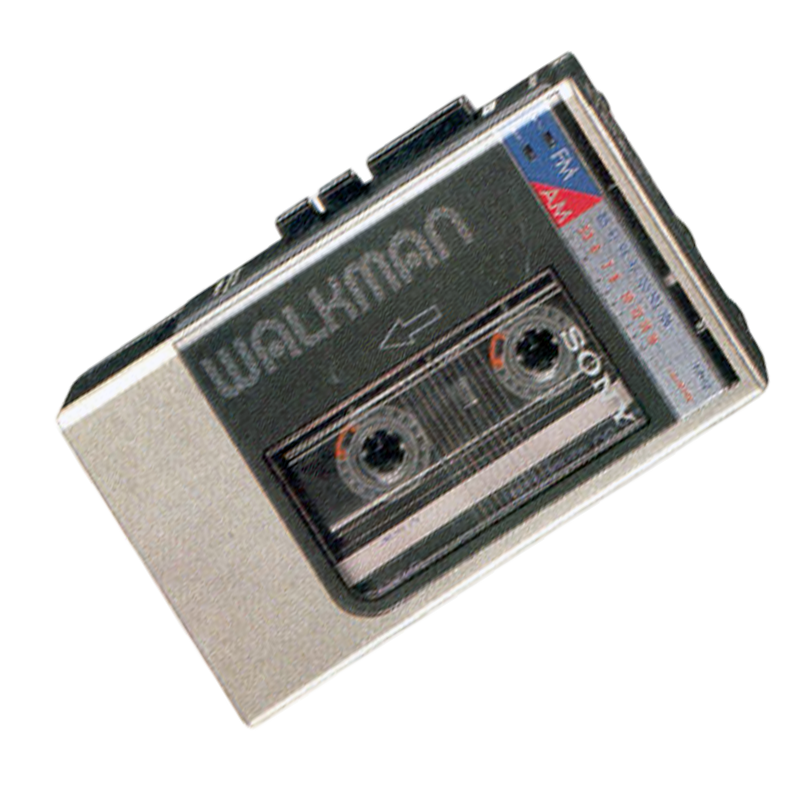
The WM-F9 was the European and Asian market counterpart to the WM-F8, carrying the same simple radio-and-cassette formula into Sony's broader international lineup. It used a relatively large plastic body with a manual AM/FM stereo tuner, LED battery and stereo indicators, normal and chrome tape support, and cue/review operation, with the tuning scale positioned directly on the cassette door. Like the WM-F8, it remained a direct, no-frills implementation of portable radio listening rather than a more advanced tuner experiment. The WM-F9 shows how quickly Sony understood radio as something that could be regionally adapted instead of looking identical everywhere. Sony was already comfortable distributing parallel versions of even relatively simple radio Walkman models across different markets. That makes this model less iconic than some of its siblings, but structurally revealing for the spread of the line.
By 1984, the Walkman had become widely available in the market. At the same time, the increasing number of products led to a growing complexity in the product configuration.