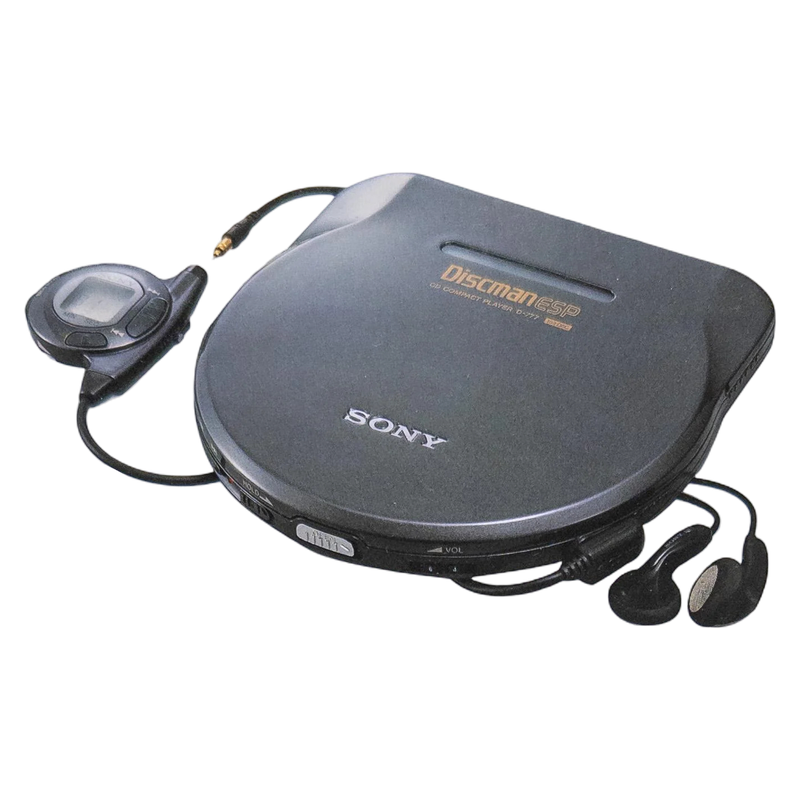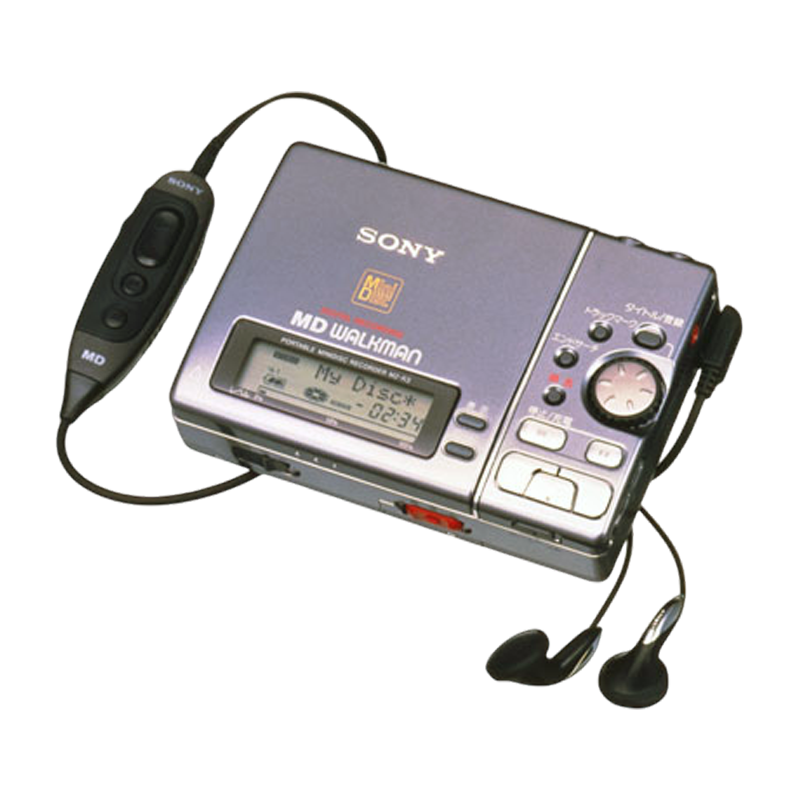
In 1995, the product line was divided into multiple price ranges and application-specific lines. Each model was designed to target a specific user group.
WM-EX811

The WM-EX811 is a premium EX-series cassette Walkman built around a slim metal body, soft-touch logic controls, and a robust sliding cover that protected the buttons during movement and transport. It combined auto-reverse playback, Dolby B noise reduction, AMS, blank skip, hold lock, AVLS, and a sophisticated LCD remote with high-speed music search, while the automatic tape selector and compact battery system helped keep the machine slim without making it feel fragile. The whole thing was built around controlled handling. The sliding cover is the real clue here. This is less about a feature-rich player and more about a machine designed around friction reduction: fewer accidental presses, easier navigation, cleaner carry. The EX811 is Sony's cassette design becoming more resolved and more self-aware at the same time, which is exactly what makes these late premium models worth preserving.
WM-EX911
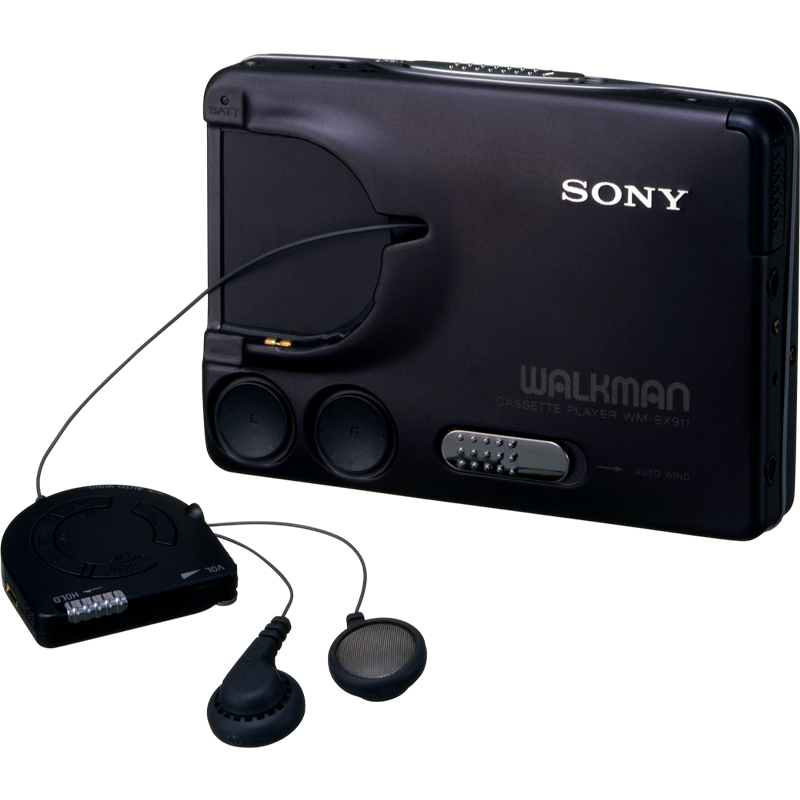
The WM-EX911 was a playback Walkman built on the same basic platform as the EX511 and EX618, but reworked around a very practical idea: eliminating loose headphones. It retained the familiar late-period feature set of auto-reverse, Dolby B noise reduction, Extended Dynamic Bass Boost, AVLS, and AMS, while integrating a retractable earbud system with inline remote directly into the body. Twin take-up reels and friction holders stored the cable neatly inside the unit, and the enlarged cassette window made the whole player feel a little more open and self-contained than its siblings. This is one of those models where Sony was clearly solving a real everyday annoyance rather than trying to create a new flagship branch. Tangled cables and missing headphones were constant problems for portable users, and the EX911 feels like a literal attempt to remove that friction entirely. It belongs to the part of Walkman history where convenience itself became a meaningful form of innovation.
WM-FX2

The WM-FX2 is the radio-equipped companion to the WM-EX2, taking the same compact upright cassette platform and integrating a digital AM/FM tuner with AM stereo capability and world-tuner logic. It retained auto-reverse, Dolby B noise reduction, Extended Dynamic Bass Boost, AVLS, AMS, blank skip, and remote support, while adding a phosphorescent LCD panel that remained legible in low light. The metal body and flexible battery arrangement carries over from the non-radio version, preserving the same practical late-EX feel despite the added tuner hardware. What makes the FX2 work well is that it does not feel like a separate tuner experiment, but like the natural radio version of an already coherent playback machine. Sony had become very good at building these parallel families by then, and the FX2 is a good example of that maturity. It is a product designed around the assumption that users wanted both tape and broadcast access without having to think much about the difference.
WM-FX822

The WM-FX822 is a radio-equipped Walkman from 1995 that emphasized interface clarity over outright slimness, using a large LCD display and oversized front buttons to make operation easier while walking, traveling, or using the player more casually. It includes auto-reverse, Dolby B noise reduction, Extended Dynamic Bass Boost, AVLS, AMS, and a digital FM/AM/TV tuner with automatic preset, but one of its more unusual additions was a built-in timer alarm adjustable in ten-minute increments. The metal body kept it feeling solid even as the control layout became more overtly usability-driven. This is a good example of Sony treating the Walkman as something that had to coexist with the rhythms of daily life instead of simply play tapes and radio. The FX822 was not trying to be the thinnest or most technical tuner model, but one of the easiest to glance at and operate without fuss. It is a machine designed around interruption, routine, and quick use instead of quiet admiration.
WM-GX711

The WM-GX711 is a full-features radio-recording Walkman from 1995 that sat near the top of Sony's GX branch, combining cassette playback and recording with a world-tuner digital FM/AM/TV receiver, Dolby B noise reduction, auto-reverse, Extended Dynamic Bass Boost, AVLS, blank skip, AMS, and a backlit LCD interface. An external stereo microphone was includes for higher-quality voice capture, while the side-mounted input layout and flexible battery arrangement reinforced its role as a serious portable recorder instead of just a music player with a record button added. This is one of those late-era GX models where Sony was clearly trying to preserve the idea of the Walkman as an active media tool. The GX711 was built for users who still wanted to capture sound, radio, and speech in one compact object without stepping up to a separate field recorder. It is a mature all-in-one machine from the point when cassette was no longer simply about playback.
WM-WX1
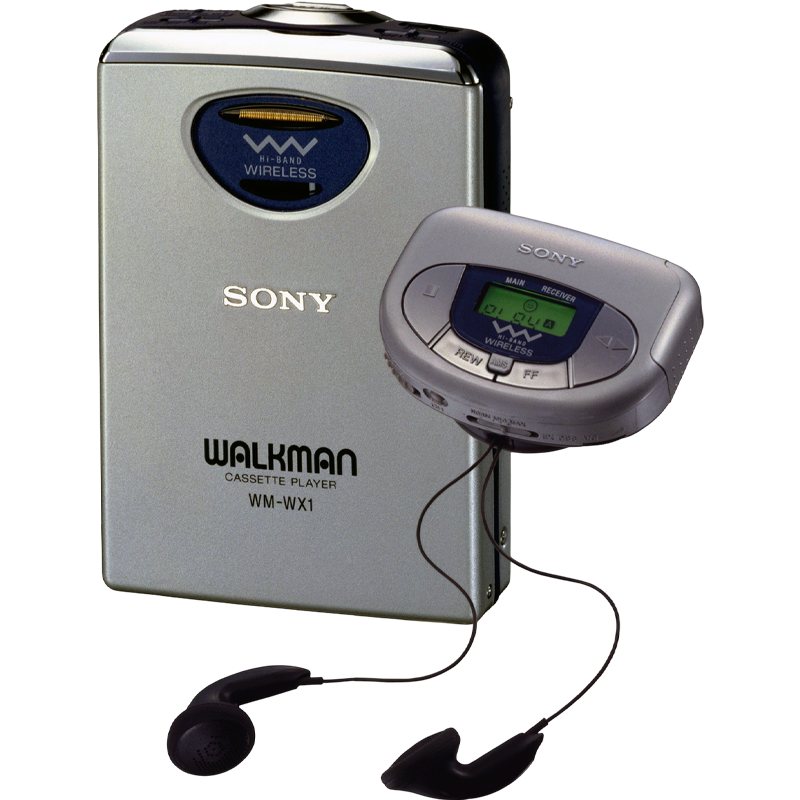
The WM-WX1 is the final model in Sony's WX wireless cassette Walkman line, released in 1995 as the closing expression of the company's long-running cord-free portable experiment. It retained the familiar wireless headphone system, auto-reverse playback, Dolby B noise reduction, Automatic Music Sensor, AVLS, and Extended Dynamic Bass Boost inside a compact upright metal chassis with a visible tape window. The overall package was less about introducing a new wireless concept than refining the one Sony had already been iterating for years. This model is less of a beginning than a graceful ending. By the mid-1990s, Sony had clearly decided the wireless cassette Walkman would remain a niche branch instead of the mainstream future, but the company still gave it one final, fully features send-off. It stands as the end of one of the stranger and more charming side roads in the Walkman family.
By 1995, the transition from a single product to a segment structure was completed. This structure was continued to be applied in subsequent market-responsive models.