In 1997, MiniDisc was enhanced with a structure that focused on recording capabilities. Editing functions and recording modes have been introduced to support disk management.
MZ-R5ST
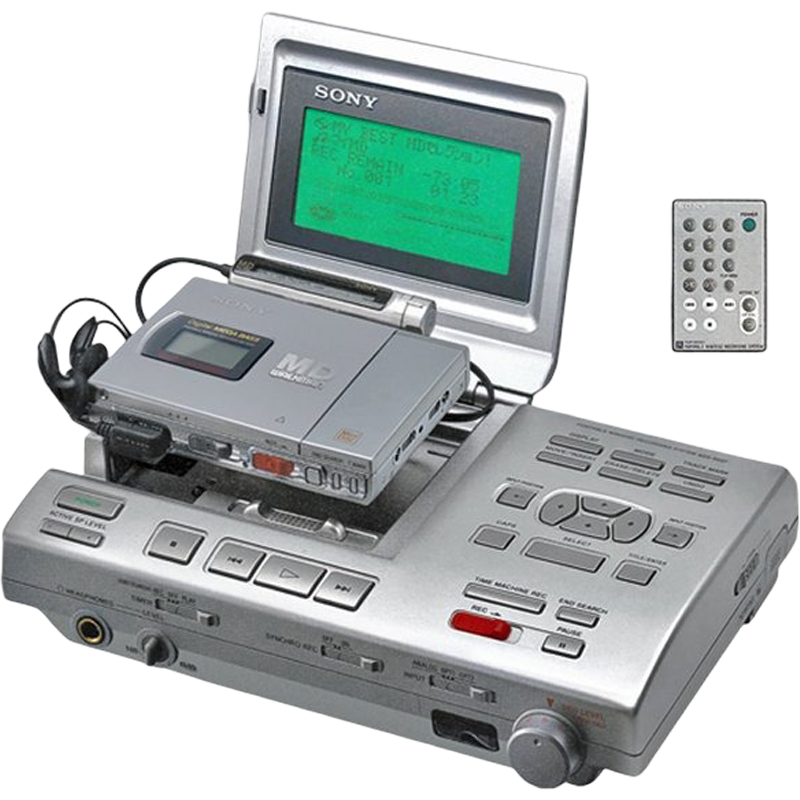
The MZ-R5ST is a hybrid MiniDisc system that separates portable recording from full connectivity by combining a basic recorder with a dedicated docking base. The portable unit handles microphone recording and playback, while the base provides expanded digital and analog connections. When docked, the system supports multiple optical inputs, synchronized digital recording, and more precise editing controls with features such as rehearsal mode and undo. Portable use remains limited to essential functions, while the base extends the system into a more complete recording setup.
MZ-EP10
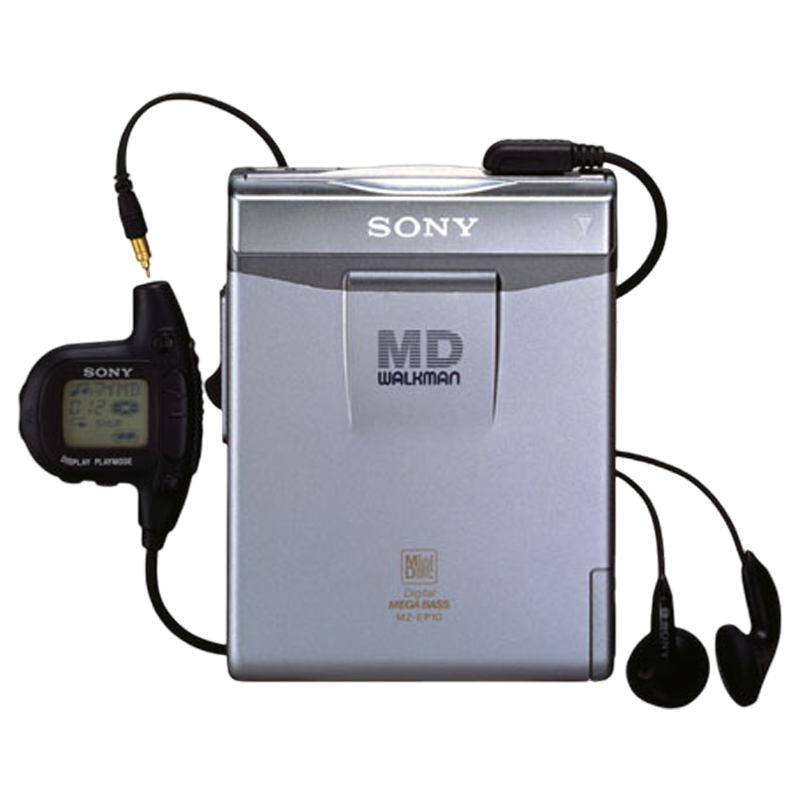
The MZ-EP10 is a MiniDisc player that focuses on ease of use when inserting and removing discs, employing a top-loading mechanism. Discs can be inserted and removed without opening the entire lid, as in conventional models, and its design also considers portability. Playback functions are limited to the standard MiniDisc range and include only basic anti-skip features. It supports both AA batteries and rechargeable batteries, allowing operation without an external case. It is designed for use as a standalone unit.
MZ-R50
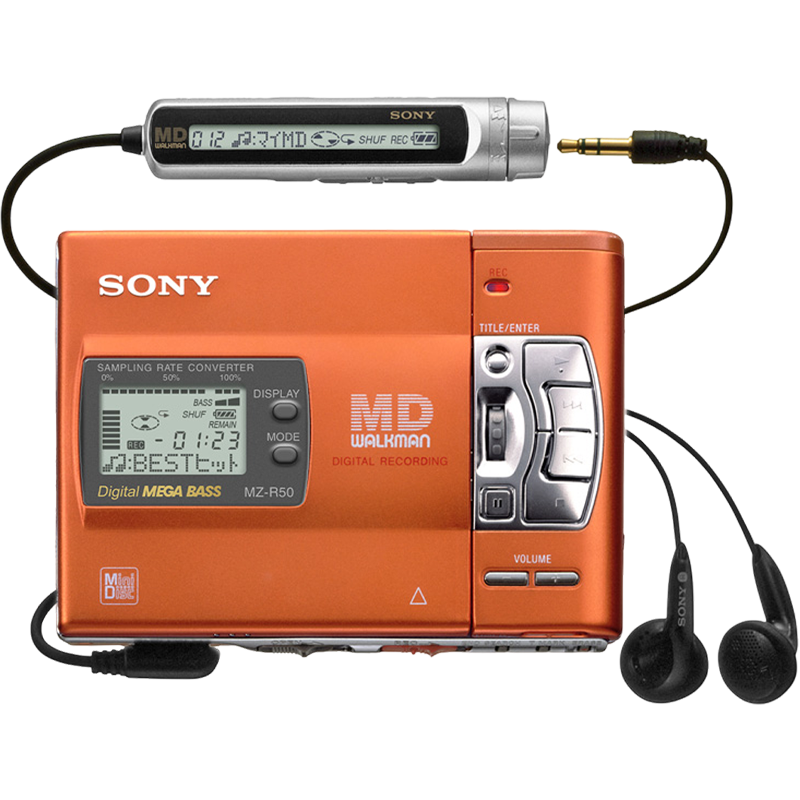
The MZ-R50 is a MiniDisc recorder that offers improved portability and ease of use compared to previous models. It features microphone input, line input, and optical input, and supports both analog and digital recording. The expanded buffer capacity ensures vibration resistance during playback, and the ATRAC processing is configured to support standard playback mode. A stick-type remote control allows for display and operation of track information. Editing functions such as splitting, merging, moving, and title input are also included.
MZ-F40
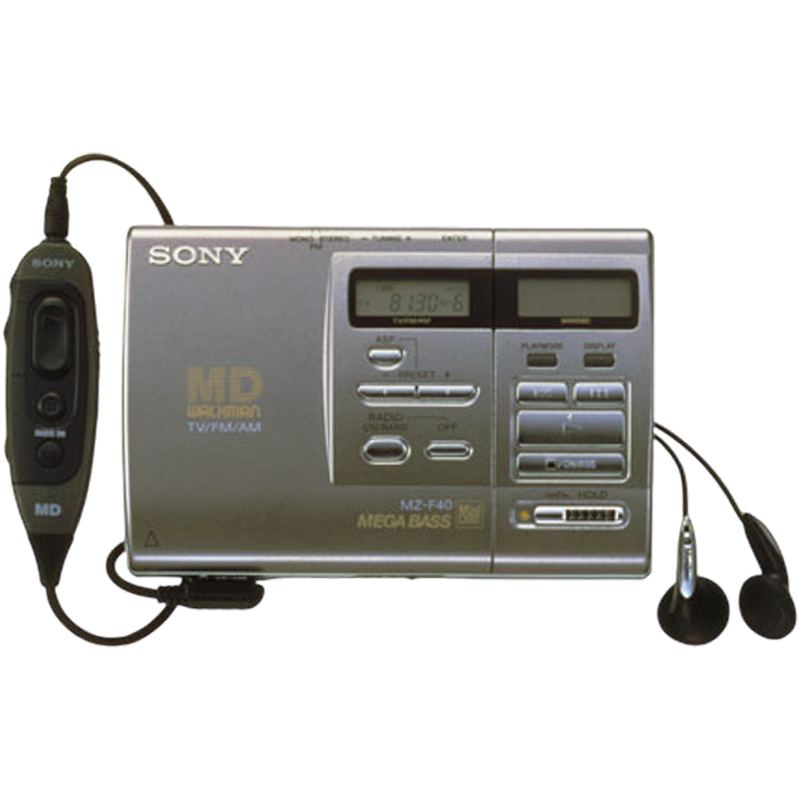
The MZ-F40 integrates radio functionality directly into the main unit, combining two listening systems in a single device. It includes separate displays for MiniDisc playback and radio operation, allowing both to be used independently. The radio supports automatic tuning and preset storage, while MiniDisc playback remains unchanged. Power options allow extended runtime, especially when using radio mode. The two systems operate side by side, though broadcast audio cannot be recorded.
MZ-E25
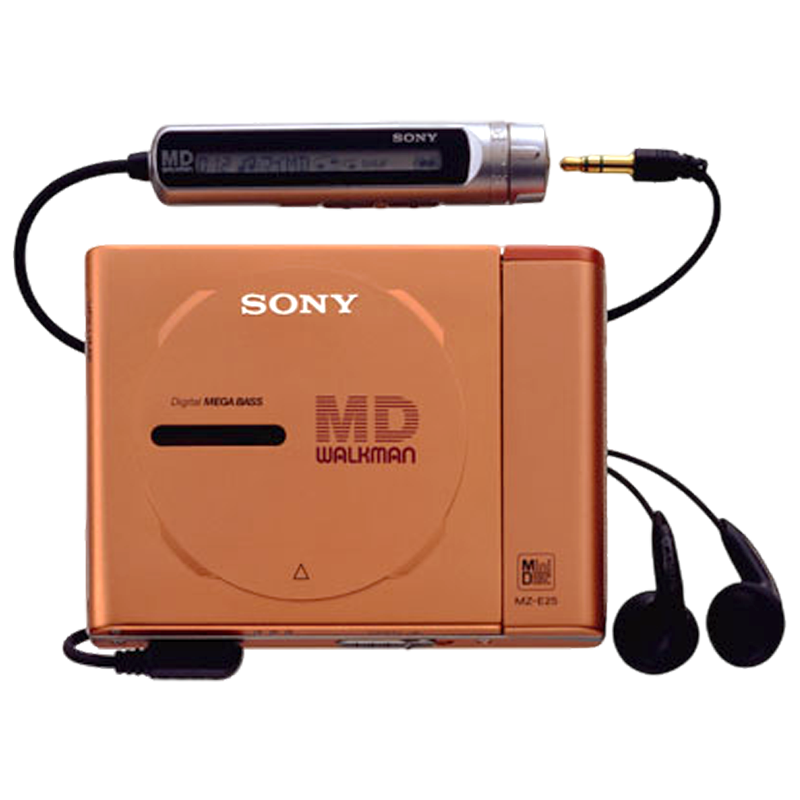
The MZ-E25 simplifies power management by keeping battery options inside the unit itself. It supports both a gumstick battery and a single AA cell internally, removing the need for external battery attachments. Controls are distributed along the edges and rear, separating playback from sound adjustments such as bass boost and volume limiting. Playback remains standard, with basic shock protection and no expanded processing features.
MZ-E20
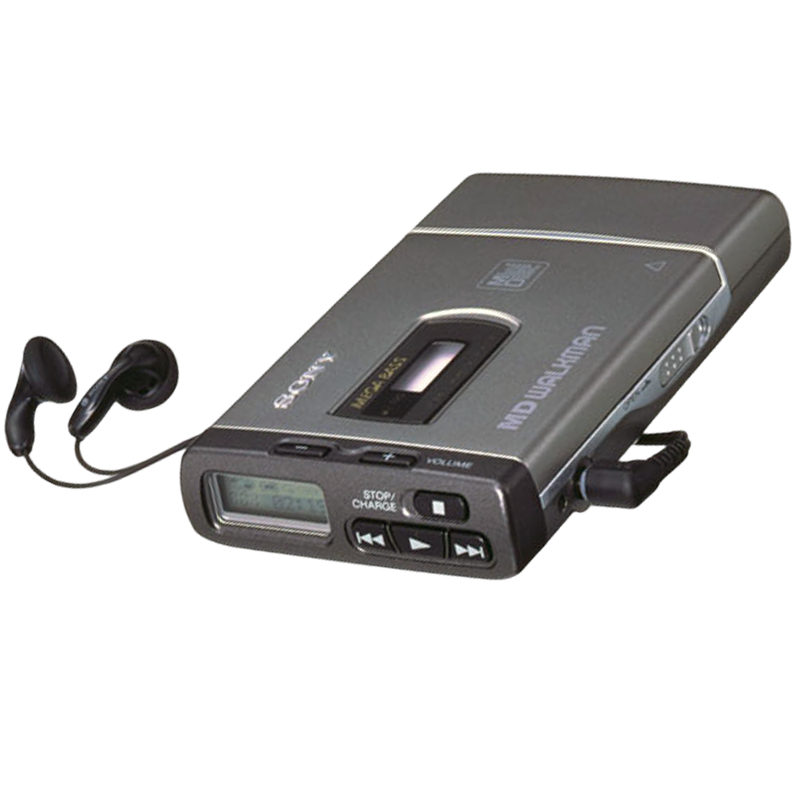
The MZ-E20 uses a distinctive vertical layout that prioritizes visibility and simplicity over compact size. Its large front display makes track and time information easy to read at a glance. Shock protection relies on a short memory buffer to reduce skipping, and playback remains straightforward with minimal sound processing. Power comes from standard AA batteries or an optional rechargeable pack. The vertical form factor changes how the unit is handled, making it better suited to belt use or stationary listening.
MZ-E35
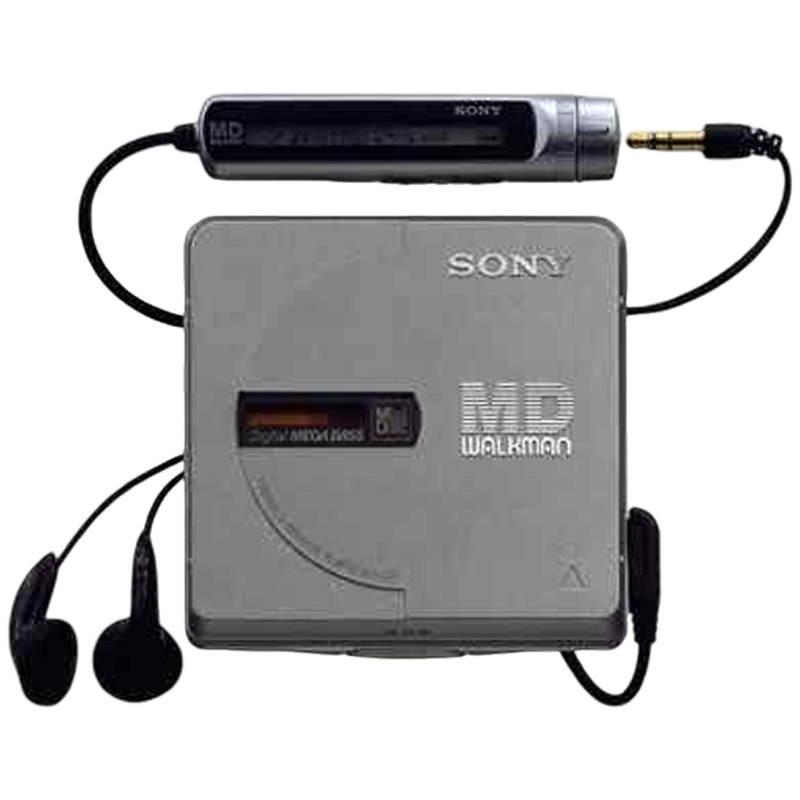
The MZ-E35 makes its LCD remote central to the playback experience, shifting most control and track information into a dedicated handheld unit. The stick-style controller changes how the device is used during portable listening. Playback includes basic sound enhancement and standard shock protection, while the main unit remains minimal. A gumstick battery helps reduce overall size. The remote functions as the primary interface instead of a secondary accessory.
In 1997, MiniDisc was established as a format that included recording capabilities. This structure was subsequently applied to subsequent models.