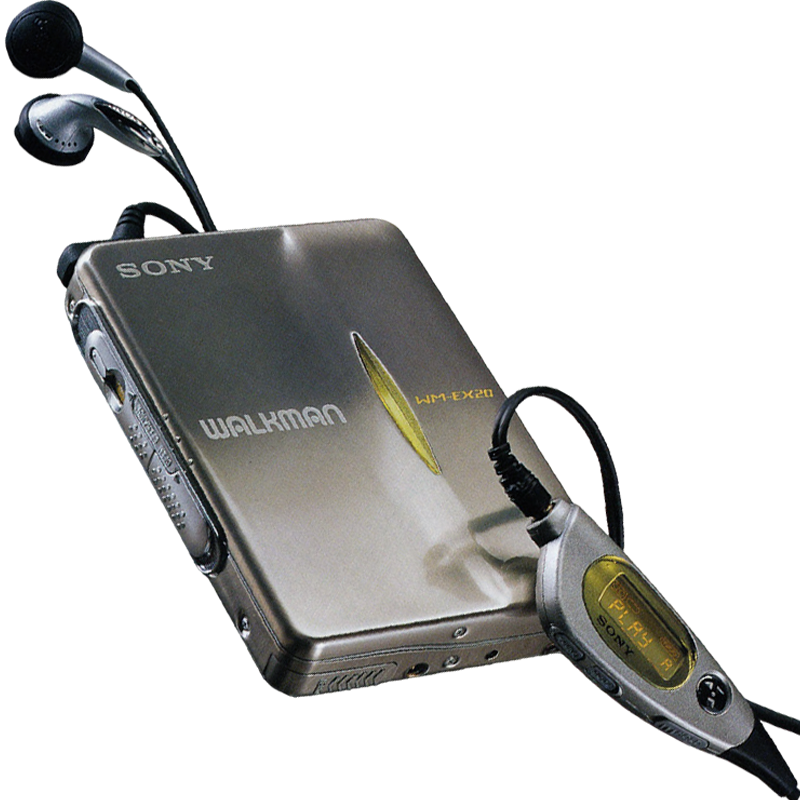
In 1999, MiniDisc adopted a design that optimized the balance between portability, power efficiency, and recording capabilities. A disk-based structure that does not require PC connectivity has been completed.
MZ-R37
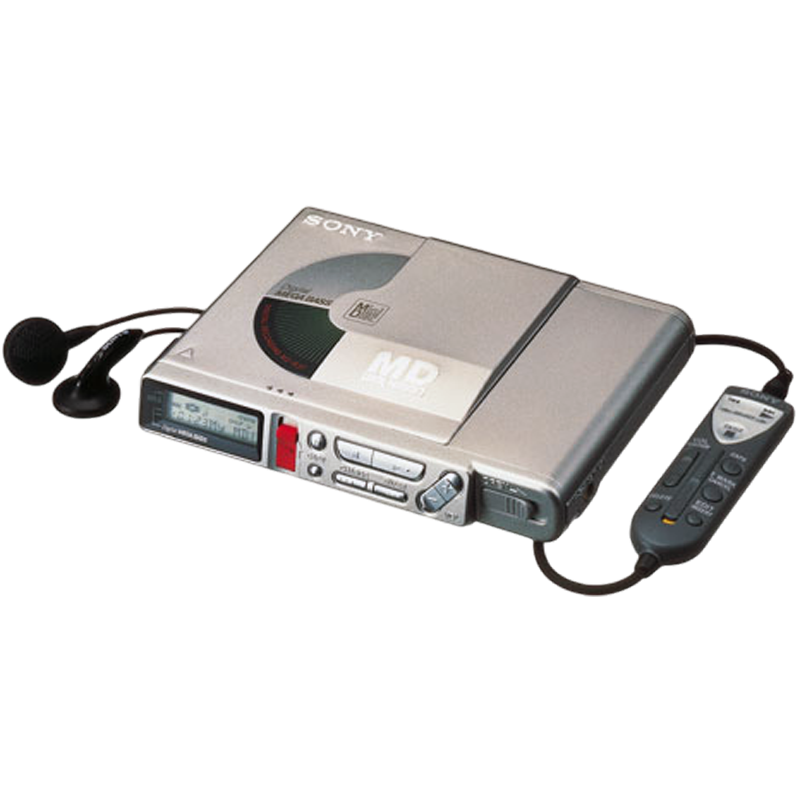
The MZ-R37 is a cost-reduced MiniDisc recorder that retains the core recording system while simplifying features. Optical and analog recording share a single input, and a dedicated microphone input supports direct voice capture. Recording uses the same encoding system as higher-end models, with basic digital level control available. Shock protection buffers playback to reduce skipping. Features such as microphone sensitivity adjustment, date and time stamping, and advanced remote functionality are removed, simplifying operation.
MZ-R90
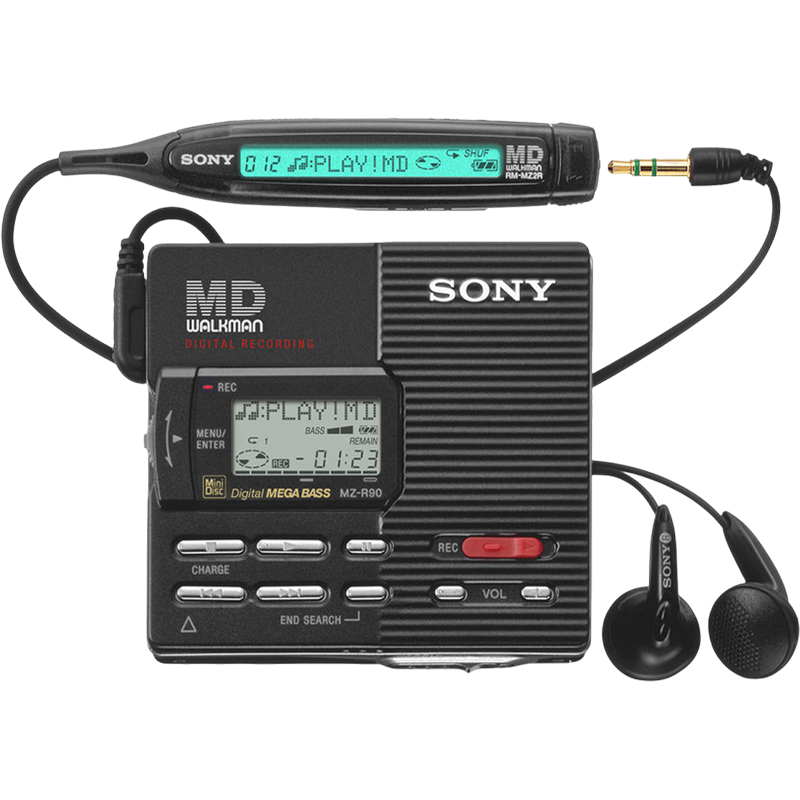
The MZ-R90 is a flagship MiniDisc recorder that maintains recording capabilities while achieving a smaller body size. Optical and analog recording share a single input, and it also supports voice recording via a dedicated microphone input. Its low-power internal design ensures efficiency during long periods of operation, and the headphone and line outputs are integrated into a single terminal via a switchable output. Operation is centered around a jog-based interface and remote control system, and it supports track name input, CD title transfer, and on-unit editing. It features a magnesium top shell.
MZ-R91
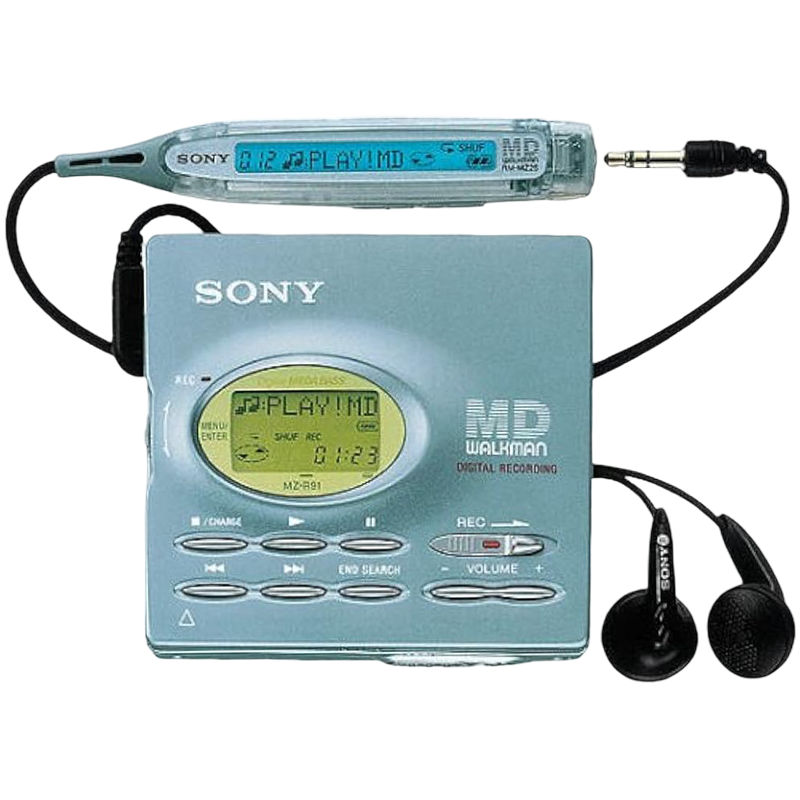
The MZ-R91 uses the same compact recorder platform as the flagship model while changing materials and exterior presentation. Optical, line, and microphone inputs remain unchanged, preserving full recording flexibility. Its internal design and battery performance remain largely the same, including the same low-power architecture and feature set for editing, naming, and playback. The main differences appear in construction, with a slightly thicker and heavier body replacing the magnesium shell.
MZ-E90
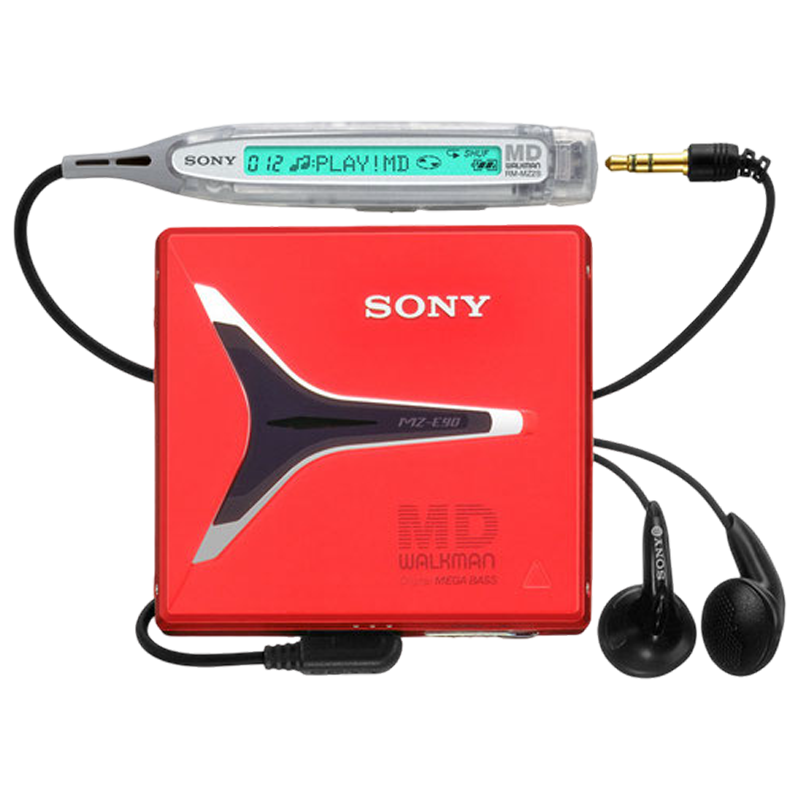
The MZ-E90 is a compact MiniDisc player built around aggressive miniaturization, reducing both size and power consumption compared to earlier designs. A smaller optical pickup and lower-power system allow a much smaller footprint while maintaining long playback time. Shock protection buffers audio to reduce skipping, and playback modes include repeat and shuffle. A backlit remote handles most interaction, while the magnesium housing adds rigidity without increasing weight. Power comes from a gumstick battery with optional AA expansion.
MZ-E75
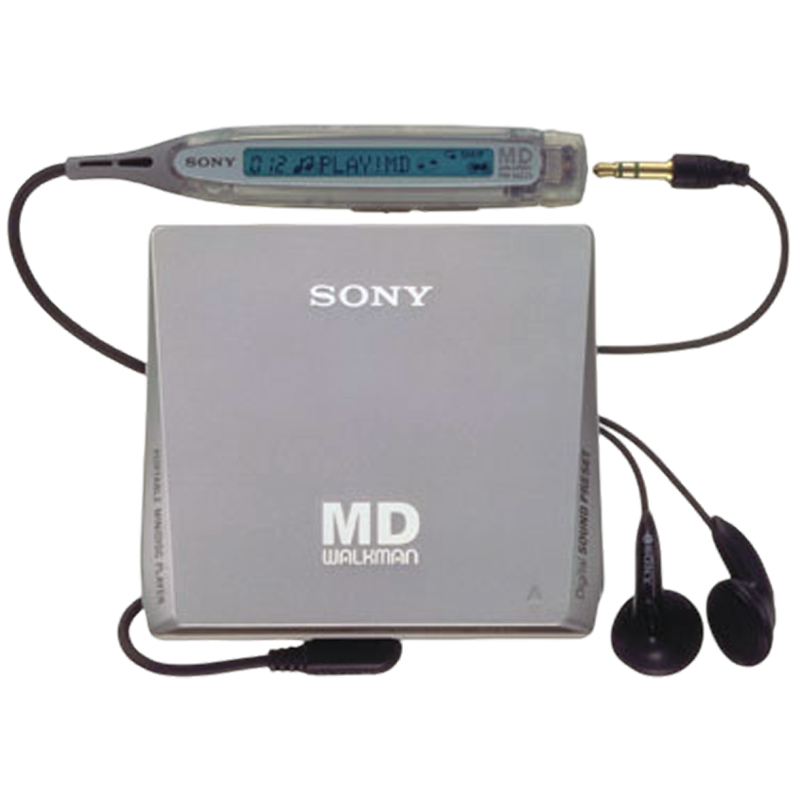
The MZ-E75 expands playback control while maintaining a practical portable form. It includes extended shock protection for more stable playback and a backlit remote for navigation and track information. Sound adjustment is more developed, with bass and treble tunable across multiple steps and stored as user profiles. A one-touch eject mechanism simplifies disc handling, and dual headphone outputs allow two listeners to share playback directly from the unit.
MZ-E80
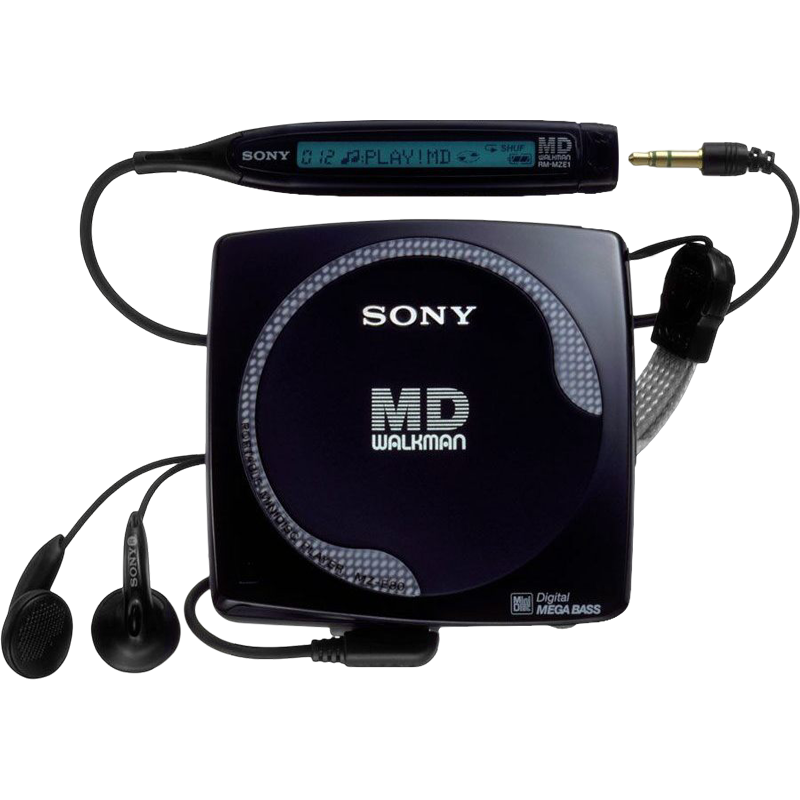
The MZ-E80 was a MiniDisc player that focused on power saving and a revamped control system. It featured a remote control with directional keys and a compact display, offering a fresh user experience. While ensuring stable playback during transit with its anti-skip function, the overall design prioritized long battery life. The hand strap and two-tone finish also reflected a new direction for portable devices in its appearance.
MZ-E70
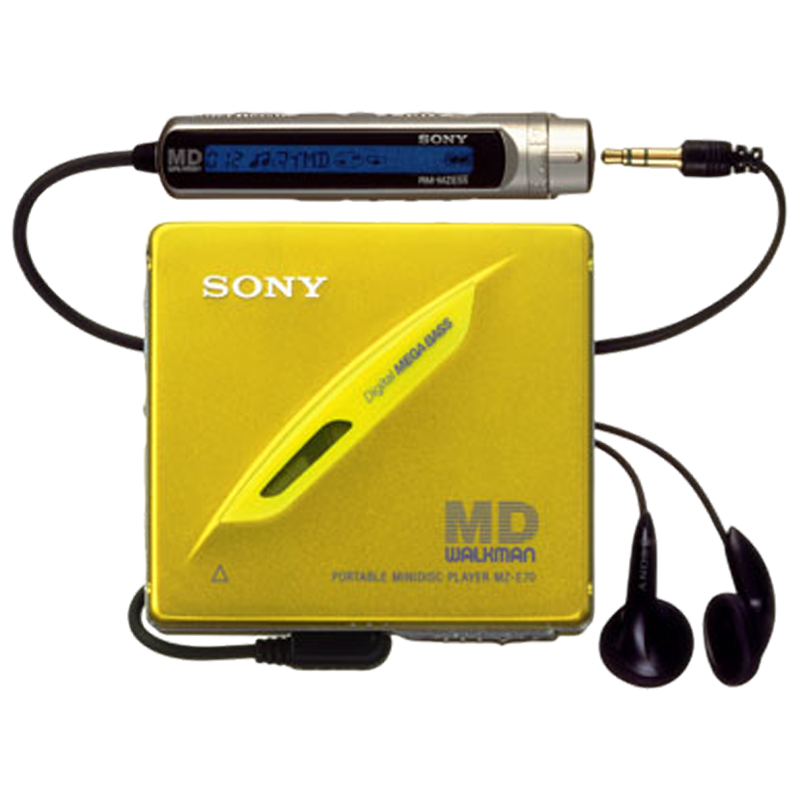
The MZ-E70 carries forward the earlier E-series design while shifting toward a more modular power setup. It supports both a gumstick battery and an external AA case for extended runtime. Shock protection buffers audio to reduce skipping, while a backlit remote handles track navigation and display. Charging is handled externally through a separate charger. The exterior is updated with new finishes and a more refined layout.
MZ-E95
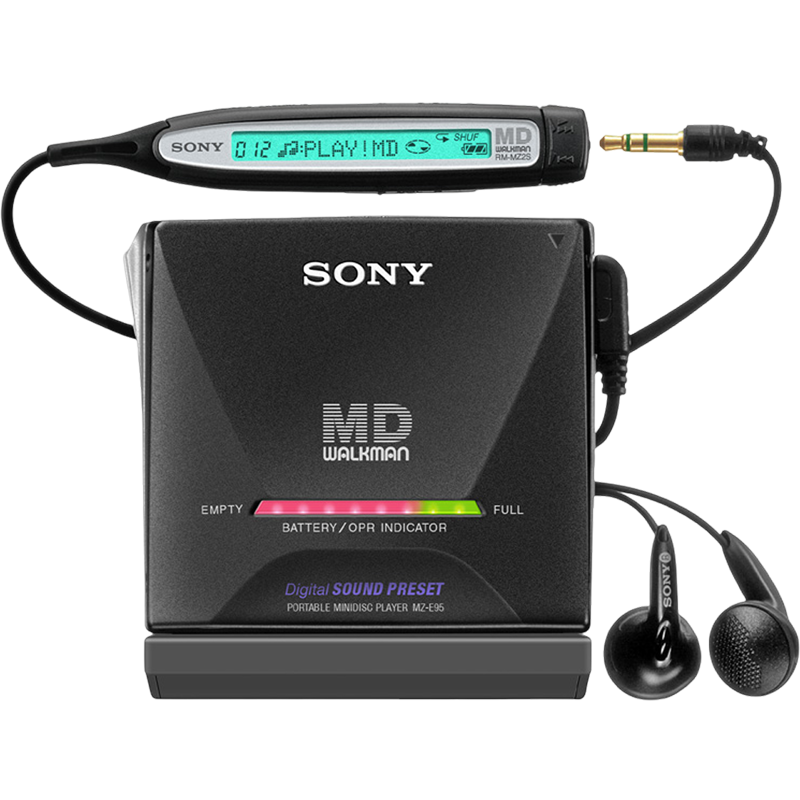
The MZ-E95 shifts from modular power toward an integrated battery design by introducing a built-in lithium polymer cell. This reduces reliance on external battery compartments while maintaining long playback time, with optional AA support still available. Charging is handled through a dedicated stand. Playback includes adjustable sound settings and standard shock protection. A one-touch eject mechanism simplifies disc handling, and the remote provides backlit control and track information.
In 1999, MiniDisc established a stable hardware structure. At the same time, the limitations regarding compatibility with the digital music environment became clear.