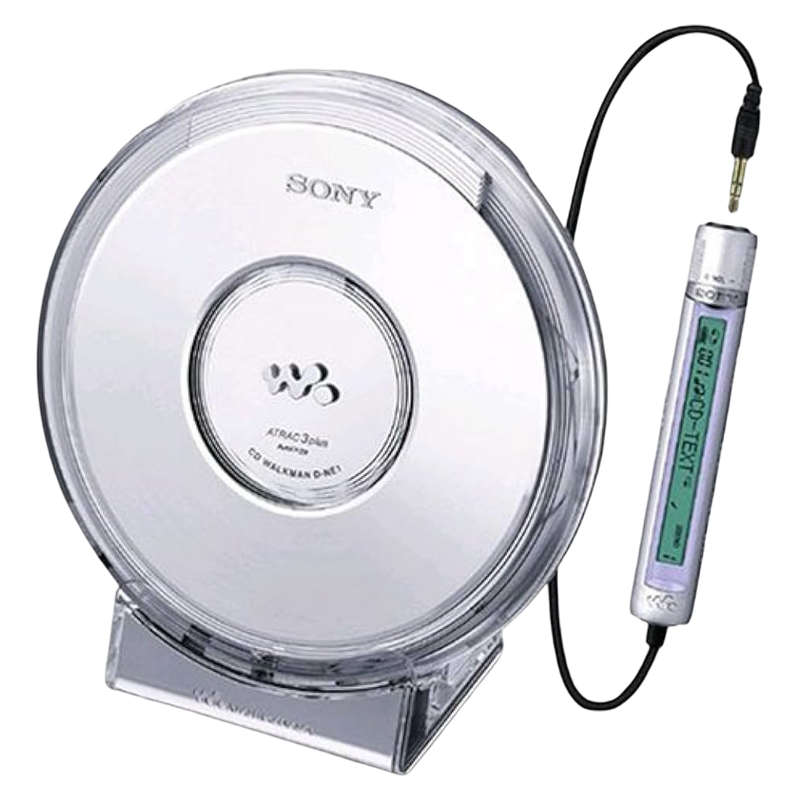
In 2003, MiniDisc adopted a structure optimized for power efficiency and sound quality. A configuration has been introduced that allows for different uses through multiple recording modes.
MZ-N510
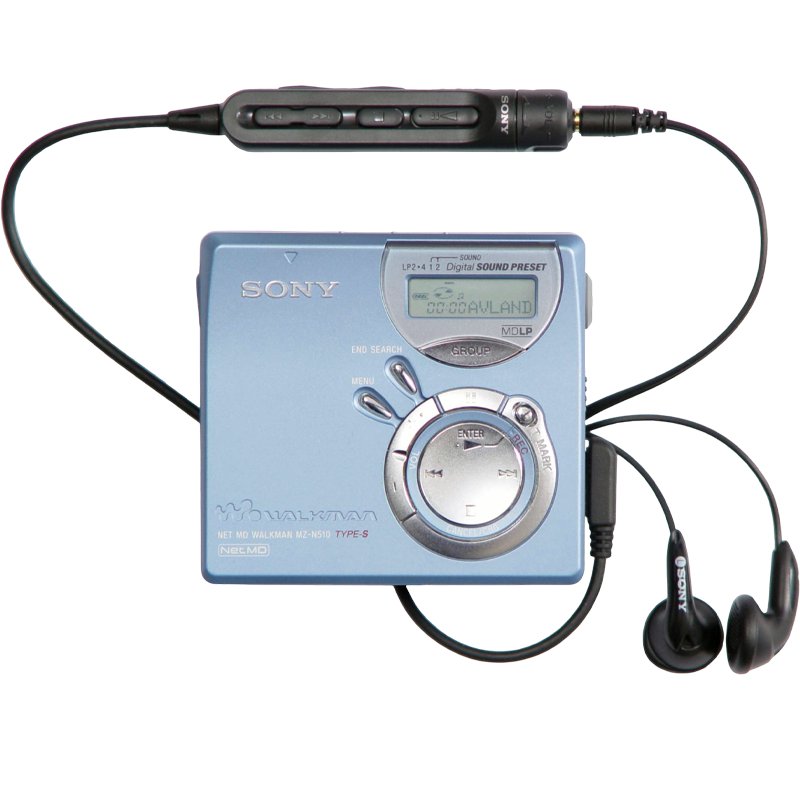
The MZ-N510 keeps direct recording paths while adding computer-based transfer. Line and optical inputs support recording from external sources, while USB provides a faster way to move audio from a PC. MDLP extends recording time through compression, and group and bookmark functions help organize longer discs. ATRAC Type-S improves playback of compressed formats. The lack of a microphone input limits voice recording. A simplified remote and single AA battery keep the unit accessible.
MZ-B10
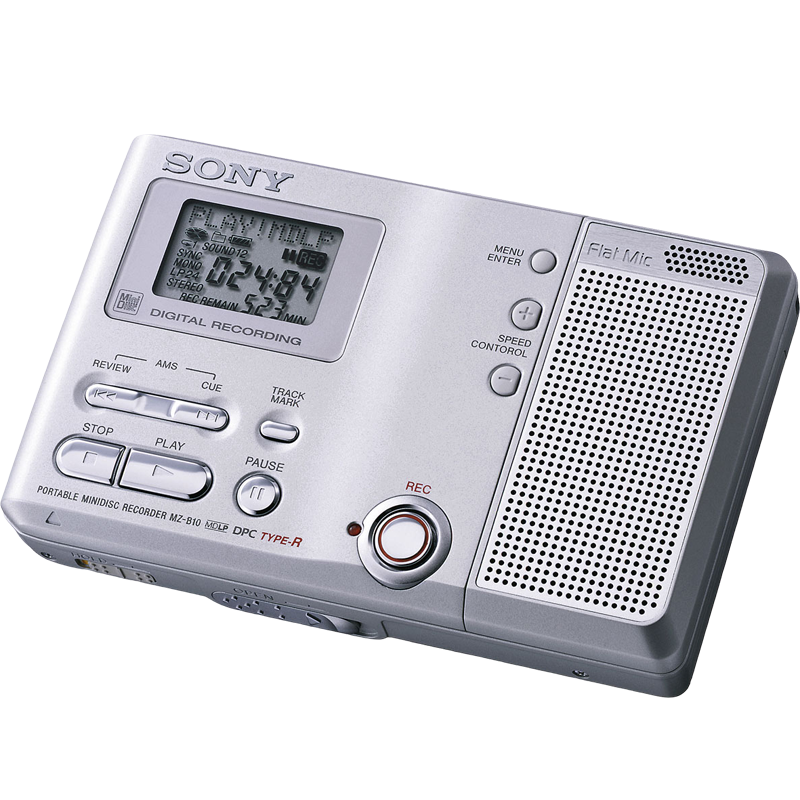
The MZ-B10 is a MiniDisc recorder built for voice instead of music, with a layout closer to a dictation machine than a portable audio player. A built-in monaural microphone, dual speakers, and a large front display allow recording and playback without headphones or external equipment. Recording behavior is tuned for speech, with automatic level control and track marking, while pitch control allows playback speed to be adjusted. MDLP extends recording time through compression. The control layout favors large, direct buttons, making it better suited to desks, classrooms, and meeting environments. Powered by standard AA batteries and operating without NetMD, it remains fully self-contained.
MZ-R410
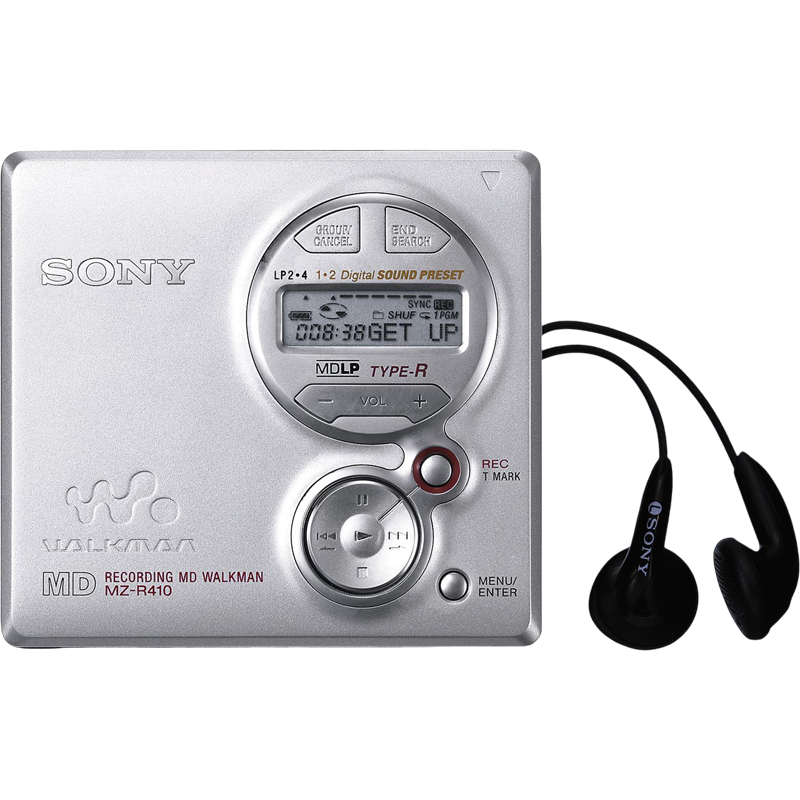
The MZ-R410 keeps direct recording capability while omitting NetMD entirely. Line and optical inputs support recording from external sources, but there is no USB transfer, keeping the system tied to real-time recording. ATRAC Type-R is used for standard play recording, and MDLP extends recording time through compression. The lack of a microphone input limits recording flexibility, and the lack of a remote keeps control centered on the main unit.
MZ-N910
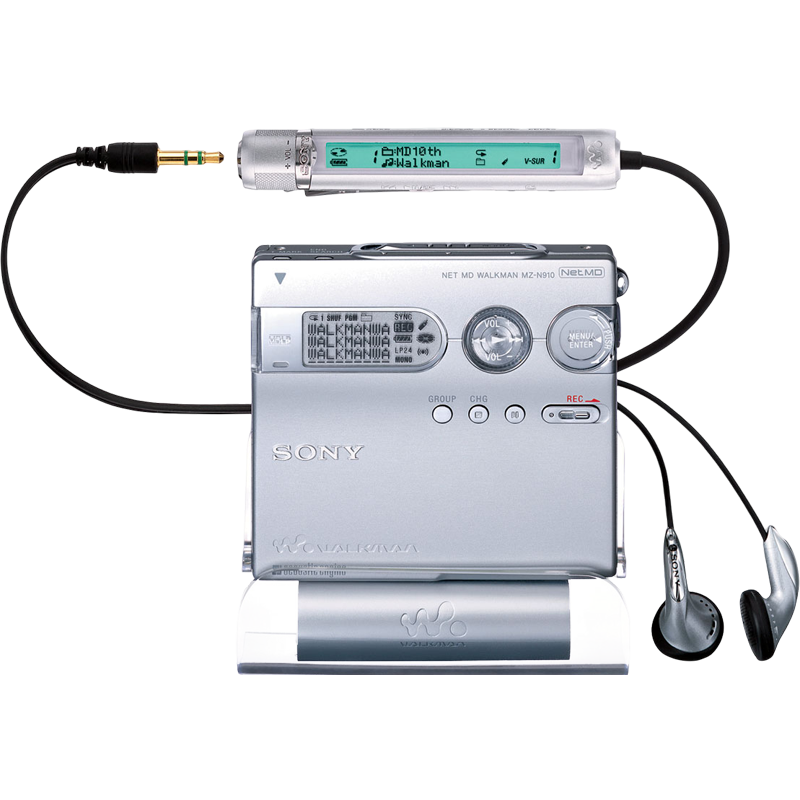
The MZ-N910 emphasizes control and material quality while keeping a full recording feature set. Microphone, line, and optical inputs support both analog and digital recording, while USB provides a faster path for transferring audio from a computer. MDLP extends recording time, and ATRAC Type-S improves playback of compressed formats. Additional processing options, including equalization and virtual surround, allow output to be shaped during playback. The aluminum chassis increases rigidity, and the rotary jog dial provides direct navigation. Power comes from a removable gumstick battery with optional AA sidecar support.
MZ-N710
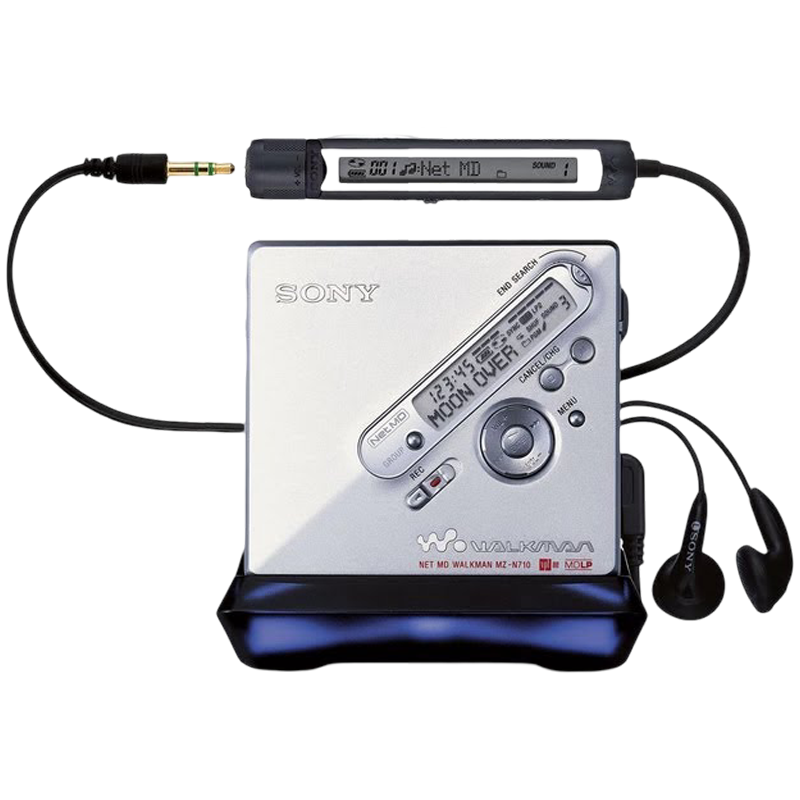
The MZ-N710 keeps the full recording path intact while simplifying day-to-day operation. Microphone, line, and optical inputs are all present, allowing both analog and direct digital recording without restriction. NetMD enables high-speed transfer of compressed audio from a computer, reducing the need for real-time recording. MDLP extends recording time through compression, while ATRAC Type-S improves playback of those formats. The display is smaller and the remote is not backlit, though it still includes features such as automatic time-based track marking. Power comes from a gumstick battery with optional AA sidecar support.
MZ-NE410
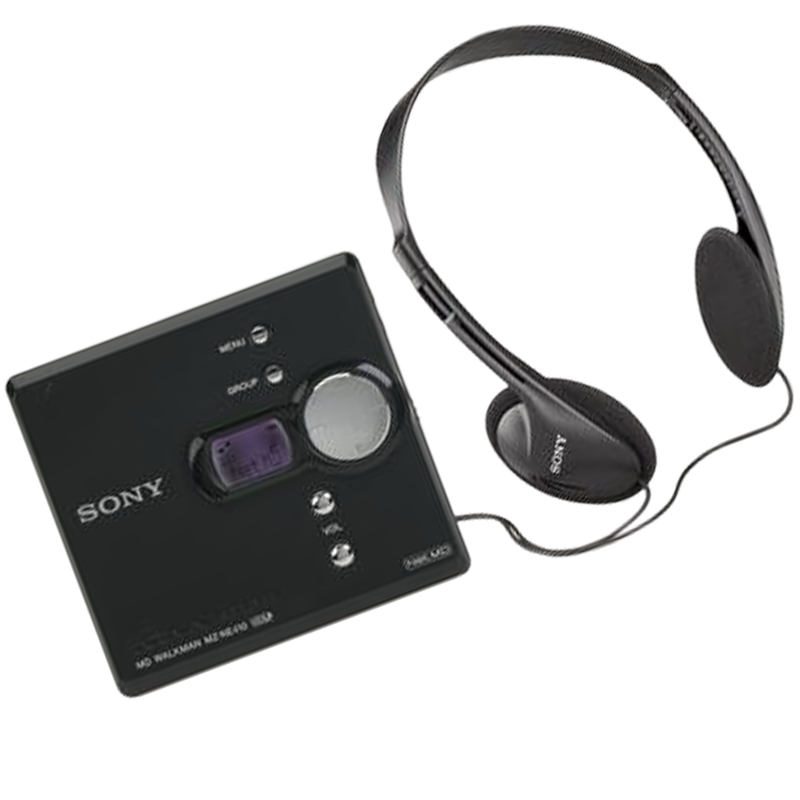
The MZ-NE410 is an entry-level NetMD unit built around the minimum needed to move audio from a computer to MiniDisc. It removes all recording inputs and reduces the device to playback and transfer, with no microphone, line, or optical support. NetMD handles audio transfer at high speed, replacing real-time recording entirely. In this configuration, MiniDisc functions more as a portable playback medium than a recording format. There is no remote, no onboard editing, and only basic controls for playback and navigation. Power comes from a single AA battery.
MZ-NE810
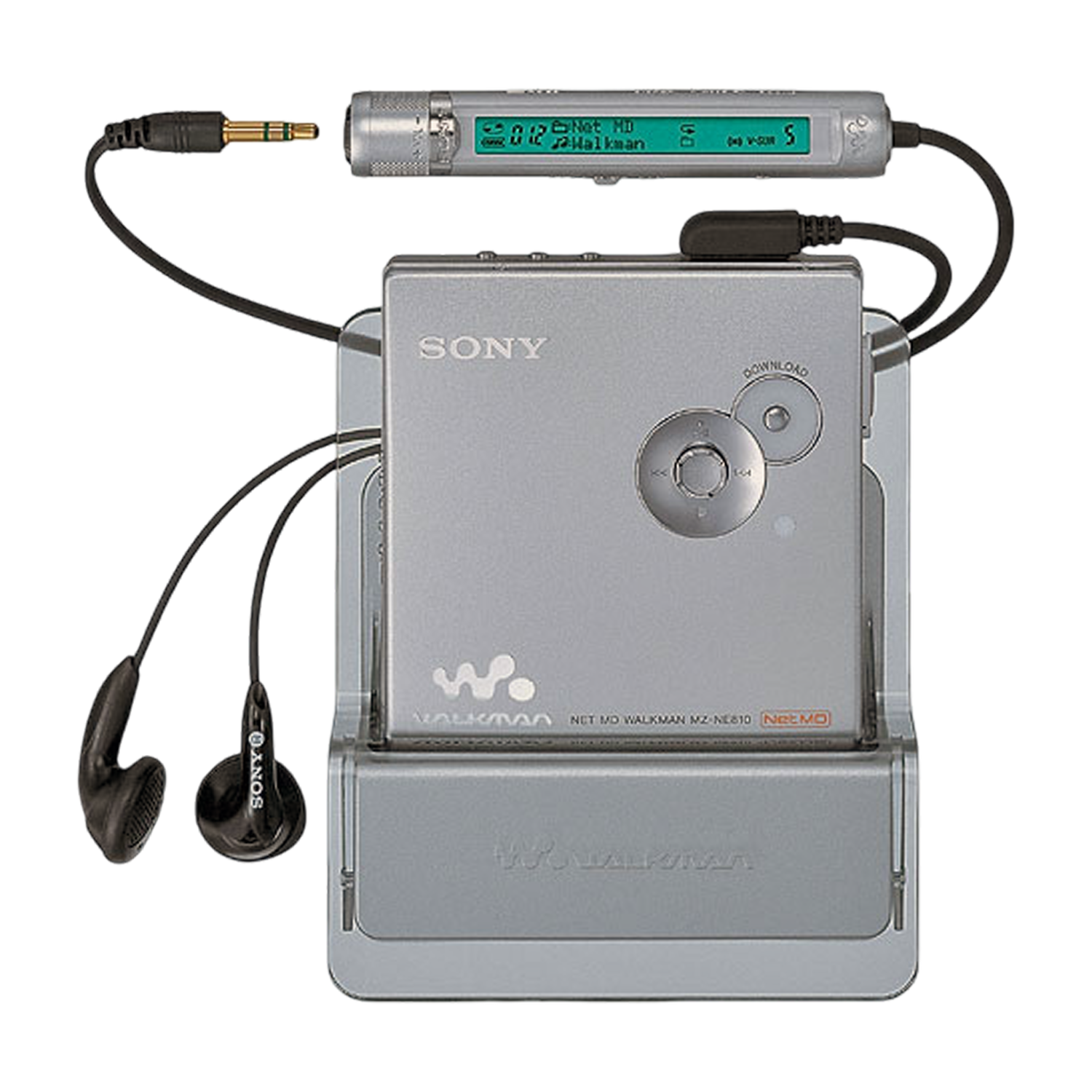
The MZ-NE810 is a NetMD player that completely shifts its recording system to the PC side. It does not have microphone, line, or optical inputs; audio sources are processed on the PC side and transferred at high speed. Playback quality is enhanced with ATRAC Type-S and it also supports MDLP. Library management is also enhanced with the group function. It has a remote control with a display, maintaining a certain level of operability. Power is supplied by a gum-type rechargeable battery + external AA batteries.
MZ-NF610
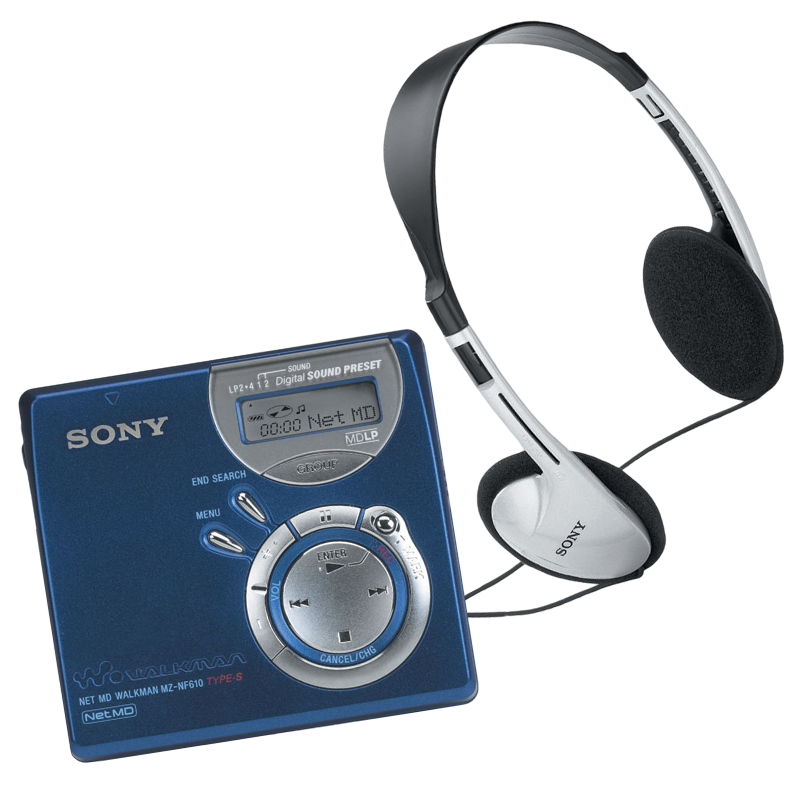
The MZ-NF610 keeps direct recording inputs while adding a second listening system through its remote. Line and optical inputs support direct recording, while USB provides a faster path for computer-based audio transfer. MDLP extends recording time, and group and bookmark functions help organize longer discs. Quick Mode improves responsiveness during operation. The remote includes AM, FM, TV, and weather band reception, allowing it to function as a standalone radio independently of the MiniDisc system, though broadcast audio cannot be recorded.
MZ-NF810
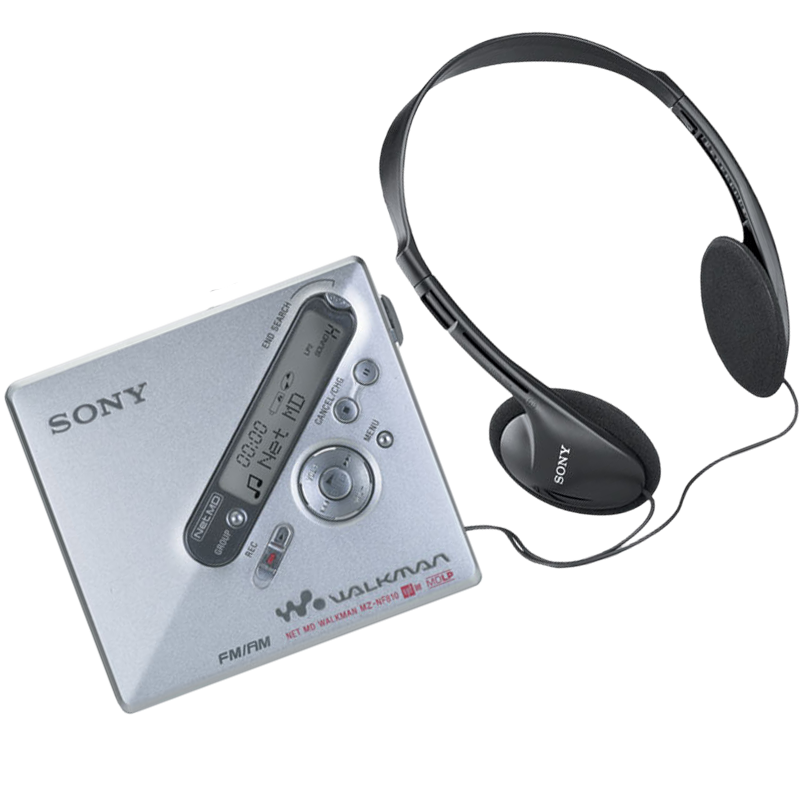
The MZ-NF810 combines full recording capability with expanded playback control while building on Sony's radio-integrated NetMD concept. Microphone, line, and optical inputs support both analog and digital recording, while USB adds a second workflow built on computer transfer. MDLP extends recording time, and playback processing includes equalization and virtual surround. The remote carries the radio system, with AM, FM, TV, and weather band reception available independently of MiniDisc playback. Navigation and track display are also handled through the remote.
MZ-E510
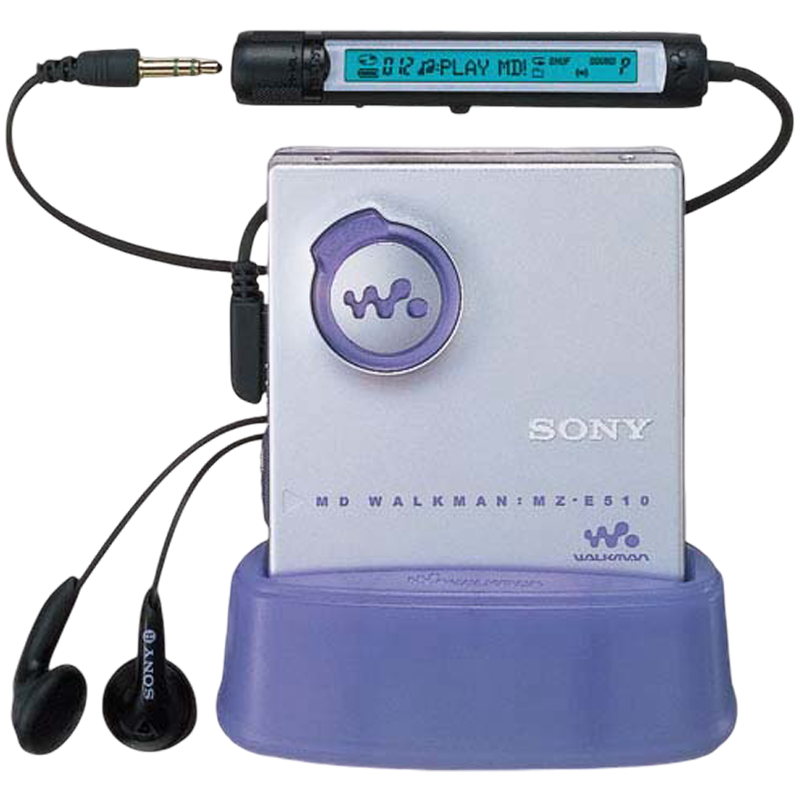
The MZ-E510 adds more playback control and improved materials without changing its core role as a portable MDLP player. Its aluminum chassis increases rigidity while keeping the device lightweight and portable. ATRAC Type-S improves playback of compressed recordings. A multi-band equalizer provides more precise sound adjustment, while group and bookmark functions help organize longer discs. A backlit remote handles most of the interface, including track information and navigation.
MZ-E310
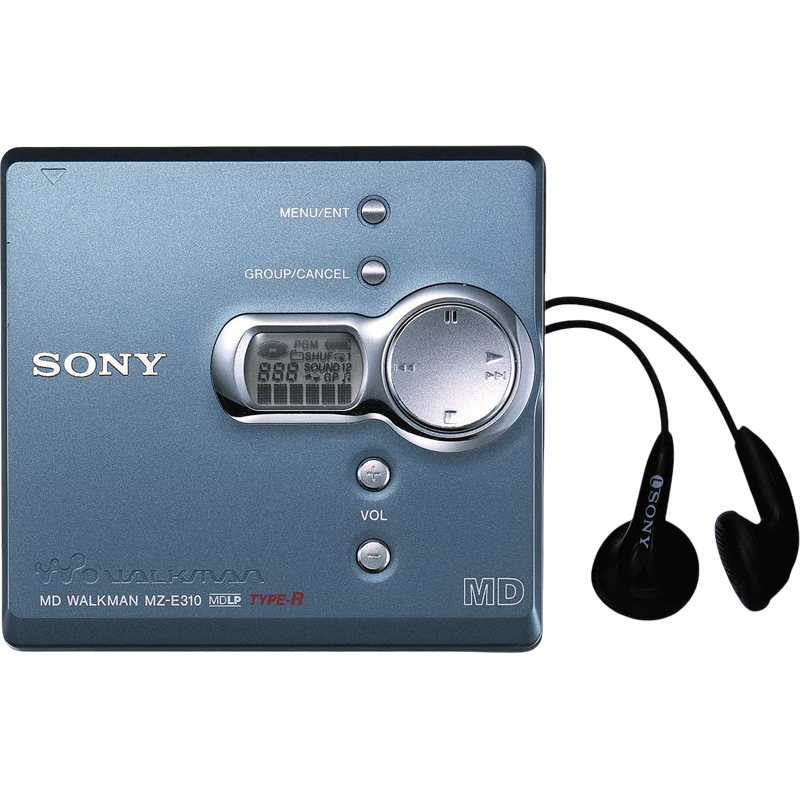
The MZ-E310 reduces playback to its core functions, removing accessories and interface layers found in higher-end models. It supports both standard MiniDiscs and MDLP recordings. ATRAC processing is handled internally during playback, while G-Protection reduces skipping. Group mode remains available for navigating longer recordings, but the lack of a remote keeps all interaction on the main unit.
MZ-E620
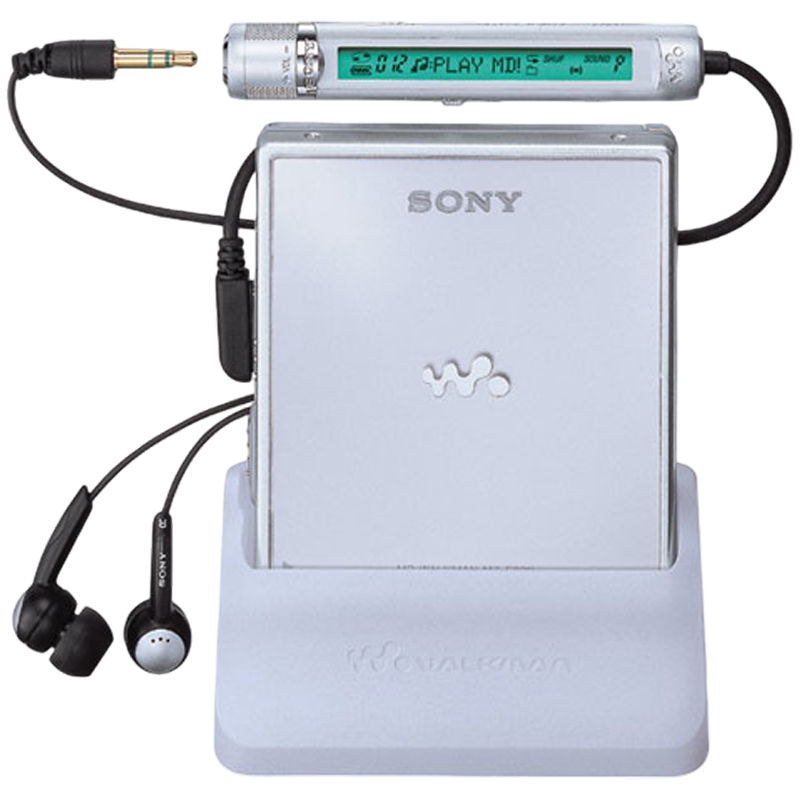
The MZ-E620 refines the same playback platform through compact usability changes instead of new features. MDLP support allows extended playback time, and ATRAC Type-S improves reproduction of compressed audio. One-touch eject simplifies disc handling. A backlit remote continues to handle navigation and display, while charging remains dock-based. Changes are incremental and focused mainly on interaction.
MZ-E810SP
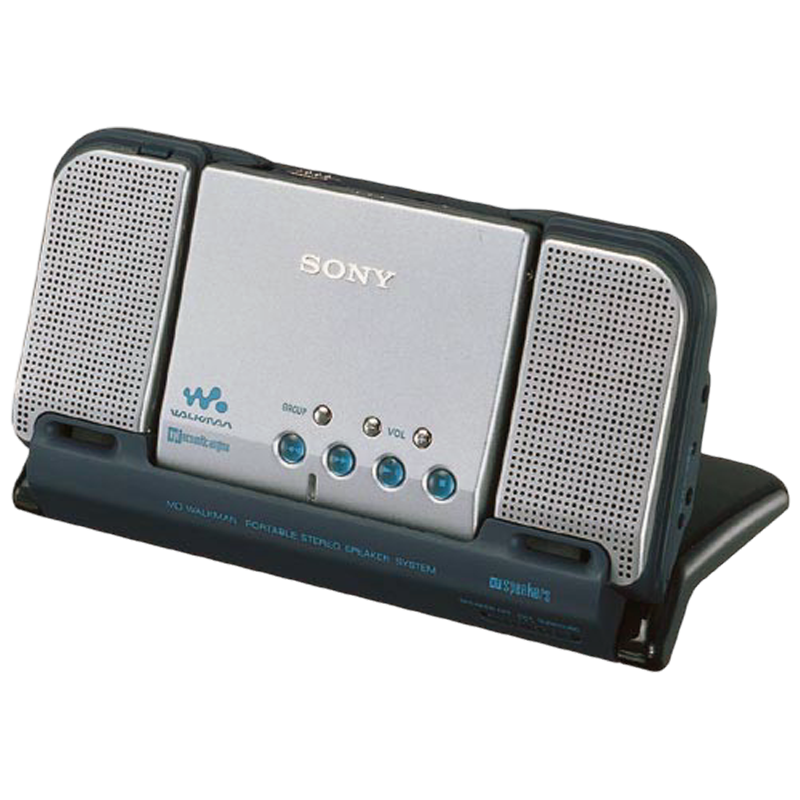
The MZ-E810SP combines portable playback with a fixed listening setup through its bundled speaker cradle. The unit itself functions as a standard MDLP player, supporting compressed formats and playback processing features. ATRAC Type-S improves playback of MDLP recordings, while equalization and virtual surround allow output to be adjusted. G-Protection maintains stability during portable use. The included cradle adds integrated speakers and amplification for desktop listening.
MZ-E610
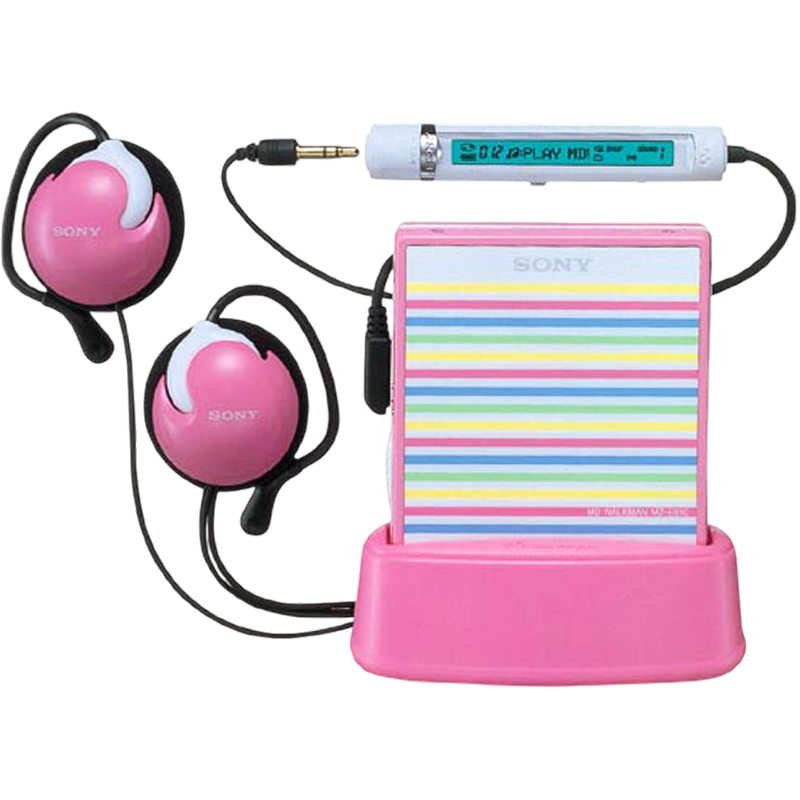
The MZ-E610 emphasizes usability through its control system instead of material upgrades. It supports both standard and long-play MiniDisc formats, with ATRAC Type-S improving playback of compressed recordings. A 6-band equalizer provides direct adjustment of sound output, while G-Protection reduces skipping. Charging is handled through a stand, and a backlit remote manages most interaction. The design varies across color-focused releases, but the underlying hardware remains the same.
MZ-E720
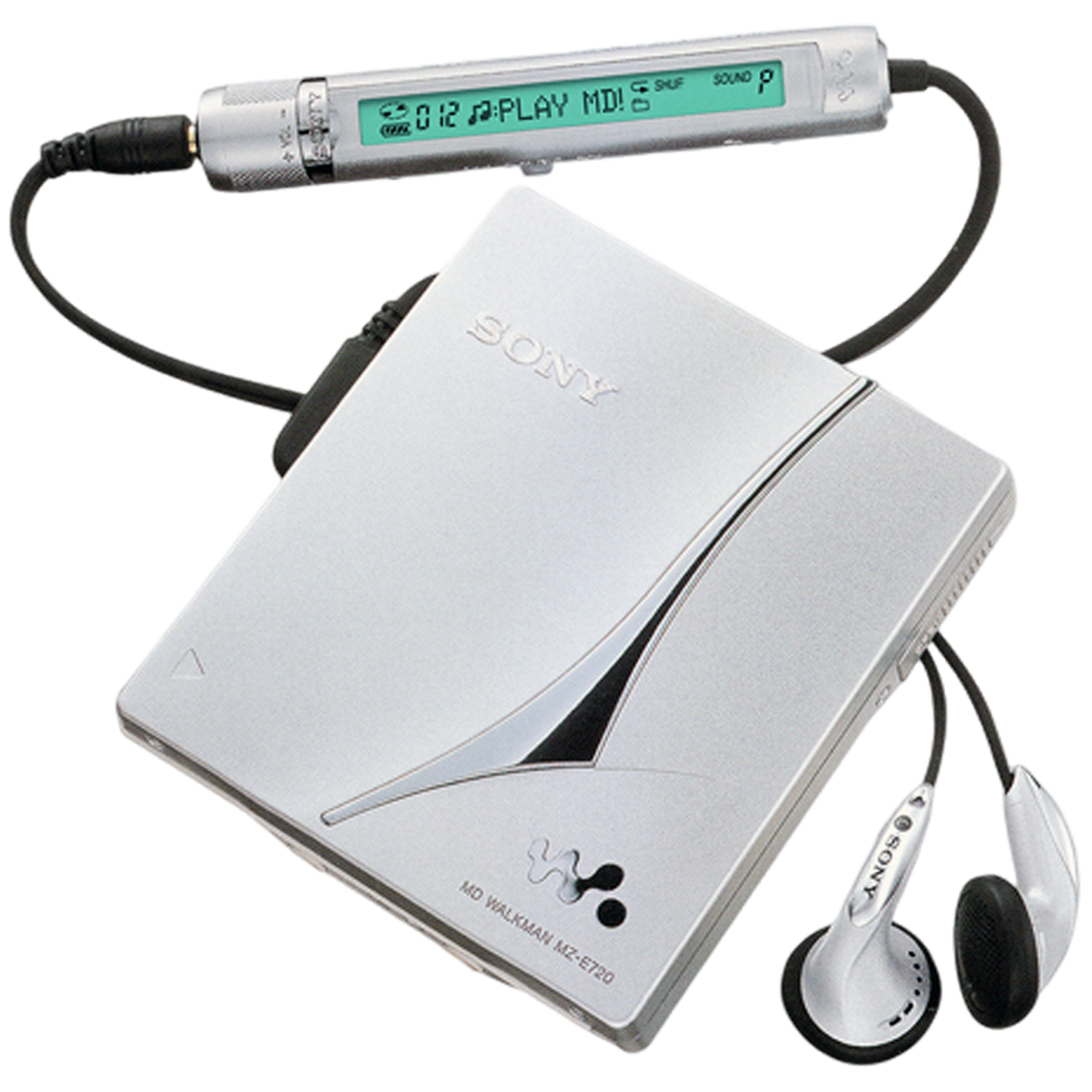
The MZ-E720 was a high-end MDLP player that enhanced sound quality and texture. It featured an aluminum body, maintaining a compact size while increasing rigidity. The digital amplifier was combined with Sony's proprietary sound processing functions, including virtual surround and equalization, expanding the expressive capabilities during playback. A memory buffer reduced startup time and prevented skipping. ATRAC Type-S ensured compatibility with long-playback recording. Most operations were performed using the remote control.
By 2003, hardware performance had reached its highest level of architecture. At the same time, the market structure shifted towards a transition to file-based audio sources.