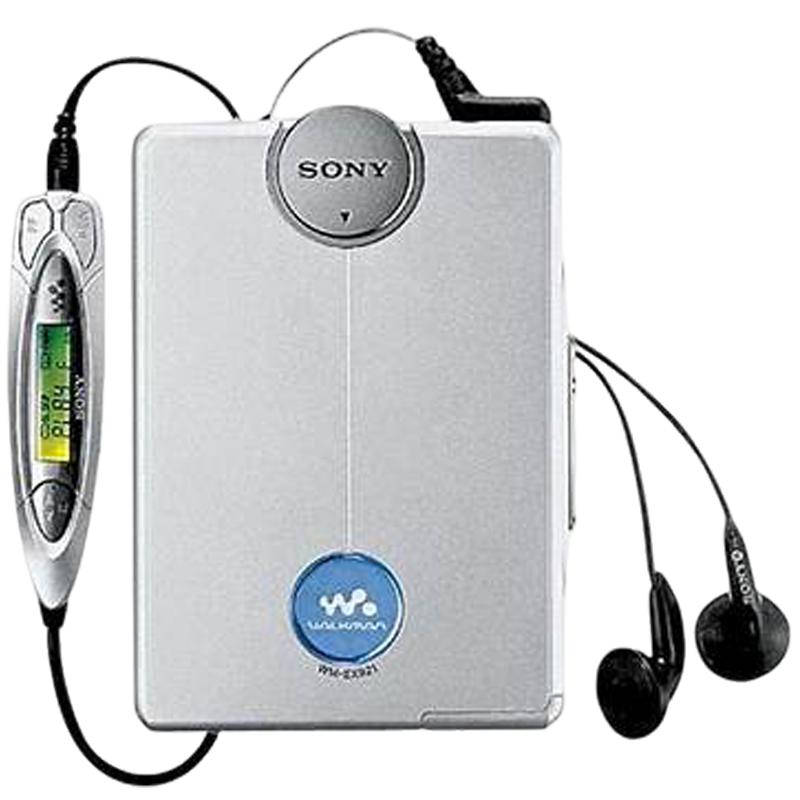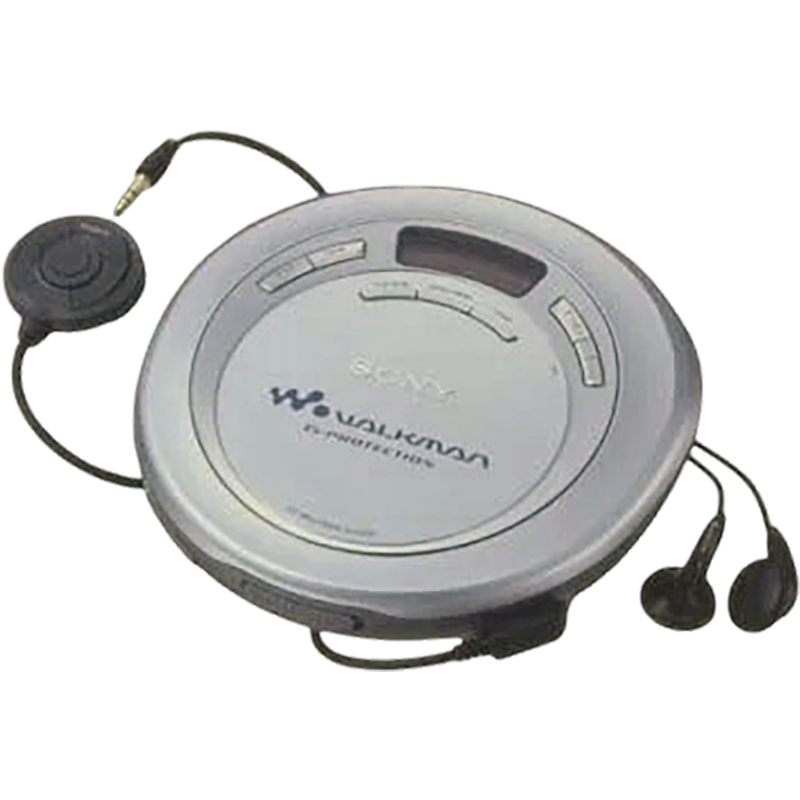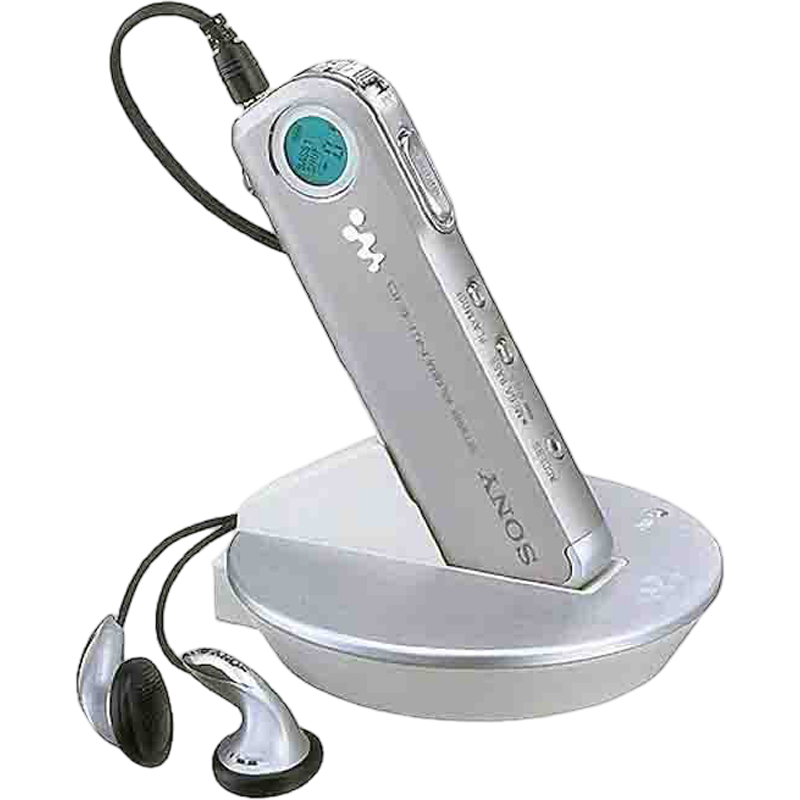
In 2001, Sony added digital connectivity to MiniDisc. A structure that supports computer integration via USB connection and software has been introduced.
MZ-G750
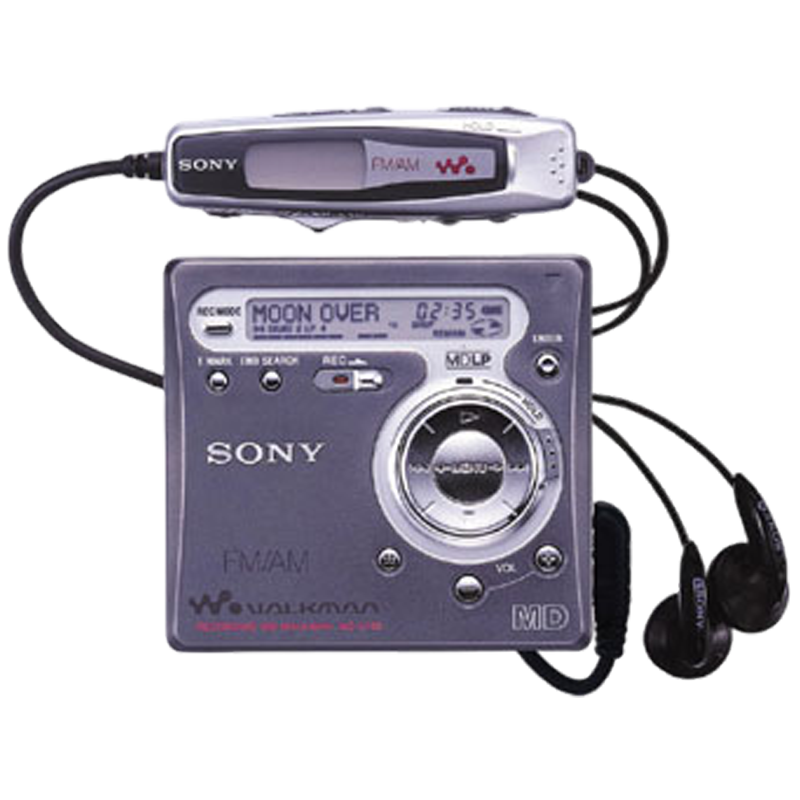
The MZ-G750 is a MiniDisc recorder built on the R700 platform that adds radio reception through its remote instead of the main unit. Microphone, line, and optical inputs remain available, preserving full recording capability across analog and digital sources. MDLP extends recording time through compression, while G-Protection buffers playback to reduce skipping. Recording levels can be adjusted manually or automatically. The radio system is handled entirely by the remote, with an AM/FM tuner that functions independently from the MiniDisc hardware.
MZ-R909
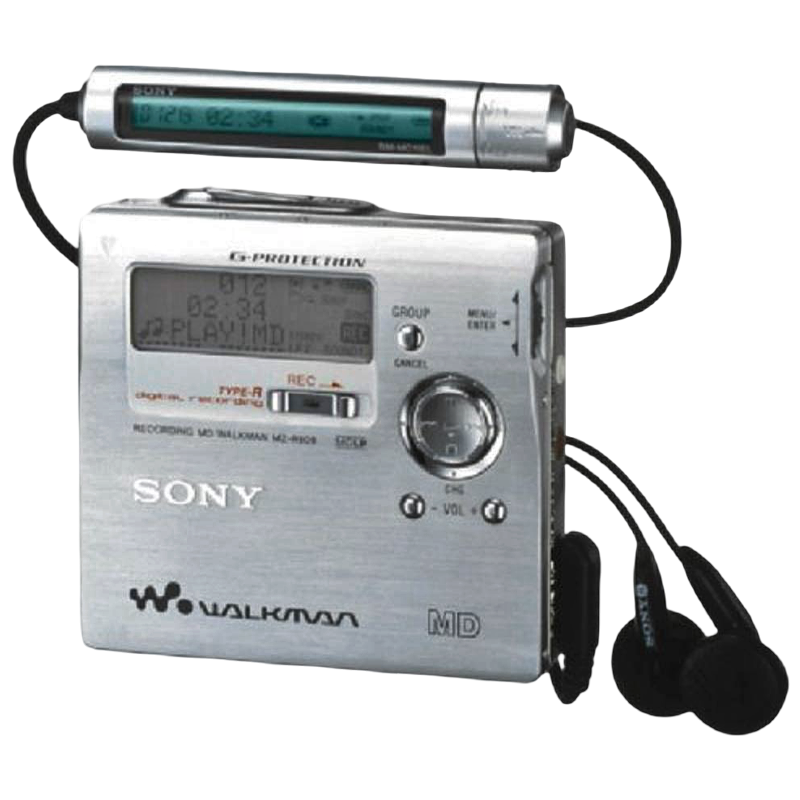
The MZ-R909 refines the R-series with improved control and interface design while keeping full recording flexibility. Microphone, line, and optical inputs support both analog and digital recording. MDLP extends recording time, and digital or manual level control allows adjustment during recording. Group functionality improves organization on longer discs. The interface combines a rotating jog dial with a multi-line display, along with features such as dual level meters and adjustable display settings.
MZ-R500
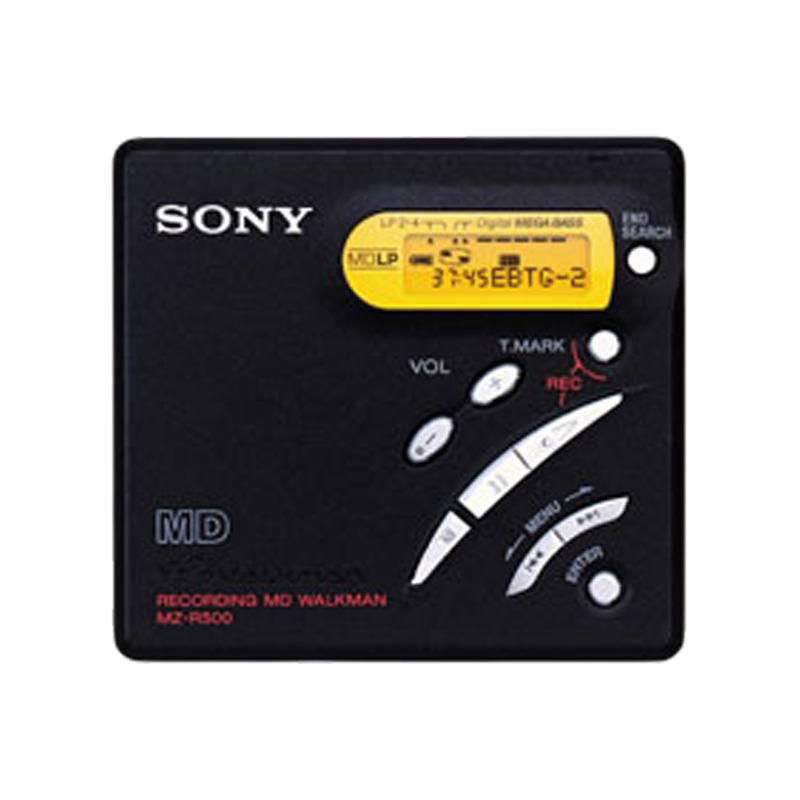
The MZ-R500 is an entry-level MiniDisc recorder focused on basic recording with minimal added features. Line and optical inputs support recording from external sources, but all recording takes place in real time without computer integration. MDLP extends recording time through compression, making longer sessions possible on a single disc. Digital and manual level control remain available for basic adjustment. The lack of both microphone input and remote control narrows how the unit can be used, with all interaction handled directly on the main body. Powered by a single AA battery, it favors simplicity over flexibility.
MZ-R700
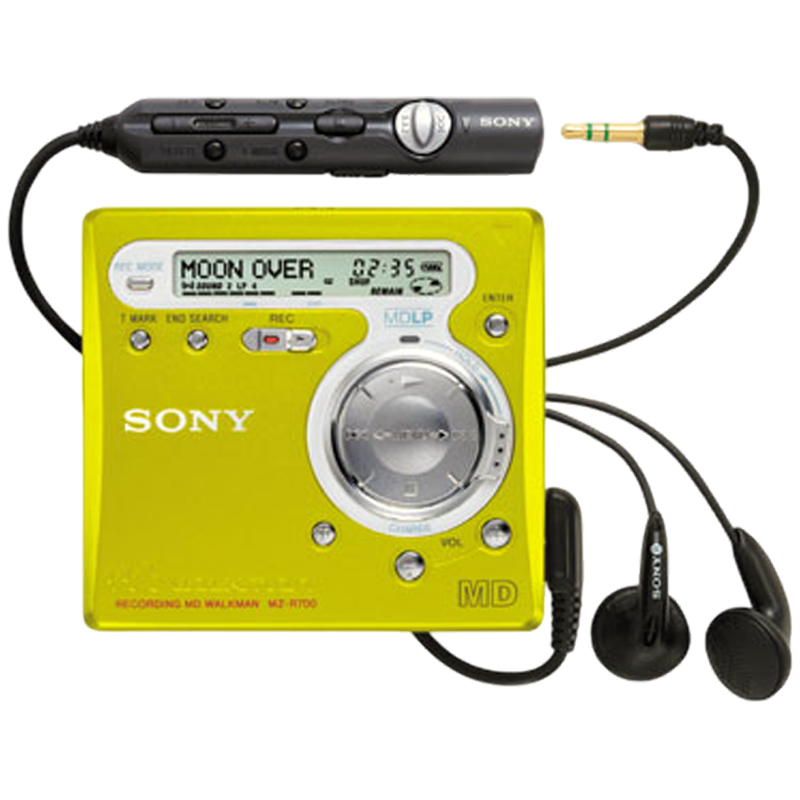
The MZ-R700 restores full recording inputs while keeping the overall design straightforward and durable. Microphone, line, and optical inputs are all present, allowing both voice and music recording without restriction. MDLP extends recording time, and G-Protection reduces skipping by buffering audio during playback. Digital and manual level control provide flexibility across different recording scenarios. A basic remote is included for playback control, though without a display, keeping most interaction centered on the main unit.
MZ-N1
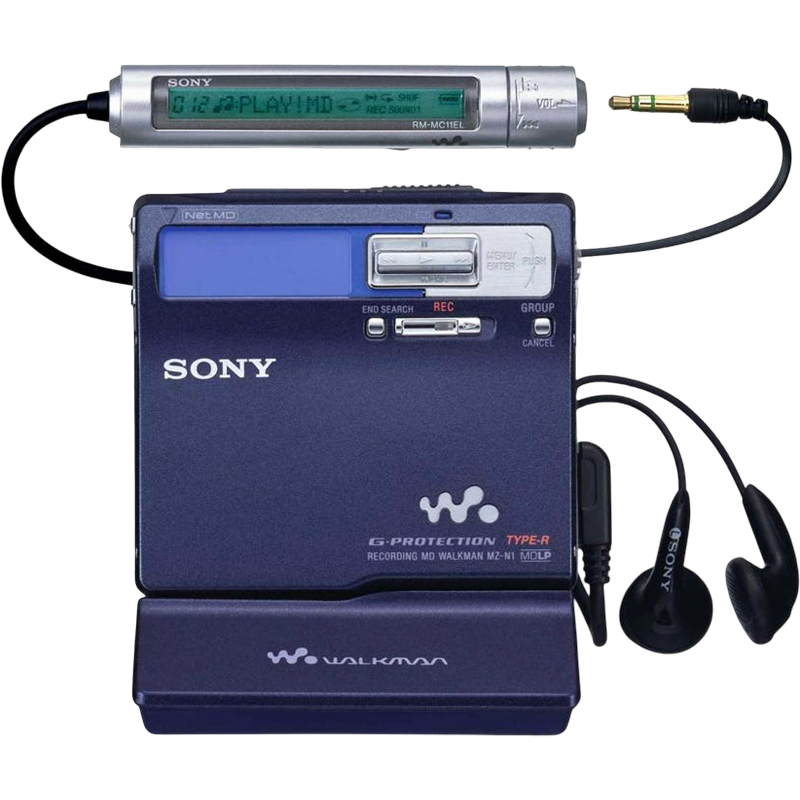
The MZ-N1 is the first portable recorder to feature NetMD and extend MiniDisc recording to PC connectivity. It allows direct transfer of compressed audio from a PC via USB connection, reducing the need for real-time recording in many situations. MDLP allows for extended recording time, and ATRAC Type-R supports sound quality in standard recording mode. Microphone input, line input, and optical digital input are also maintained, allowing for the combined use of conventional recording methods and PC-based transfer. Connection is made via a dedicated docking cradle that serves both as USB access and charging.
MZ-B100
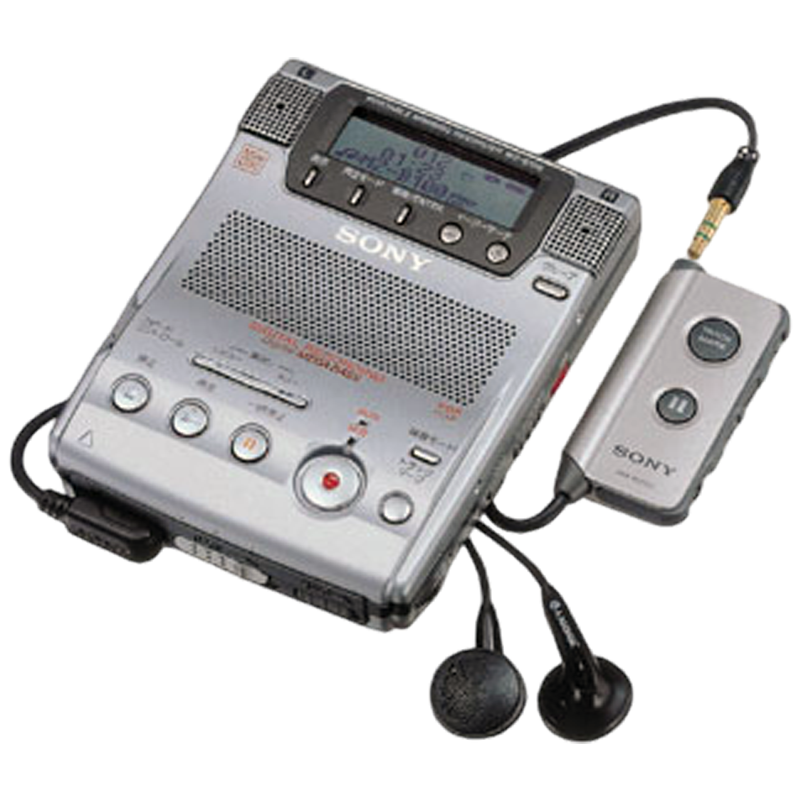
The MZ-B100 is a MiniDisc recorder built for voice capture instead of music recording, with a layout that prioritizes clarity and accessibility over compact size. A built-in stereo microphone and integrated speaker allow recording and playback without additional equipment, making it useful for meetings, interviews, and classroom use. Recording behavior is optimized for speech, with voice-activated recording and automatic track marking. Playback speed control allows recordings to be reviewed more quickly. MDLP extends recording time through compression. Line and optical inputs remain available for external sources, but the overall design centers on standalone operation with larger, more direct controls.
MZ-E300
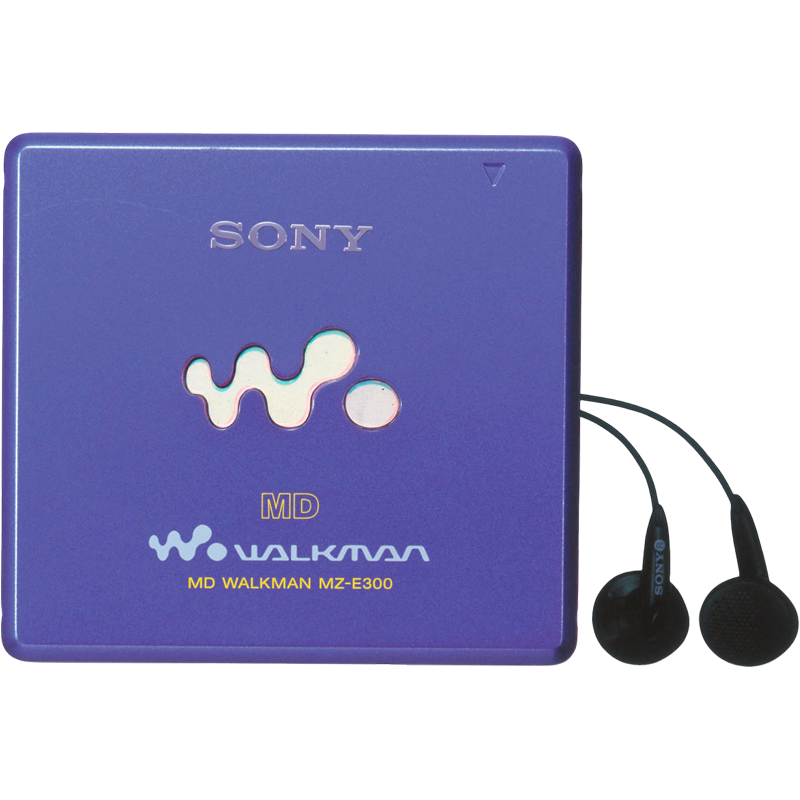
The MZ-E300 removes accessories and interface layers to keep the design simple. It handles standard MiniDisc playback with basic tone controls instead of expanded processing. All controls and the display are placed on the rear, and without a remote, playback and navigation require direct interaction with the device. Shock protection is limited compared to higher-end models, and power comes from a single AA battery.
MZ-E606W
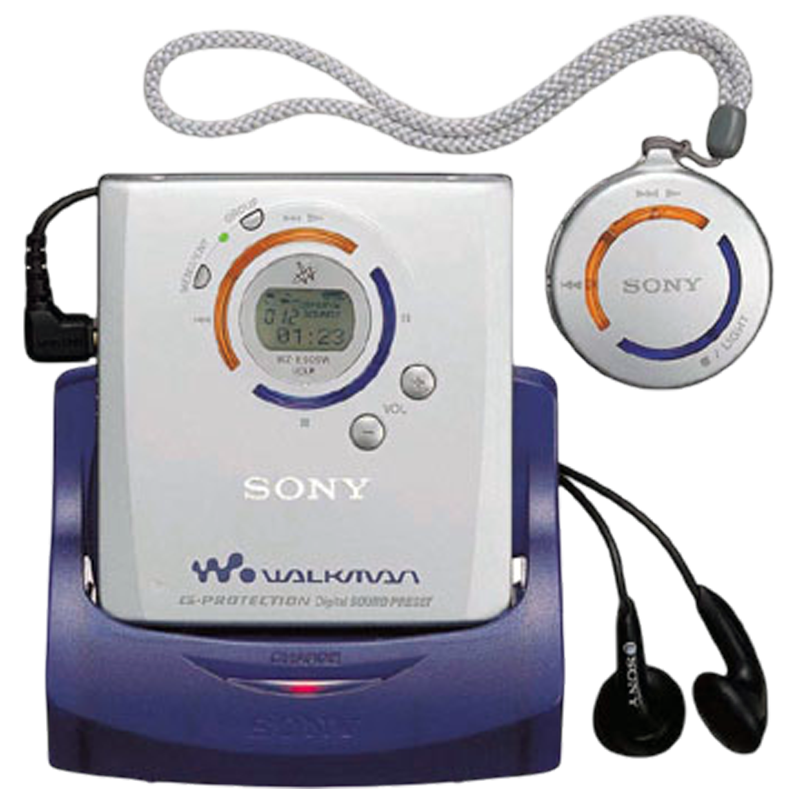
The MZ-E606W experiments with wireless control in place of a traditional wired remote, changing how playback is managed during portable use. It allows interaction without being physically tethered to the unit. MDLP playback and G-Protection remain in place, supporting extended recordings and more stable playback. Sound adjustment and playback speed control provide additional flexibility. The included cradle handles charging, and extra functions such as an alarm extend the unit beyond basic playback.
MZ-E707
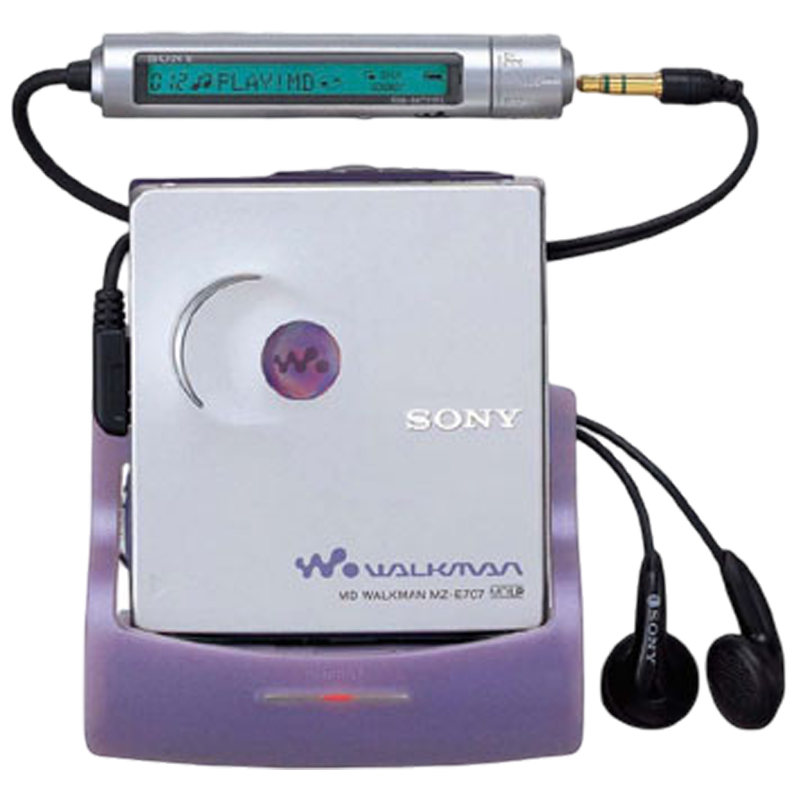
The MZ-E707 expands playback control while keeping the same format compatibility. MDLP support allows extended recordings, and G-Protection maintains stability during movement. Playback speed adjustment and manual sound controls provide more flexibility during listening. Control is managed through a remote, with charging handled through a cradle. More playback settings are exposed directly to the user instead of being limited to presets.
MZ-E909
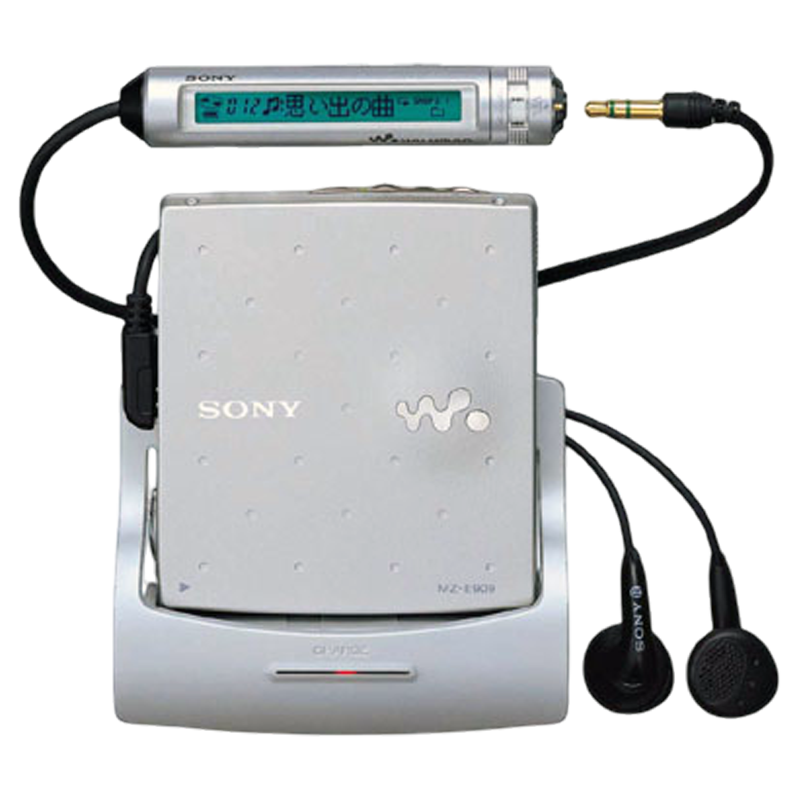
The MZ-E909 combines premium materials with extended playback performance. Its magnesium chassis reduces weight while maintaining structural rigidity. MDLP support allows longer recordings to be played back, and G-Protection maintains playback stability. ATRAC processing improves how compressed audio is reproduced. The remote supports detailed track information, including Japanese character display, and battery performance is tuned for longer listening sessions.
MZ-E501
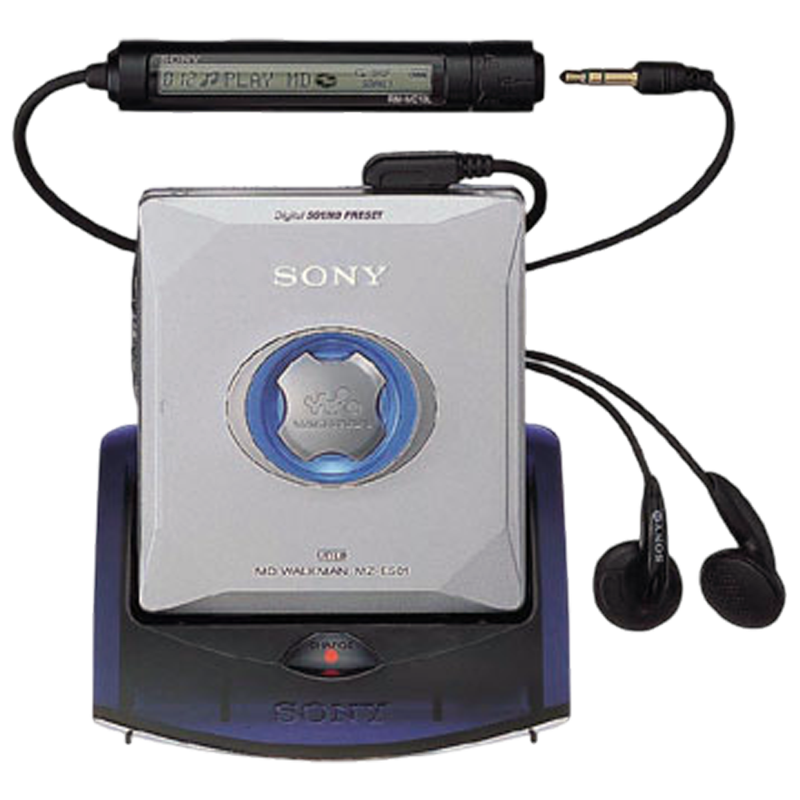
The MZ-E501 introduces MDLP compatibility, allowing playback of longer recordings created through compression. Group mode helps organize tracks on longer discs and improves navigation. Sound is adjusted through manual bass and treble controls. A remote handles playback control and display, while charging is managed through a stand. The overall design balances compatibility, control, and everyday usability without adding much complexity.
MZ-E600
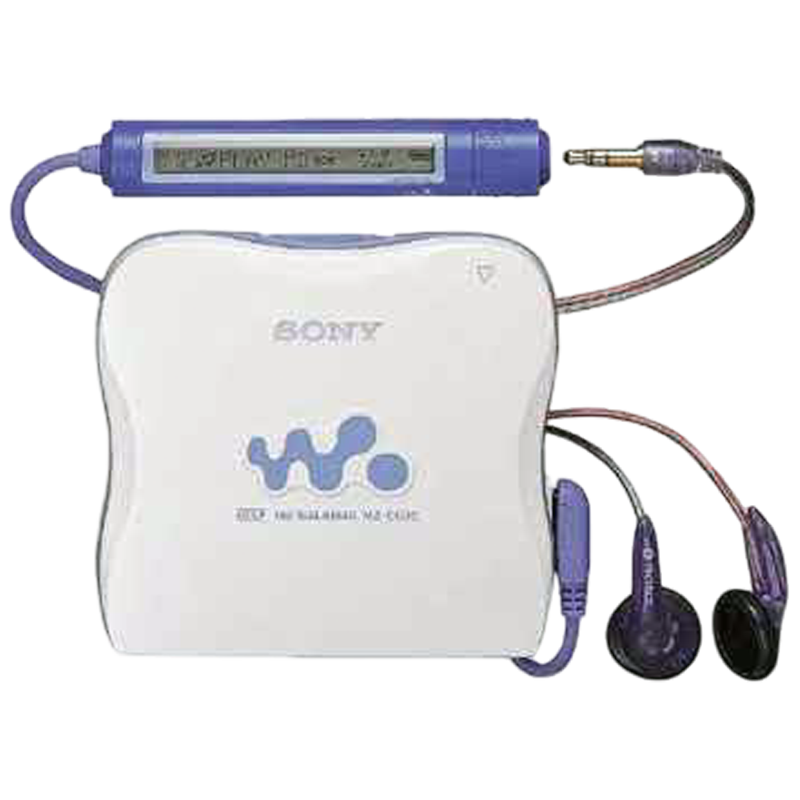
The MZ-E600 builds on MDLP playback with improved stability and compact usability refinements. G-Protection buffers audio ahead of playback to reduce skipping during movement. A remote handles playback and navigation, while charging remains cradle-based. An additional function detects nearby CDMA mobile phone signals and alerts the user.
In 2001, an integrated structure of disk architecture and digital environment was introduced. This structure was subsequently applied to subsequent models.
More Sony in 2001