
In 1979, Sony released the TPS-L2, which enabled personal stereo playback using headphones. The combination of a lightweight, portable design and cassette playback functionality established the basic configuration for portable music playback.
TPS-L2
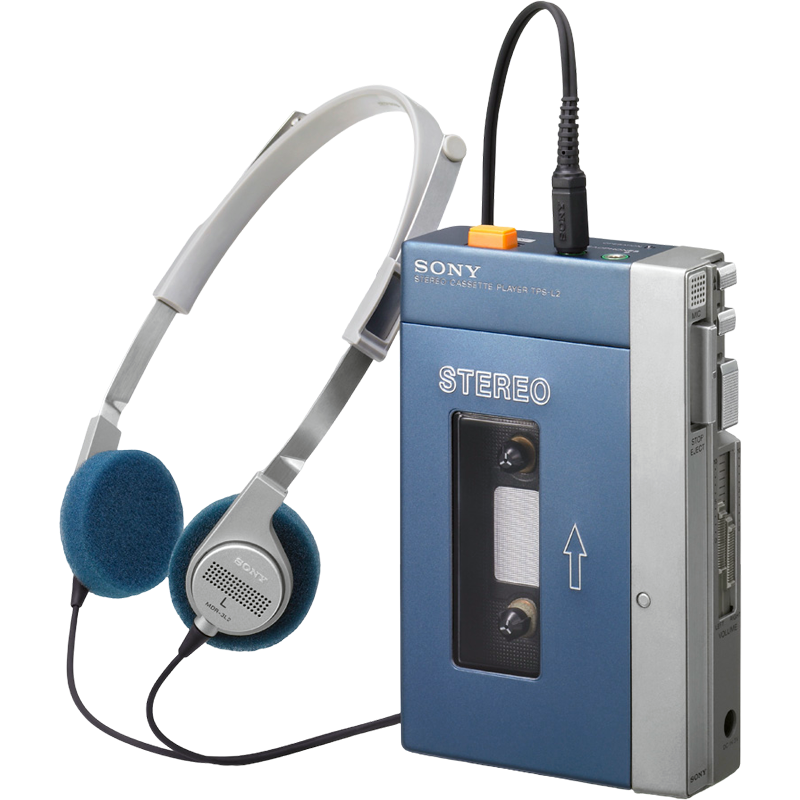
The TPS-L2 was Sony's first Walkman, launched on July 1, 1979 as a playback-only stereo cassette player built from the body of the existing Pressman TCM-600 recorder. Sony removed the recording circuitry and focused the machine entirely on listening, resulting in a compact blue-and-silver metal body powered by two AA batteries. Its belt-driven transport provided stable cassette playback, while the two headphone jacks encouraged shared listening and the Hotline button activated a built-in microphone so listeners could talk briefly without taking off their headphones. It belongs to the moment before the Walkman was really a category, when Sony was still testing whether private listening on the move could make sense as a mass habit. What made the TPS-L2 important was not technical sophistication so much as clarity of purpose: versatility was traded for portability and immediacy. It feels less like a finished member of a product family than the machine that accidentally opened the door for everything that followed.
In 1979, the basic structure of the Walkman was established as a product. This structure was continued to be applied to subsequent product designs, but configurations that relied on the cassette format were also maintained.