In 2004, data transfer and PC connectivity functions reached a practical level. Music management has been shifted to a software-centric structure.
NW-MS77DR
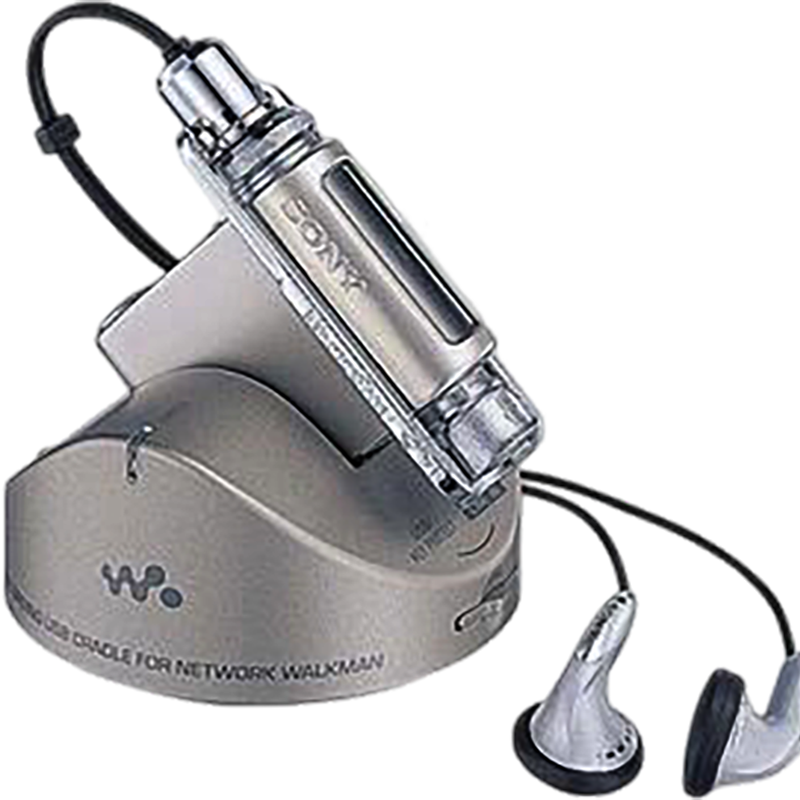
The NW-MS77DR is a third-generation Memory Stick Walkman that integrated 256MB of built-in flash memory with Memory Stick Duo support. It handled ATRAC, ATRAC3, and ATRAC3plus formats on its backlit LCD screen and added direct recording capability through a USB cradle, alongside gapless playback and Virtual Mobile Engine. It exemplified the third-generation hybrid design that blended internal storage with removable media expansion. This player shows Sony trying to expand the category without abandoning its original architecture. Like the other later MS models, it blended internal flash with Memory Stick Duo expansion, but it also added direct recording through its cradle, pushing the player slightly closer to Sony's older portable audio instincts instead of treating it as playback-only. It was one of the more transitional side branches in the family.
NW-HD1
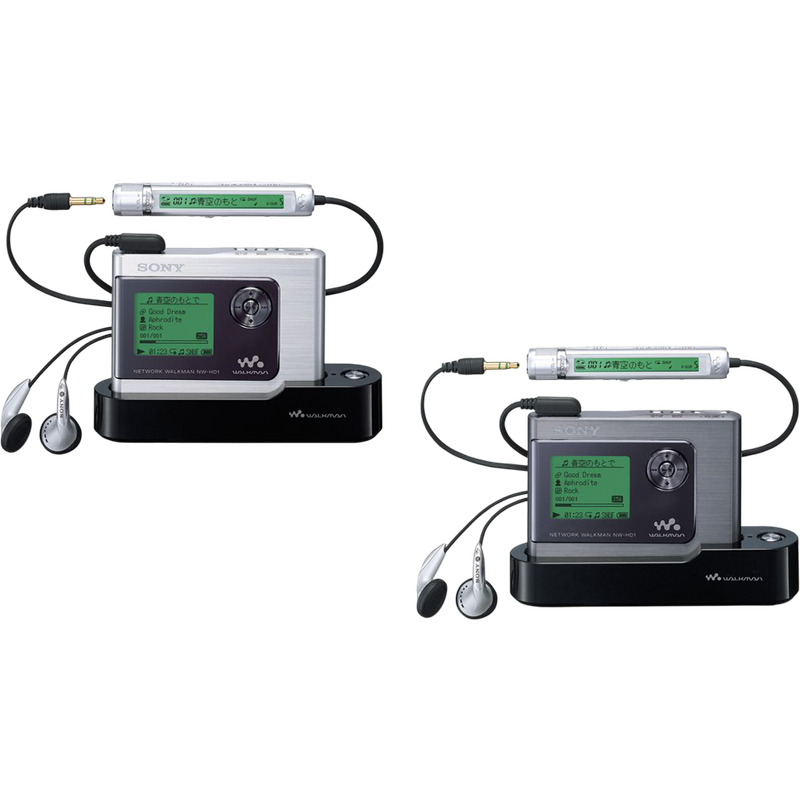
The NW-HD1 is the first Network Walkman to feature a built-in hard drive. It has a 20GB HDD and supports audio playback in ATRAC, ATRAC3, and ATRAC3plus formats. It features a backlit LCD display, shock resistance, and an accelerometer. This device employs a self-contained configuration using a built-in hard drive, allowing for the portability of large music libraries. It relies on music transfer via PC software and is dependent on the ATRAC format. It is positioned as a high-capacity-oriented model, distinct from flash memory models.
NW-HD2
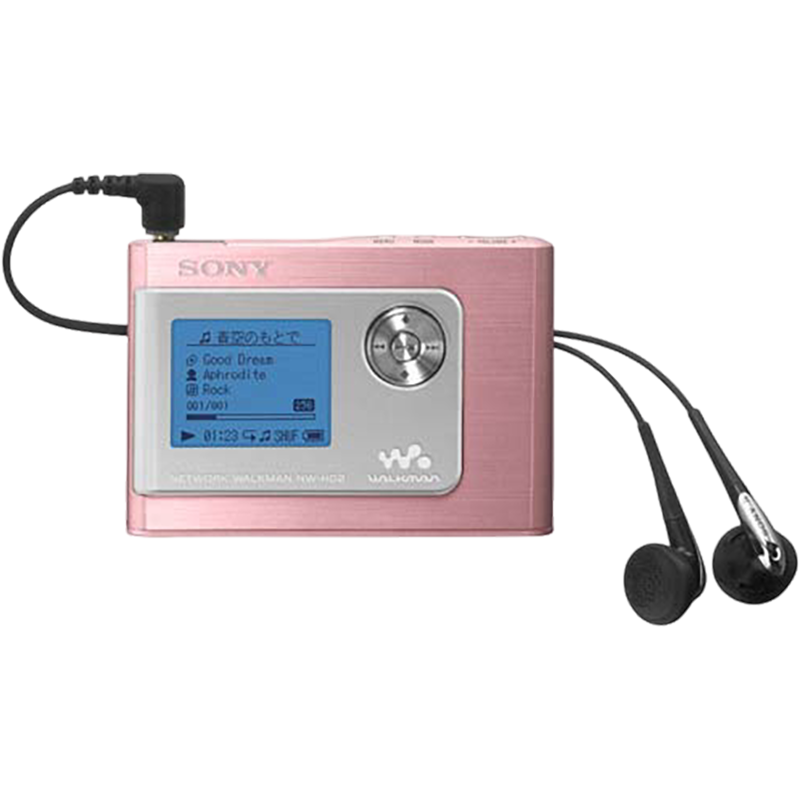
The NW-HD2 is part of the first-generation hard-disk Network Walkman family. It offers the same 20GB hard drive storage and ATRAC-family format support as the NW-HD1, with track information shown on a blue-backlit LCD and equipped with shock protection and an acceleration sensor. This model represented a color variant within the initial HDD series before Sony moved to the redesigned second-generation players. This unit was Sony trying to make the hard-disk Walkman feel less of a bold one-off and closer to an actual product family. The first HDD Walkman had already introduced the appeal of carrying a much larger portable library than flash players could offer at the time, but this follow-up nudged the idea toward something slightly less severe and slightly more livable. It still belongs to Sony's transitional premium era. The HD2 had the storage ambition and object-like seriousness of the early HDD branch, but it also carries a lot of the old software-heavy worldview that made these players feel slightly controlled.
NW-HD3
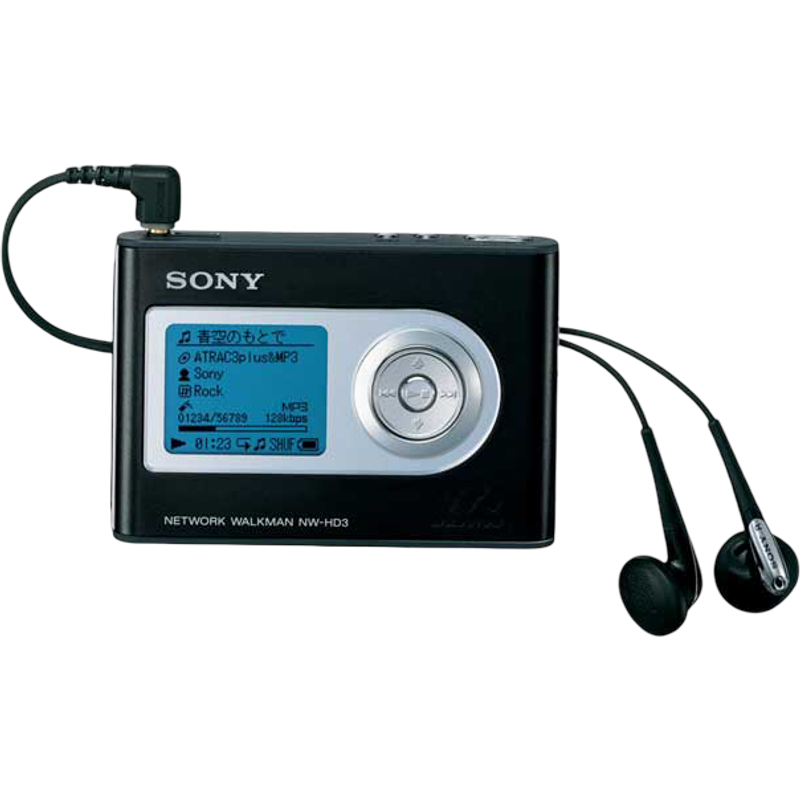
The NW-HD3 completed the first-generation hard-disk Walkman lineup. It features 20GB hard drive storage and expanded format support to include MP3 alongside ATRAC, ATRAC3, and ATRAC3plus. Its LCD screen displayed track information and it delivers up to 30 hours of battery life, with shock protection and an acceleration sensor. It is the first HDD Walkman to offer standard MP3 playback, marking the family's shift beyond ATRAC-only audio. The HD3 is where Sony's hard-disk Walkman finally became much easier to defend. The branch already had a strong core idea of carrying far more music than any flash player of the period, but the earlier models made too many parts of that experience feel heavier than they needed to be. Native MP3 support made the player feel much more realistic in ordinary use. It did not erase the tension between strong hardware and Sony's old ecosystem instincts, but it reduced it enough that the HDD Walkman started feeling less doctrinaire and more practical.
NW-E55
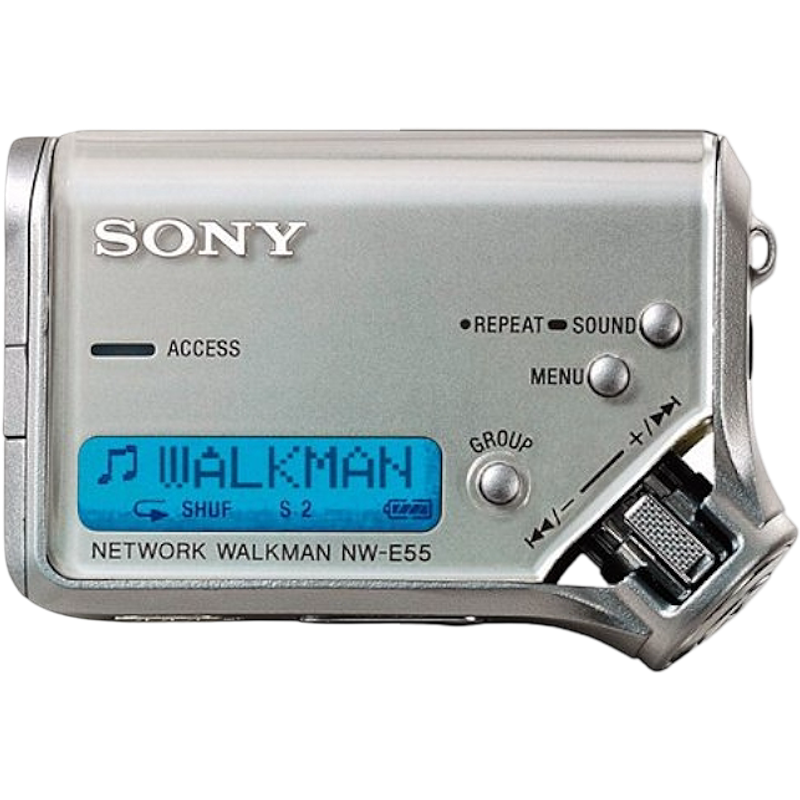
The NW-E55 is a Europe-only 128MB model within the third-generation E Series flash Walkman family. It offers built-in storage for ATRAC and MP3 playback shown on an LCD display and ran for up to 70 hours on a single AAA battery. It served as a budget-oriented branch of the third-generation E Series lineup. A Europe-focused variant created during the period when the flash Walkman was stabilizing into a recognizable consumer product instead of a fragile transitional gadget. The hardware itself was not radical, but it belonged to a family that had become much more coherent than the earliest flash players. Sony had largely settled the basic idea of built-in flash, compact playback, broader format support, and long battery life. At this point it was stretching the line across markets and price tiers instead of reinventing it every time.
NW-E95
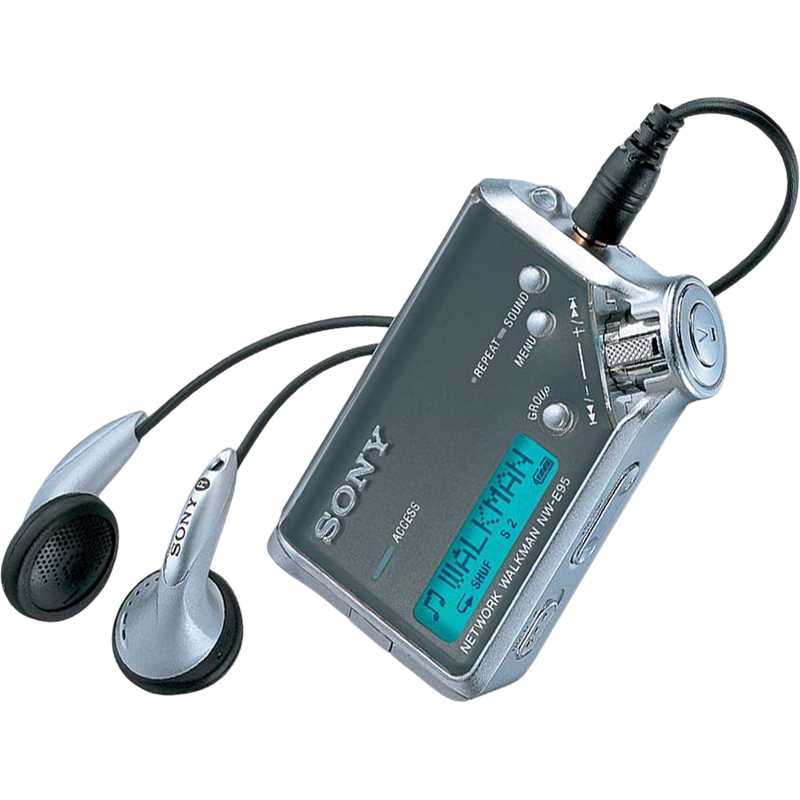
The NW-E95 is a 512MB capacity Network Walkman part of the third-generation E series. It features built-in flash memory and supports audio playback in ATRAC and MP3 formats. It has an LCD display and is configured for long-term operation with a single AA battery.
NW-S23
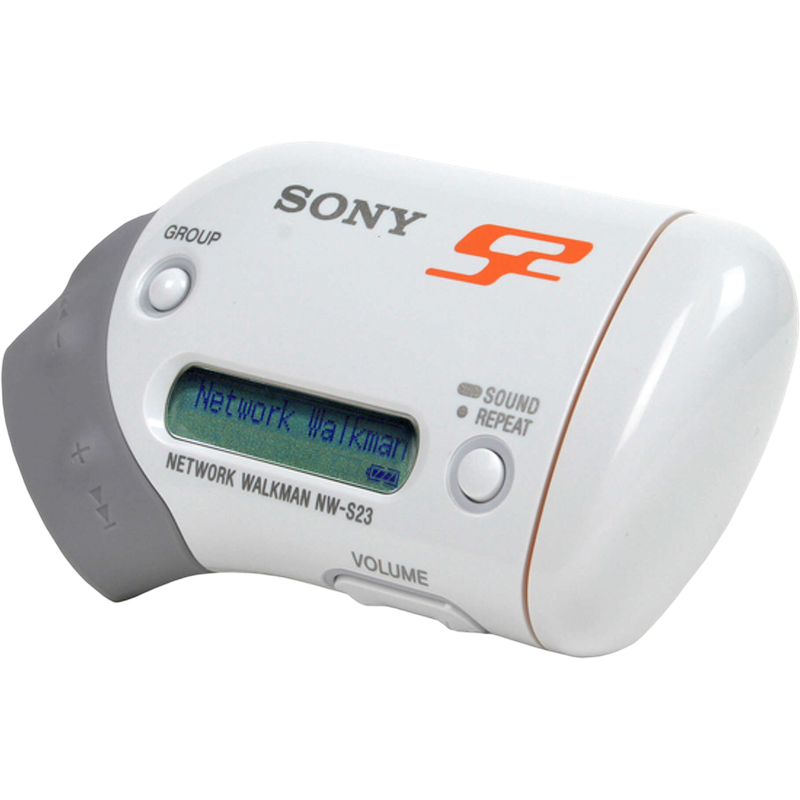
The NW-S23 offers 256MB storage in the second-generation S Series sports Walkman family. It played MP3 and ATRAC3plus files through a 1-line monochrome OLED display and lasted up to 83 hours on one AAA battery. It provides higher capacity within the sport-focused branch derived from the E70/E90 era. The higher-capacity sibling to the NW-S21 with a fairly clear historical role. It is not trying to be the most advanced or most feature-rich flash Walkman. It belonged to the branch that kept things direct, lightweight, and battery-focused while the rest of the lineup became more layered. It is the more practical upper tier of the early second-generation S Series, before that family's identity became much less straightforward.
NW-E99
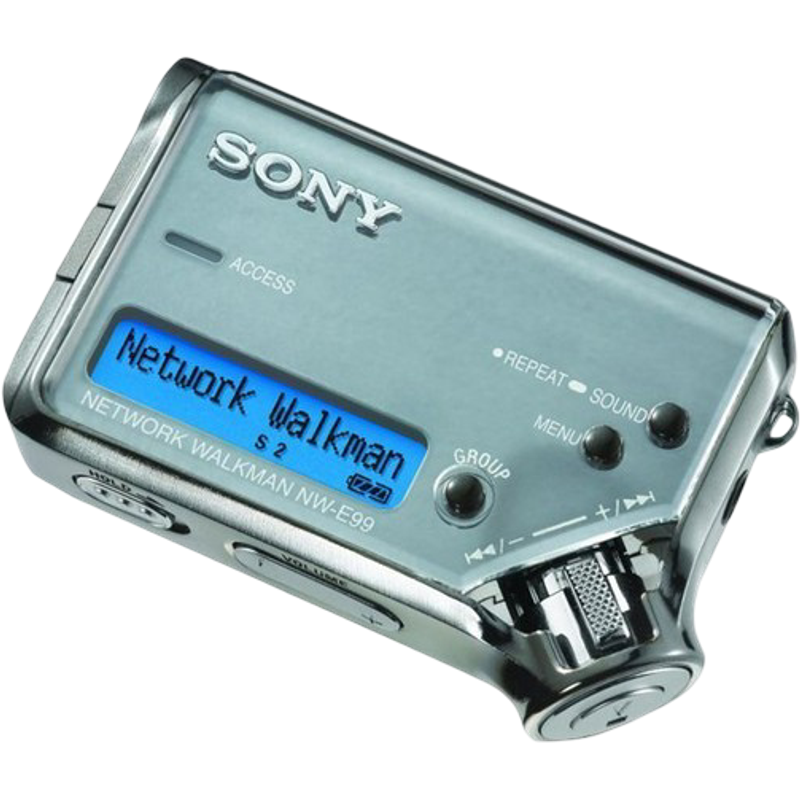
The NW-E99 is the first Network Walkman to reach 1GB of built-in flash memory. It supports MP3 playback on its LCD display and ran up to 70 hours on a single AAA battery, using two internal 512MB memory banks to achieve the capacity. This top model of the 2004 E Series generation represented the peak of flash storage in that lineup before the shift to new form factors. The first Network Walkman to reach 1GB of internal flash memory, which makes it one of the clearest capacity milestones in the early E Series story. More than most neighboring models, this one marks the point when flash storage stopped feeling severely constrained and started becoming genuinely comfortable for everyday use. Earlier flash Walkman often required very deliberate curation because space ran out so quickly. It pushed the category closer to a point where the player could start feeling more abundant and less restrictive.
By 2004, software had been incorporated as a core element of the product structure. This structure was continuously applied to subsequent product designs.