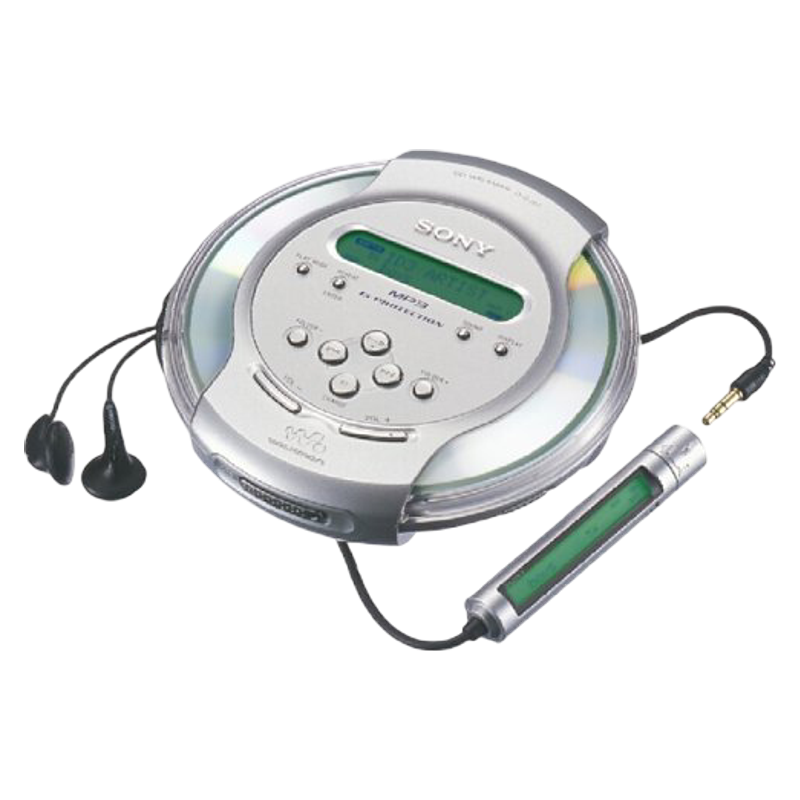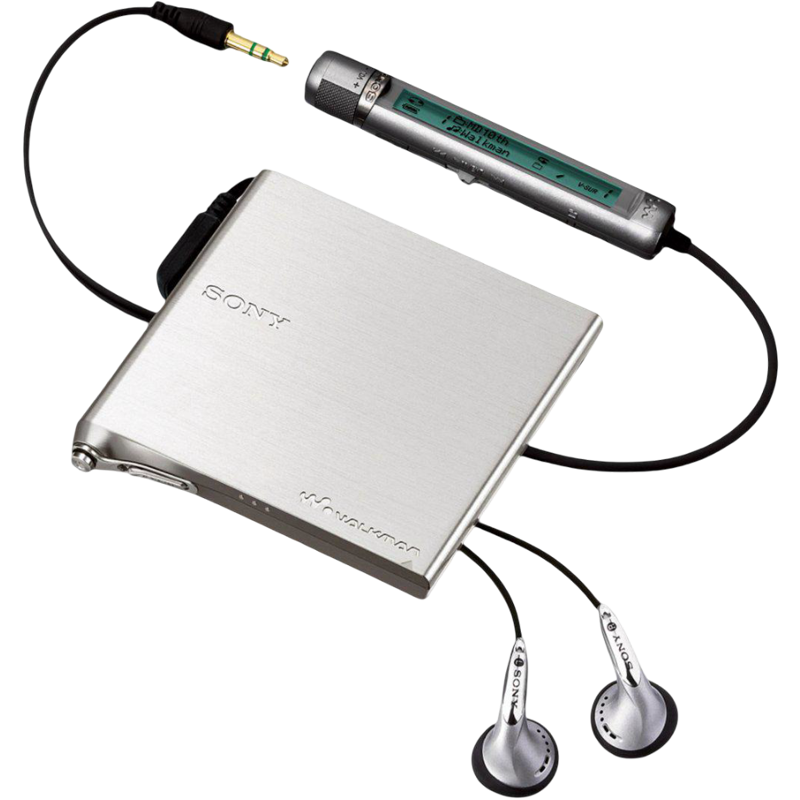
By 2002, Sony was maintaining the basic models without attempting to regain lost ground. The lineup had become residual, its role limited to serving the last loyal cassette users.
WM-FX888
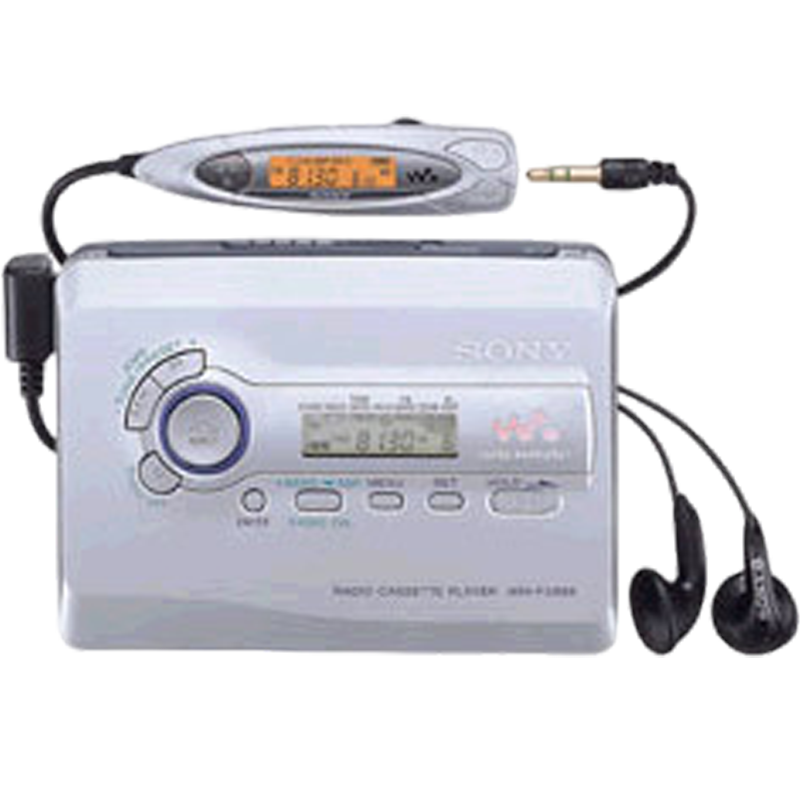
The WM-FX888 is part of the last higher-end radio Walkman, continuing the mature FX formula with a cleaner body design, an upgraded remote, and a more polished user interface than the lower-tier models surrounding it. It combined auto-reverse playback, Dolby B noise reduction, Mega Bass with Groove and Revitalizer modes, and 16x AMS track search with a world-band digital tuner for AM and FM reception. The bundled remote added a backlit display and support for charging-stand use, making the machine feel more complete and better suited to regular portable use than many of the simpler late cassette-radio players. What makes the FX888 interesting is that it shows Sony still preserving a proper upper tier for people who wanted radio and cassette without dropping into the stripped-down end of the format. It was not especially radical, but it still treated the radio Walkman as something worth doing properly. That matters a lot this late in the story.
WM-EX521
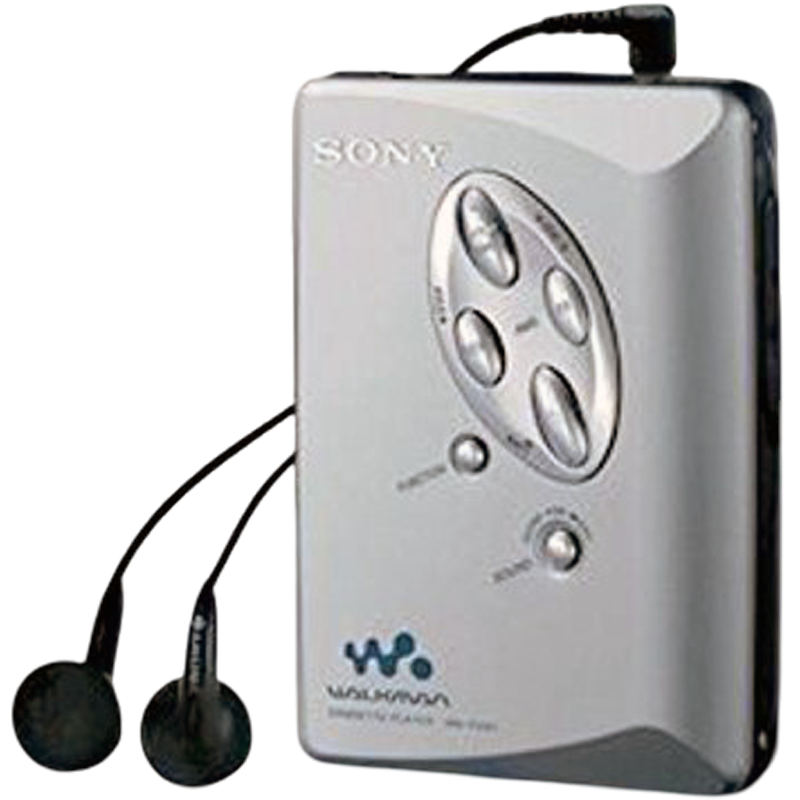
The WM-EX521 formed part of Sony's compact EX-series cassette Walkman released in 2002. Positioned toward the more accessible end of the range, it delivers auto-reverse playback together with Mega Bass sound enhancement and supplementary bass modes including Groove and Revitalizer while omitting Dolby noise reduction. A single AA battery supplied power for approximately thirty-five hours of operation, and the unit incorporated an automatic music sensor for track skipping, blank skip to bypass silent sections, AVLS volume limiting, a hold switch, and electronic logic-controlled buttons housed in a compact standing plastic body that includes a visible tape window. By the early 2000s cassettes faced growing competition from emerging digital formats, yet Sony sustained the EX line to serve everyday listeners who still preferred the simplicity of tape. This model targeted users seeking simple convenience and stronger low-end response without added expense, slotting between the most basic non-reverse players and slightly more equipped siblings as a functional daily carry that kept the format relevant for routine commutes and casual listening.
WM-EX631
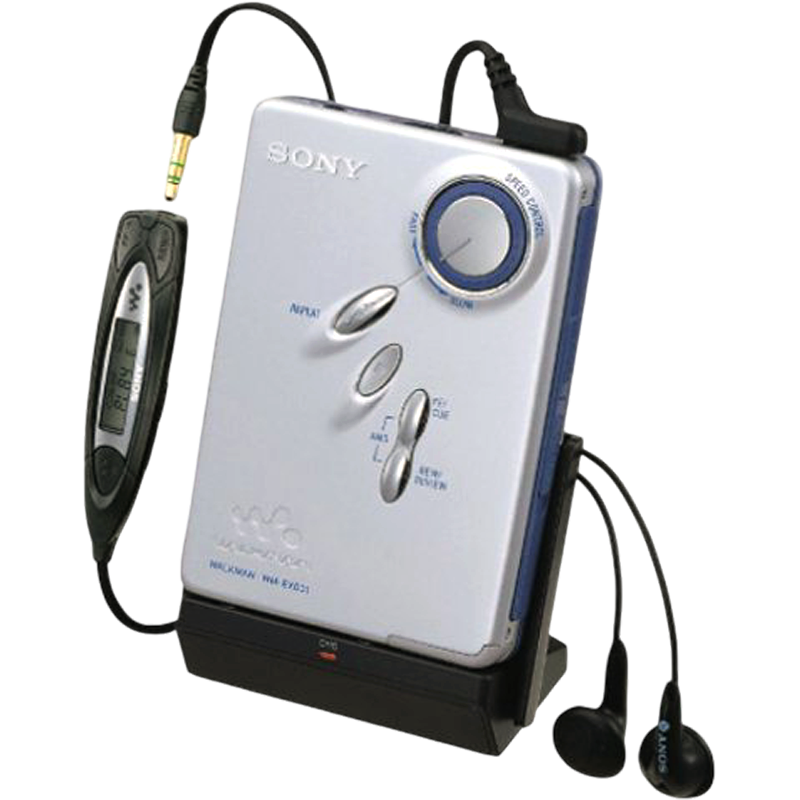
The WM-EX631 is a slim late-period EX-series playback Walkman built around a standing aluminum body that kept the machine compact, rigid, and easy to carry in one hand. It offers auto-reverse playback, automatic tape selection, Automatic Music Sensor search, blank skip, and Sony's familiar late-era sound processing through Mega Bass plus Groove and Revitalizer modes, all controlled through a wired remote and rechargeable battery system with a dedicated charging cradle. One of its more unusual additions was a variable tape-speed control dial, allowing playback to be slowed or adjusted for spoken-word listening, transcription, or language study. This model shows the cassette Walkman no longer being shaped purely around music. By 2002, Sony was still refining playback machines, but the refinements had shifted toward practical use habits that survived longer than the mainstream tape market itself. The EX631 is a machine for people still actively using cassette as a tool, more than as a format.
WM-FS555
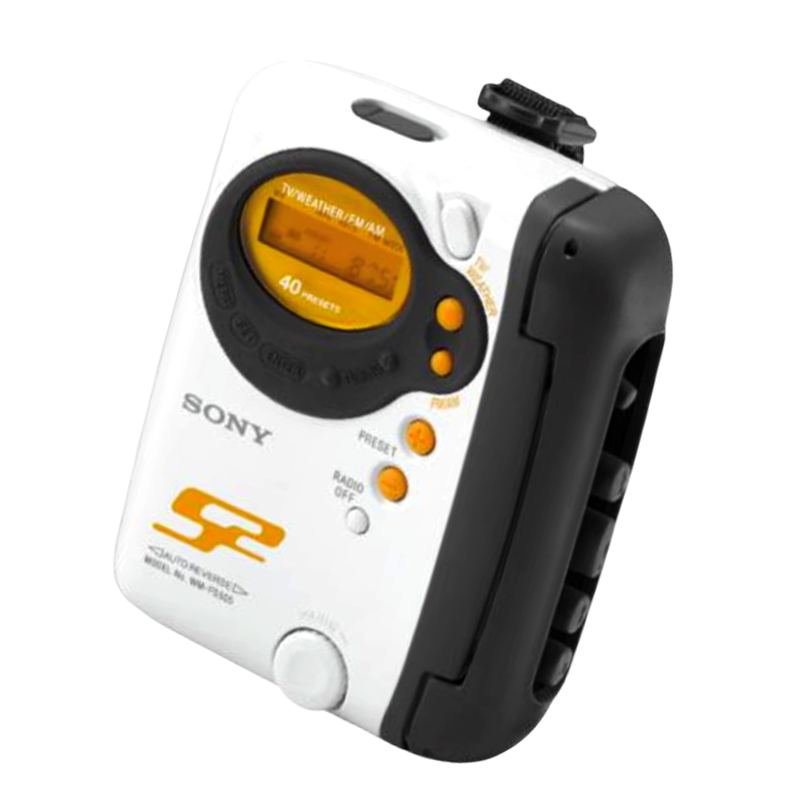
The WM-FS555 is a sport-focused cassette Walkman within Sony's FS series introduced in 2002. It integrated auto-reverse playback and Mega Bass enhancement with a built-in FM/AM radio tuner that extended to TV and weather bands, all enclosed in a rugged body engineered for shock and weather resistance. Powered by one AA battery, the design includes a reflective hand strap with belt clip and specialized ear-clip headphones suited to movement during outdoor activity. Sony maintained the sport segment of the Walkman catalog during the format's late phase to appeal to active users unwilling to abandon cassette playback. This entry aimed at exercise enthusiasts and outdoor listeners who needed durable radio and tape options that could withstand motion and elements, distinguishing itself from standard indoor models while bridging the gap to the final generation of portable cassette devices before digital dominance.
WM-FX202
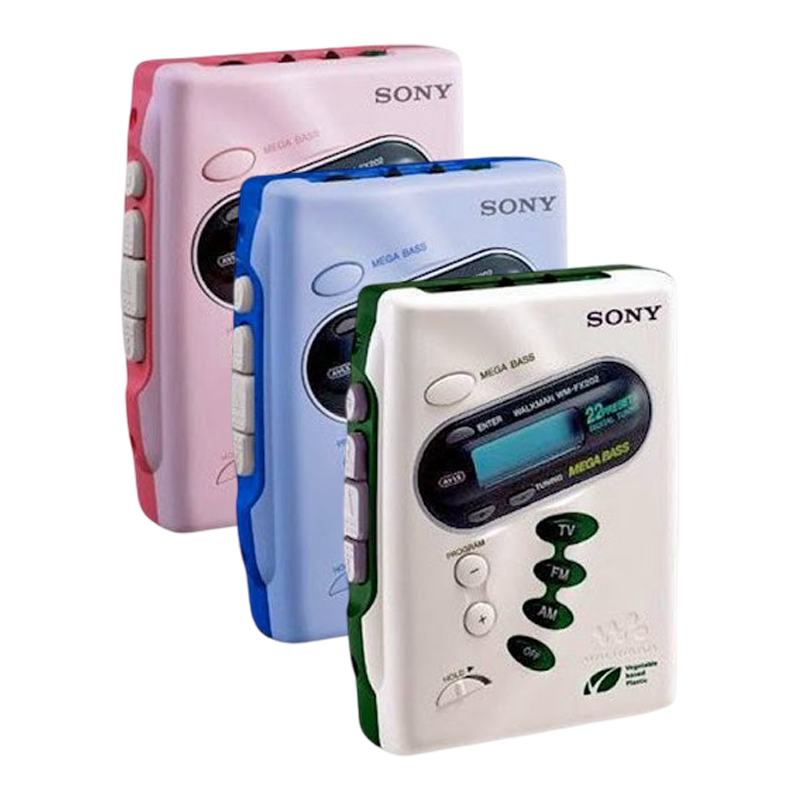
The WM-FX202 was a late radio Walkman distinguished less by its cassette hardware than by the material used for its body. Sony used a corn-based biodegradable plastic derived from polylactic acid for the outer shell, making it one of the company's early consumer-electronics experiments with more environmentally conscious materials. Beneath that unusual case, it remained a simple portable cassette-and-radio device with FM stereo, AM, and TV-band reception through a digital tuner with 22 presets, plus Mega Bass and AVLS for basic late-period listening comfort. Power came from two AA batteries, and the whole machine stayed deliberately plain. It is the kind of model that is historically more interesting than it is mechanically. The FX202 did not try to reinvent the radio Walkman, but it quietly captures a moment when Sony began testing new values around consumer electronics without changing the core use case. It feels like an ordinary late cassette player wrapped in an early-2000s experiment.
WM-FX288
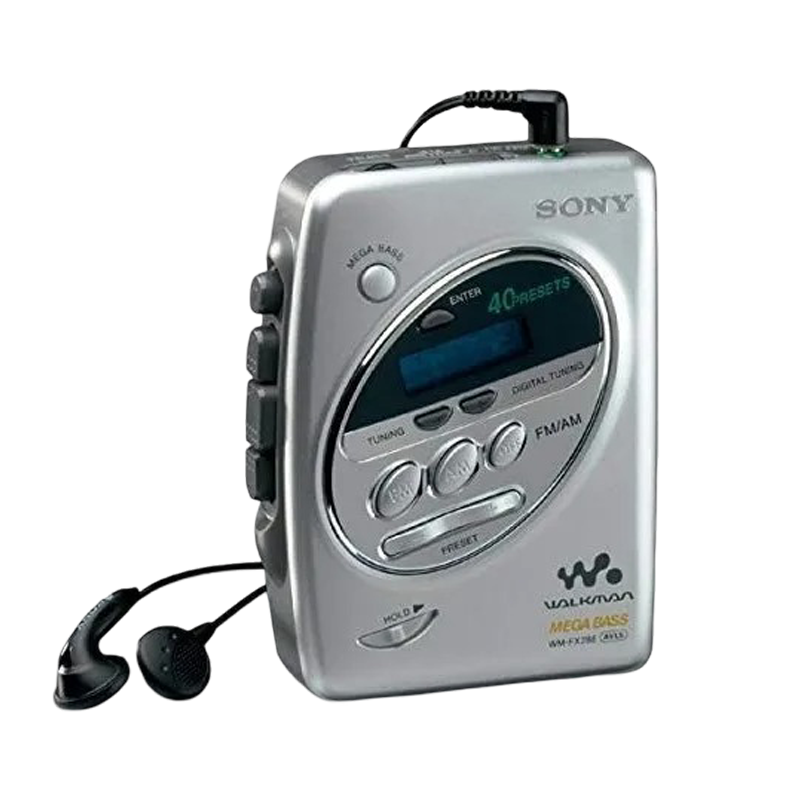
The WM-FX288 sat in Sony's FX series of radio cassette Walkman from 2002. It paired cassette playback with a digitally synthesized FM/AM tuner offering forty station presets and a compact LCD display, employing a simplified transport mechanism that eliminated auto-reverse and Dolby noise reduction in favor of basic reliability with automatic shutoff and manual tape-type selection. Mega Bass and AVLS remained available, the plastic body kept overall weight low, and power came from two AA batteries that provides extended operating time. In the closing years of cassette production Sony streamlined certain FX models to balance cost and essential radio functionality amid shrinking demand. This version existed to deliver simple combined radio and tape playback for users who prioritized preset tuning and long battery life over advanced cassette features, aligning with nearby entries like the FX202 and FX495 as part of the last wave of such hybrids before the industry fully pivoted to solid-state players.
2002 revealed what the category looked like once it was no longer central to Sony’s plans. The acceptance of that status smoothed the path from dominance to legacy. 2002 left the Walkman category as a quiet survivor instead of a strategic priority, the very survival underscoring how completely the center of gravity had moved.