
In 1981, Sony pursued a strategy of achieving both miniaturization of the device's casing and maintaining sound quality. The design was changed to prioritize a balance between portability and practicality.
WM-2
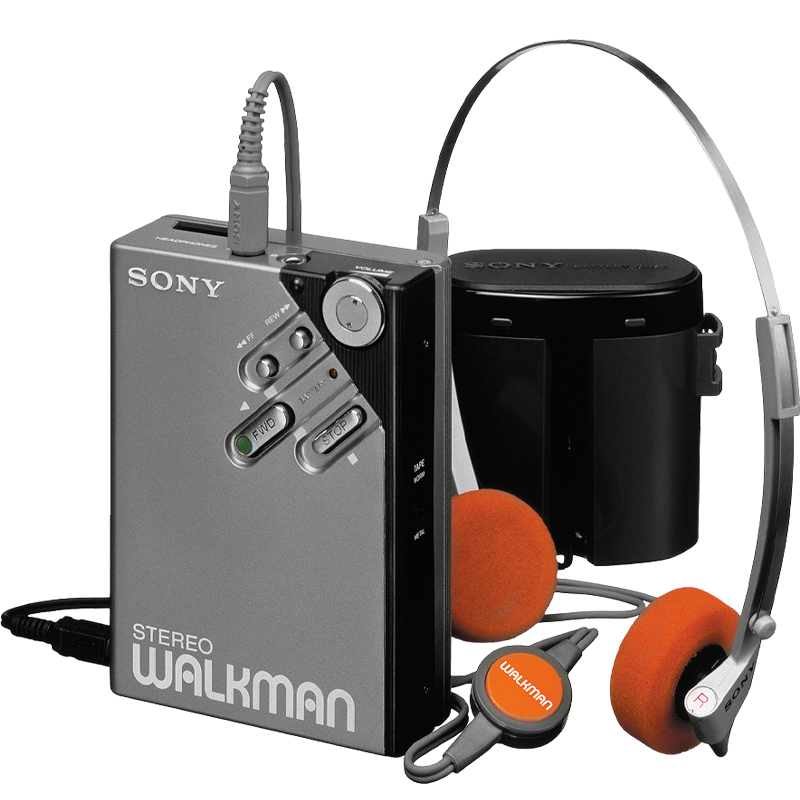
The WM-2 was Sony's first Walkman designed entirely from the ground up rather than adapted from an existing recorder. Released in 1981, it used a vertical layout with all controls on the front, making true one-handed operation feel natural. Its aluminum body kept weight low while still feeling solid. The battery compartment sat inside the cassette bay to keep the exterior clean, and a removable belt clip made the player easy to carry. A single thumbwheel replaced the earlier dual volume controls, while a tape selector expanded support to normal, chrome, and metal tapes without changing the playback-only concept. The Walkman no longer felt like a clever offshoot. It had become a coherent consumer object. Sony no longer had to prove the idea worked; it could refine it into something smaller, cleaner, and easier to live with. The WM-2 eventually became the shape many people picture when they imagine an early Walkman, not because it was flashy, but because it got the fundamentals so right.
WM-3
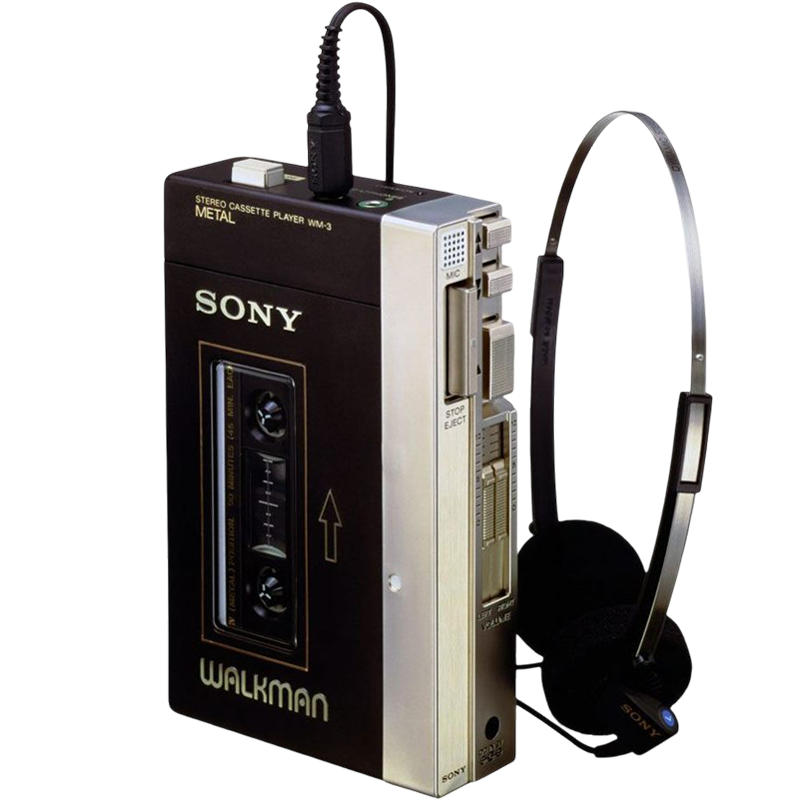
The WM-3 arrived in 1981 as the direct successor to the TPS-L2 and the model that folded the original platform into Sony's new WM naming system. It retained the same playback-only cassette mechanism and familiar horizontal layout, but replaced the earlier tone control with a tape selector better suited to normal, chrome, and metal tapes. The DC input was updated to align with WM-2 accessories, while the two headphone jacks, left-right balance control, and shared-listening focus remained. Rather than replacing the first Walkman outright, Sony kept this version because the original design still had a place. It appealed to users who preferred the proportions and feel of the earlier machine, especially as the lineup began to split into different sizes and use cases. The WM-3 feels less like a breakthrough than a continuity model, and that was exactly its role.
WM-3EX
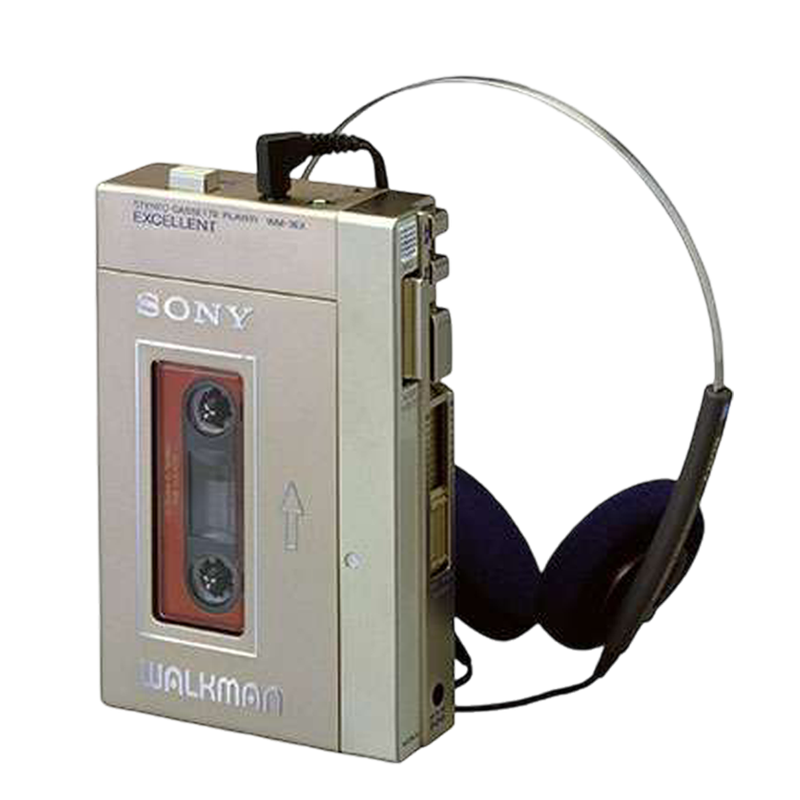
The WM-3EX was the gold-plated premium variant of the WM-3, released in 1981 as a cosmetic alternative rather than a technical redesign. Beneath the finish, it used the same playback-only mechanism, tape selector, and dual headphone-jack layout as the standard model, retaining the familiar horizontal body and control arrangement. What changed was the presentation: a satin-gold exterior that pushed the Walkman a little closer to accessory territory. It shows how quickly Sony recognized that the Walkman was becoming more than a piece of audio hardware. Even at this early stage, there was room in the range for versions aimed at taste and presentation rather than function alone. The WM-3EX is a small but telling sign that personal audio was already beginning to overlap with personal style.
WM-1
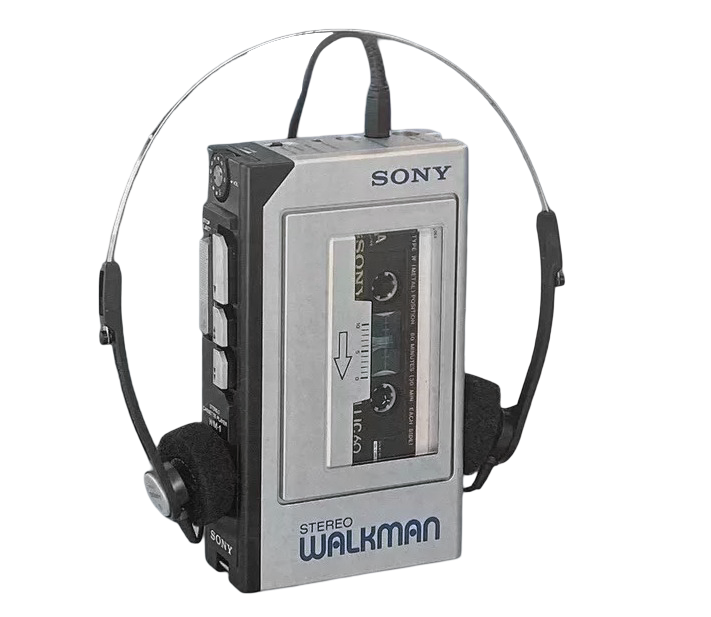
The WM-1 is Sony's third Walkman model and an early attempt to expand the category. It did not follow the miniaturized direction of the WM-2, instead using a simpler tape transport adapted from Sony's dictation-machine line inside a taller vertical body with a plastic shell over a metal frame. It includes dual headphone jacks for shared listening, mechanical cue and review, a manual tape-type selector, DC input, and a modest 2x30 mW output stage, all powered by four AA batteries. The controls are entirely analog and the machine feels more utilitarian than elegant. Even this early, Sony was pushing the Walkman category downward and outward. The WM-1 tested whether personal stereo could survive in a less compact, less premium form if that meant lower cost and simpler production. From the moment the Walkman stopped being a single product and became a range, the WM-1 feels like a slightly awkward but useful branch of the family.
In 1981, it was demonstrated that continuous improvement was possible while maintaining the basic structure. This policy was reflected in the enhancement of features and the increase in the number of products in subsequent models.