
In 1989, the cassette mechanism and sound quality performance reached the highest level. The product was entirely based on cassette technology.
WM-701S
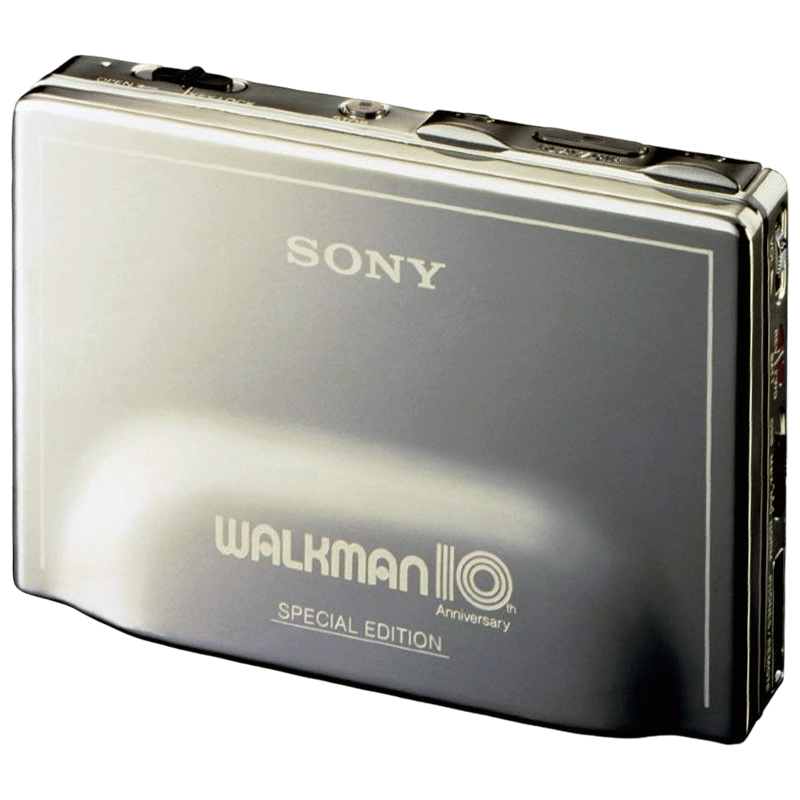
The WM-701S is a higher-end playback Walkman built around a slim metal chassis and a more mature late-generation feature set, combining auto-reverse, Dolby B and C noise reduction, an EX Amorphous head, Extended Dynamic Bass Boost, and logic control in a tightly packaged body. The rigid metal enclosure helped reinforce the sense of precision and permanence, while the harder-wearing head material and upgraded noise reduction positioned it above Sony's simpler everyday players. It was a compact machine, but not a casual one. This model shows Sony moving from breakthrough engineering into refinement as a luxury. The 701S was not radical in the way earlier miniaturization milestones had been, but it represented a stage where the company was polishing the cassette Walkman into something denser, cleaner, and more self-assured. It is a product from a line that already knew what it was.
WM-DD9
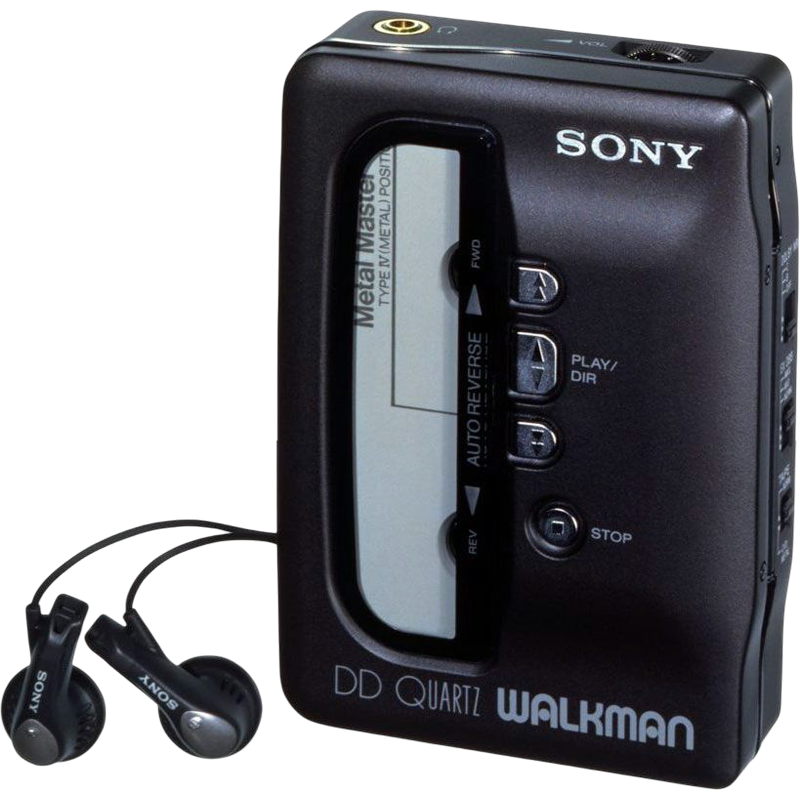
The WM-DD9 was the final and most advanced expression of Sony's Disc Drive Walkman concept, released as a 10th Anniversary model and built around a dual-capstan transport with two separate direct-drive motors to maintain precise tape tension and head alignment without belts. Quartz Lock held playback speed with exceptional accuracy, while Dolby B/C noise reduction, an EX Amorphous Head, Extended Dynamic Bass Boost, and a hybrid AA/gumstick power system treated the signal and power sides with equal seriousness. It was one of the rare Walkmans where the transport itself remained the central attraction. This model sits at the point where Sony was extracting the last serious mechanical performance from the cassette format before digital alternatives began changing the conversation entirely. The DD9 was aimed at listeners who treated portable cassette playback as something worth optimizing rather than merely tolerating. It remains one of the clearest examples of the Walkman as a precision instrument rather than just a portable lifestyle object.
WM-F18
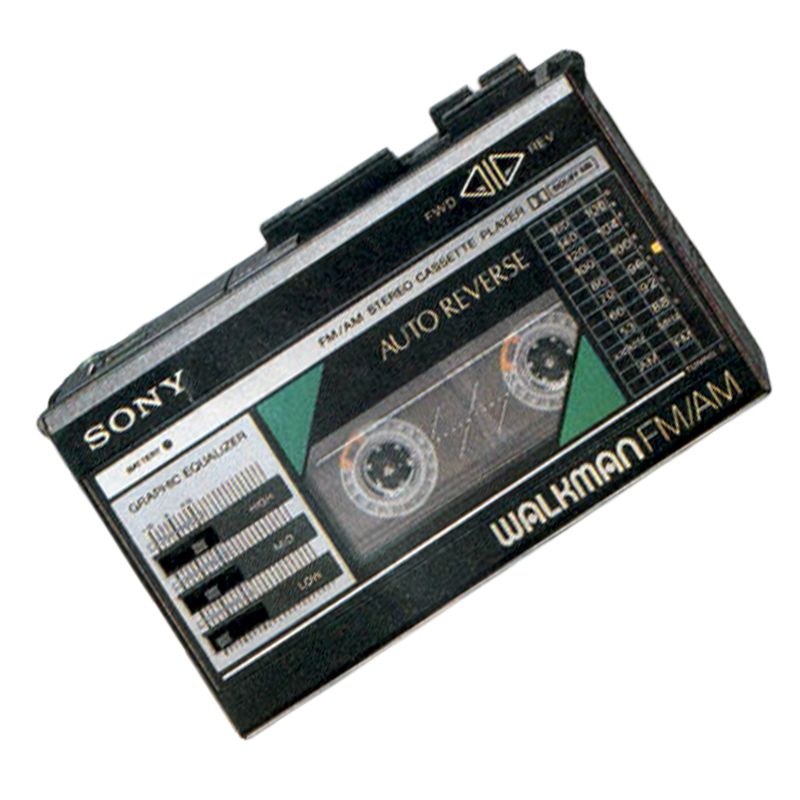
The WM-F18 is a larger compact-style radio Walkman that paired FM/AM reception with cassette playback in a body that favored control space, battery capacity, and usability over extreme miniaturization. Compared with the slimmer pocket-first models elsewhere in the line, it felt more substantial and easier to operate, with the tuner and transport laid out in a more relaxed, accessible way. It was a radio player that did not try especially hard to disappear. The F18 suggests Sony still making room for slightly larger, easier-handling radio Walkman even as miniaturization continued elsewhere. Not every portable needed to be tiny to make sense.
By 1989, analog technology had reached a stage of completion. It became clear that this structure would be difficult to adapt to new technologies.
