
In 1987, the subdivision of models based on their intended use progressed even further. At the same time, improvements to sound quality and usability were applied throughout the entire design.
WM-103
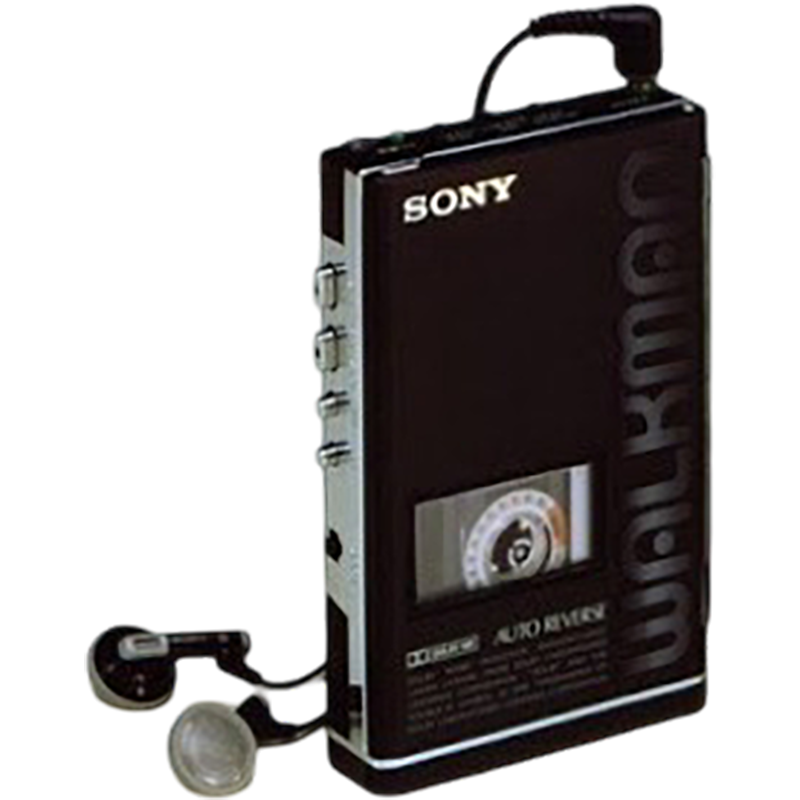
The WM-103 is one of Sony's slimmer playback-only Walkman models of 1987, using an all-metal body just under 20 millimeters thick while still fitting auto-reverse, Dolby B noise reduction, and support for normal, chrome, and metal tapes. A hold switch, LED indicator, and optional external battery arrangement keep the player practical without disturbing its clean rectangular proportions. The overall design leans toward restraint, with very little surface detail beyond the confidence of how compact and solid it feels. This model comes from a point when Sony had already solved most of the technical problems and was refining the object itself. The WM-103 is not trying to define a new category or branch into radio, recording, or gimmicks. It is a disciplined version of the late-1980s Walkman idea, meant for users who simply wanted a slim player that worked and stayed out of the way.
WM-501
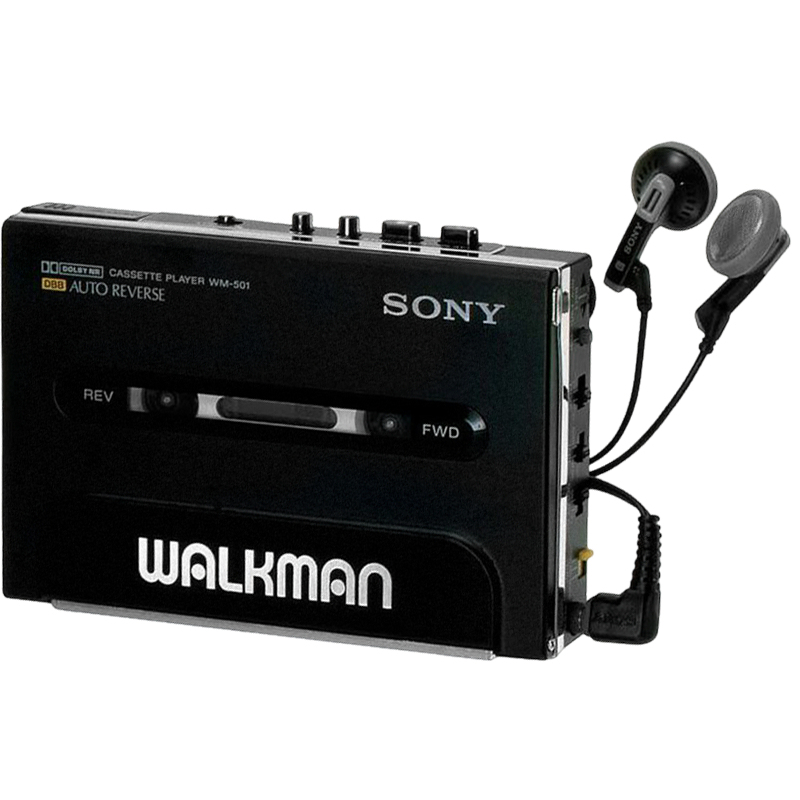
The WM-501 was a slim auto-reverse Walkman that represented one of Sony's most important packaging advances of 1987, integrating its rechargeable gumstick battery directly into the body instead of relying on a separate external holder. That allowed the player to approach cassette-case proportions while still offering Dolby B noise reduction, Dynamic Bass Boost, an amorphous head, and one-hour quick charging. The metal frame, hold lock, and self-contained layout gave it a sense of completeness that earlier slim Walkmans often lacked. This is the moment when Sony's compact rechargeable players stopped feeling like clever compromises and started to feel properly resolved. The WM-501 did not simply make the device smaller; it removed one of the last obvious drawbacks of the slim-body format by making the power system part of the design. It stands as one of those late-1980s Walkmans where the achievement was not a single feature, but how little of the object still felt unfinished.
WM-503
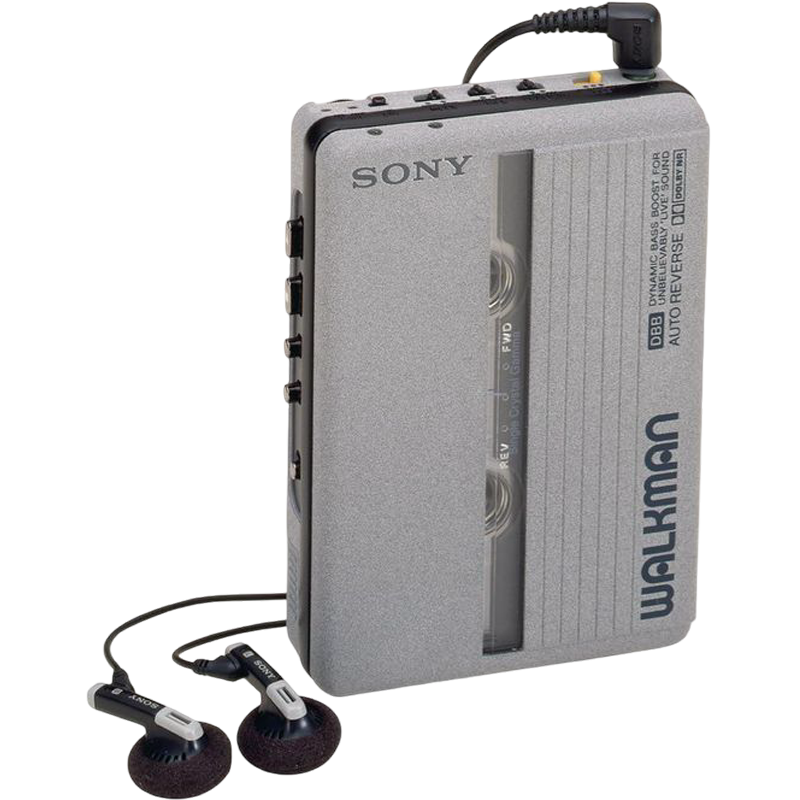
The WM-503 uses the same slim rechargeable chassis as the WM-501 but distinguishes itself through a soft matte suede-like finish that changes the feel of the player more than its underlying function. Auto-reverse, Dolby B noise reduction, Dynamic Bass Boost, an amorphous head, and internal rechargeable power all remain in place, with charging handled through a supplied desktop dock. The result is a cassette-sized Walkman that is mechanically familiar but physically more tactile than most of its siblings. This model shows Sony thinking beyond portability and into texture, touch, and surface character. By then the Walkman was already a personal object people handled constantly, so making it feel pleasant in the hand was not trivial styling but part of the product itself. The WM-503 is a compact but telling example of Sony treating industrial design as part of the listening experience.
WM-504
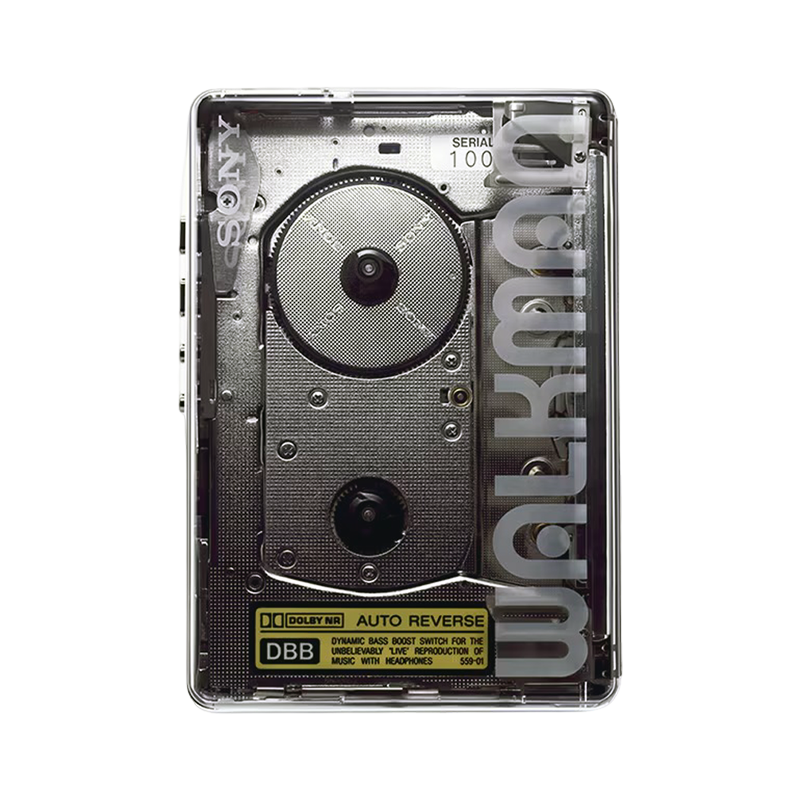
The WM-504 was a transparent-front variant of Sony's slim rechargeable Walkman platform, based on the same cassette-sized body as the WM-503 but replacing the opaque front with a clear resin panel. It retained auto-reverse, Dolby B, Dynamic Bass Boost, an amorphous head, and the internal rechargeable battery system with desktop charging, while the metal frame preserved the same rigid underlying structure. What changed most was the way the loaded cassette became visually inseparable from the machine itself. This model only really makes sense once the cassette had become part of the culture and not just the medium. Sony effectively let the tape label, shell color, and even wear patterns become part of the Walkman's appearance, turning an otherwise standard player into something that changed with whatever was loaded inside. The WM-504 feels less like a technical variant than a late-cassette-era design gesture, and a good one.
WM-51
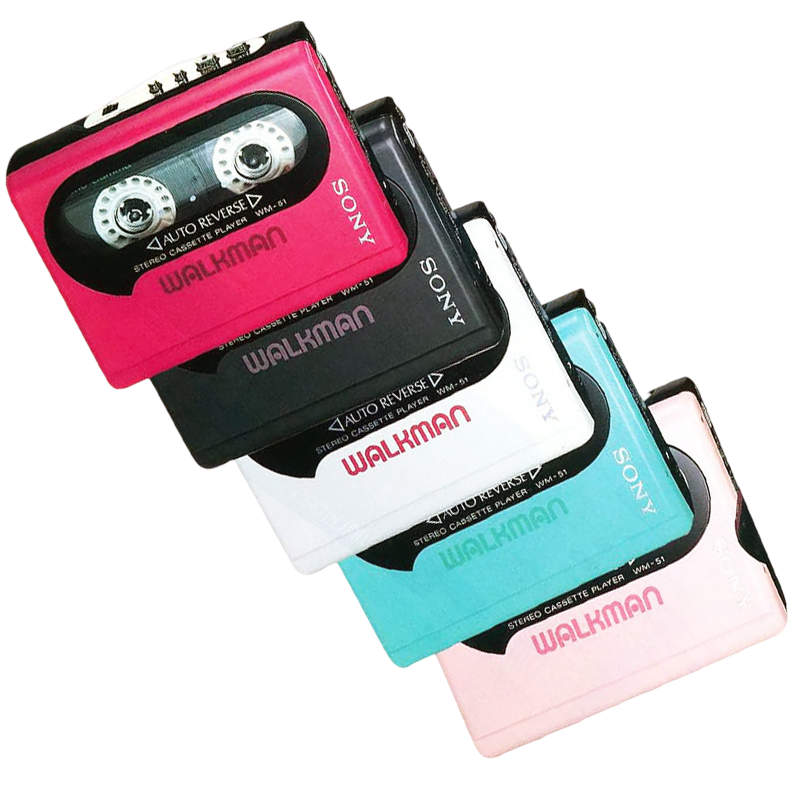
The WM-51 is a compact playback-only cassette Walkman released in 1987, built around the same basic chassis as the earlier solar-powered WM-F107 but reworked into a simpler everyday model. It combined auto-reverse, Dolby B noise reduction, and a retractable earphone system that wound into a rear compartment through a dedicated wheel, keeping the unit self-contained without loose cords or attachments. A metal internal frame supports the plastic shell, while the exposed rear volume control, hold function, and cassette door catch system gave it a slightly more engineered feel than its modest positioning might suggest. This model makes sense once the Walkman had become ordinary enough that convenience itself could be a selling point. Sony was no longer trying to wow buyers with radical hardware, but with compact reductions in friction: fewer loose accessories, less cable clutter, fewer reasons to think about the machine when heading out the door. The WM-51 is a commuter's Walkman in the most literal sense.
WM-F109
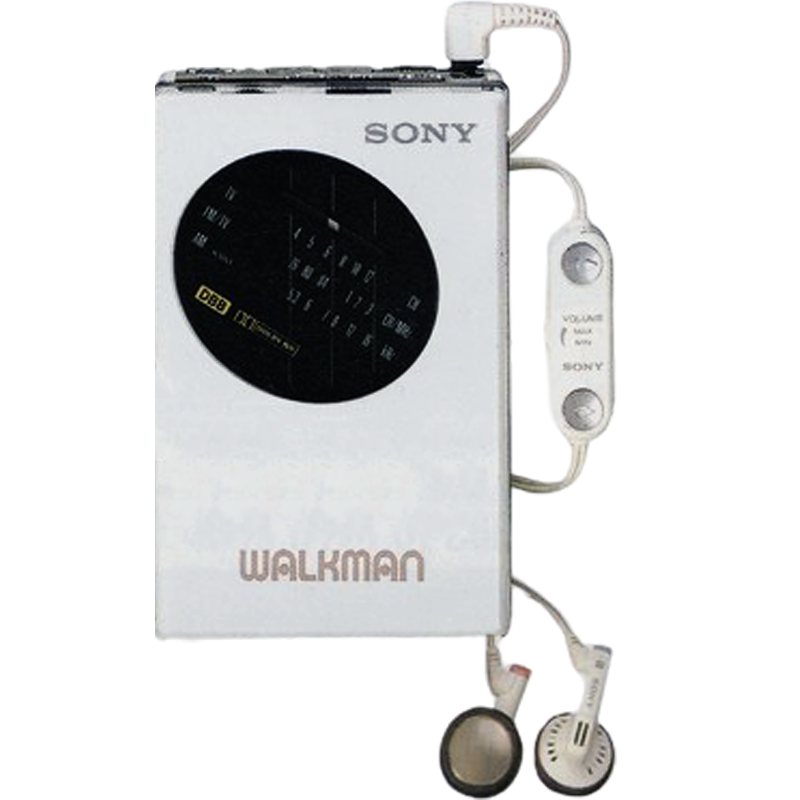
The WM-F109 is the radio-equipped follow-up to the earlier WM-109, keeping the wired remote control concept while adding FM stereo and AM tuning to the same clean, symmetrical playback body. Auto-reverse and Dolby B remained standard, and the remote connection through the headphone cord allowed basic operation without reaching for the main unit. Like its predecessor, the player itself stayed visually restrained despite the added function. What makes the F109 notable is that it pushes the Walkman a little further away from being something you physically handle every few minutes. Sony was starting to think more seriously about use while in motion, whether on a train, walking through a city, or carrying the player out of sight in a coat or bag. The F109 is a convenience model, but in a way that points toward the behavior of much later portable players.
WM-F203
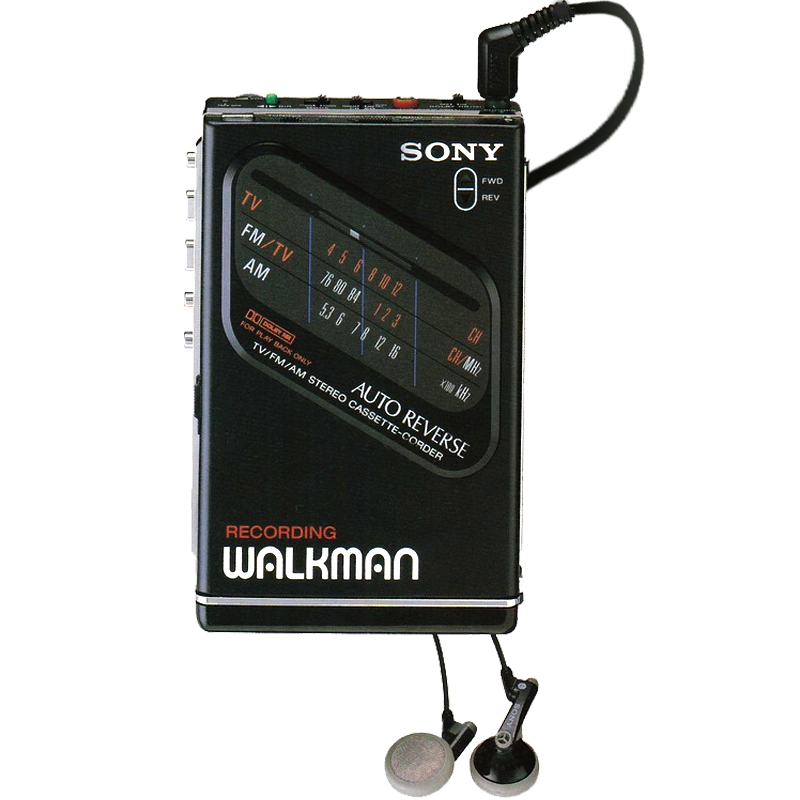
The WM-F203 is a compact radio-recording Walkman that combined auto-reverse playback, Dolby B noise reduction, and a three-band tuner with the ability to record from both line-in and broadcast sources. A 60-minute quick-charge system supports its rechargeable battery pack, while the metal body, hold function, and manual tape selector kept the machine grounded in the same practical late-1980s design language as Sony's better playback models. It packed a lot into a body that still remained genuinely portable. This is one of those midrange Sony machines that did far more than its outward appearance suggests. It makes the most sense for users who were still actively using tape as a way to collect sound instead of just replay it, whether from radio, external sources, or everyday recording needs. The F203 is not quite a specialist recorder, but it sits much closer to that world than most ordinary radio Walkman.
WM-F502
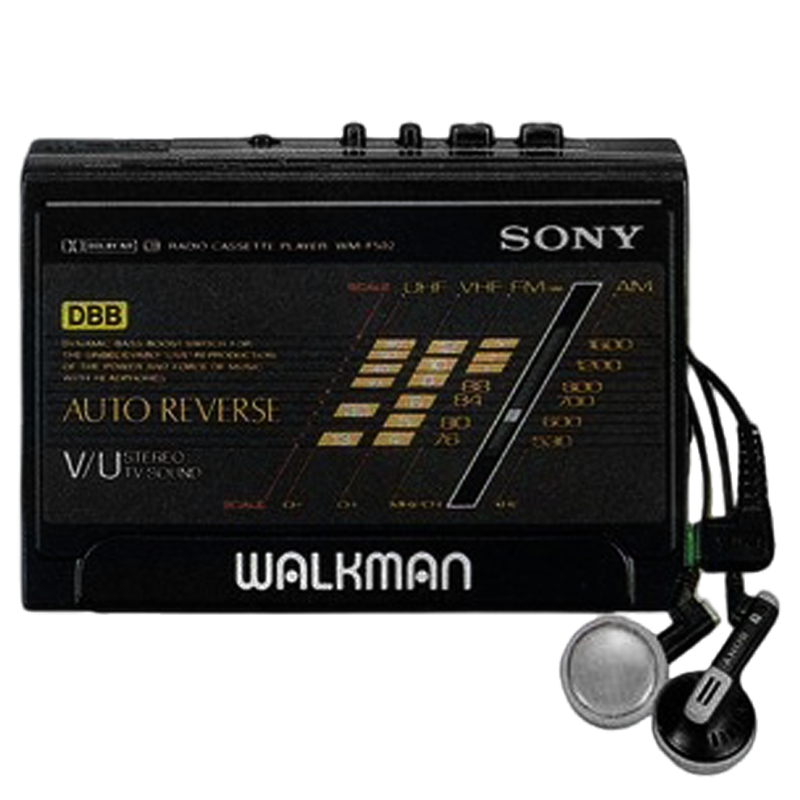
The WM-F502 built on the same slim rechargeable Walkman platform as the WM-F501 but expanded the tuner section to cover FM, AM, and both VHF and UHF TV audio bands. Auto-reverse, Dolby B, Dynamic Bass Boost, and an amorphous head remained part of the cassette side, while the metal chassis and supplied carry case kept the package portable despite the more ambitious broadcast coverage. It is a compact machine with a noticeably broader listening range than most of its siblings. What sets the F502 apart is not the cassette mechanism so much as the sense that Sony is treating portable listening as a wider media habit instead of just a tape habit. For users following television audio, sports, or live broadcast content, it turned the Walkman into something closer to a pocket entertainment receiver. That makes it one of the more revealing late-1980s models, not because it changed the form, but because it widened the use case around it.
WM-F51
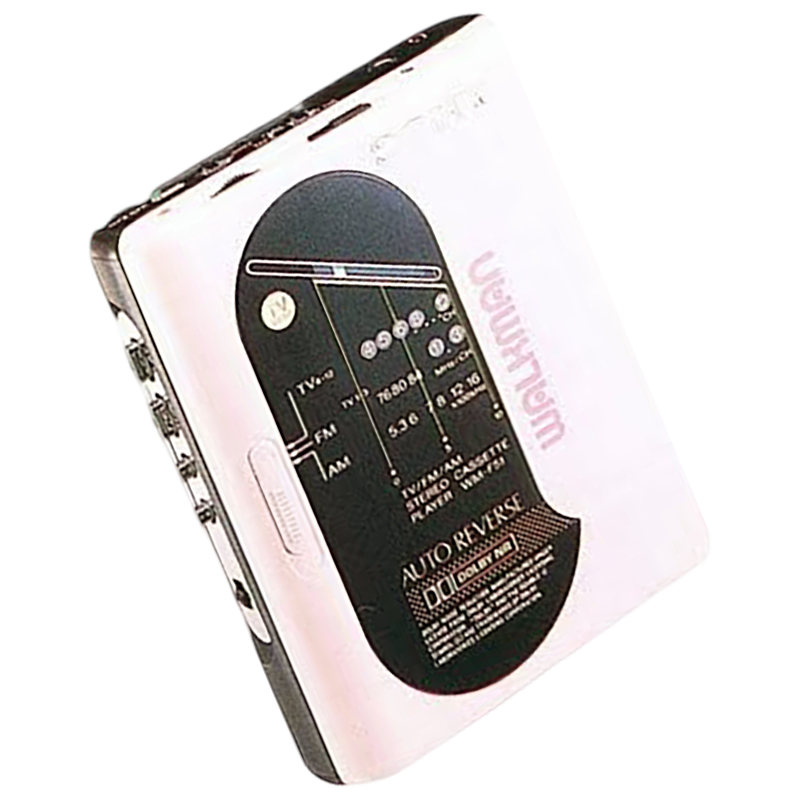
The WM-F51 is the radio-equipped counterpart to the WM-51, combining the same retractable earphone storage system with cassette playback and a built-in tuner covering FM, AM, and TV audio bands. Auto-reverse, Dolby B noise reduction, and a hold lock remained part of the cassette side, while the slightly thicker body made room for the tuner circuitry without losing the compact, self-contained form. Power came from either a single AA battery or the includes rechargeable cell and charger. This is exactly the kind of extension Sony was good at once a useful format had been established. The retractable design had already solved a real portability problem, so adding radio simply made the concept more complete for people who wanted one compact machine to cover both personal tapes and whatever happened to be on the air. It is not a dramatic model, but it is a very coherent one.
WM-F501
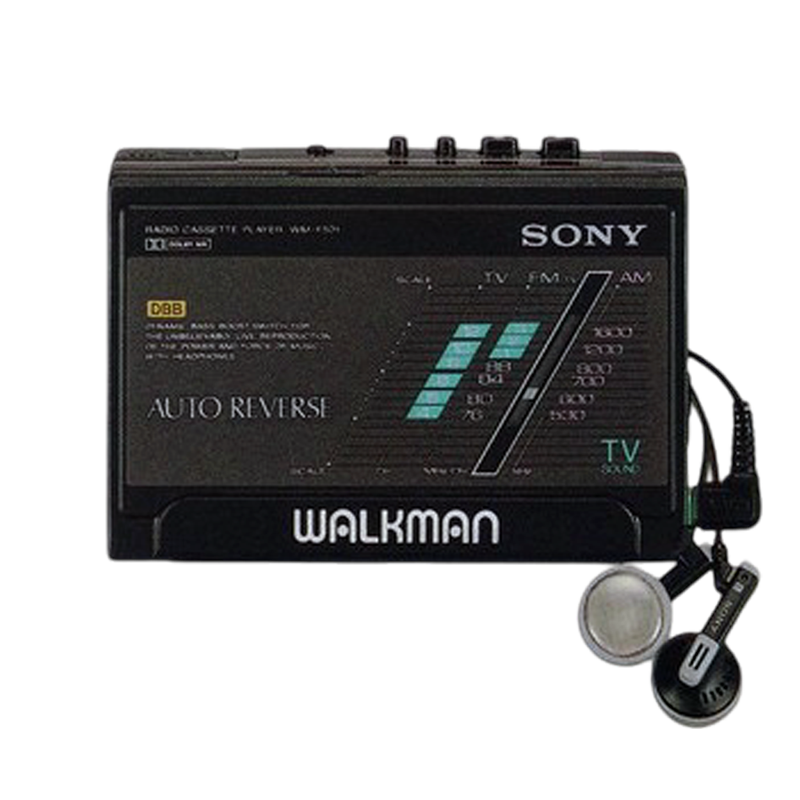
The WM-F501 is the radio-equipped version of the WM-501, carrying over the same integrated gumstick rechargeable chassis, auto-reverse transport, Dolby B noise reduction, Dynamic Bass Boost, and amorphous head while adding FM, AM, and TV audio reception. Despite the extra circuitry, it preserved much of the same compact, self-contained feel that made the original 501 platform so important. The metal body and hold lock reinforced its role as a complete all-in-one portable instead of a compromise design. Here, Sony doing the obvious next thing, but doing it well. Once the slim integrated rechargeable format worked, it made perfect sense to extend it into radio instead of forcing users back into larger, more accessory-dependent machines. The F501 is the point when the compact premium Walkman stopped being a niche format and started becoming a full family.
In 1987, the diversity and performance of the product range were expanded simultaneously. This structure was continued to be applied in subsequent models to improve performance.
