
In 1982, a model equipped with recording and radio functions was introduced. This expanded the structure from a playback-only device to a multi-functional portable device.
WM-4
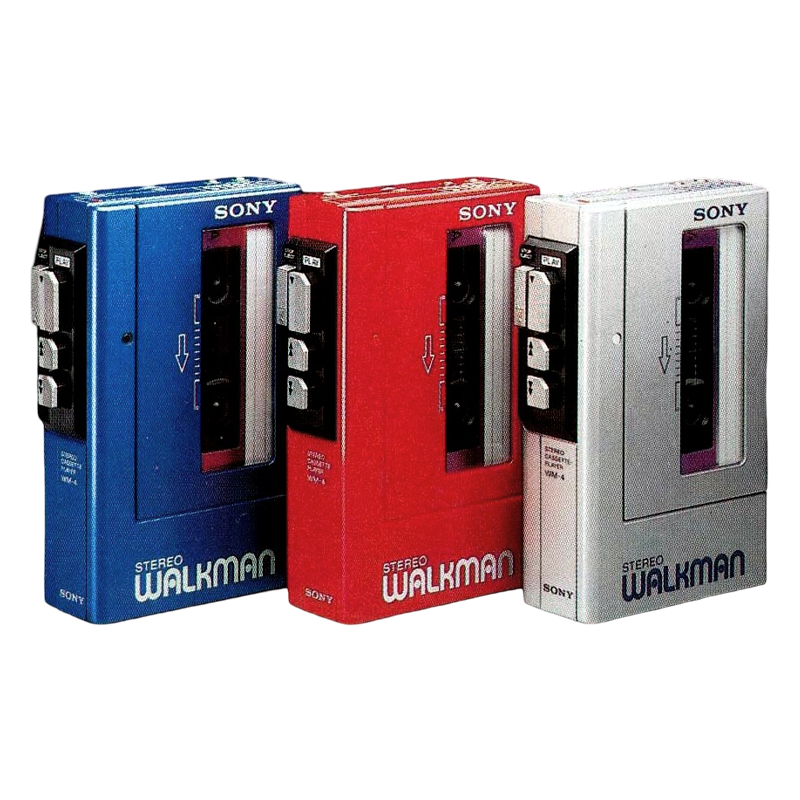
The WM-4 is a budget-oriented early Walkman built as a smaller and more efficient follow-up to the WM-1, while still relying on a robust transport architecture closer to Sony's dictation-derived designs than to the compact WM-2 family. Its upright plastic body over a metal frame kept the player physically simple and fairly durable, with dual headphone jacks, 2x30 mW output, DC input, and four-AA power covering the essentials. There was no radio or Dolby, and the relatively power-hungry amplifier limited battery life, but the machine remained straightforward and dependable. At this point Sony was making the Walkman more ordinary on purpose. The WM-4 was not built to impress or define the future, but to keep personal stereo from remaining a premium novelty. It helped prepare the format for wider, less self-conscious adoption.
WM-7
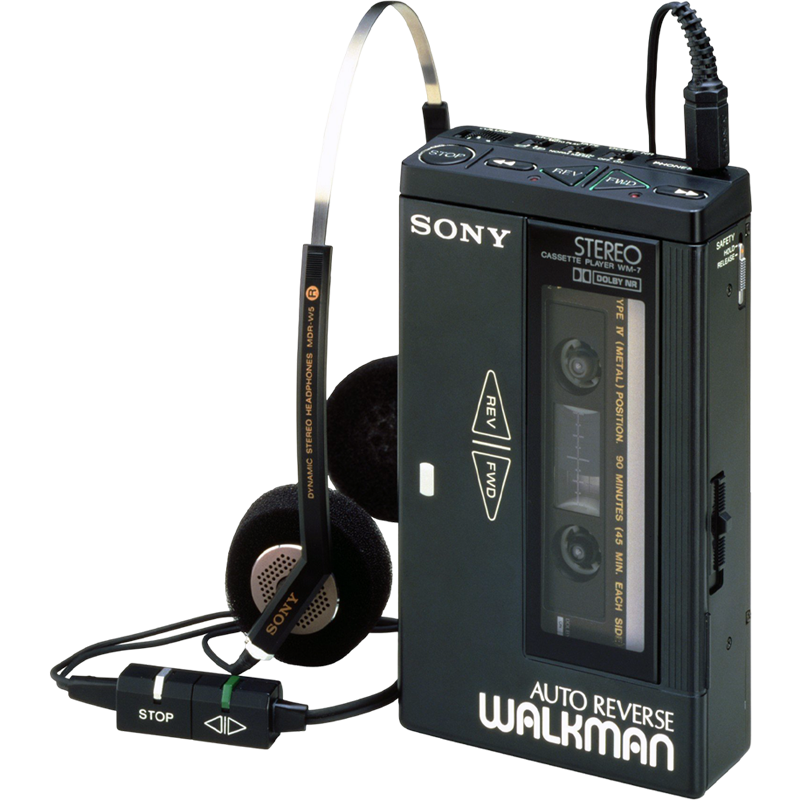
The WM-7 was Sony's first Walkman to replace direct mechanical button linkages with full electronic logic control. Released in 1982, it used circuit-controlled transport functions rather than purely physical switching. That change made auto-reverse possible, allowing the tape to switch directions automatically at the end of a side, while Dolby B noise reduction reduced playback hiss and a wired remote added basic control away from the main unit. A hold switch helped prevent accidental presses and underlined the more convenience-focused design. Sony was beginning to ask whether a Walkman could feel not only smaller, but more refined. The WM-7 was aimed at listeners willing to pay for convenience and less friction, especially when listening for long periods without constantly handling the player. It helped open a high-end branch of the line where electronics, not just mechanics, became part of the appeal.
WM-D6
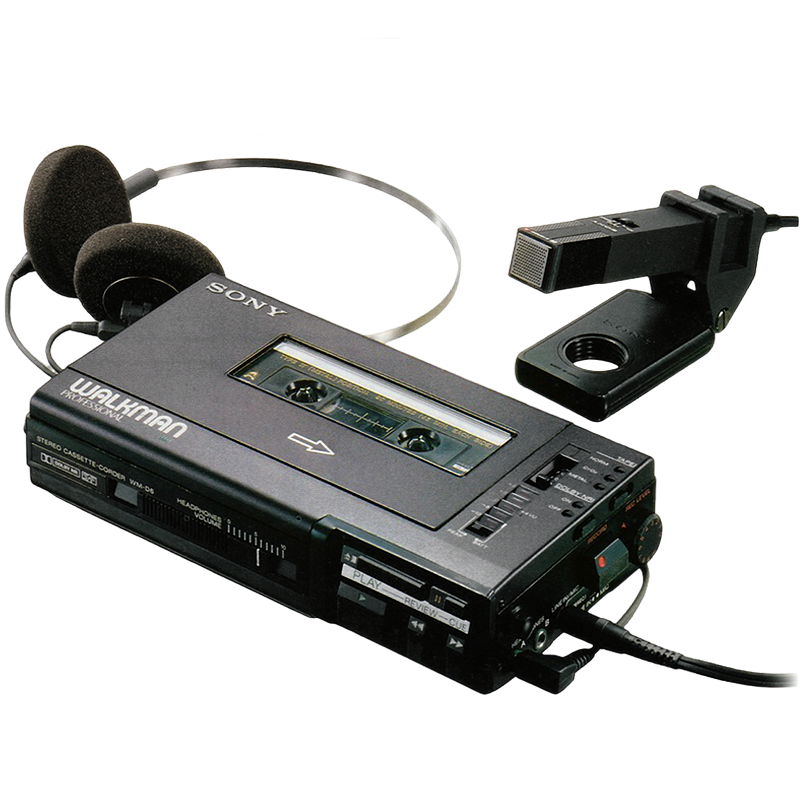
The WM-D6 was a portable cassette recorder that went far beyond an ordinary playback Walkman. Released in 1982, it combined microphone and line-input recording, manual recording-level control, Dolby B noise reduction, and a Disc Drive transport designed for much steadier operation than typical consumer portable players. Its larger four-AA body and more serious internal construction moved the machine closer to a compact working recorder than a casual handheld music player. It belonged to a different branch of portable audio, aimed at people for whom recording genuinely mattered. Journalists, musicians, and serious enthusiasts were the natural audience, and Sony treated it less like a fashionable Walkman than a compact tool. The D6 is one of those rare models where portability was less about leisure than capability.
WM-DD
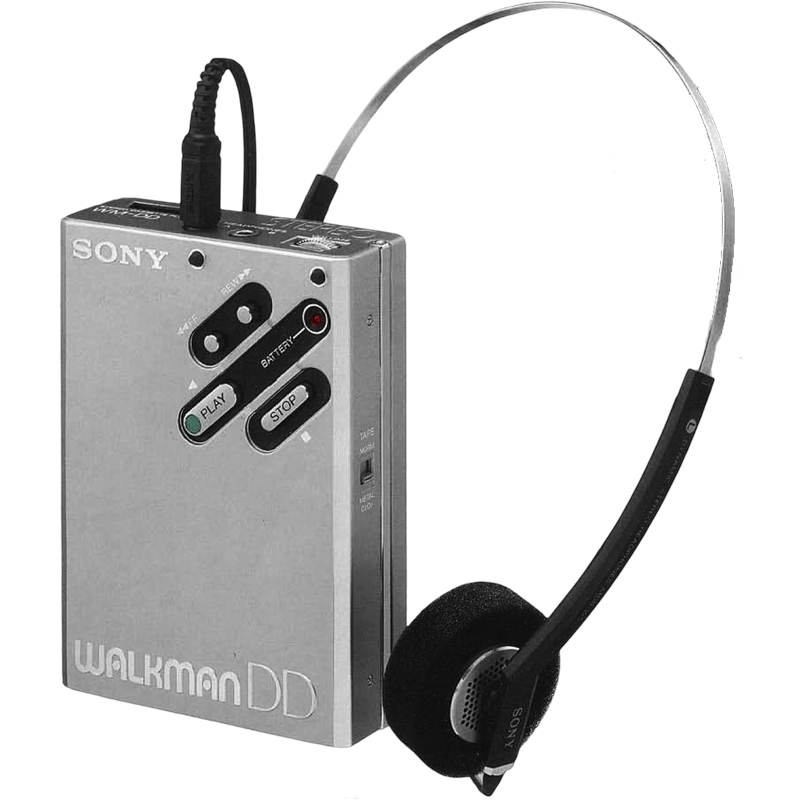
The WM-DD was a playback-only Walkman introduced in 1982 around Sony's Disc Drive transport. Instead of the usual belt connection between motor and capstan, it used a rigid disc coupling intended to reduce the speed variation caused by belt wear or flex, helping lower wow and flutter and keep playback steadier while the player was moving. The rest of the machine stayed close to the WM-2 formula, with a compact metal body, tape selector, AA power, auto stop, and Hotline function, but the transport itself was the story. The DD shifted the conversation from size to precision. Sony had already proved that the Walkman could be made small; this model showed that mechanical quality could also be marketed as a meaningful improvement. It laid the foundation for the DD line, aimed at listeners who cared less about novelty than about how well the machine actually ran.
WM-F1
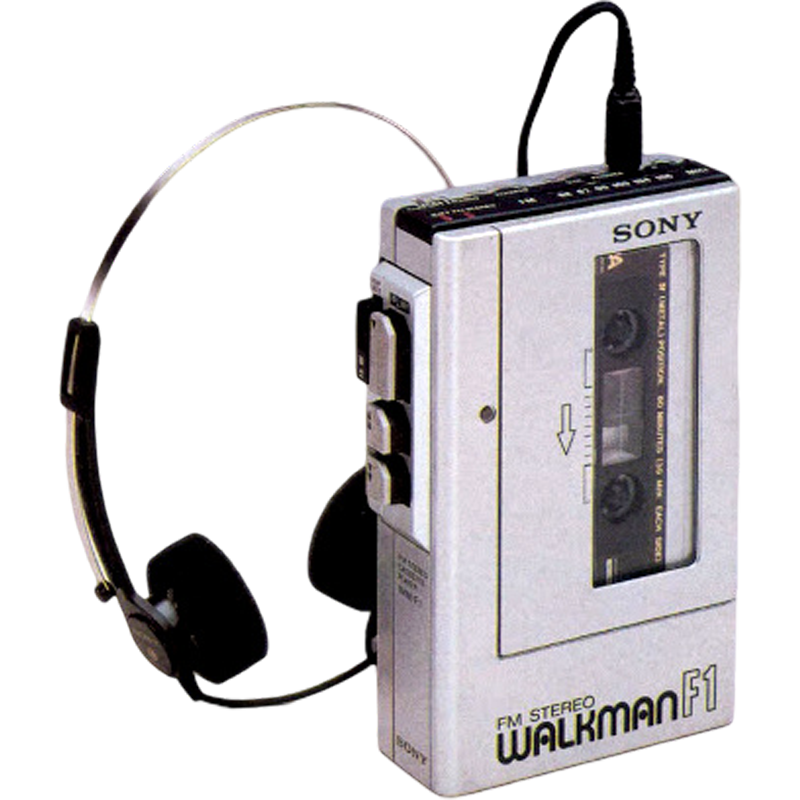
The WM-F1 is one of Sony's earliest radio Walkman models and a very direct attempt to add live listening without turning the player into a recorder or a much larger machine. Introduced in 1982, it paired a manual FM stereo tuner with a compact playback-only cassette platform from the WM-2 era, using the headphone cable as the radio antenna to avoid extra external bulk. It retained dual headphone jacks, Hotline mode, a manual tape-type selector, simple LED indication, and a 2x30 mW amplifier powered by four AA batteries, all without Dolby or more advanced control logic. It captures radio integration before the radio Walkman had fully matured into its own branch. The WM-F1 still feels like a cassette player first and a tuner second. It belongs to the short phase when the format was still discovering how much extra function it could carry before becoming something else.
WM-F2
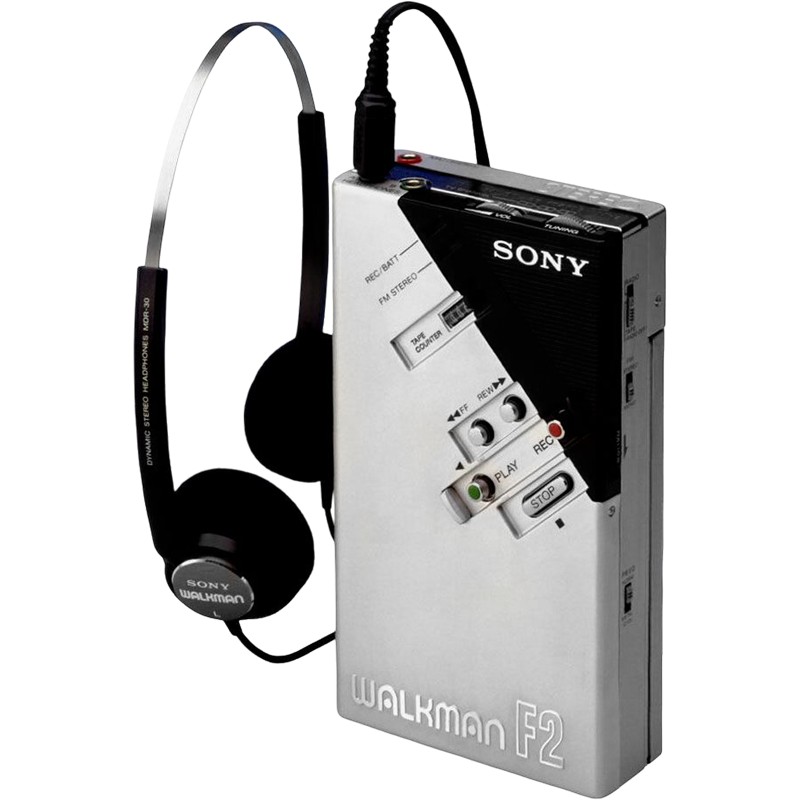
The WM-F2 pushed the Walkman into hybrid territory by combining cassette playback and recording with an FM stereo radio tuner. Released in 1982, it was one of Sony's earliest attempts to make the platform more than a tape-only device. The radio section used a stereo decoder and automatic recording-level adjustment, while the headphone cable doubled as the antenna. On the cassette side, it could play and record from external sources or directly from the built-in radio. Sony had begun to think of portable audio as something broader than the tapes a listener happened to bring from home. The F2 was clearly aimed at users who wanted more spontaneity, whether that meant catching a song from the radio or making quick recordings on the move. It also helped establish the logic behind the F-series, where broadcast listening became part of the Walkman identity rather than an add-on.
WM-R2
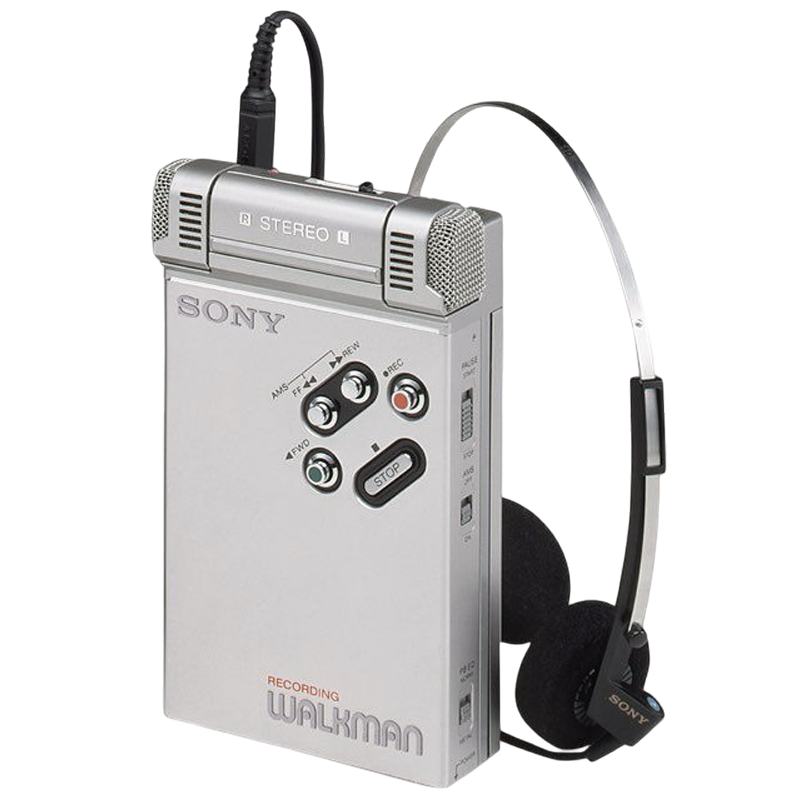
The WM-R2 was a recording-capable Walkman derived from the compact WM-2 platform and introduced in 1982 with a built-in stereo condenser microphone along the top edge of the body. It could record through the internal microphones or from external line sources, and it included a centrally placed three-digit tape counter without disrupting the basic vertical layout. Much of the physical design and control logic remained familiar, but the internal electronics moved it well beyond playback. It filled the obvious gap that appeared once the compact Walkman format proved people wanted something smaller than a field recorder but more capable than a listening-only player. Sony did not present it as a professional tool in the WM-D6 sense, but as a more everyday recorder for people who wanted to capture things as well as hear them. That made it one of the more practical offshoots of the early lineup.
In 1982, the Walkman transitioned from a single-function device to a multi-function device. This change has expanded its range of applications for everyday use.