
In 1985, diversification of exterior design and specifications for different applications was promoted. The product is now configured to accommodate individual usage styles.
WM-101
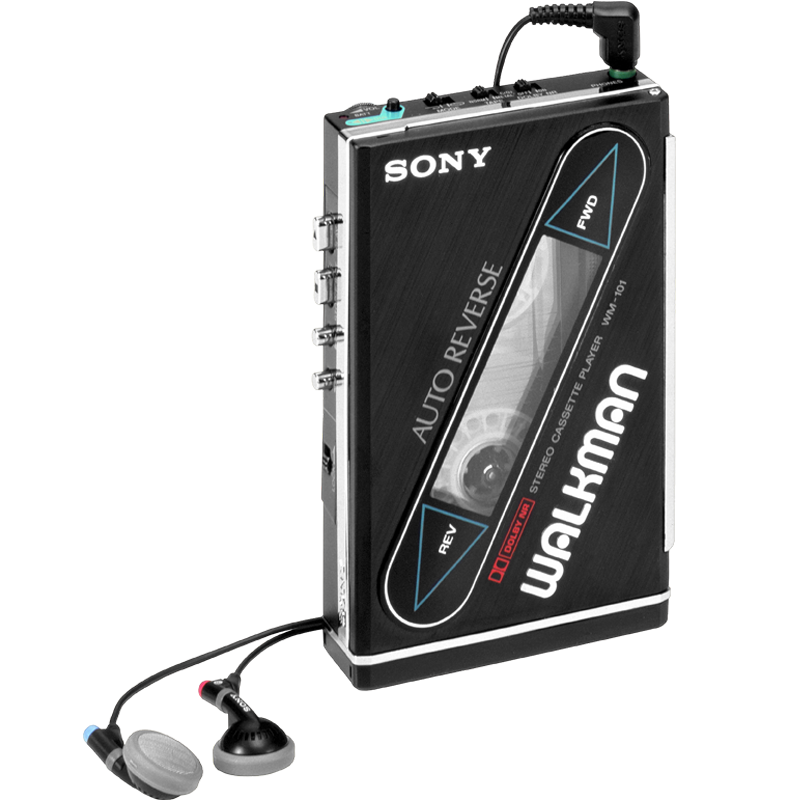
The WM-101 was a slim rechargeable playback Walkman that introduced Sony's gumstick battery system, using the thin internal cell to reduce overall thickness while still allowing an external AA adapter for longer use. It combined auto-reverse playback and Dolby B noise reduction in a metal-framed body barely wider than a cassette, with manual tape selection for normal, chrome, and metal formats. The result was one of Sony's cleanest and most forward-looking cassette players of its period. Where earlier compact Walkmans focused on shrinking the machine around conventional batteries, the WM-101 changed the equation by shrinking the power source itself. That made it one of the decade's key transitional models, establishing the slim rechargeable format that later defined the EX-era players. It feels like the beginning of a different kind of refinement: less mechanical theater, more elegant packaging.
WM-50
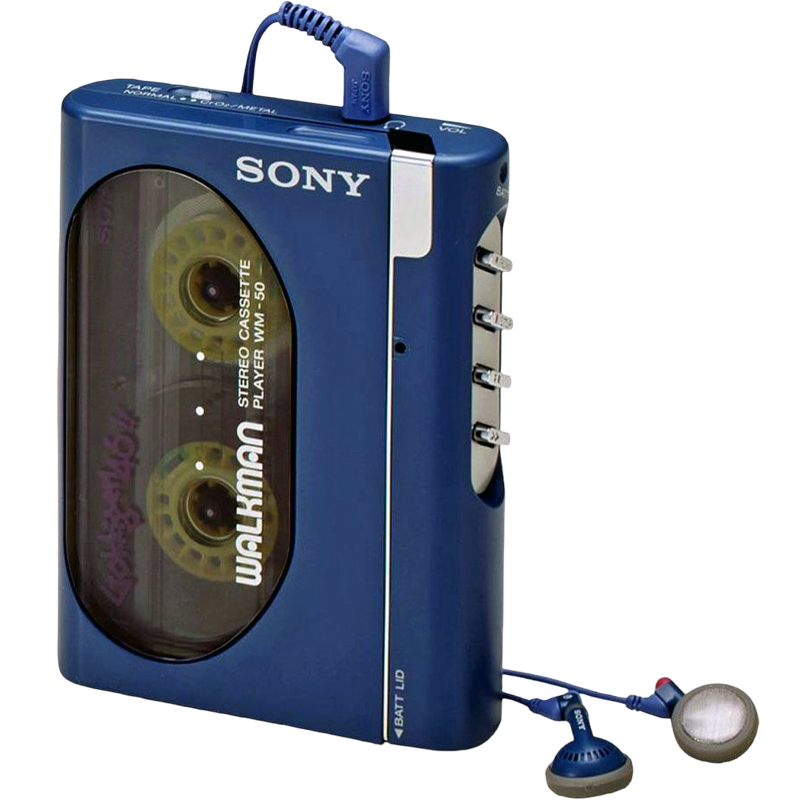
The WM-50 was a basic stereo cassette Walkman that marked one of Sony's first clear moves away from strict miniaturization toward a more comfortable everyday form. It used rounded edges and softer plastic surfaces instead of the sharper, boxier shells of earlier models, while keeping a simple single-AA battery layout and straightforward belt-drive transport that could be used either upright or flat. Playback supported normal, chrome, and metal tapes, but the design kept the player light, simple, and inexpensive. This was not about impressing through specifications or shrinkage. By 1985 Sony had already shown it could make Walkmans tiny, so this model shifted attention to how the player actually felt in a hand or bag over the course of an ordinary day. It came from the part of the lineup less concerned with technical ambition than with making the format familiar and easy to handle.
WM-D3
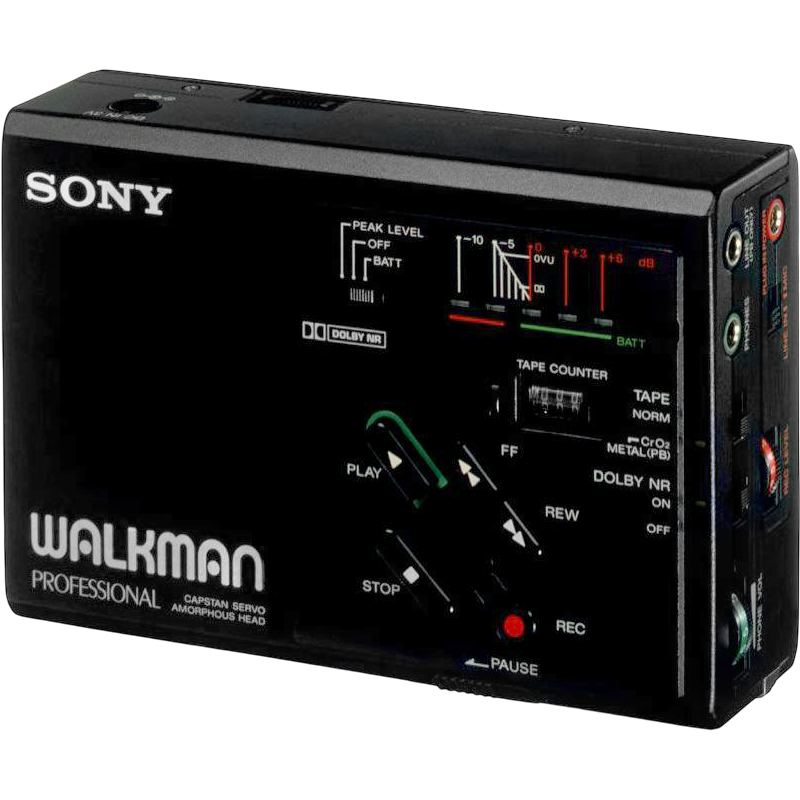
The WM-D3 was Sony's compact professional cassette recorder, based on the same Disc Drive capstan-servo idea as the larger WM-D6 series but housed in a much smaller body. It offered microphone and line inputs, manual recording-level control, a five-segment LED level meter, an amorphous head, and Dolby B for recording and playback, while the transport remained stable enough for serious mobile use. It did not reach the full specification of the D6 line, but it preserved much of the same underlying philosophy in a more compact package. It is the kind of model that only makes sense in a world where portable recording still mattered to people who were actually working. The WM-D3 was not built for casual notes or novelty, but for users who wanted something smaller than the D6 without giving up too much credibility. It occupies a very specific and very Sony middle ground: still serious, just less imposing.
WM-F101
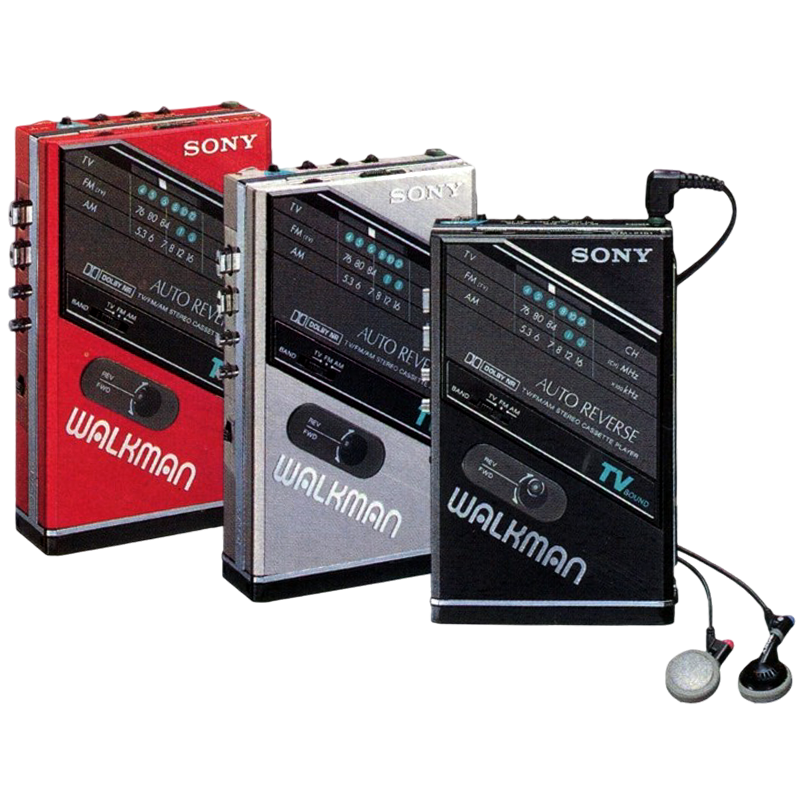
The WM-F101 is the radio counterpart to the slim WM-101, adding FM, AM, and TV audio reception to the same ultra-compact gumstick-battery chassis. Auto-reverse and Dolby B remain standard, while the external AA adapter option carries over for longer sessions away from a charger. Sony fit the tuner controls neatly into the same slim body without compromising the cassette-player layout that made the original 101 so appealing. Sony proved that the new rechargeable slim-body formula was not limited to playback-only players. By extending the concept to radio, the company made the format more complete and more adaptable to daily life, especially for commuters and travelers who wanted broadcast listening without falling back to a bulkier player. It quietly helped normalize the shape of later Walkmans.
WM-F22
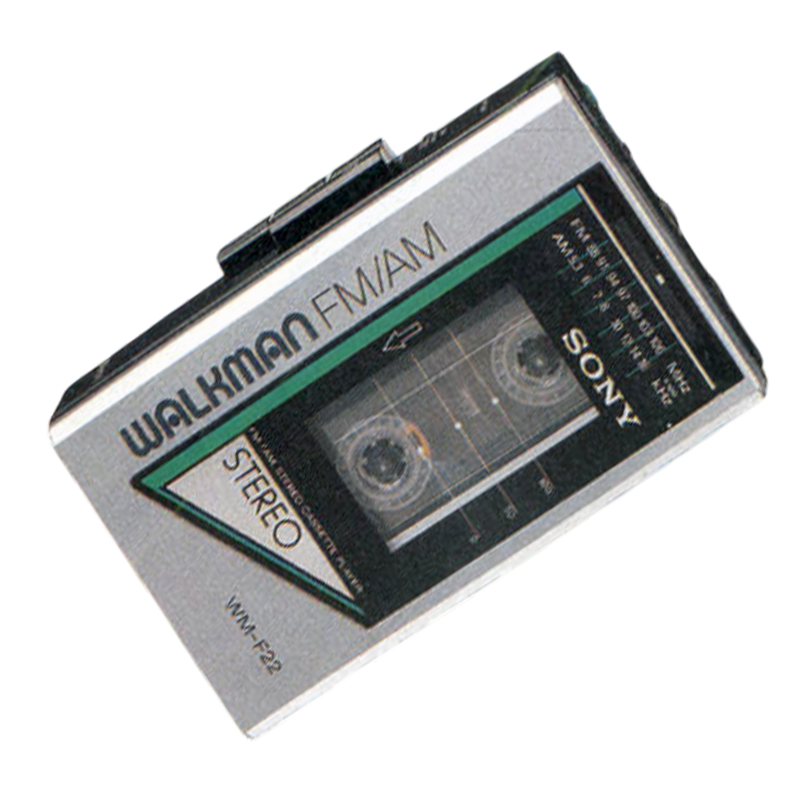
The WM-F22 is a standard AM/FM stereo radio Walkman that combined cassette playback and manual tuning in a familiar, mid-sized plastic body powered by two AA batteries. It supports normal and chrome/metal tapes but keeps the overall control layout simple, with no Dolby, no auto-reverse, and no recording functions. This model is clearly designed as a practical all-in-one listening portable rather than a more specialized branch. The WM-F22 comes from a point when the radio Walkman had settled into the middle of the range as something normal and repeatable. Sony no longer needed to justify why a listener might want both radio and tape in one device. By 1985, that idea was already stable enough to support solid, everyday models like this.
WM-F75
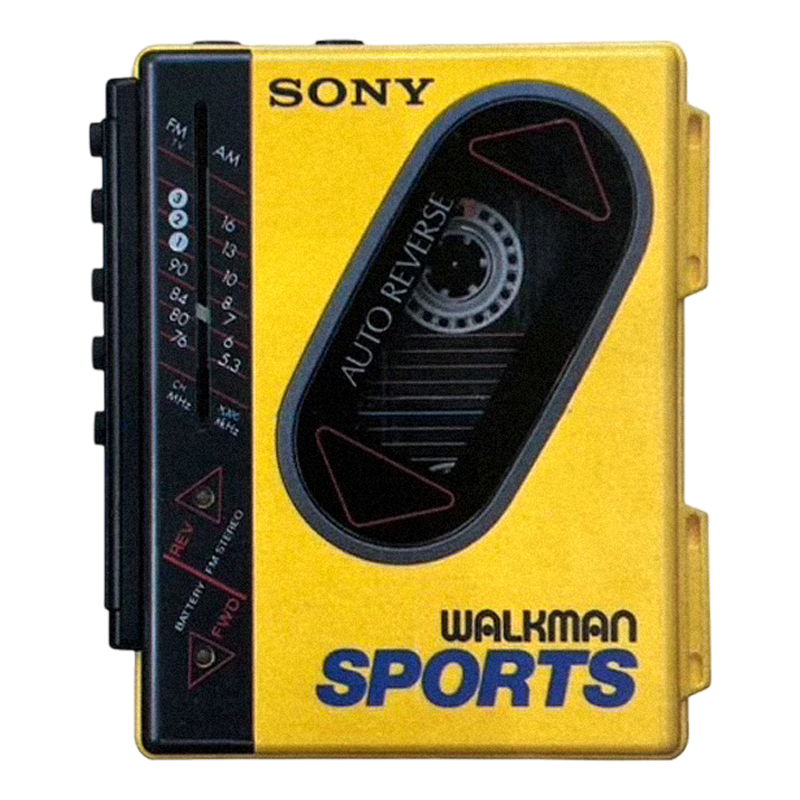
The WM-F75 used the proven WM-75 Sports platform and added a full AM/FM radio, creating a splash-resistant radio Walkman that required substantial internal rearrangement to make everything fit. A bulge at the back of the body housed the ferrite bar antenna, while a cable-drive system linked the rear tuning wheel to a scale visible along the edge of the cassette door. To preserve sealing, Sony removed the second headphone jack and relocated several controls. Dolby B, switchable auto-reverse, and metal-tape support remained, with automatic tape detection simplifying operation. What stands out about the F75 is not just that Sony added a radio, but how many small compromises and mechanical detours were needed to do it without breaking the Sports concept. It shows how much the physical logic of a Walkman could still be shaped by water resistance, antenna placement, and sealing. The result feels less like a generic feature upgrade than a carefully negotiated piece of portable engineering.
WM-R55
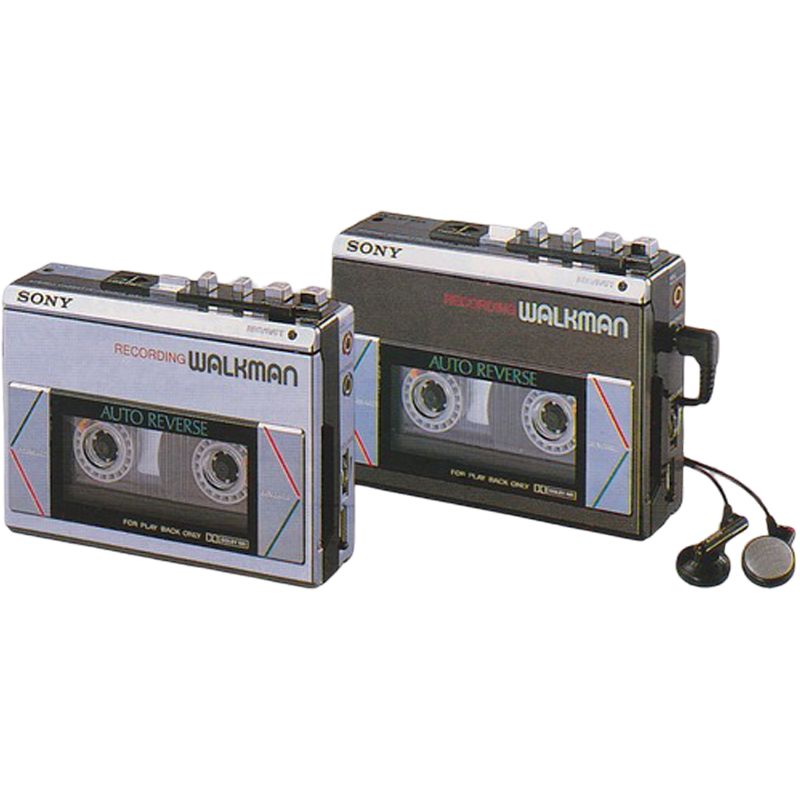
The WM-R55 is a portable cassette recorder Walkman that stood out for including a built-in mono speaker alongside switchable auto-reverse, Dolby B noise reduction, and line-input recording. Powered by two AA batteries, it also includes a mechanical tape counter and optional compatibility with Sony's cassette-shaped tuner pack, giving it more flexibility than most recording-capable Walkman models of its size. The metal-frame body and carrying case reinforce its role as a practical, multi-purpose player rather than a specialist recorder. This model occupied an unusually broad middle ground in the lineup, useful both as a personal stereo and as a compact self-contained recorder that does not always require headphones. That made it appealing to users who wanted something functional and adaptable rather than especially refined or professional. The R55 is a good example of how many directions Sony was exploring at once once the basic Walkman formula had matured.
WM-W800
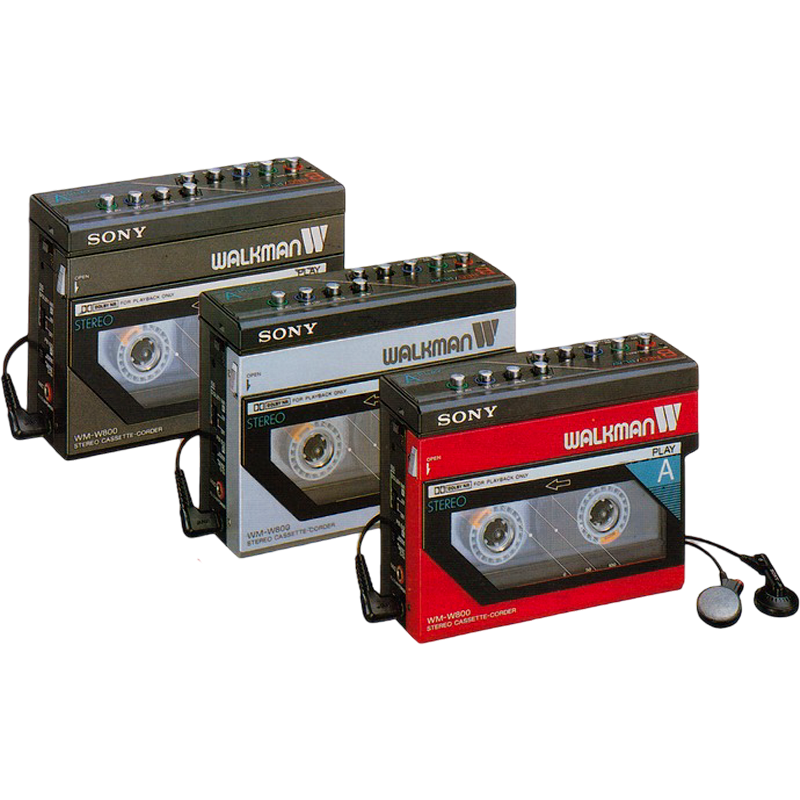
The WM-W800 was Sony's only double-cassette Walkman, nicknamed the Doppler, and used two independent mechanisms mounted back to back in a single portable body to allow direct tape-to-tape duplication without external equipment. One side handled playback while the other recorded, with internal routing circuitry, Dolby B on the playback side, support for normal, chrome, and metal tapes, line input, and a built-in AM/FM radio. Despite its unusual function, it still ran on two AA batteries and stayed compact enough to be carried as one self-contained machine. This is one of the strangest and most charming branches of the entire Walkman family, because it solved a very specific cassette-era problem in the most literal way possible. For students, mixtape makers, or anyone regularly copying tapes, the W800 removed a whole chain of inconvenience by turning dubbing into something portable and self-contained. It was never going to become a mainstream branch, but it shows Sony at its most inventive and willing to indulge a niche use case.
By 1985, the product line had expanded from simple playback devices to application-specific equipment. This configuration was subsequently applied as part of the segmentation design.