ObsoleteSony.com
1986
WM-F57
Walkman
The WM-F57 combined cassette playback with an integrated AM/FM tuner and a small built-in speaker...
obsoletesony.com/walkman/wm-f57

If you find it useful, you can support it. Support the archive


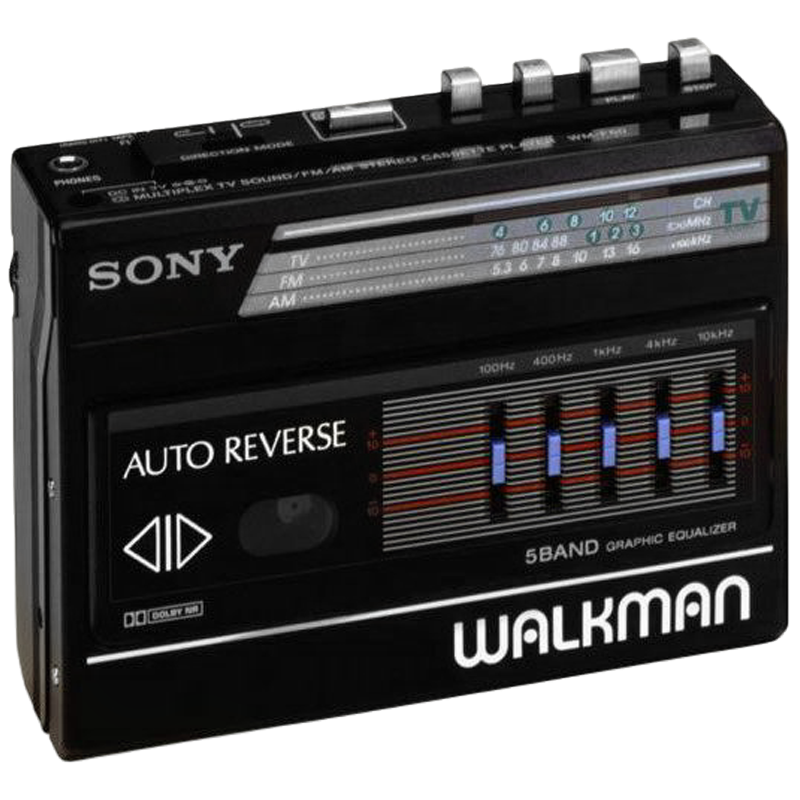
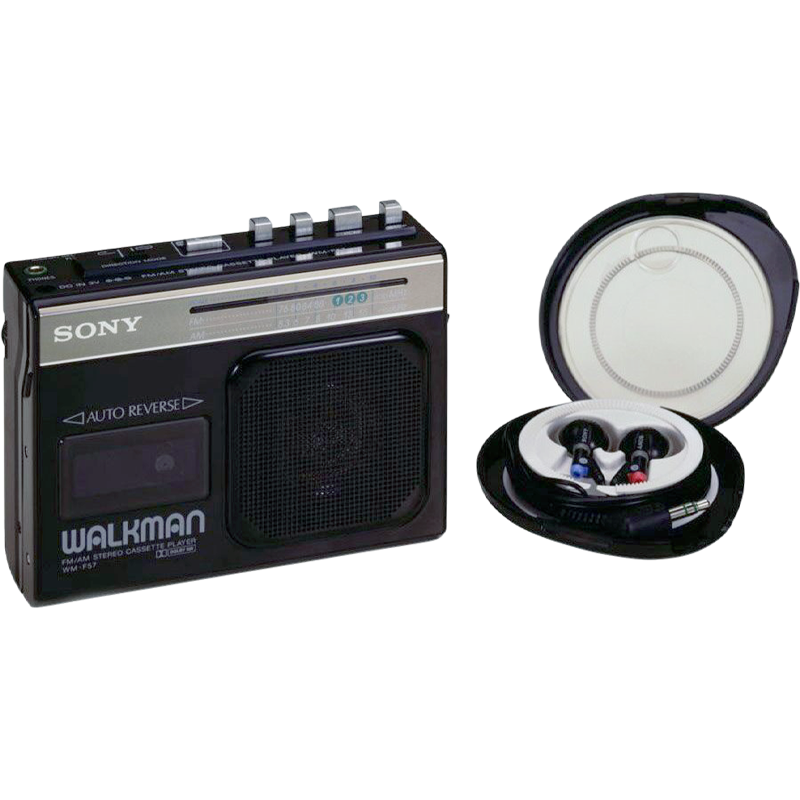
The WM-F57 combined cassette playback with an integrated AM/FM tuner and a small built-in speaker, allowing it to function both as a personal stereo and as a compact portable radio. Auto-reverse made tape playback possible without manually flipping the cassette, while the radio section worked independently from the cassette transport for easy switching between sources. The front-facing speaker and modest amplifier made it usable without headphones in casual settings, all in a body that still stayed reasonably compact.
It is the kind of model that shows how elastic the Walkman idea had already become by the mid-1980s. It was no longer only about private listening, but also casual sharing, radio listening, and informal situations where headphones were not always the point. The F57 feels like a convenience-first machine in the broadest sense.
Sony introduced the WM-F57 as a more social variation of the Walkman idea, adding a small front-facing loudspeaker to a compact cassette and radio design. It allowed playback without headphones, shifting the device from strictly personal listening to something that could be shared casually.
The cassette mechanism supported Auto Reverse, Dolby B noise reduction, and a selector for normal and chrome tapes, while the tuner offered both FM and AM reception. The built-in speaker required a shallow enclosure, which limited bass response and shortened battery life compared with headphone use.
It worked best for brief listening sessions or background sound rather than higher-fidelity playback. Externally, the WM-F57 followed the familiar Walkman silhouette with a front grille to accommodate the speaker.
It came in black, white, red, and dark blue, a color range that reflected its role as an easy, everyday portable rather than a specialized audio unit. The F57 was one of the earliest Walkmans to integrate a speaker in this form, showing how portable audio was beginning to extend beyond private listening into more flexible, informal use.