ObsoleteSony.com
1986
WM-F107
Walkman
The WM-F107 was a solar-assisted Sports Walkman from 1986, with a large solar panel built into the lid...
obsoletesony.com/walkman/wm-f107


If you find it useful, you can support it. Support the archive


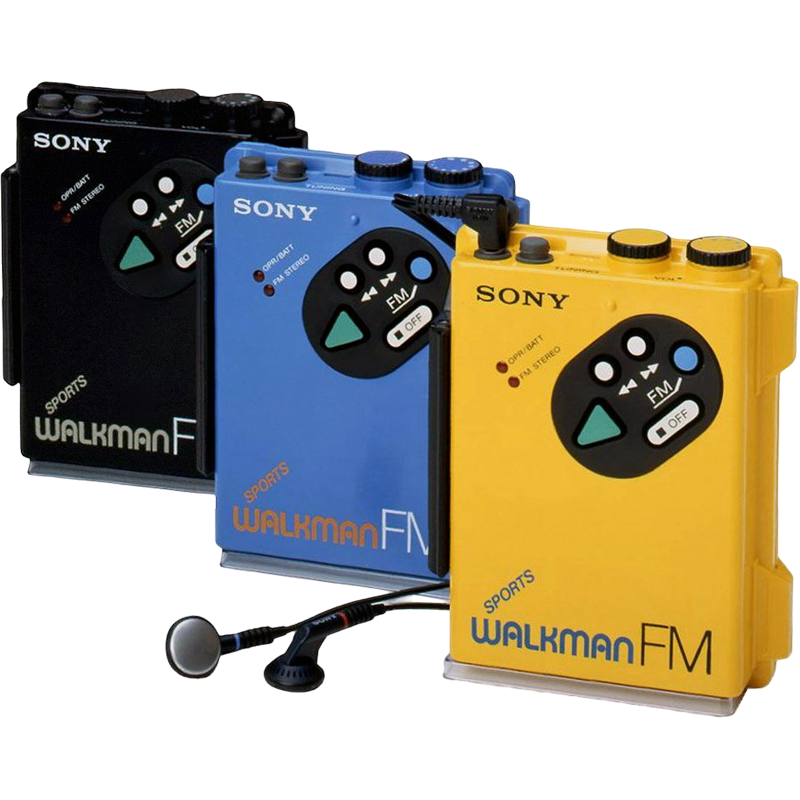
The WM-F107 was a solar-assisted Sports Walkman from 1986, with a large solar panel built into the lid to help charge its internal battery and support the radio and electronic functions in sunlight. The cassette transport still depended on stored battery power, but the sealed weather-resistant body also included auto-reverse, Dolby B, metal-tape support, and full AM/FM reception. Packing all of that into a Sports shell made it one of Sony's densest and most unusual portable designs of the decade.
This is a very Sony experiment: practical on paper, slightly eccentric in execution, and impossible to confuse with anything else in the lineup. It shows the Sports branch becoming not only a place for ruggedness, but also for technical experimentation around power and outdoor use. The F107 was never an ordinary mainstream player, but it is exactly the kind of model that makes the Walkman family feel inventive rather than merely iterative.
Sony explored alternate power systems in the mid-eighties, and the WM-F107 became the most ambitious result. It placed a solar panel across the front of the chassis, supplying power to an internal rechargeable battery and supporting direct radio operation under strong sunlight.
The idea built on earlier experiments such as the BPT-36 solar charger from 1982, which had shown that photovoltaic cells could meaningfully extend portable playback. The power system drew from three sources: the solar panel, the internal rechargeable pack, and an external AA battery caddy.