ObsoleteSony.com
1982
WM-DD
Walkman
The WM-DD was a playback-only Walkman introduced in 1982 around Sony's Disc Drive transport...
obsoletesony.com/walkman/wm-dd

If you find it useful, you can support it. Support the archive


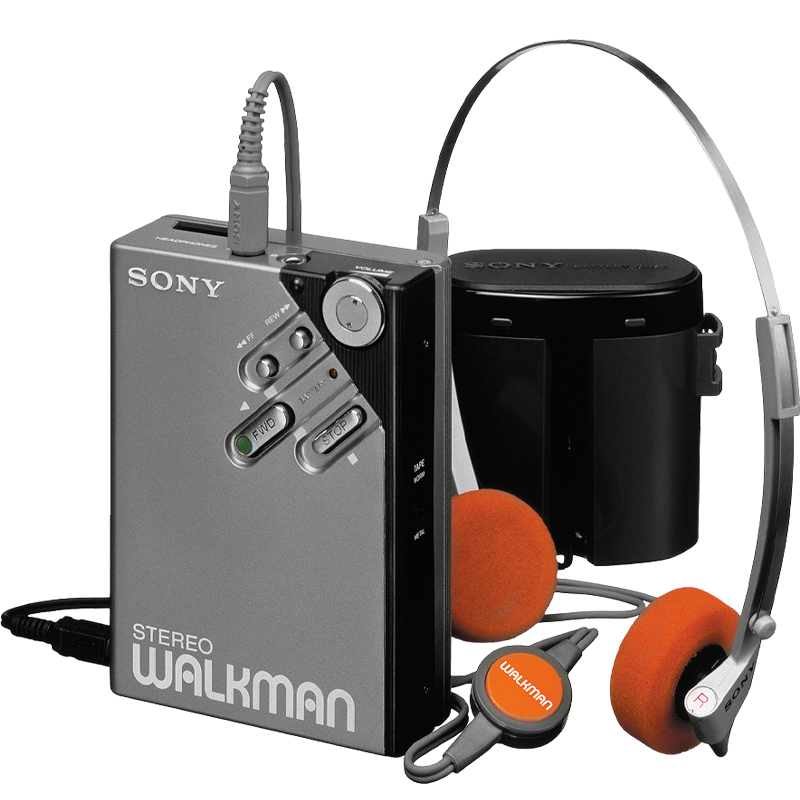
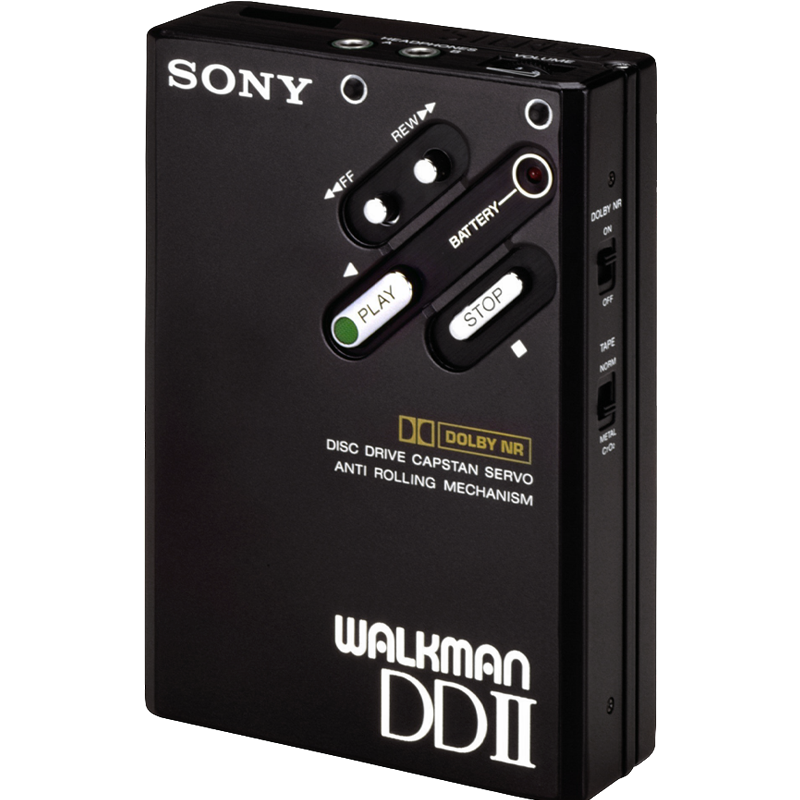
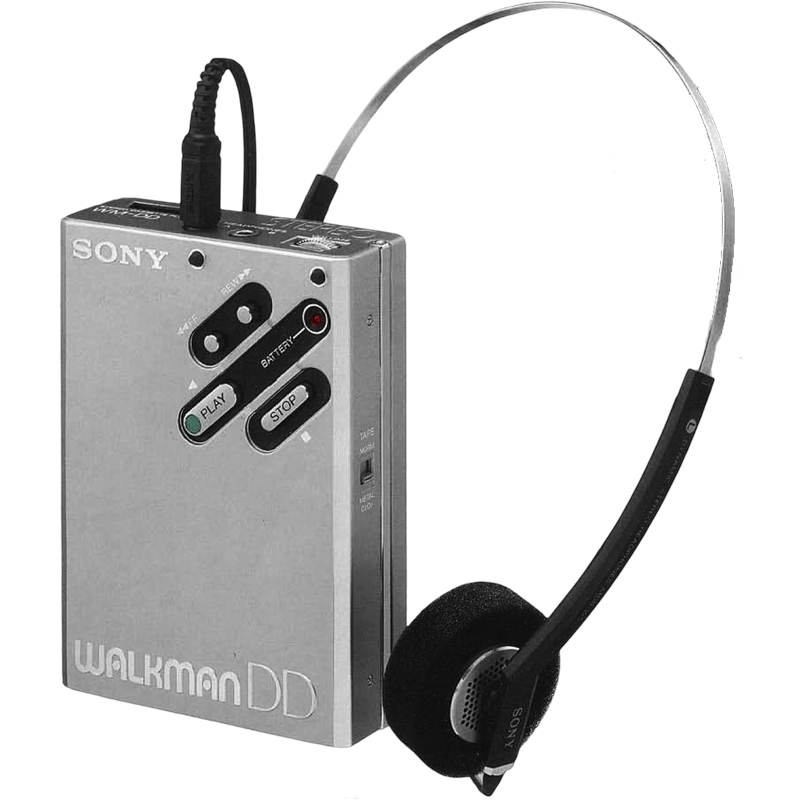
The WM-DD was a playback-only Walkman introduced in 1982 around Sony's Disc Drive transport. Instead of the usual belt connection between motor and capstan, it used a rigid disc coupling intended to reduce the speed variation caused by belt wear or flex, helping lower wow and flutter and keep playback steadier while the player was moving. The rest of the machine stayed close to the WM-2 formula, with a compact metal body, tape selector, AA power, auto stop, and Hotline function, but the transport itself was the story.
The DD shifted the conversation from size to precision. Sony had already proved that the Walkman could be made small; this model showed that mechanical quality could also be marketed as a meaningful improvement. It laid the foundation for the DD line, aimed at listeners who cared less about novelty than about how well the machine actually ran.
Early Walkmans proved that cassette playback could be portable, but the limits of belt-driven mechanisms were becoming clear. Models such as the WM-2 reached remarkable size reductions, yet the traditional belt still introduced small variations in tape speed. As these compact players aged, that instability became easier to hear.
Sony's engineers decided the next step was not to shrink the Walkman further but to stabilize it. The WM-DD approached the problem from a new angle. Instead of improving tension systems, Sony removed the belt entirely.
The Disc Drive mechanism placed the motor in line with the capstan through a metal coupling disc, creating a single controlled rotation rather than a chain of moving parts. Wow and flutter dropped to levels close to small home decks, and for the first time a portable Walkman could hold pitch with real consistency. The design carried a higher price than typical models, but it showed that precision had become a central goal.
Piano notes no longer wavered, sustained tones stayed steady, and playback felt cleaner in motion. The WM-DD proved that portability and fidelity no longer had to be separate ideas. With the belt removed, the Walkman reached a new level of mechanical stability, setting the foundation for the precision-focused DD models that followed.