ObsoleteSony.com
1982
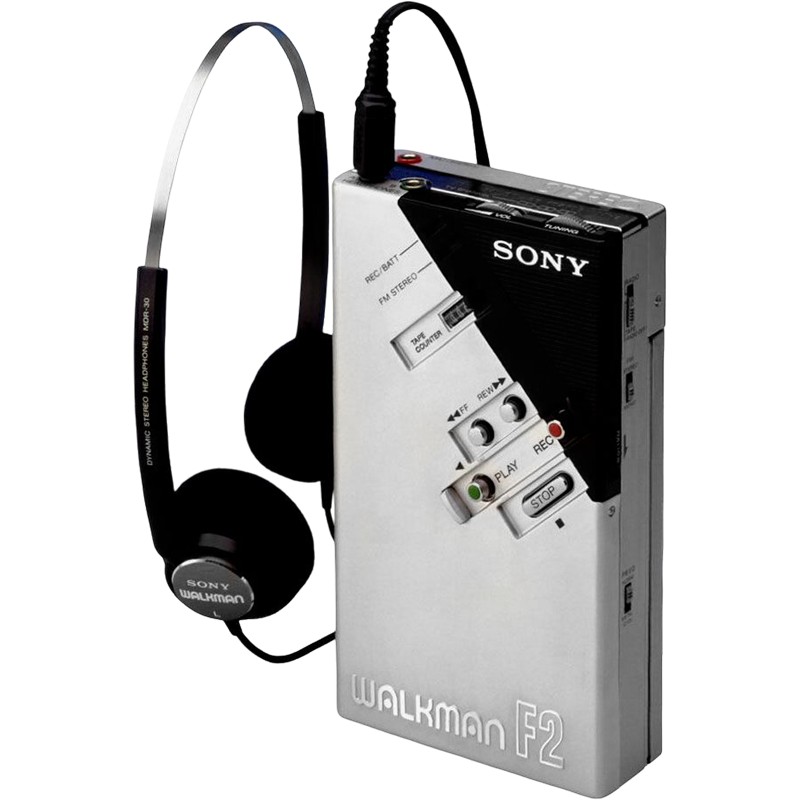
WM-F2
Walkman
The WM-F2 pushed the Walkman into hybrid territory by combining cassette playback and recording...
obsoletesony.com/walkman/wm-f2

If you find it useful, you can support it. Support the archive


The WM-F2 pushed the Walkman into hybrid territory by combining cassette playback and recording with an FM stereo radio tuner. Released in 1982, it was one of Sony's earliest attempts to make the platform more than a tape-only device. The radio section used a stereo decoder and automatic recording-level adjustment, while the headphone cable doubled as the antenna. On the cassette side, it could play and record from external sources or directly from the built-in radio.
Sony had begun to think of portable audio as something broader than the tapes a listener happened to bring from home. The F2 was clearly aimed at users who wanted more spontaneity, whether that meant catching a song from the radio or making quick recordings on the move. It also helped establish the logic behind the F-series, where broadcast listening became part of the Walkman identity rather than an add-on.
The early Walkman models could only play the tapes you carried, which felt limiting in a country where FM culture shaped daily listening. The WM-F2 expanded the idea of portable audio by combining a cassette player with a high-sensitivity radio tuner.
It turned the slim WM-2 layout into a device that could play tapes, receive live broadcasts, and record directly from the air. Mechanically, the WM-F2 stayed close to the mid-period Walkman formula.
It used a belt-driven transport, ran on AA batteries, and relied on simple analog controls. The added tuner made it slightly heavier than a playback-only unit, but it still fit easily in a coat pocket.
Its design introduced the F-prefix that later defined a long-running family of radio-equipped portables. While it lacked Dolby noise reduction and tape-type selection, its simplicity made it dependable.