ObsoleteSony.com
1991
WM-EX88
Walkman
The WM-EX88 was a high-end playback Walkman from Sony's EX family in 1991, distinguished...
obsoletesony.com/walkman/wm-ex88

If you find it useful, you can support it. Support the archive


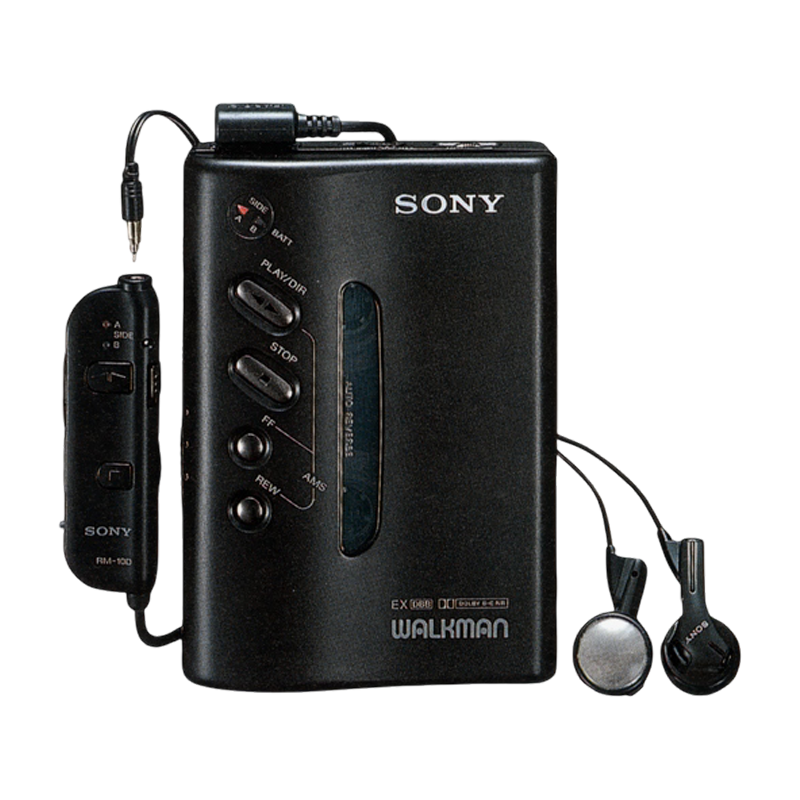
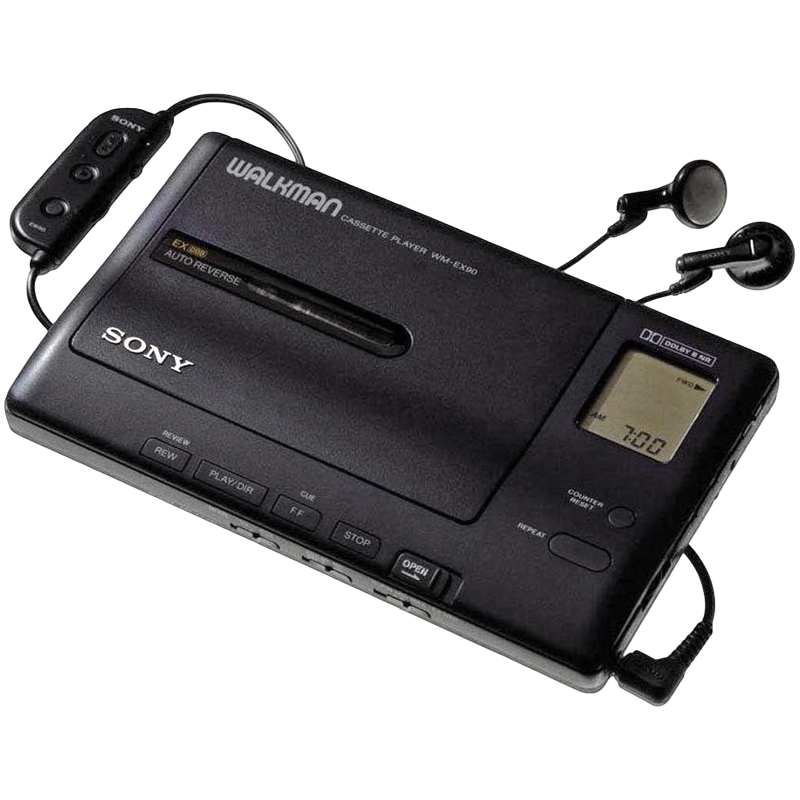
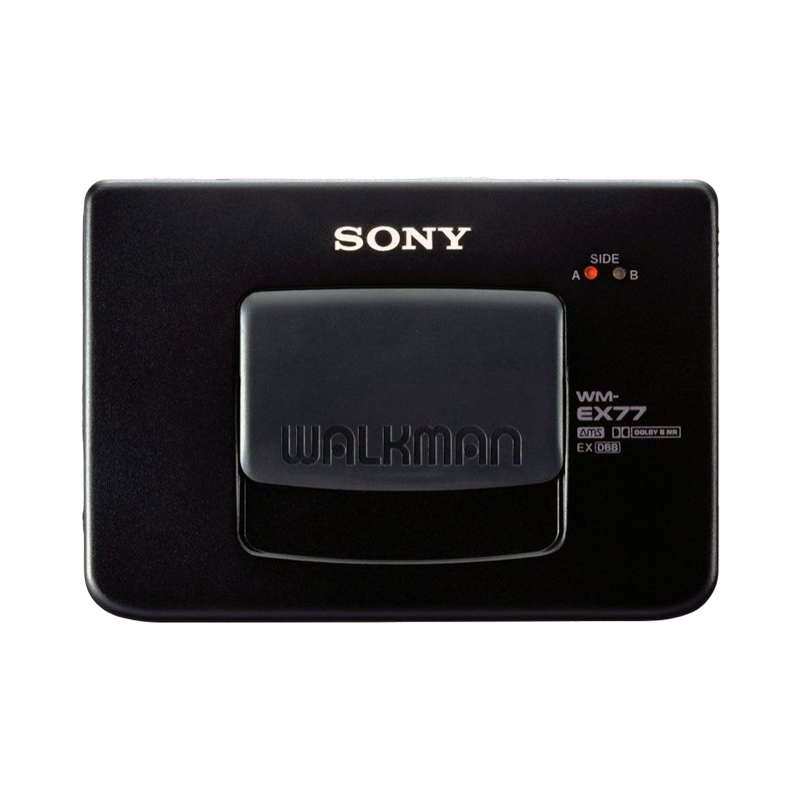
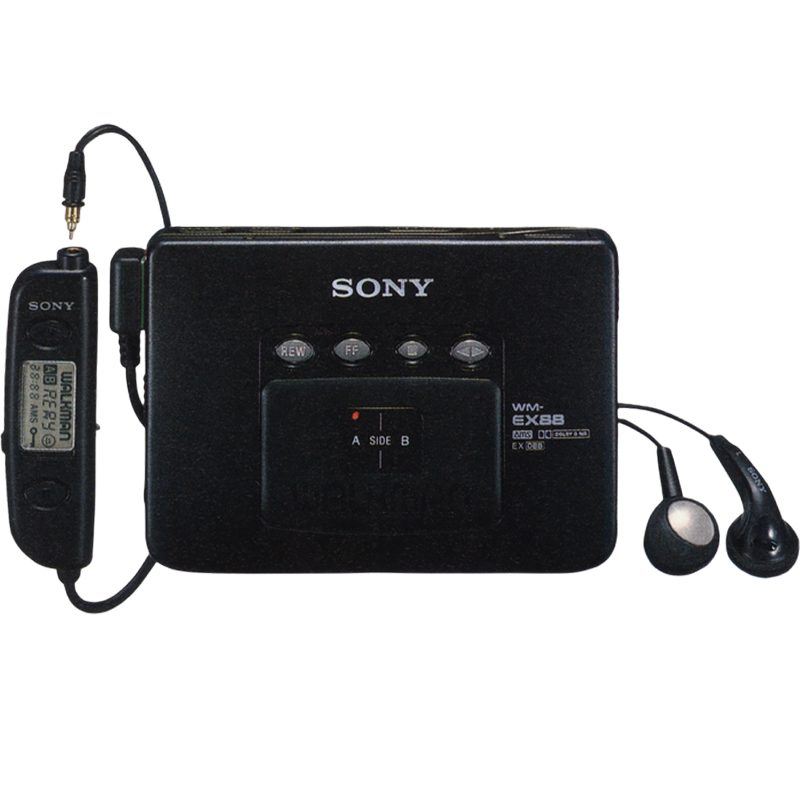
The WM-EX88 was a high-end playback Walkman from Sony's EX family in 1991, distinguished by the introduction of a sliding hold lock built directly into the cassette lid so the latch engaged automatically when closed. The lid also carried the main control keys, giving the machine a cleaner and more self-contained interface than many nearby models. Beyond that, it offered an EX Amorphous Head, auto-reverse, Dolby B, Extended Dynamic Bass Boost, AMS track search, AVLS volume limiting, Sound Swing Guard anti-vibration control, and an LCD remote connected through Sony's small gold-plated micro-plug system.
It shows Sony moving some of its innovation away from pure transport mechanics and toward interaction design. The EX88 is not important because it radically changed cassette playback, but because it made the Walkman feel more secure in the hand and harder to misuse in motion. It reads as a premium portable from the moment when the company began refining behavior as carefully as hardware.
Sony's 1991 cassette range took a small but noticeable turn toward restraint, and the EX88 was the clearest expression of that shift. Instead of adding more modes or expanding the control scheme, Sony built a player that did one thing and did it cleanly. No tuner, no remote, no decorative features. Just a compact Walkman focused on playback quality.
The exterior kept the familiar EX silhouette but sharpened it. The surfaces were flatter, the edges straighter, and thin metal panels on the front and back kept the body rigid without making it heavy. A slim tape window cut through the otherwise quiet design, and the controls sat neatly along the right side. Nothing called attention to itself.
That restraint became part of the character. Inside, Sony introduced a new transport that also appeared in models like the EX808. It ran more quietly, held speed more consistently, and drew less power than the mechanism it replaced. Dolby B and C performed more effectively as a result, and the updated motor gave the player solid endurance on a single gumstick cell, with most users seeing around eight to ten hours.
The sound leaned toward accuracy. It handled metal and chrome tapes smoothly without adding warmth or boosting the bass. The amplifier provided enough drive for everyday headphones, and the overall presentation felt clean and steady rather than stylized. The WM-EX88 emphasized controlled, accurate playback through a restrained design that prioritized sound quality over added features.