ObsoleteSony.com
1984
WM-DD2
Walkman
The WM-DD2 was a compact cassette Walkman that extended Sony's original Disc Drive concept by adding...
obsoletesony.com/walkman/wm-dd2

If you find it useful, you can support it. Support the archive


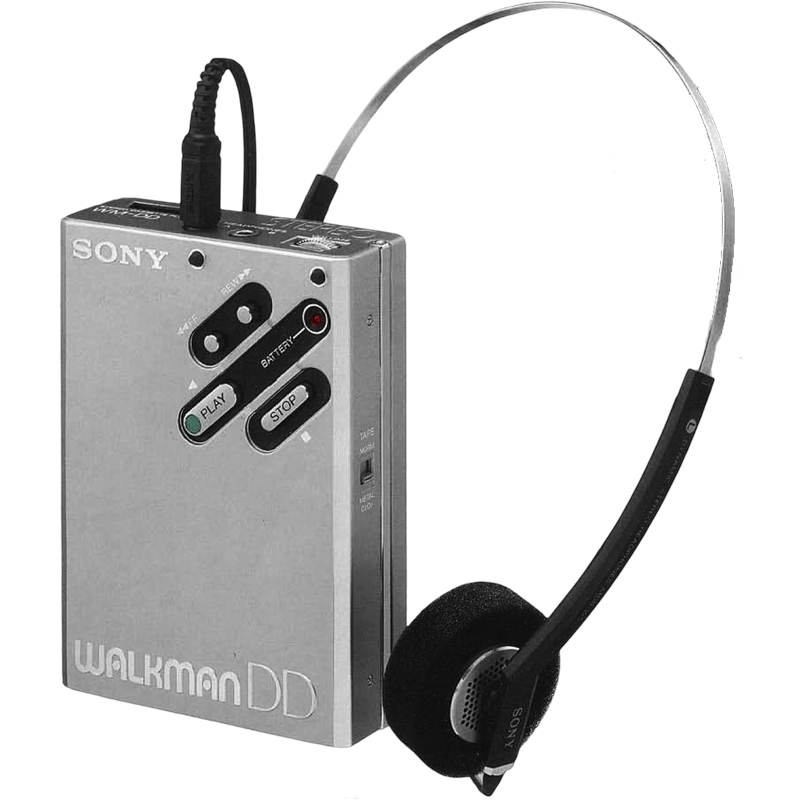
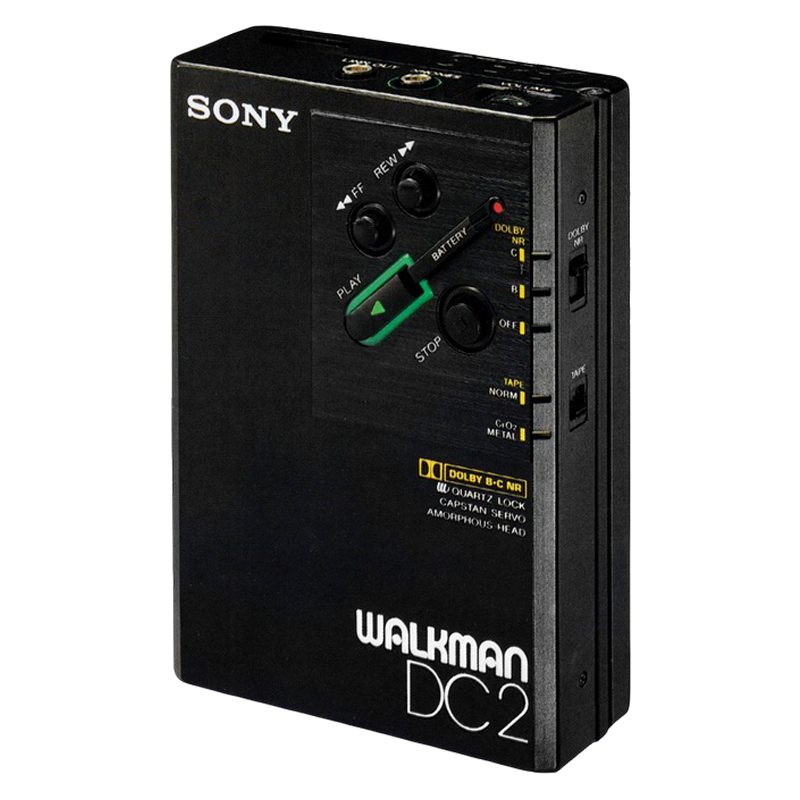
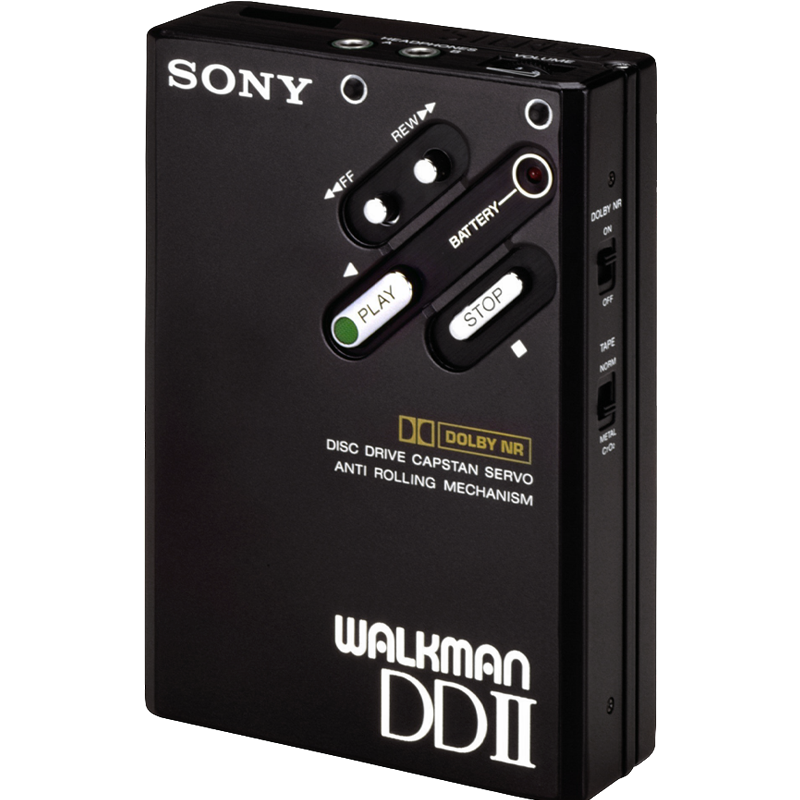
The WM-DD2 was a compact cassette Walkman that extended Sony's original Disc Drive concept by adding Dolby B noise reduction to the same beltless transport architecture. It retained the anti-rolling stability and capstan precision that defined the first DD model while adding the circuitry needed to reduce tape hiss without substantially changing the size or overall appearance of the body. Powered by two AA batteries, it remained a mechanically focused machine at heart.
Rather than reinventing the DD idea, Sony used the WM-DD2 to complete it. The direct-drive platform had already proved its value for listeners who cared about speed stability, and this version simply made the listening experience quieter and more refined without losing what made the series appealing in the first place. It is one of those evolutionary models that mattered because it made a good idea harder to outgrow.
Direct-drive design had already proven its value in the original DD, and the next step was to refine that stability without increasing size or complexity. The WM-DD2 followed this direction by preserving the direct-coupled capstan motor and pairing it with a more efficient electronic layout that reduced noise while keeping the chassis compact.
A newer generation of miniature Dolby ICs allowed Dolby B noise reduction to fit within the same footprint as the earlier model, something previous components could not achieve without raising power requirements or enlarging the enclosure. Playback time reached roughly nine hours from two AA batteries, and the transport maintained the steady tape handling that defined the DD series.
A manual tape selector supported normal, chrome, and metal formulations, and the mechanism remained aligned within a rigid metal body. The overall construction showed a maturing stage of Walkman design.
The WM-DD2 balanced stable mechanics, controlled sound, and compact proportions without relying on the collapsible structures seen in other mid-eighties models. It refined the direct-drive platform while preserving the core characteristics that made it distinct.