ObsoleteSony.com
1984
D-50
Discman
The D-50 is Sony's first portable CD player, released in 1984...
obsoletesony.com/discman/d-50

If you find it useful, you can support it. Support the archive


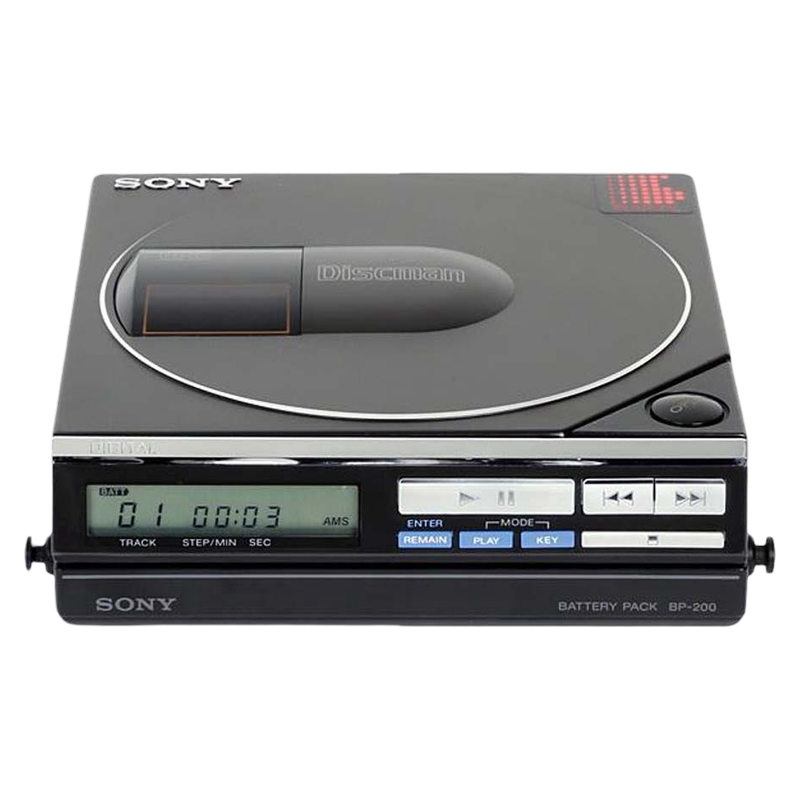
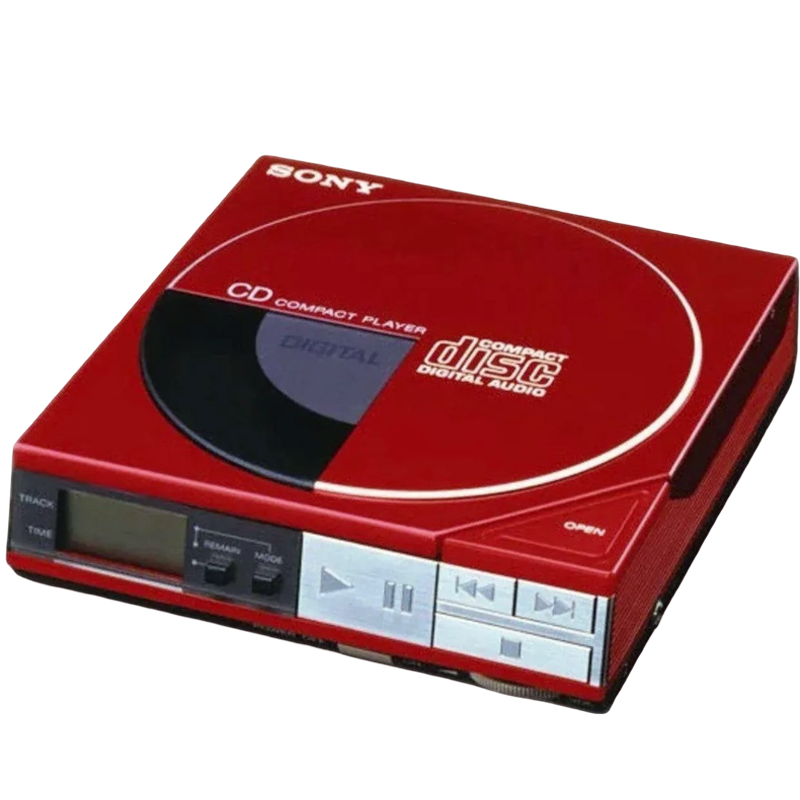
The D-50 is Sony's first portable CD player, released in 1984. It does not have a built-in battery and operates by connecting an external battery pack. It features a line output and two headphone outputs, and supports basic CD playback functions. It lacks vibration damping, requiring a stable placement during playback. Due to its limited power supply, it was designed more for stationary use than for portability. It exhibits the limitations seen in early portable CD players.
The compact disc had been introduced as a high-fidelity home format, but early adoption was limited by cost and scale. What it needed was a way to move beyond full-size players and reach everyday listeners.
That goal shaped the development of the D-50, the first portable CD player built to bring the format into practical, personal use. The initial concept was defined by a simple requirement: reduce the size to the smallest workable footprint.
A cost-reduction effort ran alongside this, simplifying digital circuitry and reworking the optical pickup so it could operate efficiently in a compact enclosure. The aim was to make the format accessible without compromising sound quality, which meant omitting nonessential functions and focusing on the core audio path.
Full-size sound moved into a portable form. The D-50 could run from external power or optional batteries and connect directly to amplifiers through its line output.