ObsoleteSony.com
2002
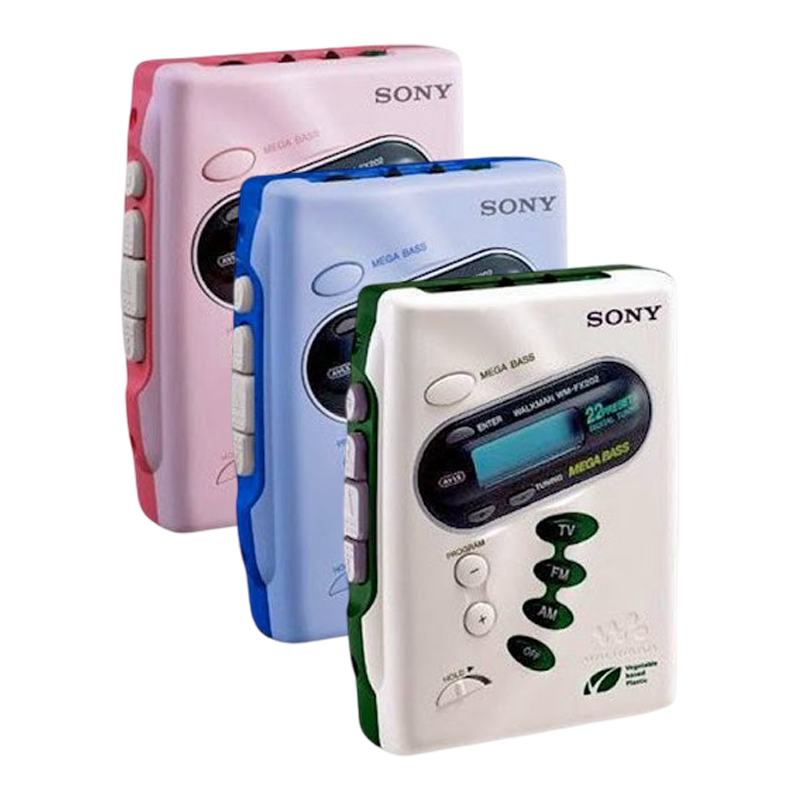
WM-FX202
Walkman
The WM-FX202 was a late radio Walkman distinguished less by its cassette hardware than by the material...
obsoletesony.com/walkman/wm-fx202

If you find it useful, you can support it. Support the archive


The WM-FX202 was a late radio Walkman distinguished less by its cassette hardware than by the material used for its body. Sony used a corn-based biodegradable plastic derived from polylactic acid for the outer shell, making it one of the company's early consumer-electronics experiments with more environmentally conscious materials. Beneath that unusual case, it remained a simple portable cassette-and-radio device with FM stereo, AM, and TV-band reception through a digital tuner with 22 presets, plus Mega Bass and AVLS for basic late-period listening comfort. Power came from two AA batteries, and the whole machine stayed deliberately plain.
It is the kind of model that is historically more interesting than it is mechanically. The FX202 did not try to reinvent the radio Walkman, but it quietly captures a moment when Sony began testing new values around consumer electronics without changing the core use case. It feels like an ordinary late cassette player wrapped in an early-2000s experiment.
The WM-FX202 entered the lineup with a quiet experiment hidden in its shell. Sony built the casing from a starch-blend biodegradable plastic that looked nearly identical to its usual housings.
It was a simple, low-cost test bed for reducing petroleum-based plastics and never appeared in marketing, so most owners never knew it was there. The rest of the player followed Sony's familiar late cassette layout with softened edges, a basic AM/FM tuner, and a reliable transport suited to its tier.
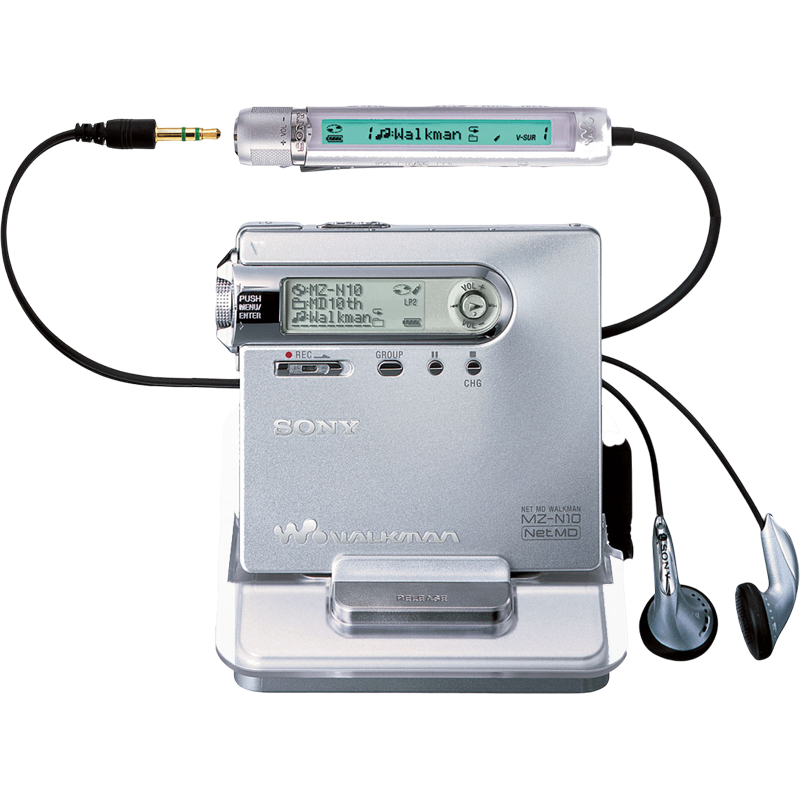
The MZ-N10 is a flagship NetMD recorder that integrates the basic configuration of a recording device and early PC connectivity functions into a compact, all-in-one body.
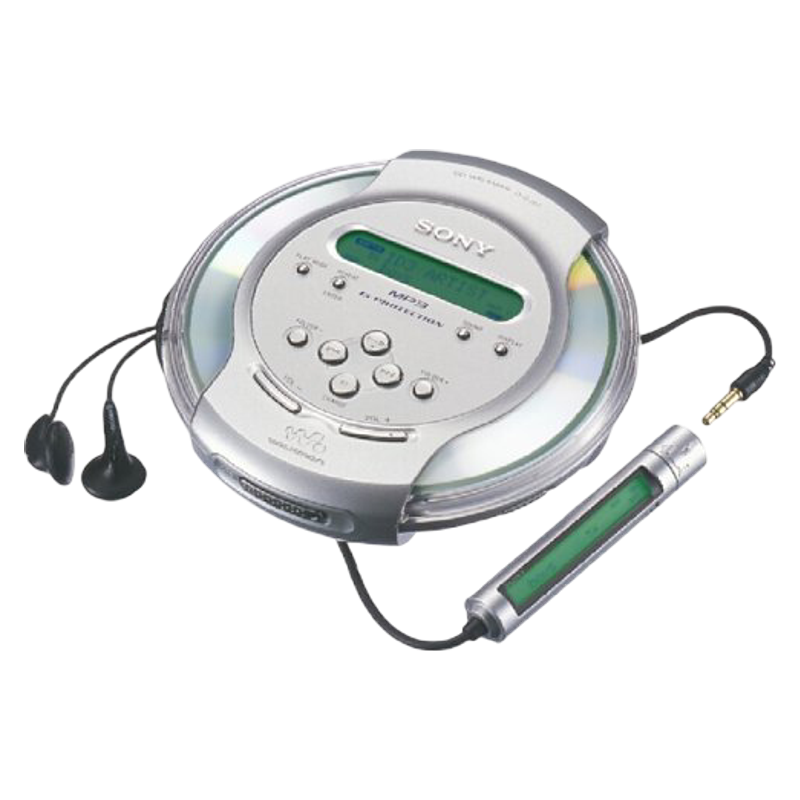
The D-CJ01 is a portable CD player that supports MP3 playback.
The NW-MS10 is the second-generation Memory Stick Walkman, following the NW-MS7.