ObsoleteSony.com
1988
WM-701C
Walkman
The WM-701C was one of Sony's most important high-end playback Walkman models of 1988, built around...
obsoletesony.com/walkman/wm-701c

If you find it useful, you can support it. Support the archive


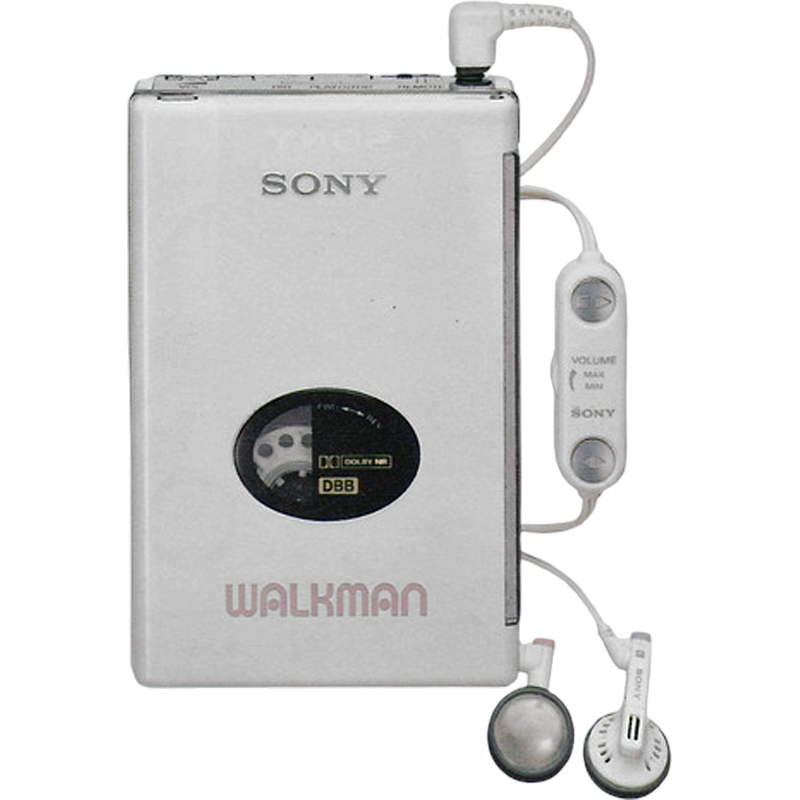
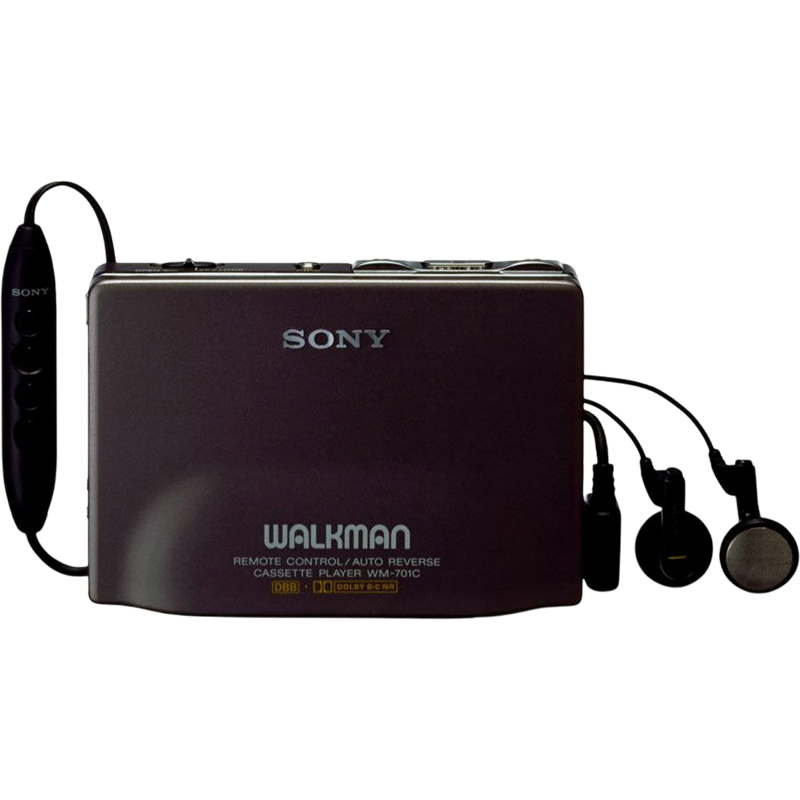
The WM-701C was one of Sony's most important high-end playback Walkman models of 1988, built around a newly developed slim transport that allowed the player to shrink to roughly 18 millimeters thick without giving up premium functions. It combined Dolby B and C noise reduction, an EX Amorphous Head, Dynamic Bass Boost, auto-reverse, and feather-touch logic controls in a compact metal body, with the battery housed inside the cassette compartment to preserve the clean silhouette. The whole machine was engineered to feel dense, precise, and unusually resolved for its size.
Here Sony showed that the Walkman could still move forward even after years of miniaturization had already transformed the category. The 701C was not only thin, but thin in a way that still felt expensive, intentional, and acoustically serious. It sits at the point where high-end Walkman design became less about novelty and more about polish.
Fitting a full cassette transport into an 18.2-millimeter enclosure required a new internal layout, and the WM-701C introduced that approach in one of Sony's smallest bodies. It used an EX Amorphous playback head, Dolby C noise reduction, and a compact, electronically controlled mechanism designed to work inside such a thin frame.
To make the enclosure this slim, Sony replaced many of the usual moving parts with small electronically triggered components and arranged the interior to use every bit of space. A compact power circuit let the player run from a single gumstick battery, which further supported the thin layout.
The transport sat on a metal base to keep it steady, and the circuit boards folded through the body like layered paper. Even with its small size, the Walkman felt solid because everything inside was packed tightly.
The WM-701C showed how far Sony could push miniaturization before the design introduced practical limits. Sony followed it with the WM-703C, which added rapid charging, and the WM-702, which used thicker panels and a different audio system.