ObsoleteSony.com
1986
D-100
Discman
The D-100 is a model that expands upon the functionality of early portable CD players while miniaturizing...
obsoletesony.com/discman/d-100

If you find it useful, you can support it. Support the archive


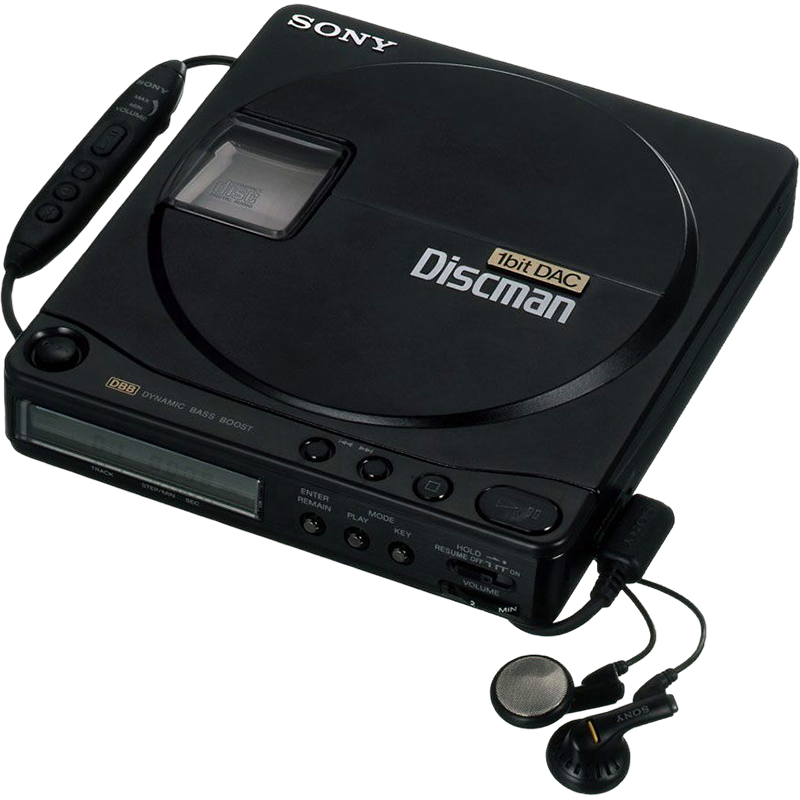
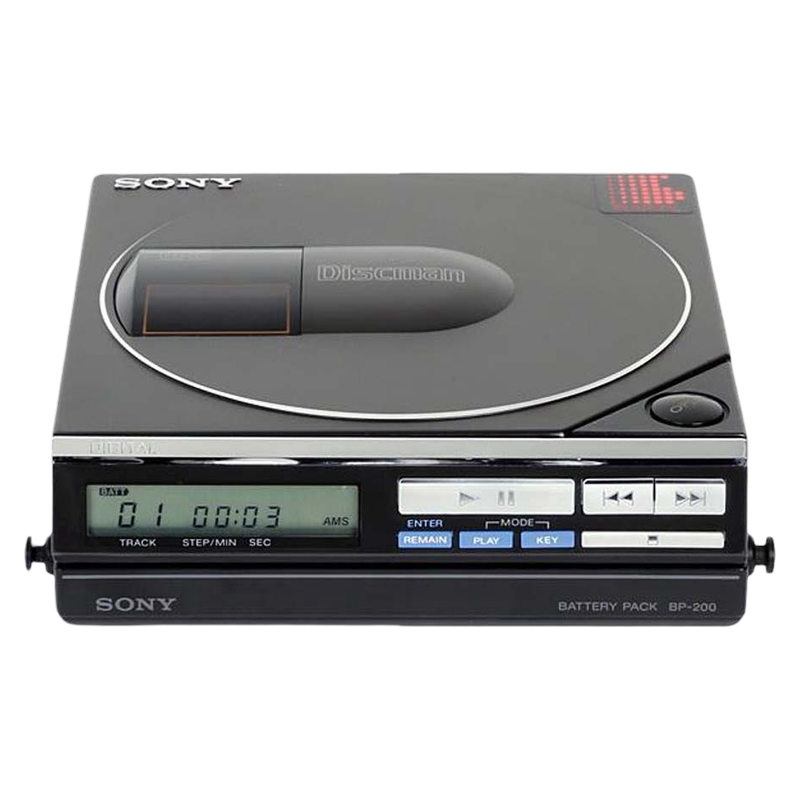
The D-100 is a model that expands upon the functionality of early portable CD players while miniaturizing their configuration. It features playback control functions such as program playback, repeat playback, and A-B repeat, and the transport mechanism has also been miniaturized. The power supply relies on an external battery and it does not have a vibration-resistant mechanism. Although improvements have been made to accommodate portable use, it is intended for use in a stable installation environment. It is an advanced model of the early generation that aims to balance miniaturization with added functionality.
Sony took another step toward smaller portable CD players with the D-100, which followed the D-50 and D-50 Mk II in the Discman lineup. The design emphasized thickness reduction and arrived as one of the thinnest CD players of its period, bringing the format closer to the portability associated with Walkman models.
The internal layout remained fully mechanical, relying on a refined transport and suspension system to maintain tracking accuracy. Early portable CD mechanisms had no memory buffer or electronic anti-skip function, so stable playback depended on careful handling.
Within those limits, the D-100 performed predictably and tolerated light movement without difficulty. The audio section used a 16-bit linear converter and a clean analog path, giving the model the same resolution as Sony's full-size players of the mid-eighties.
Its tuning placed it among the stronger performers in early portable CD comparisons, and the unit was positioned at the higher end of the lineup as a premium compact design. The D-100 bridged portable and home use, combining reduced size with full-resolution playback and early remote control support in a compact Discman format.
The D-50MkII is an improved model based on the original D-50, with a revised power supply system and internal design.
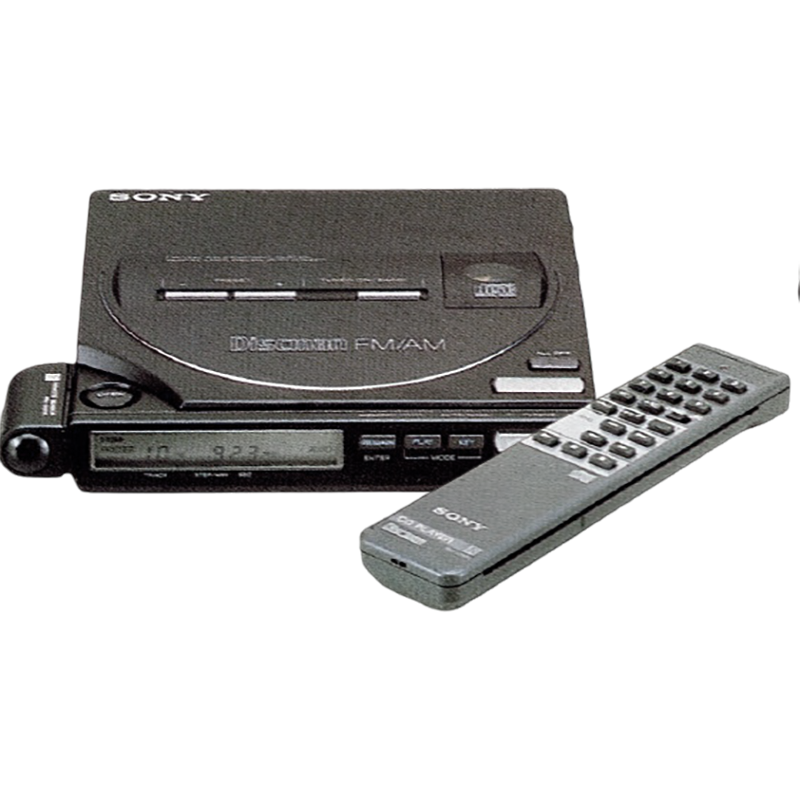
The D-2001 is a portable CD player that supports a wired remote control.

The D-99 is a high-end portable CD player featuring a metal casing and a 1-bit conversion circuit.