ObsoleteSony.com
1992
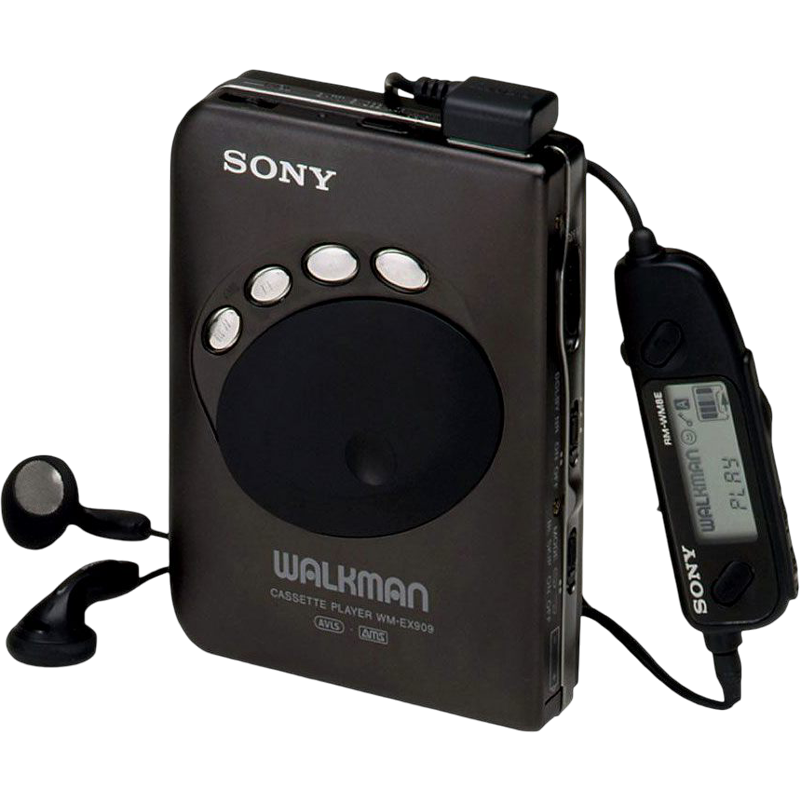
WM-EX909
Walkman
The WM-EX909 was a top-class playback Walkman from 1992 and one of Sony's clearest late attempts to solve...
obsoletesony.com/walkman/wm-ex909

If you find it useful, you can support it. Support the archive


The WM-EX909 was a top-class playback Walkman from 1992 and one of Sony's clearest late attempts to solve the remaining compromises of auto-reverse cassette playback. Instead of relying on a rotating head assembly, it used separate fixed heads for each tape direction, preserving alignment and reducing the small inconsistencies in sound quality that could appear in conventional reversing mechanisms. Sony combined this with an EX Amorphous Head system, Dolby B, Extended Dynamic Bass Boost, AVLS, automatic music sensor, and a slim metal body with remote control, creating a machine that felt technically serious without becoming bulky.
This is exactly the kind of model that appears only when a format is deep into maturity. Sony was no longer inventing cassette portability here, but refining the last annoyances for people who still cared enough to notice them. The EX909 feels like a machine built for listeners who had lived with Walkmans long enough to want the polished version of every old compromise.
Sony built the WM-EX909 around a dual-head cassette system designed to solve a long-standing weakness of auto-reverse playback. Most reversible decks used a single head that physically shifted position, a setup that often caused small alignment changes and a different tone in each direction.
With two dedicated playback heads, the EX909 delivered auto-reverse without the usual loss of clarity or shift in tone. Alignment stayed steady and high frequencies held their shape whether the tape was playing forward or backward.
The exterior followed the EX-series approach to compact metal construction, with a clean front window that revealed the cassette and controls arranged for quick access. The player supported Dolby B noise reduction and carried the same direct, uncluttered operating feel that defined much of Sony's early-nineties cassette work.
Inside, the audio circuit favored a neutral balance and quiet background, taking advantage of the stable geometry created by the dual-head layout. The mechanism demanded more power than later efficiency-focused EX units, but it delivered a level of consistency uncommon in portable auto-reverse designs.
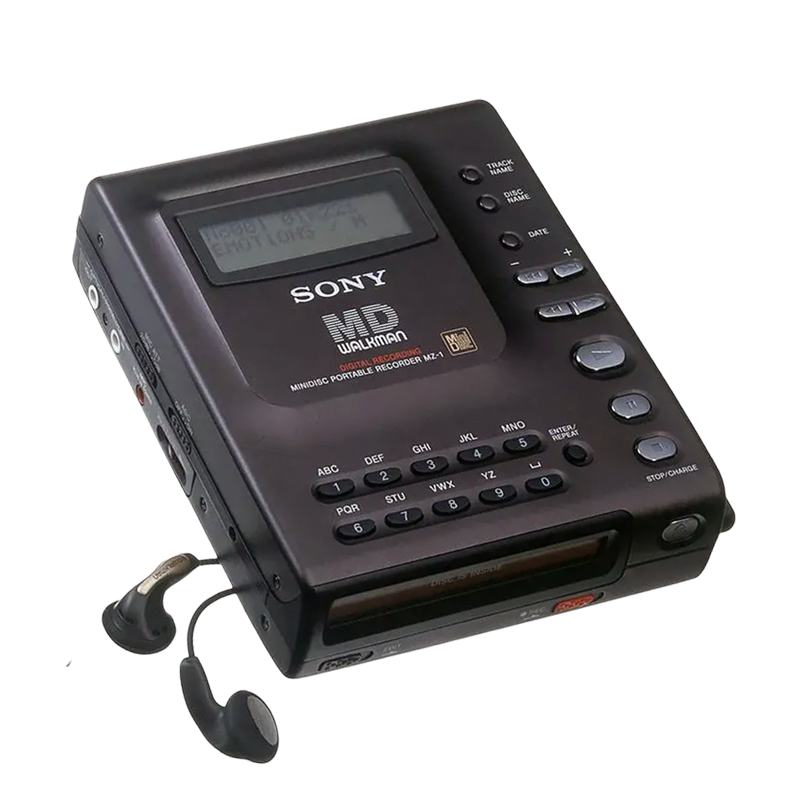
The MZ-1 was the first MiniDisc recorder to adopt random access discs instead of linear tape, significantly changing how recorded audio was handled.
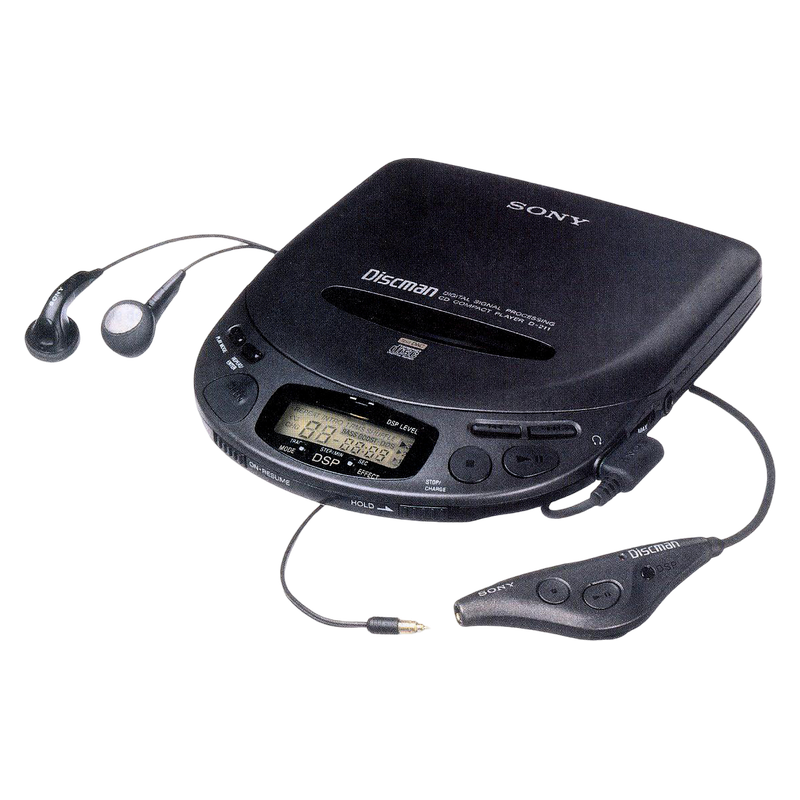
The D-211 is a portable CD player equipped with an electronic anti-skip mechanism.
The WM-EX10 is a playback-only Walkman.