ObsoleteSony.com
1988
D-88
Discman
The D-88 is a portable CD player with a compact chassis that supports playback of 12cm and 8cm CDs...
obsoletesony.com/discman/d-88

If you find it useful, you can support it. Support the archive


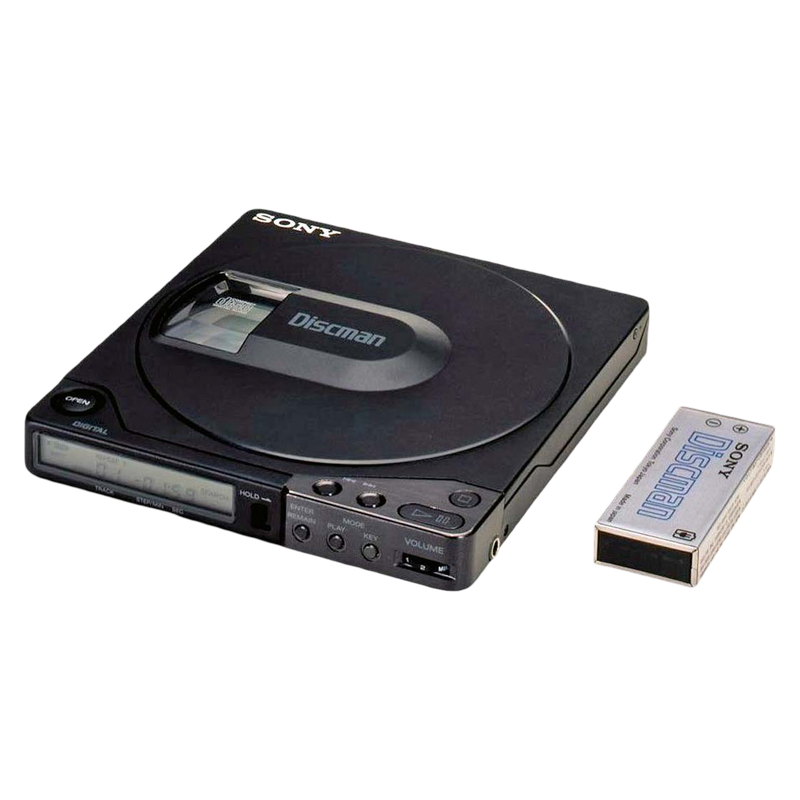
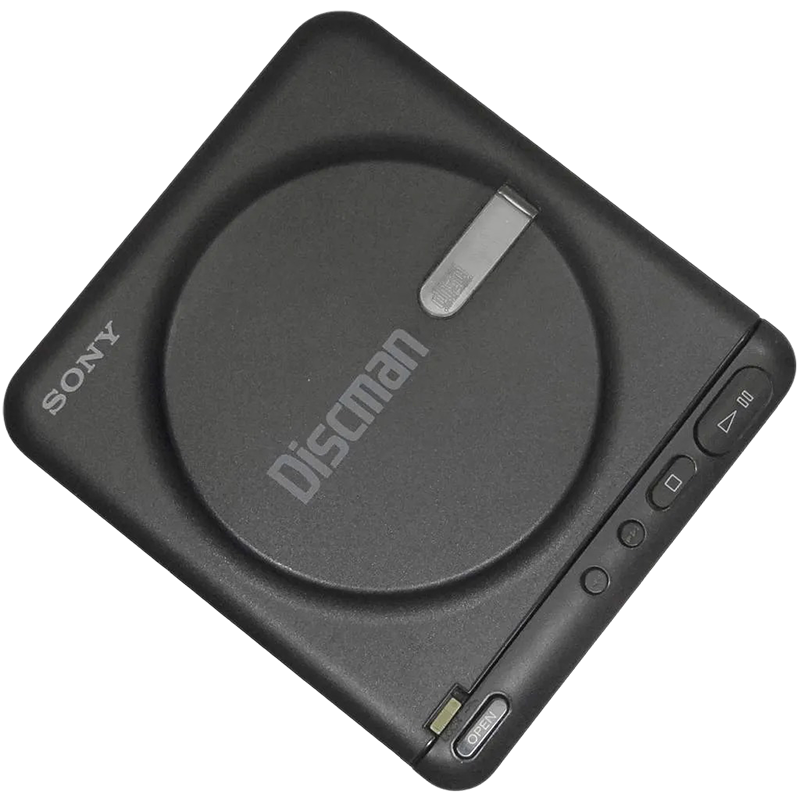
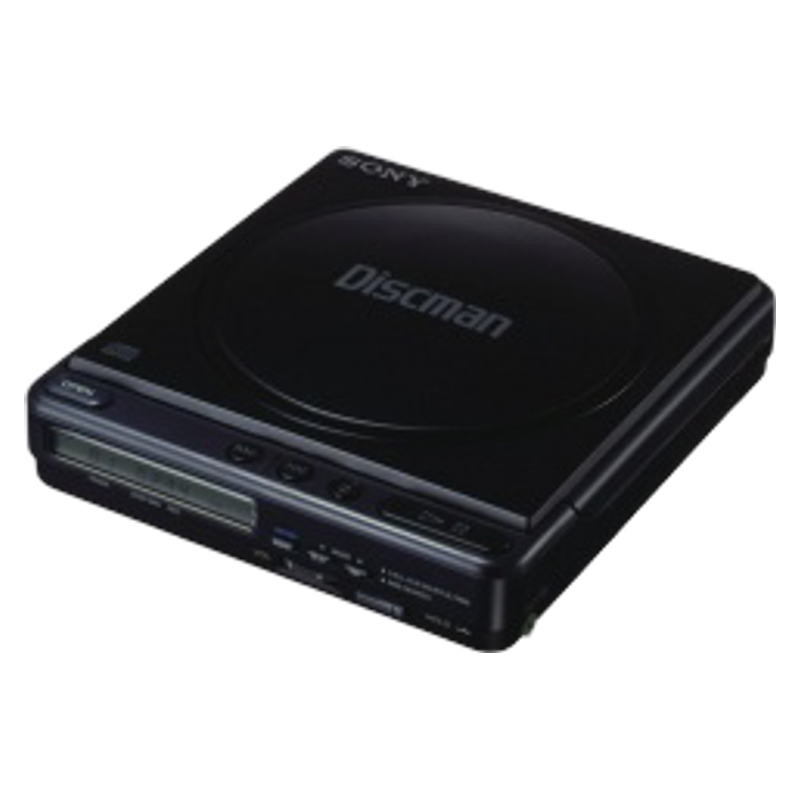
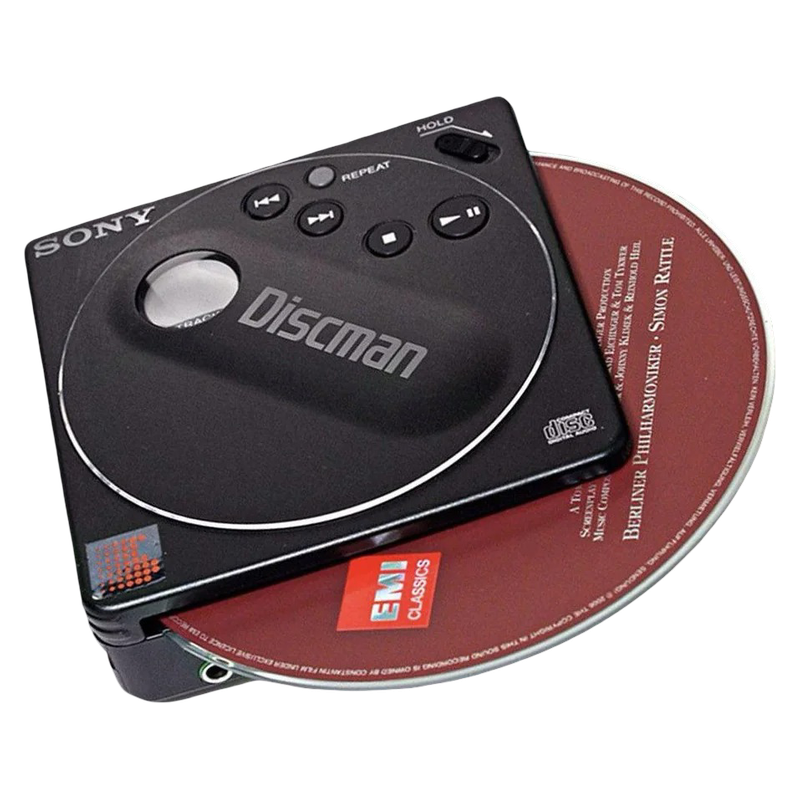
The D-88 is a portable CD player with a compact chassis that supports playback of 12cm and 8cm CDs. Its size is smaller than the disc diameter, and when playing a 12cm CD, part of the disc is exposed at the outer edge. Playback is limited to that of a standard CD player, and it lacks vibration damping. Its design prioritizes miniaturization, resulting in a unique chassis with physical constraints.
Compact disc singles shaped the design of the D-88, a small portable player built around the 8-centimeter format that had gained traction in Japan. Its enclosure fully contained the smaller discs, while full-size 12-centimeter media extended beyond the sides when played. The transport was arranged to read the outer area of a full CD despite the exposed edges, giving the unit a footprint smaller than the medium itself.
The mechanism used a slot-loading layout with tight alignment requirements, and the internal structure followed compact Discman designs of the period. A 16-bit converter handled audio output in line with other Discmans of the time. Power came from the BP-2 lead-acid pack, and the player shipped with a charger and carrying case.
The body felt dense due to the arrangement of the transport and circuit boards, and the design centered on the smallest workable form for an optical mechanism. Operation favored careful handling. The exposed edges of full-size discs required attention when loading, and the slot mechanism offered less protection than later clamshell designs.
Playback stayed consistent with 8-centimeter singles, which fit the transport precisely. In Japan, where the smaller discs were common, the D-88 fit naturally into the portable CD lineup as a compact alternative to larger models. Elsewhere it was seen as a specialized design with limited day-to-day practicality.